

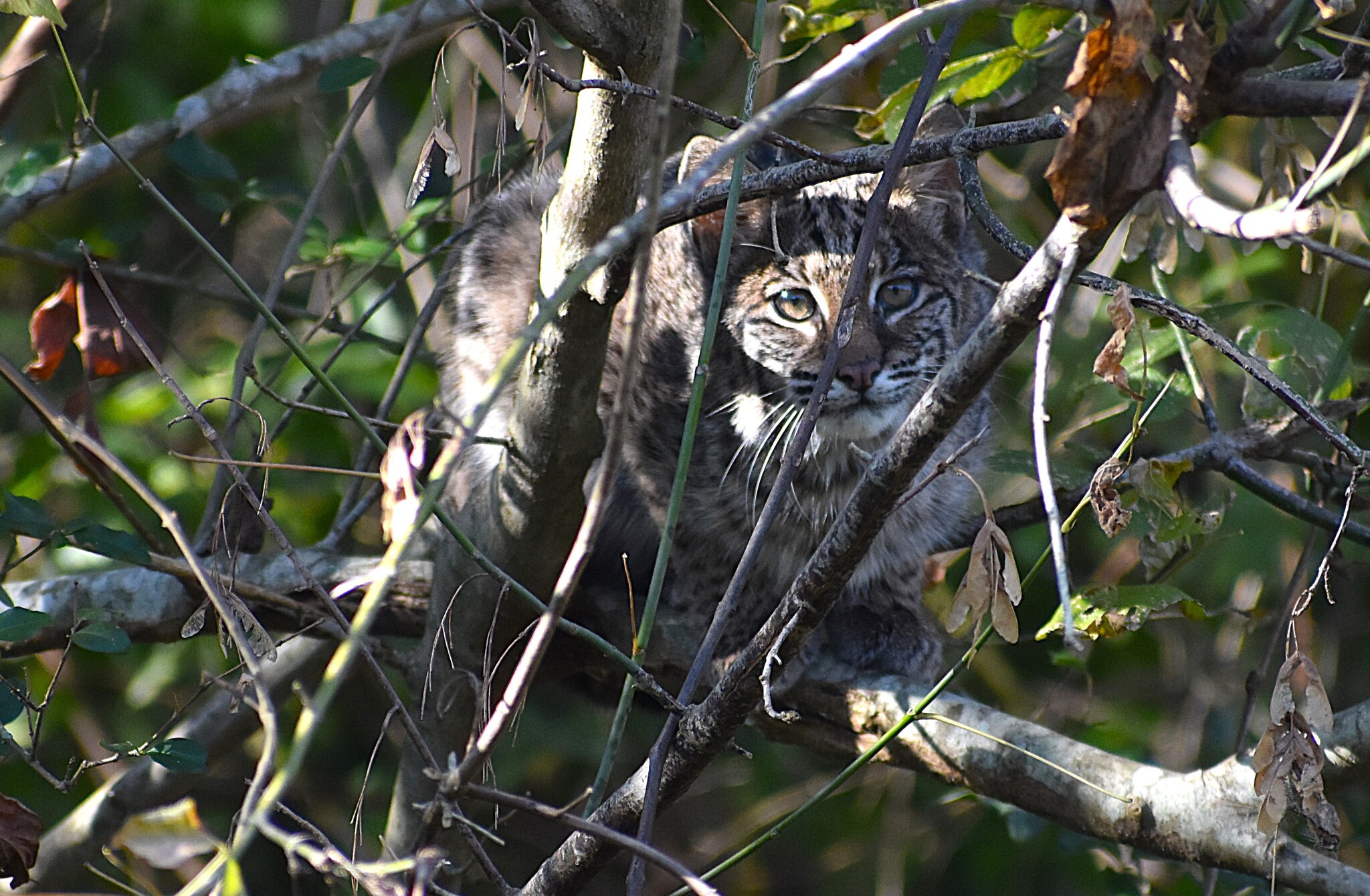
 A wild bobcat in South Carolina. Credit: bill777 (CC license)
Across much of their range, bobcats are ecosystem indicators. Because bobcats regularly travel 2-7 miles per day through their territories and disperse longer distances, their presence is often a sign of quality wildlife habitat and corridor connectivity – especially in Eastern states, where they are one of the few top predators present. Like coyotes, bobcats are large enough to limit smaller mesopredators, while also adept at living in more fragmented landscapes (due to smaller territory requirements) compared to larger predators like cougars, jaguars, and wolves. These versatile wildcats can adapt to a variety of habitats, including coastal islands, playing a crucial ecological role in those areas.
Island ecosystem guardians
One of those places is Kiawah Island, a 15.14 square mile barrier island and golfing resort community 21 miles southwest of Charleston, South Carolina. For years, the island was home to stable populations of approximately 30-35 bobcats and 600-700 deer. Local biologists have monitored and tracked the cats for decades. As this coastal barrier island provides excellent habitat, it supports higher bobcat densities than mainland South Carolina. While the island is more developed today compared to the early 2000s, bobcats have adapted, and large areas of land are permanently protected and remain pristine. Bobcats prefer the marsh edges and secondary dunes, away from developed areas, but roam throughout the island.
These wildcats are crucial to the island’s biodiversity. In 2005, a collaborative study between Kiawah and the University of Georgia found that bobcats helped maintain the white-tailed deer population at a stabilized, healthy level. The presence of bobcats – the island’s resident apex predator – was the main source of fawn mortality. Under normal conditions, bobcat survival rates were very high, and the deer herd was healthy and in excellent condition. Kiawah’s bobcats did an exceptional job balancing deer abundance so that deer population control was largely unnecessary – not the case in many urbanized areas that lost their wild predators.
A sudden decline
Every year, local conservancy biologists anesthetize and fit some bobcats with temporary radio collars programmed to eventually drop off. This data helps identify important wildlife habitat areas, monitor the population, and inform guidelines for habitat preservation and improvement. Normally almost every collared bobcat survived, year after year. Bobcat populations self-regulate, and are protected from hunting or trapping on the island.
However, between 2017 and 2020, bobcats suddenly started dying. Survival rates dropped precipitously. Wildlife biologists found multiple bobcats who died from internal bleeding, without signs of outward trauma. Toxicity analysis of the deceased bobcats determined the cause – second generation anticoagulant rodenticides. At least one radio-collared female died while giving birth. High levels of rat poison killed not just this bobcat, but her four kittens – a devastating loss for Kiawah’s small population. By 2020, the population dropped below 10.
Since bobcats are a keystone species, their abrupt decline had rippling ecological effects. The ecosystem was no longer balanced. Without their natural predator, deer densities on the island surged to 111 per square mile, threatening native plant biodiversity. When too numerous, deer can overbrowse and severely degrade plant communities, especially within developed landscapes. Kiawah Island began culling deer to reduce overpopulation, a cost that had been unnecessary when the bobcat population was stable and healthy.
What are second-generation anticoagulant rodenticides?
Both first and second-generation anticoagulant rodenticides are highly potent. These toxins inhibit Vitamin K production, causing internal bleeding and fatal hemorrhaging in rodents. Pest control operators widely use and distribute them in “bait boxes” outside buildings. First-generation anticoagulants include chlorophacinone, diphacinone and warfarin. Second-generation anticoagulants – developed in the 1970s to poison rats resistant to first-generation compounds – include brodifacoum, bromadiolone, difenacoum, and difethialone.
While both poisons take several days to kill rodents, second-generation anticoagulants are stronger, linger for longer periods of time in animal tissues, and pose higher secondary poisoning risks. Despite their widespread use, anticoagulants are highly toxic to wildlife and accumulate in food webs. After eating poison bait, rodents become lethargic, making them easy targets and appealing meals to wildlife. Top predators are especially impacted because the toxins accumulate up trophic levels – a process known as biomagnification. Bobcats consume large numbers of rodents and also hunt smaller predators like weasels. After eating enough poisoned rats or small carnivores, they eventually accumulate a lethal dose.

A community bobcat guardian program began
Kiawah Island’s residents respect and value their bobcats, and understood the urgency of immediate action. Addressing the rat poison issue was the top priority before reintroduction could be considered. Introducing new bobcats makes little difference unless the island’s ecosystem is healthy and viable for them. Occasionally, a new bobcat will also cross the Kiawah River from the mainland independently.
Initially, Kiawah Island planned on passing a local ordinance to immediately protect their bobcats from rat poison. Rat poison was largely unregulated under state law, and precise usage data wasn’t publicly available. However, in South Carolina, only Clemson University’s Department of Pesticide Regulation can legally issue any regulatory action on rodenticides. In many states, laws broadly prohibit towns and municipalities from enacting local restrictions on rat poisons or other pesticides – which benefits pesticide industries at the expense of wildlife. Narrow exemptions exist for imminent danger to human health or endangered species, but bobcats lack federal or state endangered species protection. Kiawah Island submitted a request in 2020 to enact a local temporary rodenticide ban as bobcat numbers were dangerously low, but Clemson DPR denied their proposition, claiming “no chronic misuse violations” occurred.
Prior to the bobcat decline, the island’s golf courses gained nationwide attention from hosting PGA championships. As Kiawah’s popularity increased, more people began renting properties. Most of these homeowners or renters hired pest control and landscaping companies, and these businesses’ standard protocols had caused the sharp rodenticide influx. In many cases, pest control companies had pre-emptively set out and regularly replenished rat poison outside homes – regardless of whether homeowners were experiencing any issues with rodents.
Because the community was barred from locally regulating rodenticides on the island, conservation efforts relied on voluntary participation. Earlier in 2020, the community launched a Bobcat Guardian program, with education and outreach efforts raising awareness of the issue. Residents already liked the bobcats and understood their ecological importance, but making the clear connection between rat poison and bobcat deaths was pivotal. Even when used correctly under label instructions, these slow-acting poisons posed high secondary risks to wildlife. Soon many local businesses, residents, and 20 Charleston-area rodent control companies signed the Bobcat Pledge, agreeing to stop using rat poisons harming these wildcats. Renters and residents began hiring only Bobcat Guardian program landscapers and pest control providers. Over the following years, the rodenticide deaths stopped.
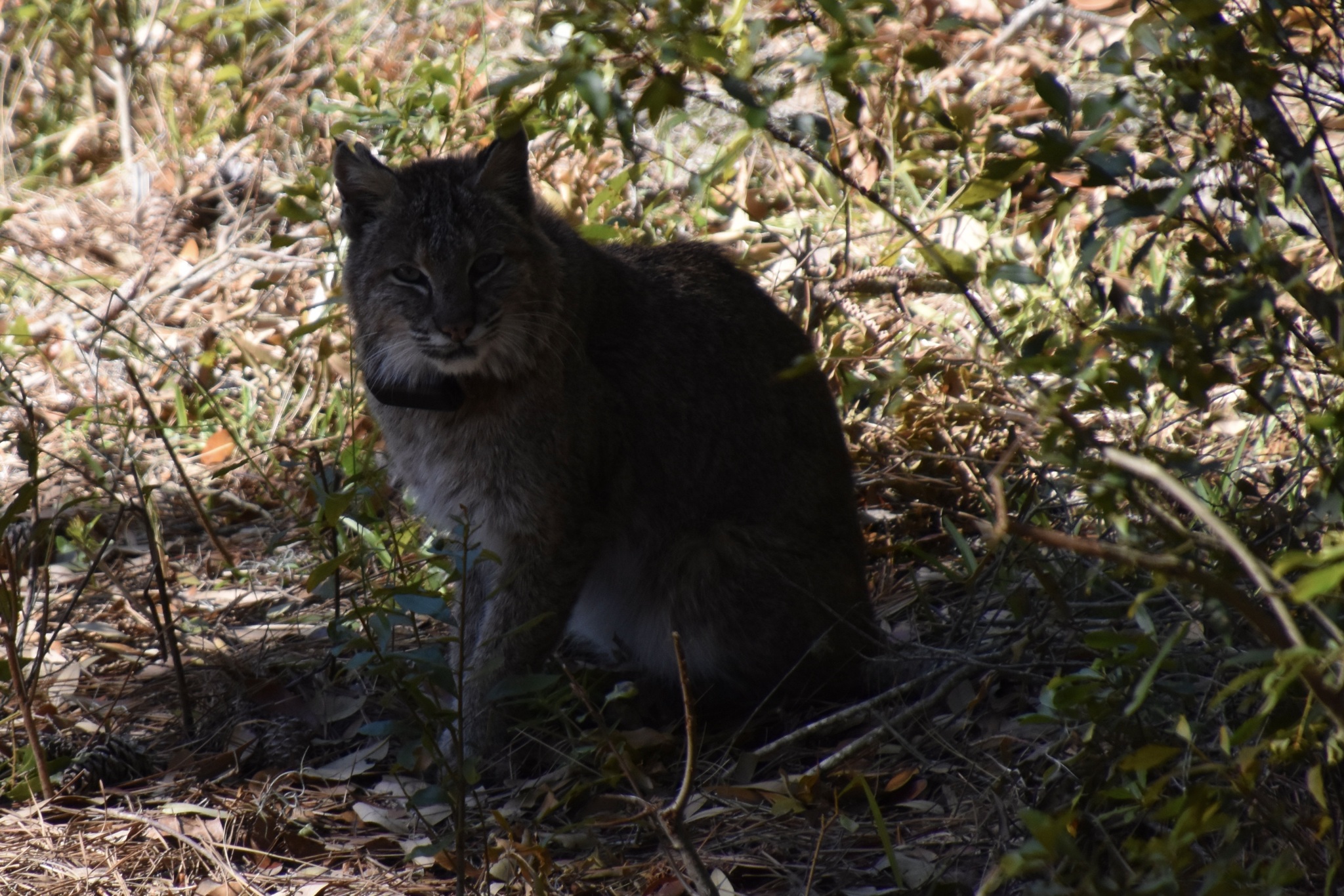 Radio-collared bobcat on Kiawah Island, South Carolina. Credit: Jordan Haber (CC photo)
Awareness and research led to state-level reform for South Carolina
Meghan Keating, a doctoral research student at Clemson, studied toxicology and annual survival rates of Kiawah’s radio-collared bobcats, comparing data with similar studies in other states. Her recently published research confirmed rat poison – not development – was the primary factor for the bobcats’ decline. As the population continues to recover, maintaining the Bobcat Guardian program remains necessary for the bobcats’ long-term survival. The paper’s abstract states: “Based on population projections, our study presents some of the strongest evidence to date that AR exposure can contribute to population declines in wild carnivores.”
These findings shifted state regulations. In 2025, Clemson DPR issued an indefinite statewide moratorium classifying second-generation anticoagulant rodenticides as state-restricted pesticides. This means that in South Carolina, purchases are now restricted to certified applicators only, and sales must be recorded and require a dealer license to sell. These modest reforms marked an important reversal from 2020 and showed that the harmful impacts of rat poisons were gaining recognition and traction.
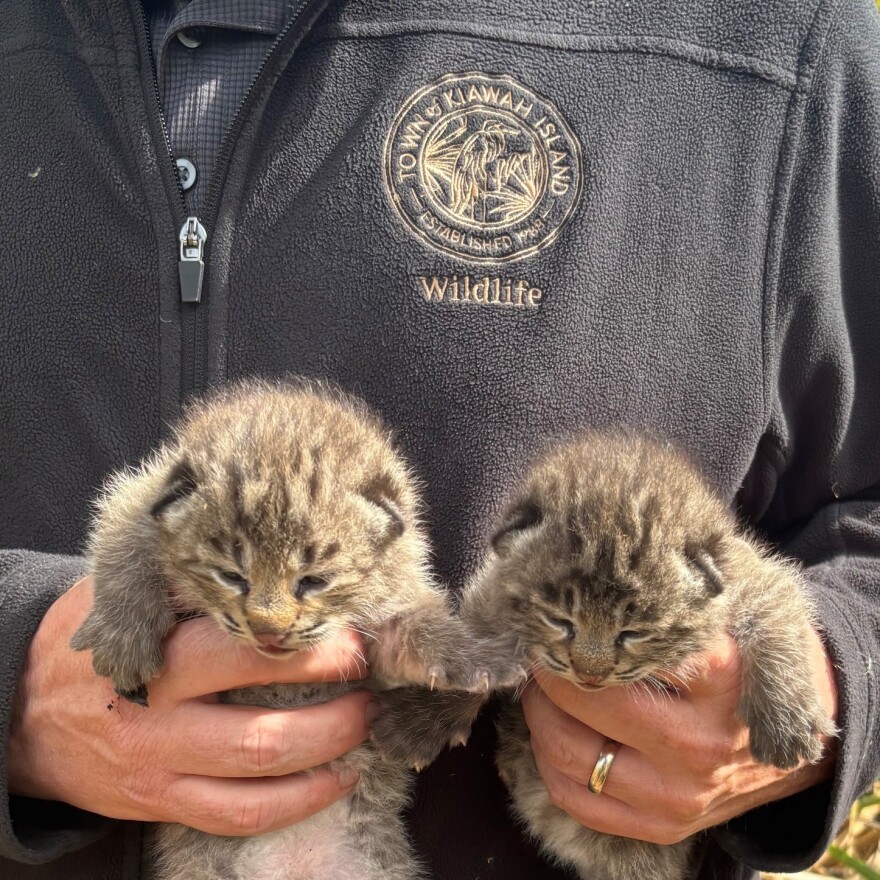
Wildlife officials show off the first bobcat cubs of the season on Kiawah Island, an important milestone in protecting their dwindling population in the area. Photo Credit: Town of Kiawah Island
However, without community intervention, it’s likely Kiawah’s bobcat population would have been lost entirely by now. Today, these elusive wildcats still roam the island and are making a comeback. While it took time to have a measurable effect, the program successfully increased survival rates, helping the population slowly recover to 20-25 bobcats by 2024. This year, on April 28, 2026, local biologists discovered a den with healthy kittens born to a radio-collared female. The two young bobcats, a male and female, represent hope for a rebuilding population and an encouraging sign for their continued recovery.
Rat poisons have many alternatives
It is difficult to ban rodenticides entirely, particularly in cities where rats pose a significant public health issue. However, awareness of these poisons is increasing, and non-toxic alternatives for rodent issues are emerging. Wildlife rehabilitators, particularly those caring for birds of prey, are a reliable source for learning environmentally friendly solutions. Some good general practices include:
Proactive exclusion: making buildings uninviting for rodents is more cost-effective than removing existing rodents.
- Seal holes in roofs, walls, and foundations to remove access to entry or easy nesting areas
- Eliminate entry points around pipes and electrical wires
- Clean up spilled grain, birdseed, pet food and other potential rodent attractants
- Eliminate easy access to nesting materials like shredded paper and fabric
Natural repellents and nontoxic alternatives
- Use botanical repellents such as peppermint, lavender, citronella, eucalyptus, or balsam fir oils – soak cotton balls in oil and place near entry points. (Rodents hate these smells because they interfere with navigation)
- Cayenne or chili pepper also work – mix with water and dish soap to create a mixture and spray anywhere rodents are active.
- Some cities are using rodent fertility control in the form of palatable soft bait or liquid to decrease populations. This is a humane and nonlethal Integrative Pest Management practice, and only affects rodents with no secondary impacts on wildlife
- Nontoxic forms of lethal rodent control are available – avoid using glue traps, which also entrap small birds and snakes
Native predators are natural allies
- Owls, hawks, bobcats, foxes, and coyotes help manage outdoor rodent populations for free
- Encourage birds of prey by planting trees, leaving dead ones standing, or building nest boxes for owls or kestrels
- Bobcat conflicts are uncommon, but carnivore coexistence practices allow residents to benefit from having native predators around while also keeping pets, backyard chickens and livestock safe.
- Keep wildlife wild and don’t feed them
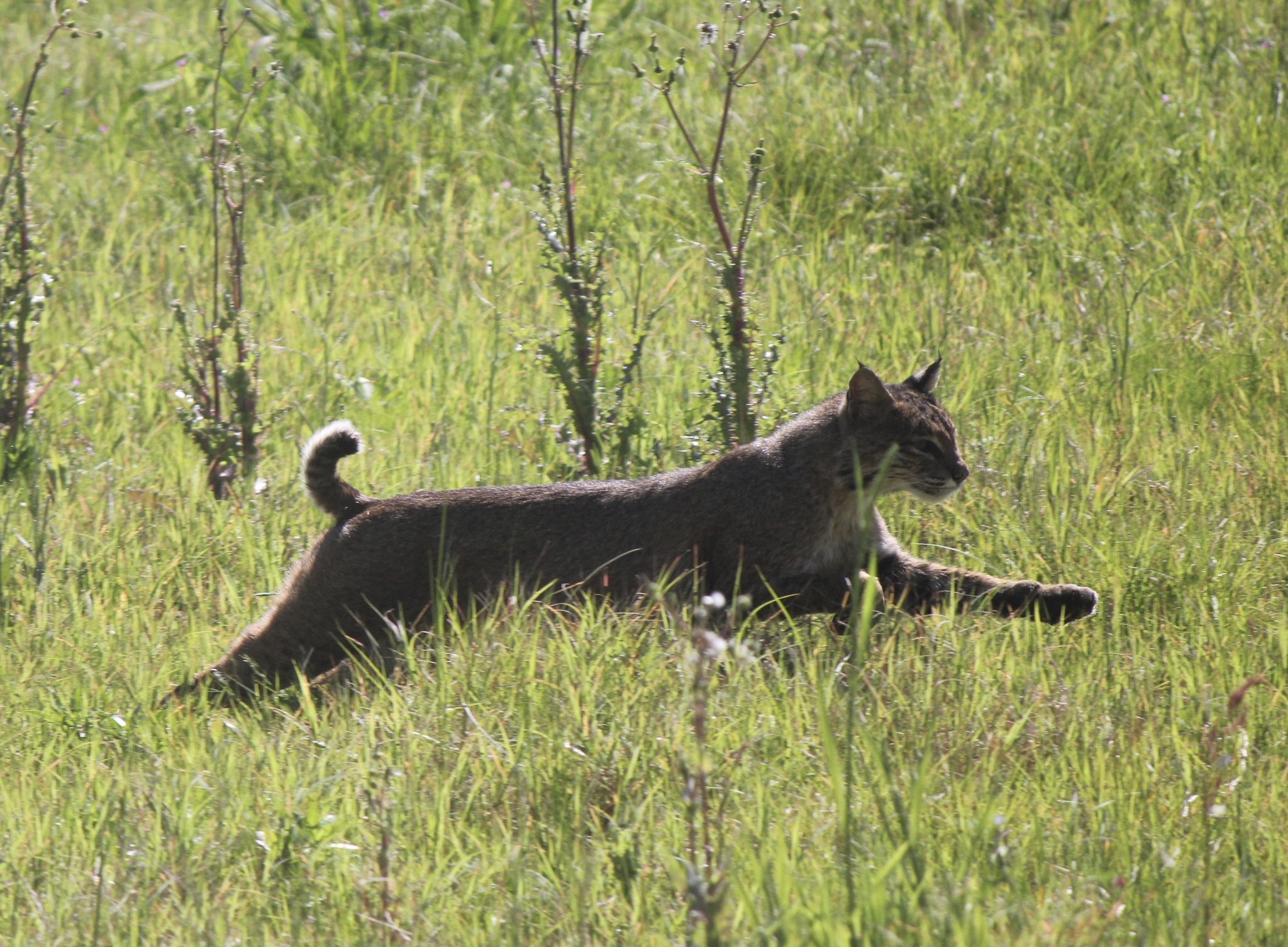
A bobcat at the Savannah NWR in South Carolina. Credit: thequirkyquail (CC photo)
State-level and local wildlife advocacy matters
Bobcats receive relatively little advocacy across much of their wide range, despite their ecological importance. While these wildcats’ adaptability and elusive behavior contributes to their survival, resilience does not make them invulnerable or expendable. In areas near urban or suburban development, habitat fragmentation, vehicle collisions, and rodenticides are usually the biggest threats to localized bobcat populations. Conversely, in some rural regions, bobcats may have excellent habitat but also contend with local intolerance and unrestricted hunting pressure, as well as state agencies’ lack of reliable standards for population monitoring. While bobcats generally cause very few conflicts with humans (in many cases people don’t even realize they share land with these wild neighbors), some areas still stigmatize the wildcats as dangerous or undesirable. Historically, bobcats faced intense persecution and bounties in most states almost immediately after European colonization. Social perceptions of bobcats matter.
Despite barriers to direct local regulation, Kiawah’s bobcats still had several factors in their favor. Local residents already viewed bobcats positively. They were an important symbol of the island to many in the community. In addition, the bobcats were being studied over a small-scale local area for decades. As the island’s main deer predator, their absence was easy to notice and pinpoint. This helped Kiawah begin a rapid, successful grassroots response. Many bobcat populations don’t receive the same attention or awareness.
Rural and urban development and management practices intrinsically shape local wildlife ecology. Beyond habitat conditions, social contributions influence conservation, especially for carnivores. These include local perceptions of wildlife, culture, expectations, prior experiences, worldviews and values.
Take action for local wildlife
Many people view the Endangered Species Act and other federal legislation as the ultimate backstop for wildlife protections. However, conservation means more than just protecting land and preventing extinction – it also involves responding to early warning signs on a local scale, and making changes when necessary.
If you’re ready to take action for your local wildlife, check out our Action Hub resources and join our free Building Power for Wildlife Justice cohort to help create positive change and challenge narratives. Local advocacy can help shift perceptions about bobcats, coyotes, and other misunderstood wildlife, and raise awareness of the effects of anticoagulant rodenticides.
State-level rodenticide regulations directly impact local bobcats, hawks, owls, coyotes, and entire food webs. Let elected officials in your state know this issue matters to you and that you support limiting anticoagulant poisons that harm wildlife.
Peggy Clark is a Geospatial Science & Biology student at Radford University in Radford, Virginia and volunteer writer for Wildlife for All. Peggy is a dedicated wildlife advocate who uses her talents to connect threads and investigate topics geared towards bringing justice to state wildlife governance.