
Understanding Right-to-Hunt Constitutional Amendments
A new policy brief from Wildlife for AllAcross the country, right-to-hunt constitutional amendments are increasingly being used as a tool to shape wildlife policy. While they are often presented as simple protections for hunting and fishing traditions, many proposals contain broader language that could shape how wildlife is managed and who gets to make those decisions.
Changing constitutional language can have lasting effects, shaping how wildlife is managed, what tools decision-makers can use, and locking who has a voice in future wildlife policy.
As these amendments become more common, advocates, journalists, policymakers, and community members need clear, factual information about what they do—and how they differ from one state to another.
Our new policy brief provides an accessible overview of this growing national trend.
In this brief, you'll learn:
- What right-to-hunt constitutional amendments are and how they have evolved over time.
- How these amendments differ from state to state.
- Common provisions found in recent amendments and what those provisions could mean.
- What courts have said about existing amendments—and where important legal questions remain.
- Why placing wildlife policy in a state constitution can have long-term consequences.
- Questions to consider when evaluating proposed constitutional amendments.
Drawing on Wildlife for All’s analysis of more than 140 right-to-hunt proposals introduced since 1997, this guide translates complex legal and policy issues into plain language for advocates, journalists, legislators, and anyone interested in the future of wildlife.
Whether you’re encountering a right-to-hunt amendment for the first time or looking for a trusted resource to share with your community, this brief provides the context needed to better understand what is at stake and how these proposals may shape wildlife governance for generations.

Why Wildlife for All is tracking these proposals
Wildlife belongs to all of us. Decisions about how wildlife is managed affect ecosystems, communities, and future generations.
As constitutional amendments become an increasingly common tool for shaping wildlife policy, understanding their language—and the potential consequences of changing the rules at the constitutional level—has never been more important.
Wildlife for All works to advance democratic, science-informed wildlife governance by providing research, policy analysis, and educational resources that help people engage thoughtfully in decisions about our shared wildlife.
This policy brief is part of our ongoing effort to ensure people have the information they need to understand emerging wildlife governance issues and participate in shaping the future of wildlife policy
Quick Facts
- 140+
right-to-hunt proposals tracked since 1997 - 30+
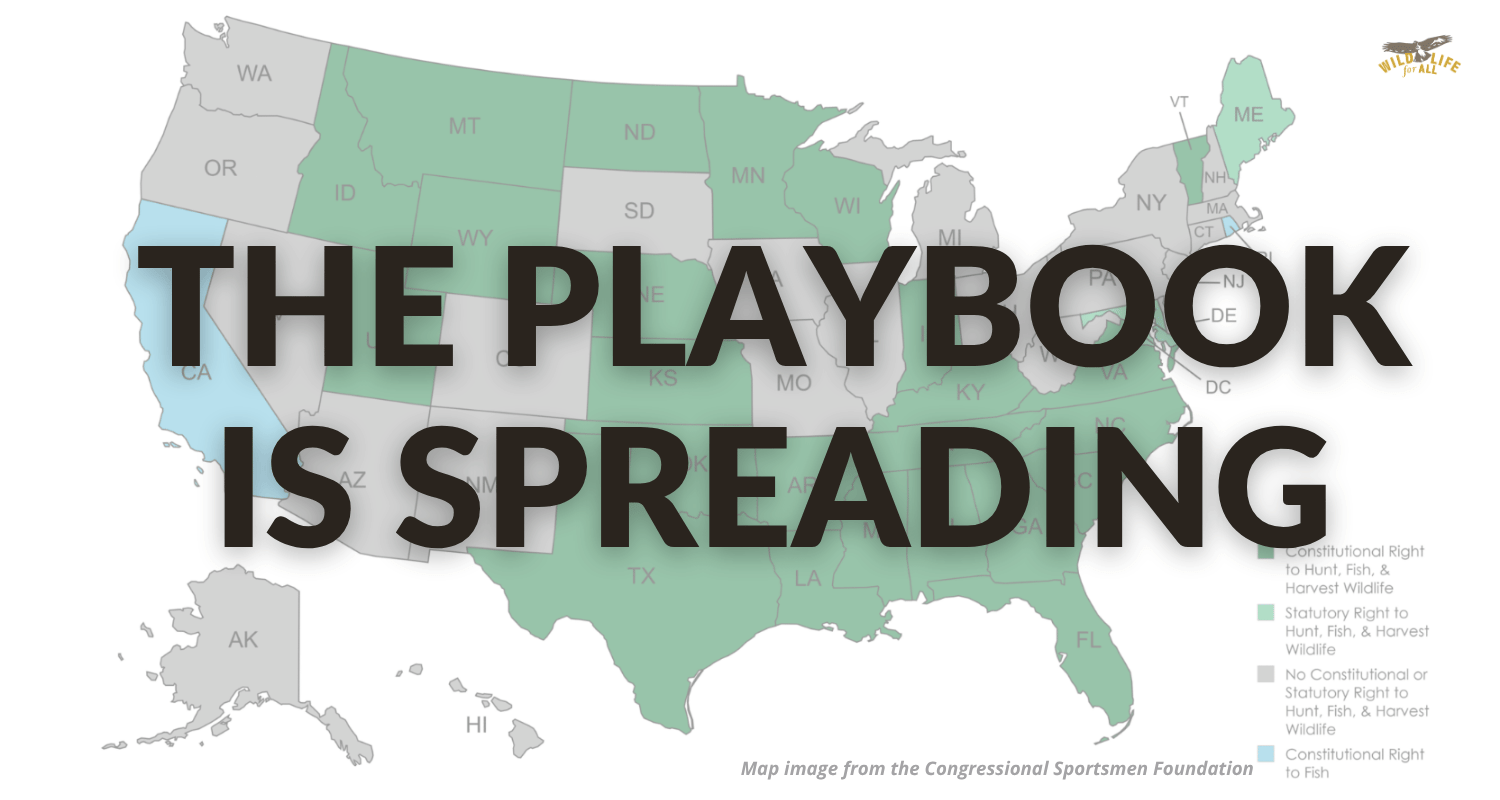
states have constitutional right-to-hunt amendments and statutes - 2 pages
a concise guide for advocates, policymakers, journalists, and community members

Methodology
Wildlife for All developed an original 50-state database documenting constitutional and statutory right-to-hunt provisions, legislative proposals, and relevant court decisions. The figures in this brief are based on comparative analysis of that dataset together with primary legal sources and peer-reviewed scholarship. Graphs showing common amendment language were produced by coding each state’s constitutional provision for the presence of recurring legal elements identified in prior legal scholarship, including provisions related to preferred wildlife management methods, traditional hunting methods, and standards for regulation.
Our research included:
- A review of constitutional amendments, statutes, ballot measures, and legislative proposals related to right-to-hunt protections in all 50 states.
- Analysis of amendment language to identify common provisions and recurring model language used across states.
- Review of published court decisions and legal databases (including Westlaw) to examine how courts have interpreted right-to-hunt provisions and how they interact with other legal doctrines, such as state wildlife authority, property rights, and the public trust doctrine.
- Review of peer-reviewed legal scholarship, legislative history, and publicly available policy materials related to right-to-hunt amendments.
- Compilation of state-by-state data into a comparative database to support the figures and analysis presented in this brief.
Because legislation and litigation continue to evolve, this brief reflects the status of available information as of July 2026.