
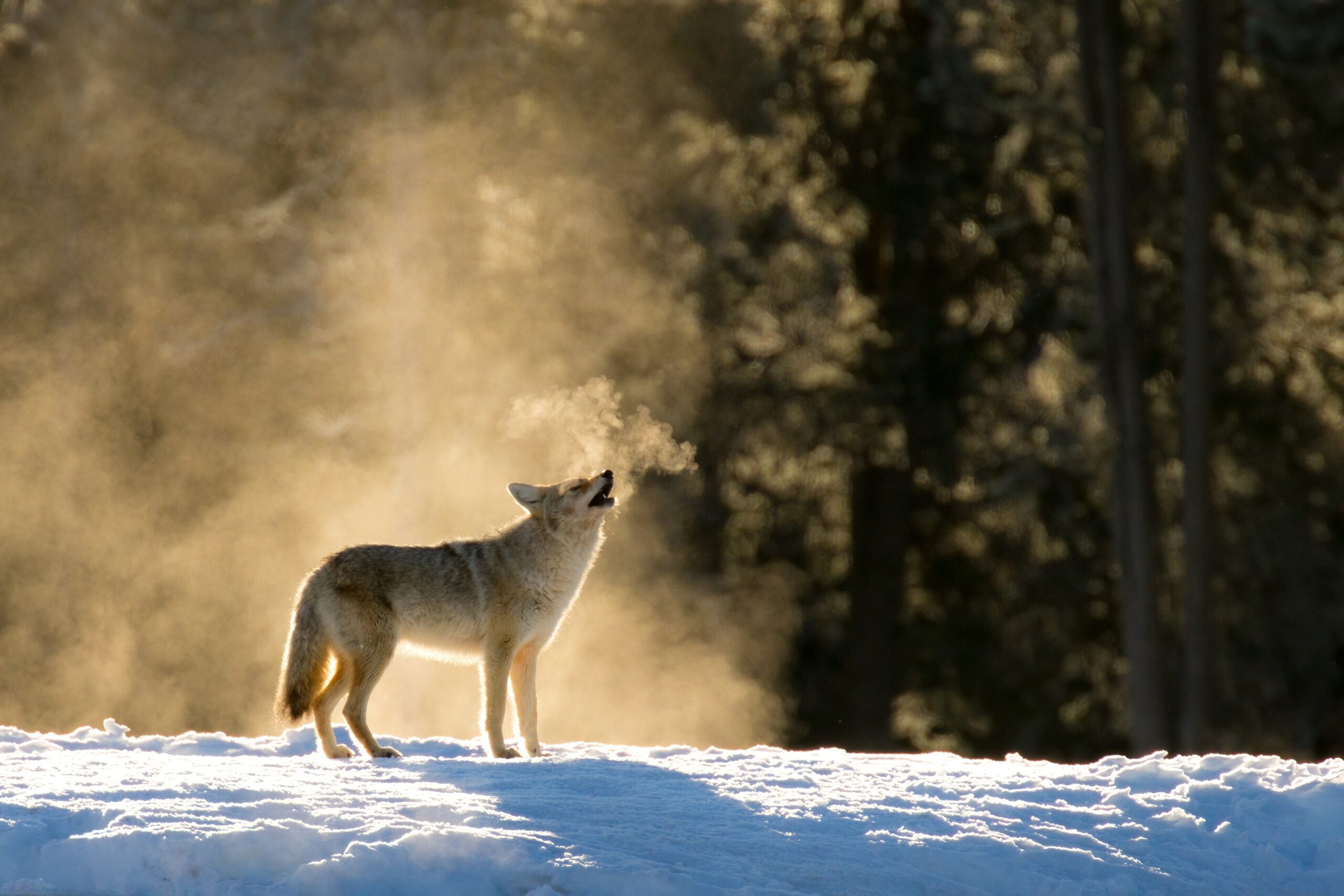
The Wolf Conservation Center’s Integrative Ecology and Coexistence Lab in South Salem, New York is studying eastern coyotes and red wolves. The Center’s C3 program (Cultivating Canid Coexistence) emphasizes canid ecology, coexistence, recolonization/reintroduction, and the ways these aspects intersect. One current project aims to better understand local distribution, ecology, and social perceptions of coyotes in the Lower Hudson Valley. This knowledge can be applied to benefit not just coyote coexistence, but endangered wolf recovery as well.
Studying Eastern Coyotes
Westchester County, where the Wolf Conservation Center is located, is a suburban county just north of New York City, with numerous parks and natural areas. Remote trail camera footage, mapped with ArcGIS, provides both geographic and behavioral data on local eastern coyotes.
Preliminary results indicate Westchester coyotes prefer riparian and mixed hardwood-coniferous forest habitat types. Increased observations in September represent juvenile coyotes dispersing from their packs. Two locations, Croton Point Park and Rockefeller State Park Preserve, had the highest coyote activity. In areas like Ward Pound Ridge Reservation and Muscoot Farm Park, coyotes were less common but still present.
Additionally, citizen-submitted photos and observations inform the project and help gauge local attitudes towards wildlife. In Westchester County and adjacent Fairfield County, Connecticut, public perceptions of wildlife are generally positive. Most participants who sent sightings and data feel safe living around coyotes and other wildlife. Understanding how local residents perceive carnivores helps wildlife advocates build mutual understanding and foster coexistence.
Red Wolves and Coyotes
Red Wolves are critically endangered; coyotes are not. In August 2026, the only wild Canis rufus population numbered 21-23 adult wolves and 14-15 pups, with 295 additional wolves in captive recovery programs. Coyotes are smaller than wolves, and as a species are more adaptable and resilient to persecution and anthropogenic changes. Yet the two species share many ecological similarities; they can interbreed, are both habitat generalists, and fulfill similar environmental niches. (In red wolf territory, the presence of “placeholder” coyotes – sterilized, hormonally intact coyotes holding territories – has been a successful method to minimize hybridization with the endangered red wolves.) Due to their similar appearance, practices like allowing night coyote hunting in the red wolf recovery area also threaten red wolves.
In certain coastal Texas and Louisiana marshlands, coyote populations carry previously undiscovered “ghost genes” — high admixtures of red wolf DNA — that can help rescue the genetic diversity of the endangered wolves. Coyotes can also serve as a proxy for measuring community attitudes towards carnivores, and fostering coyote coexistence can extend to wolves. Knowledge gained from this research project can help conservationists identify geographic areas with suitable habitat and high local acceptance for potential wolf reintroductions in the future.
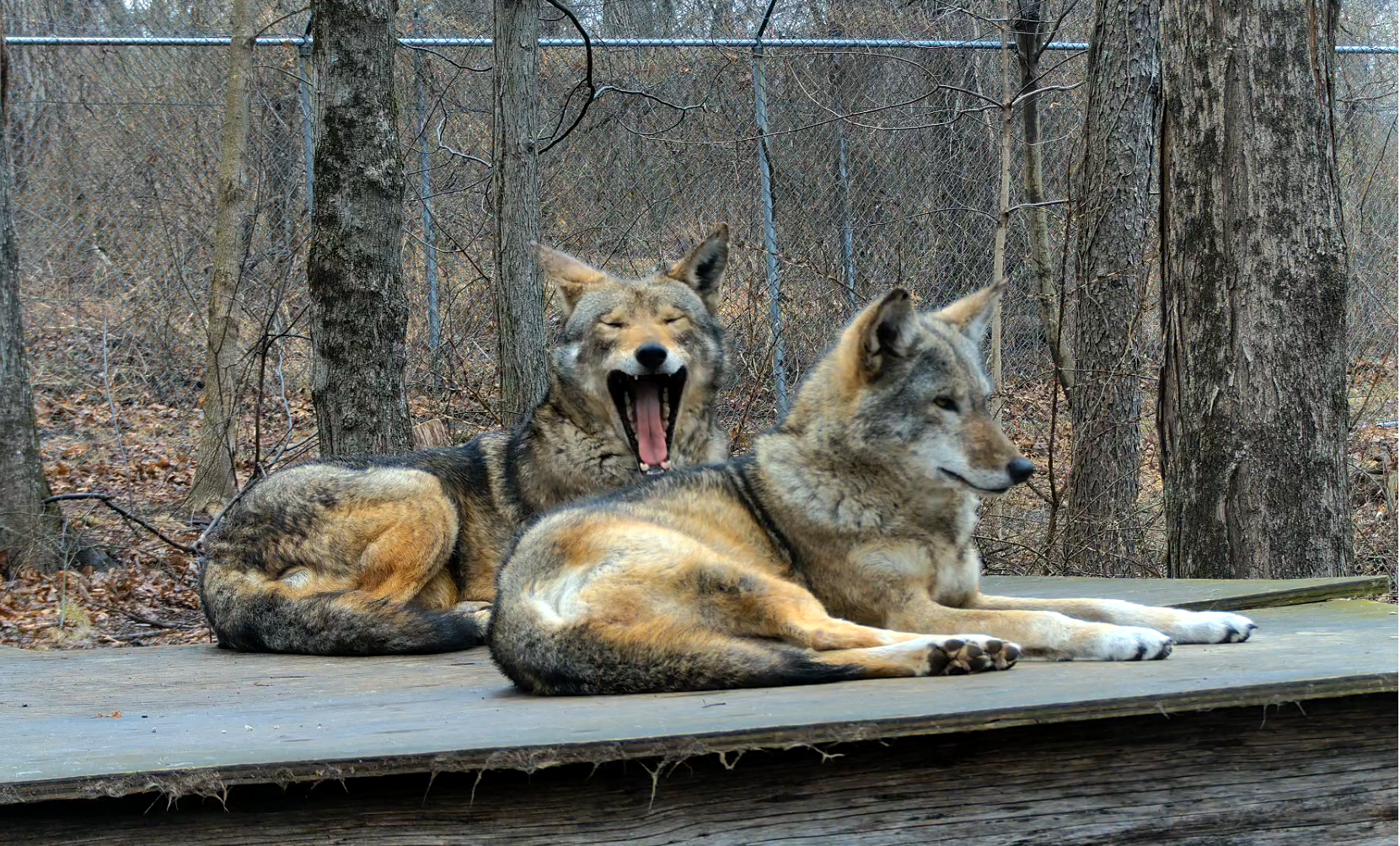
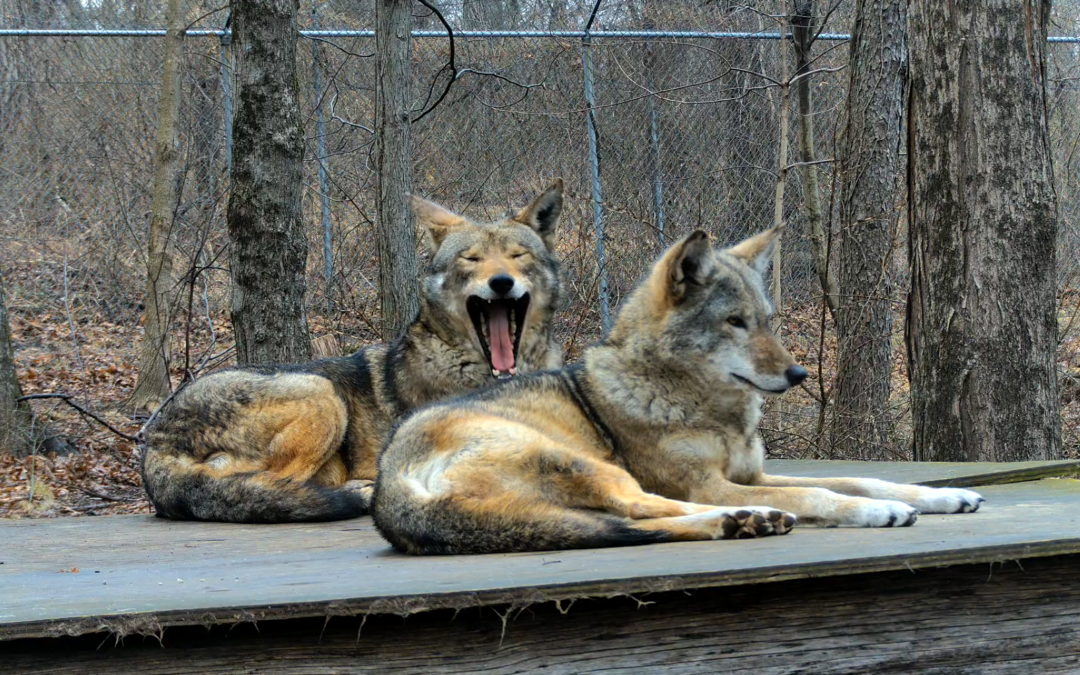
2025 webcam image capture of Mac Tíre (left) and Ginger, endangered red wolves formerly at the Wolf Conservation Center in South Salem, New York
Why this work matters
The questions we ask shape wildlife science. So do the goals and objectives we hope to accomplish. Projects like these fill an important niche by broadening wolf and coyote research beyond traditional wildlife management endeavors.
State wildlife agencies mainly center utilitarian/traditionalist values of wildlife. Frameworks like the North American Model promote an exclusionary legacy which ignores conservation contributions from non-hunters (and non-whites and women). Because agencies and current funding structures typically prioritize maximizing game species and hunter opportunity, coyotes and other carnivores are viewed with hostility. When state wildlife agencies research carnivores, their objectives and approaches still often center game species and hunting (such as researching how coyotes impact white-tailed deer fawn survival rates or population growth).
Instead, the Integrative Ecology and Coexistence Lab centers coyotes and wolves, and the communities living alongside them. That distinction matters. It inspires others to better understand and coexist with local wildlife. It centers a different way of understanding wolves and coyotes as individuals and wild neighbors, rather than threats.
You can learn more about the Wolf Conservation Center’s eastern coyote and red wolf research here.
This post was contributed by Peggy Clark, a student from Radford, Virginia. Peggy is a dedicated wildlife advocate who uses her talents to connect threads and investigate topics geared towards bringing justice to state wildlife governance.