Colorado Voters Reject Amendment 83, Delivering Victory for Wildlife and Democratic Accountability
Colorado-led coalition celebrates voters’ rejection of a constitutional power grab and the grassroots effort to defend wildlife and democracy
COLORADO — Colorado voters have rejected Amendment 83, delivering a decisive victory for the state’s wildlife, democratic institutions and the principle that wildlife policy should be shaped by Coloradans, not dictated by a national political agenda.
Amendment 83 failed to reach Colorado’s 55% threshold for passage, reflecting voters’ rejection of an effort backed by pro-trophy-hunting interests to rewrite the state’s Constitution as part of a national political agenda. Despite substantial resources behind the campaign, proponents also fell short of persuading a majority of Coloradans to support the measure.
Today’s defeat of Amendment 83 marks a major milestone in a grassroots campaign that began in May, when 14 Colorado organizations and dozens of advocates came together to oppose this unnecessary and misleading constitutional amendment. Built from the ground up by Colorado-based conservation, wildlife, animal protection and grassroots environmental organizations, the coalition developed the strategy, messaging and organizing foundation that led a statewide effort to protect Colorado’s wildlife and democratic decision-making.
By Election Day, the coalition had grown to include 163 endorsers, representing 71 organizations, 41 elected officials, 14 county-level Democratic parties, five issue committees, 12 scientists and legal scholars, and six editorial boards. This caps nearly eight years of sustained work to challenge the entrenched interests shaping Colorado’s wildlife policy and advance a more democratic, science-informed approach to wildlife management.
“From the beginning, this was a Colorado-led effort, built by Coloradans who recognized what was at stake and got to work long before the campaign was on most people’s radar,” said Mandy Culbertson, acting executive director at Wildlife for All. “This fight brought together people with different backgrounds, perspectives and relationships with wildlife around a shared conviction: Colorado’s wildlife belongs in the hands of a responsible, accountable public process. Today’s result shows what a determined grassroots coalition can accomplish.”
“As a big game hunter, I am exceptionally proud of Coloradans for establishing an ethical system of hunting in our state,” said Eric Washburn, president of Colorado Hunters and Anglers for Sensible Wildlife Conservation. “Tonight, I am even more proud of my fellow Coloradans for rejecting this ballot measure, which would have brought back all those unethical and cruel methods of killing wildlife and put them into our state’s constitution. It shows how much Coloradans care about our wildlife.”
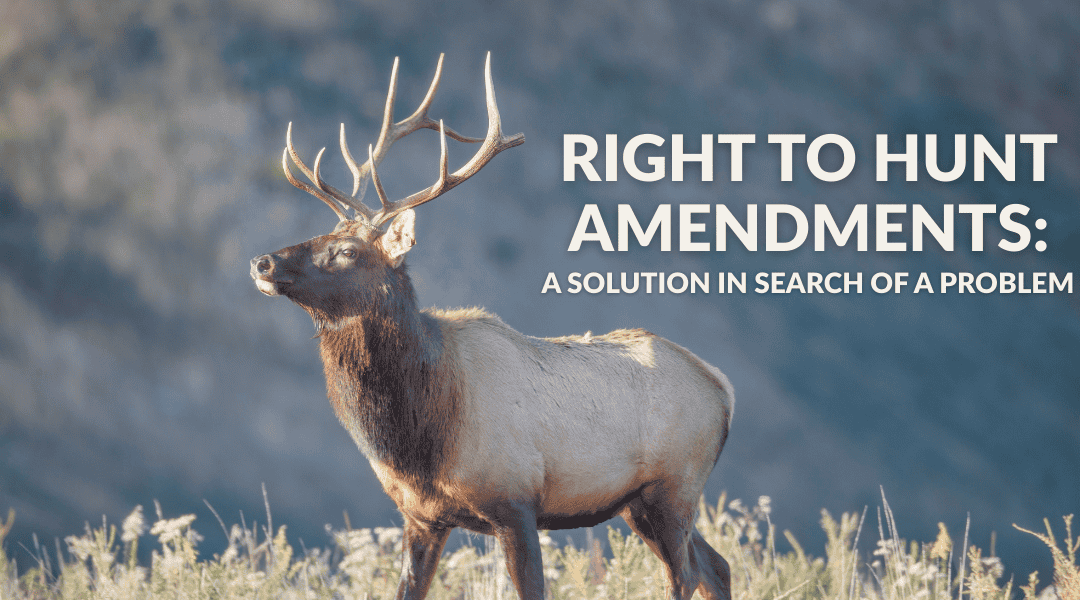
Amendment 83 was unnecessary as hunting and fishing are already legal in Colorado, and the state’s wildlife management system already provides for those activities. Instead, the amendment sought to elevate vague constitutional language that could constrain the state’s ability to make responsible, science-informed wildlife management decisions and respond to changing ecological realities.
Coloradans rejected that approach and saw through the deceptive language of the proposed constitutional amendment.
“Both hunting and fishing are already protected in state statute and will remain so. That doesn’t change,” said Jen Clanahan, executive director of Colorado Nature League. “What is also preserved tonight is the right of Coloradans and wildlife professionals to determine the best management for our wildlife based on science and up-to-date information about the current status of specific species, the threats they face and the condition of their habitat, rather than the whims of trophy hunters.”
The campaign demonstrated that wildlife governance is not a narrow issue. It affects the health of ecosystems, the integrity of public institutions, and the ability of Coloradans to participate in decisions about their shared natural heritage. By bringing together conservation organizations, scientists, elected officials, community advocates, and people who care about wildlife, the coalition challenged a well-funded national political effort that spent more than $3.4 million with a distinctly Colorado response.
“Coloradans have sent a clear message that wildlife management belongs in the hands of scientists and the public, not in courtrooms where ambiguous constitutional language would decide the outcome,” said Mark Surls, Colorado and Northern Rockies coordinator for Project Coyote. “Voters also refused to place one group’s interests above everyone else’s, which keeps the door open for future generations to shape wildlife policy as science, public values, and our knowledge of wildlife evolve.”
“Stewardship of wildlife should be grounded in biological, ethological, ecological, and social science, in addition to ethics and ecosystem health,” said Melinda Marquis, president and co-founder of Science for Colorado Wildlife. “We are grateful that Colorado voters agree.”
The coalition’s success was made possible by the organizations that built the campaign from its earliest days, as well as the endorsers, donors, volunteers, local businesses, and community members who contributed their time, resources, voices, and networks throughout the effort. Every partner helped build this campaign and bring its message to more Coloradans.
“Colorado’s wildlife is part of what makes this state extraordinary, and healthy landscapes depend on recognizing the intrinsic value of all native wildlife species,” said Delia Malone, board president and founder of Colorado Wild. “We’re gratified that Coloradans continue to stand for ethical hunting and fishing and recognize the intrinsic value of all native wildlife species to maintaining healthy, vibrant landscapes.”
“We are thrilled that Coloradans showed up for wildlife. Voters stood up for responsible management that protects healthy wildlife and thriving ecosystems,” said Jennifer Best, Director of Friends of Animals’ Wildlife Law Program.
Colorado’s wildlife now has a united coalition behind them. Formed in the early stages of the fight against Amendment 83, this coalition will continue standing together for democratic accountability and stronger protections for wildlife, climate mitigation and the environment.
Defeating Amendment 83 is a milestone for Colorado’s wildlife and conservation movement, and it is not the finish line. The relationships, organizing infrastructure and shared purpose built through this campaign create a foundation for the wildlife and conservation work ahead across the state, and a model for other states facing similar right-to-hunt constitutional amendments.