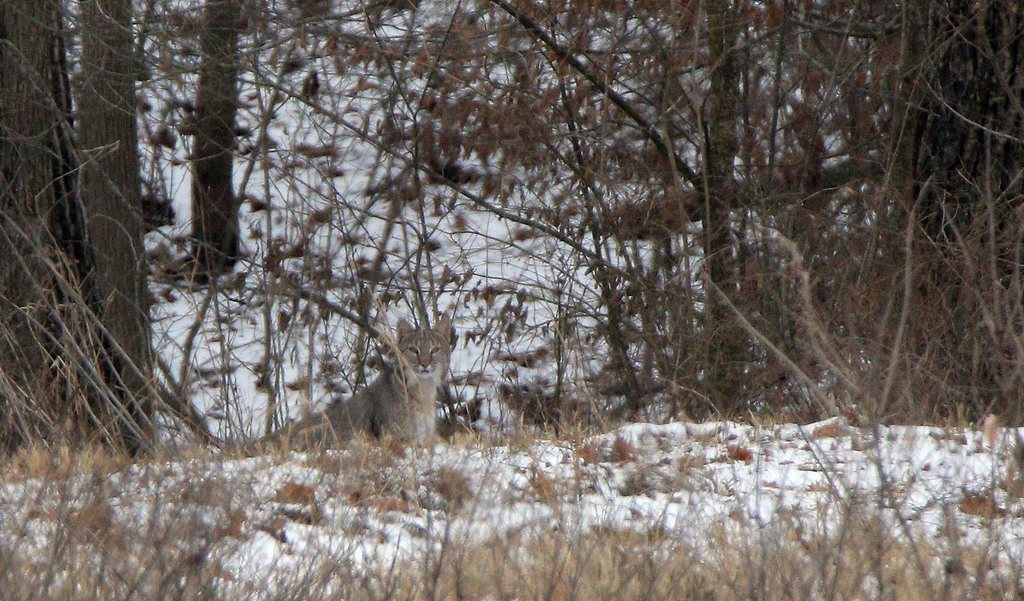
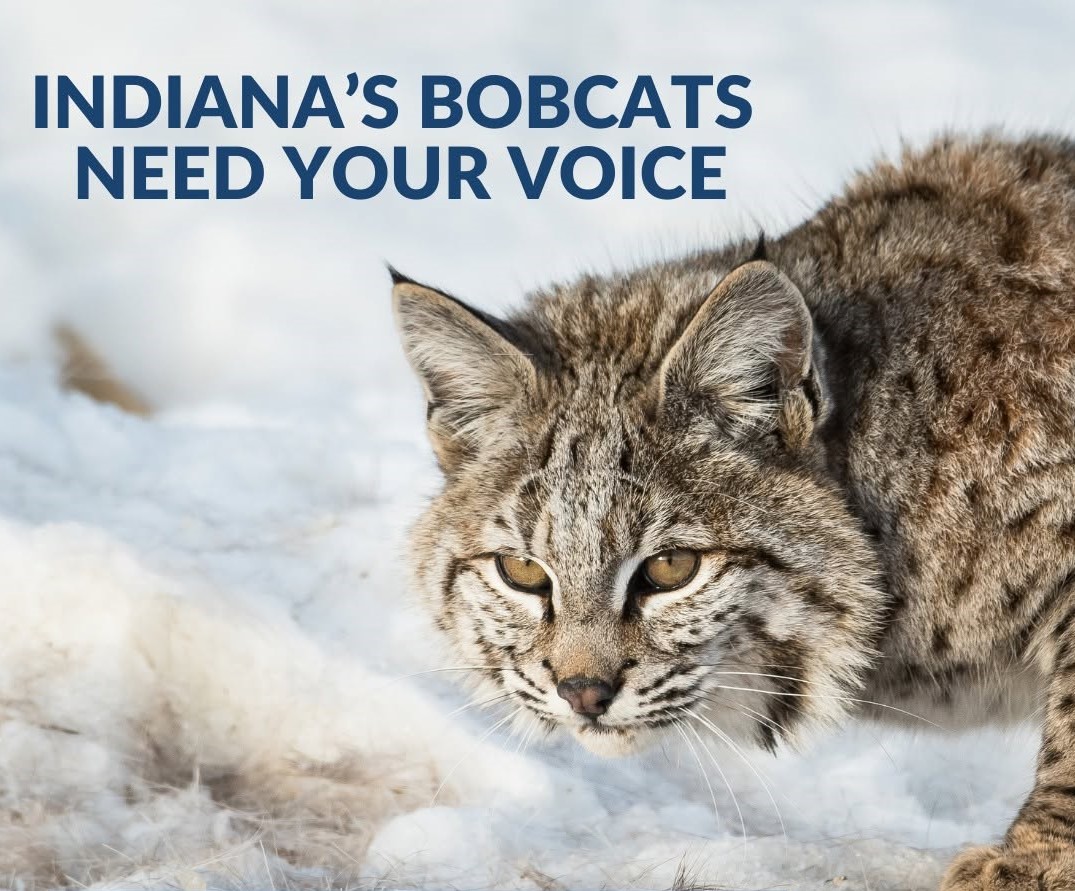
Indiana’s bobcats have faced significant challenges over the years. Unregulated hunting and habitat loss caused their designation as a state endangered species from 1969 to 2005. Bobcats have only recently returned to parts of Indiana after decades of decline, making proactive conservation especially important. High hunting and trapping pressure could return Indiana bobcats to the statewide endangered species list.
Why protecting bobcats matters
The Indiana Natural Resources Commission proposed a significant quota increase to 400 bobcats (compared to last year’s quota of 250), as well as expansion of methods for killing them. At the same time, they plan to issue 10,000 bobcat tags, making a quota overshoot likely.
According to the NRC’s most recent status update, setting a quota at 400 bobcats will cause a population decline at all three most likely kitten survival scenarios. The agency admits first-year kitten survival is extremely challenging to determine, and lacks state-specific estimates. Their population scenarios assume first-year kitten survival rates of 25%-35% based on estimates from other states’ bobcat populations. As the Sierra Club’s Hoosier Chapter notes, “essentially, DNR is acknowledging that they are not tracking their own modeling indicators over any reasonable period of time following the 2025 trapping season to understand the impact on bobcat populations.”
Among Indiana’s few top predators (along with eastern coyotes), bobcats self-regulate their own numbers through territoriality and dispersal. If left alone, habitat quality and prey abundance determine bobcat population densities in a given area. Bobcats do not decimate deer, small prey, or ground-nesting bird populations. In fact, they benefit overall ecosystem biodiversity, nutrient cycling and trophic balance. Their ecological role is especially critical in a state where wolves, bears, and cougars remain extirpated.
Indiana’s rationale for increasing the quota portrays bobcats as a “nuisance” or threat to people and livestock, and is rooted in fearmongering. Despite the NRC citing “increased complaints” in 2025, the actual number of conflicts (34 statewide) remains small.
Bobcats do not threaten human safety. Conflicts with domestic animals in Indiana are rare and can be prevented through proactive nonlethal measures, such as securing backyard chickens. Furthermore, hunting and trapping previously protected predators does not increase tolerance for them.
Take Action
If you live in Indiana, fill out the Sierra Club’s comment form and attend the public hearing virtually tomorrow at August 27, 2:00 PM EST.
If you live outside Indiana and visit or watch wildlife in the state, contact the state’s governor and wildlife agency and voice your support for stronger bobcat protections in Indiana. Let elected officials and the Indiana Natural Resources Commission know you are paying attention to this issue.
When submitting comments or statements, state why protecting Indiana bobcats personally matters to you. Cite one to three corresponding facts to support your claims. Provide your vision for the future – what would an Indiana that prioritizes bobcat welfare and conservation efforts mean to you? Conclude with a clear call to action – tell the Governor to protect bobcats and the Commission to reject additional quota increases.
Follow the Hoosier Chapter of the Sierra Club on Instagram and Facebook for notification and more details regarding opportunities to speak up for Indiana’s bobcats.