
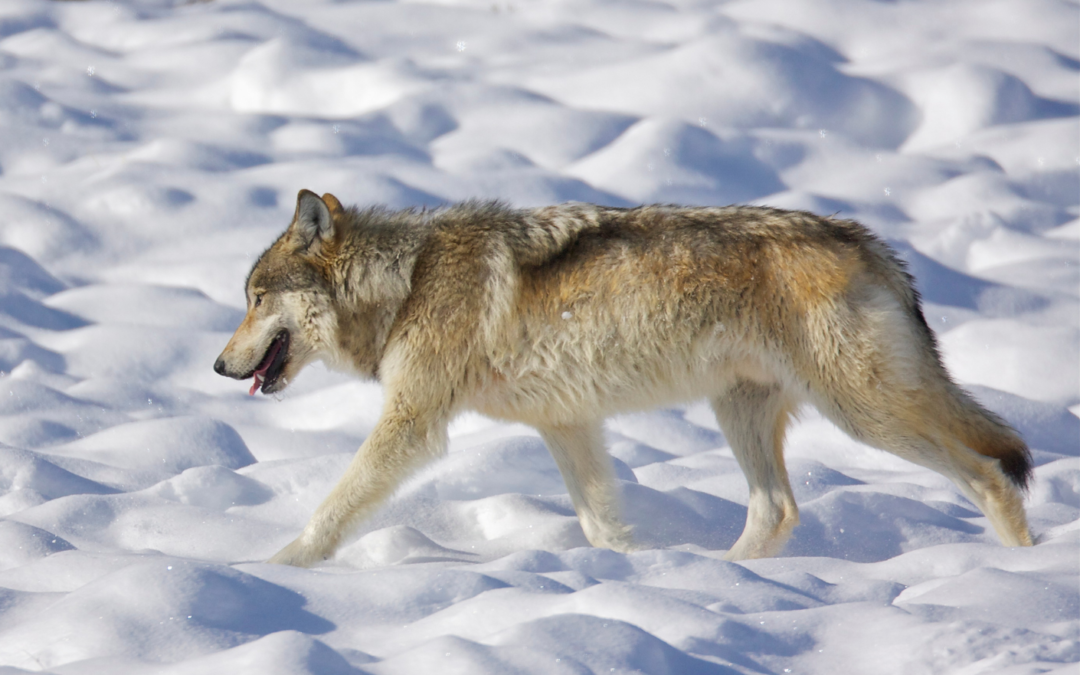
 3 Things You Can Do for Wildlife This Week
Montana is preparing to set a new wolf-killing quota. The Trump administration is proposing weaker protections for grizzly bears. And one of Yellowstone’s most important wolf families could be killed this fall. Here’s what’s happening—and how you can help.
Jump to sections:
Montana wolf hunting quota | Federal grizzly 4(d) rule | Mollie’s Pack in Wyoming
Wildlife policy can sometimes feel abstract. A commission meeting in another state, a federal rulemaking process, or a management decision involving animals most people will never see can seem far removed from everyday life, but these decisions have very real consequences.
Three important wildlife decisions are happening right now, and the public has an opportunity to weigh in before those decisions are made. None requires you to be a wildlife policy expert. What matters is taking a few minutes to understand what is being proposed and making sure decision-makers hear from people who care about wildlife and how it is managed.
So without further ado, here are three things you can take action on this week:
MONTANA
1. Tell Montana to pause wolf killing until we know how many wolves are actually there
Written comments are due Wednesday, August 12.
On August 19, Montana’s Fish & Wildlife Commission will decide how many wolves hunters and trappers can kill during the upcoming season, a consequential decision under any circumstances. But this year, there is a basic problem that should make the Commission stop and take a much more cautious approach: Montana Fish, Wildlife & Parks has substantially revised its estimate of the state’s wolf population.
For years, FWP has relied on a population modeling system that it maintained produced reliable estimates showing Montana had a stable and abundant wolf population.
Montana Fish, Wildlife, and Parks relies on the Integrated Patch Occupancy Model (iPOM), a tool designed to estimate where wolves are, not how many exist, because the iPOM model predicts distribution, not abundance. iPOM data is based on hunter observation and lacks peer review. In absence of more precise population modeling, reliance on iPOM could erroneously label declining wolf populations as stable. Montana’s aggressive wolf-hunting policies do not align with ecological principles or data, and lack reasonable safeguards for wolf populations. Without reliable population data, setting quotas to kill hundreds of wolves is not “responsible science-based management”, it’s guesswork with consequences.
FWP now agree iPOM 1 was flawed and shared its updated modeling estimates that Montana has approximately 725 wolves with iPOM 2. The agency previously estimated to wolf population to be 1,094.
That is a 34% reduction in the estimated population, not because hundreds of wolves suddenly disappeared, but because the agency has acknowledged serious problems with the way it was estimating the population in the first place.
And there is another important caveat: FWP’s updated model, known as iPOM 2, has not been peer-reviewed through the scientific literature. We have no idea if they’ve actually fixed the problem (and a good deal of suspicion that they haven’t).
The proposed quota could leave Montana below its own minimum
Perhaps worst of all is that FWP is STILL proposing a hunting and trapping quota of 250 wolves for the upcoming season. Landowners would also be permitted to kill up to another 100 wolves under existing provisions.
If Montana actually has 725 wolves, killing ~350 of them would leave approximately 375. FWP has identified 450 wolves as the minimum population it believes is needed to reliably maintain the federally required 15 breeding pairs.
That doesn’t mean we can simply subtract the proposed quota from the population estimate and declare that 375 wolves will remain. Wildlife populations don’t work that neatly, and mortality occurs for many reasons. In fact, that uncertainty is precisely the problem.
In 2025, FWP recorded 328 wolf mortalities from all causes, including documented hunting and trapping, vehicle collisions, detected poaching and other causes. The agency also acknowledged that additional mortalities undoubtedly occurred but were not detected.
The reporting periods for the total mortality and hunting harvest figures don’t line up exactly, so those numbers cannot simply be subtracted from one another. But they demonstrate something important: the proposed killing quota is only one source of mortality affecting Montana’s wolves.
FWP is making a decision with incomplete information about both the number of wolves in the state and the number of wolves that will die from other causes.
That is not a situation in which the responsible response is to proceed as though the numbers are certain.

Wolves are more than a number on a spreadsheet
There is another reason population estimates alone don’t tell the whole story: Wolves are social animals. They live in highly organized family groups in which adults and younger animals depend on one another for hunting, raising pups, learning and survival.
A population of 725 wolves isn’t simply 725 interchangeable individuals. The size and stability of wolf packs matter, as does the age and reproductive status, where packs are located matters as well as concerns like disease, habitat conditions, food availability and other sources of mortality.
FWP now reports that average pack size in Montana has fallen to approximately four wolves. That should be a warning sign, particularly when the agency is simultaneously proposing significant additional mortality.
And Montana’s wolves are facing other pressures, such as canine distemper, which has caused substantial mortality among wolf pups in the Yellowstone ecosystem. Further, drought, heat, and wildfires are changing conditions across the state, and habitat is being fragmented by development and other land-use changes.
None of these factors necessarily tells us exactly how many wolves Montana can sustain. Together, however, they make one thing clear: This is not the time to pretend we know more than we do.
What you can do
Submit a comment to the Montana Fish & Wildlife Commission by Wednesday August 12.
- Ask the Commission to establish a moratorium on wolf hunting and trapping until FWP can provide transparent, reliable and scientifically defensible information about Montana’s wolf population, including pack size and population health.
- If you live in Montana, you can also contact your regional Fish & Wildlife Commissioner directly and ask them to support a moratorium.
- If you wish to comment at the meeting via Zoom, you MUST register to comment, which closes at noon MT on August 18.
The Commission will consider the wolf proposal at its August 19 meeting in Helena, but you do not need to attend the meeting to make your voice heard.
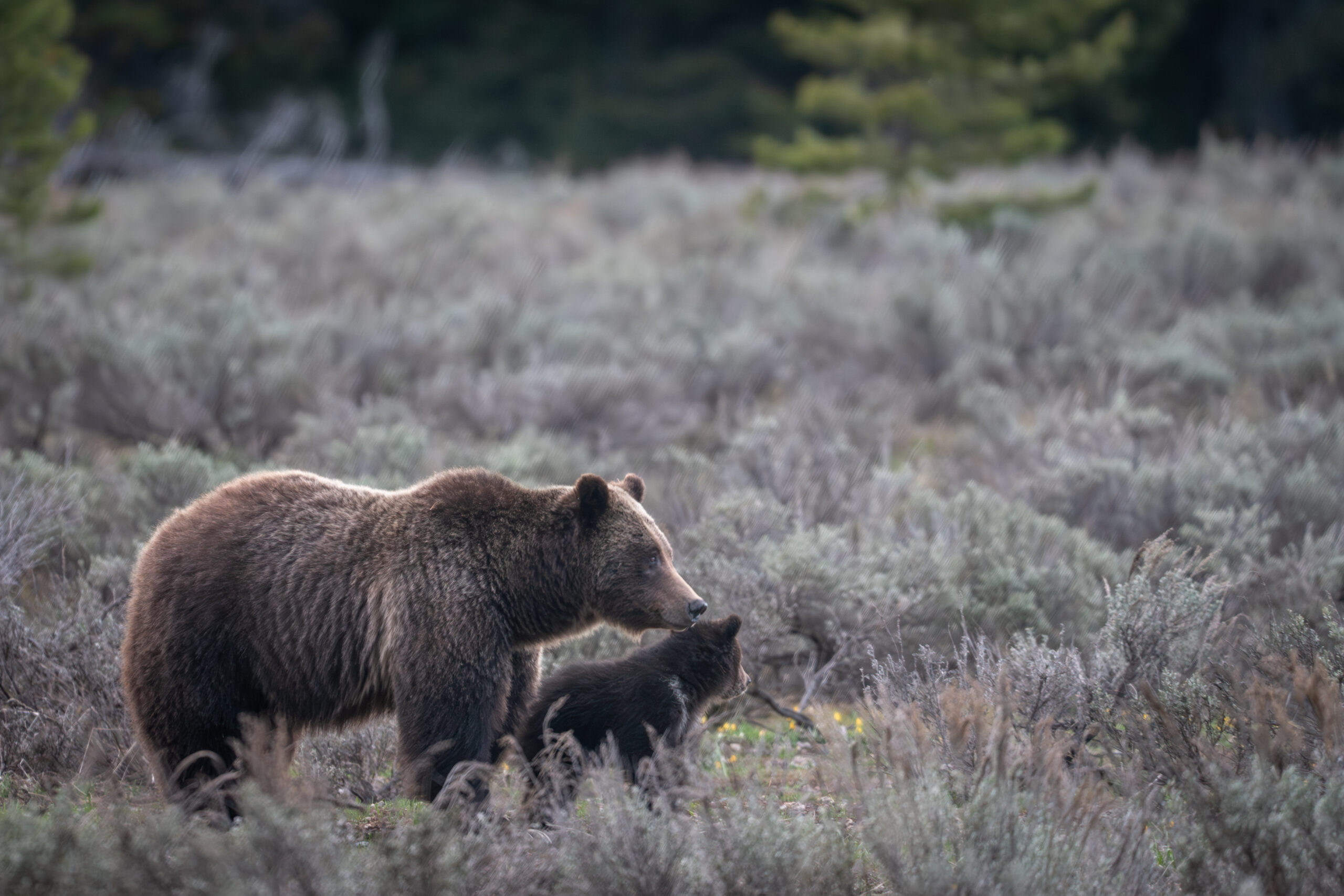
Photo of Grizzly 399 and Spirit by C. Adams, Grand Teton National Park
GRIZZLIES
2. Tell the Trump administration not to weaken protections for grizzly bears
Comments are due August 17.
On July 16, the Trump administration proposed sweeping changes to the Endangered Species Act protections that currently apply to grizzly bears. The proposal does not formally delist grizzlies, but it would nevertheless substantially weaken the practical protections grizzly bears receive while they remain listed as threatened.
The proposal would create a tiered management system that gives federal, state and other wildlife agencies greater authority to manage grizzlies under agreements approved by the U.S. Fish and Wildlife Service. It would also expand exceptions to the Endangered Species Act’s prohibition on “take.”
Under the ESA, “take” is a broad legal term that includes killing, harming, harassing, trapping, capturing or otherwise injuring protected wildlife.
In other words, this proposal would make it easier for agencies to undertake activities that can result in grizzly mortality with less direct federal oversight, and it comes at a particularly important moment.
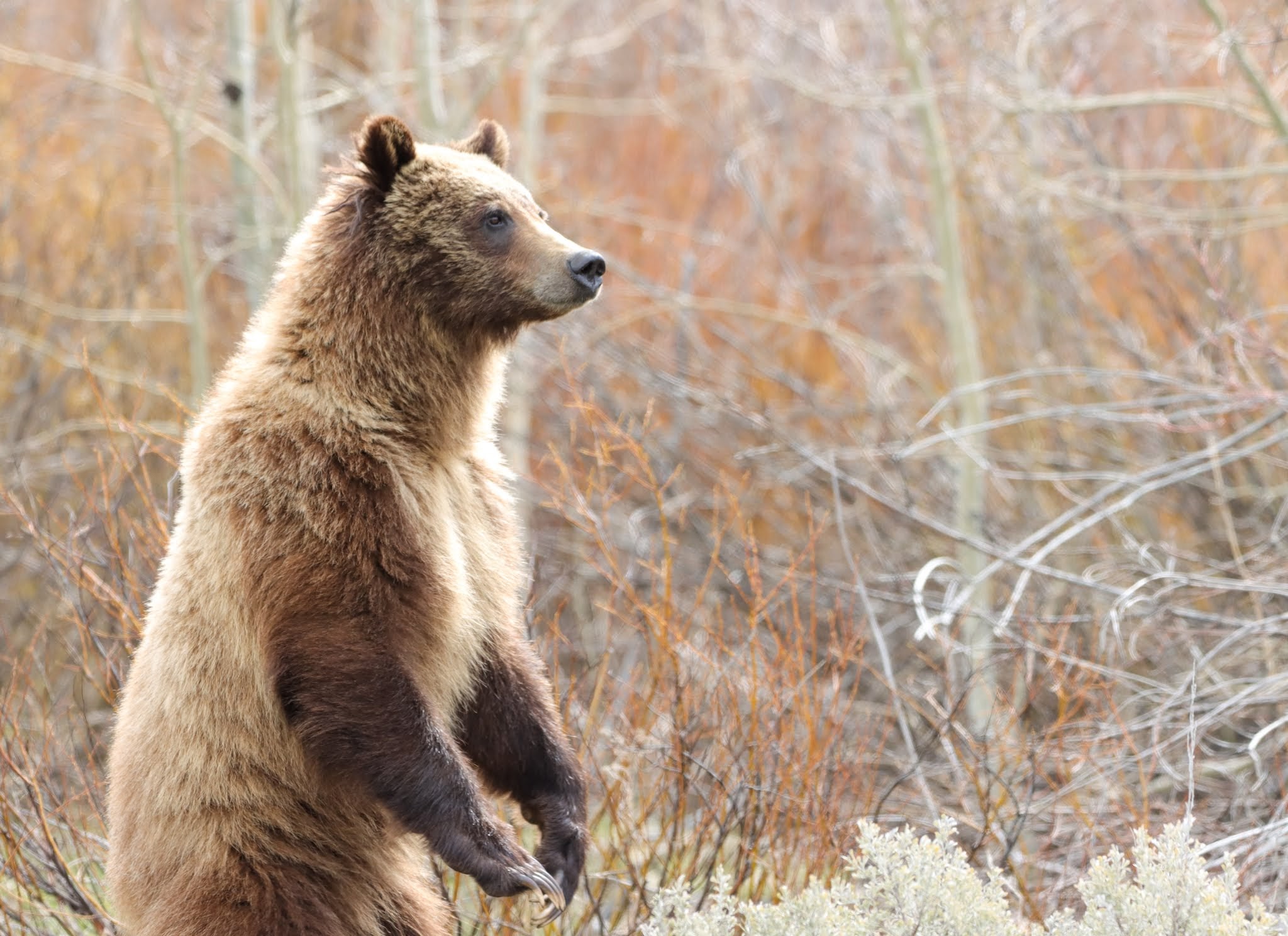 Grizzlies aren’t recovered
Grizzly bears remain listed as threatened under the Endangered Species Act because they have not recovered across a significant portion of their historic range.
Populations have increased in some parts of the Northern Rockies, but grizzlies occupy only a fraction of the habitat they once occupied. Long-term recovery depends not just on maintaining existing populations, but on protecting habitat and reconnecting isolated populations. The U.S. Fish and Wildlife Service reached that conclusion just 18 months ago.
In 2025, the agency rejected petitions from Montana and Wyoming seeking to delist grizzly bears, determining that removing federal protections would be premature, and the agency instead proposed retaining ESA protections while making changes to how grizzly populations are managed.
Now the Trump administration is proposing to weaken those protections while simultaneously signaling that it may pursue a separate action concerning the species’ listing status.
Taken together, these actions point toward a larger, politically driven shift: moving grizzly management away from federal recovery requirements and toward state management before recovery is complete.
Grizzly bears already face significant threats from human-caused mortality. Conflict with livestock is a leading cause of grizzly deaths, road strikes kill grizzlies annually, and trapping activities targeting other species can also injure or kill grizzlies. Meanwhile, habitat fragmentation makes it more difficult for bears to move between populations and maintain the connectivity needed for long-term recovery.
The Greater Yellowstone Ecosystem has experienced record levels of grizzly mortality in recent years even under existing protections. Reducing those protections now moves in exactly the wrong direction.
The problem becomes even more serious when considered alongside other actions the administration is pursuing that could affect grizzly habitat, including efforts to eliminate the Roadless Rule and weaken other Endangered Species Act safeguards. Grizzlies cannot recover if the habitat it needs is continually fragmented, and a population cannot recover if mortality continues to increase.
State management isn’t automatically better management
The proposal also raises questions about what will actually happen once more authority is transferred to states. Montana, Wyoming and Idaho have repeatedly sought greater control over grizzly management and, in some cases, have pursued delisting and the return of hunting.
More state authority to kill bears isn’t a recovery strategy.
Montana’s own grizzly bear management plan says the state would not actively manage for grizzly presence between core population areas. That is a significant problem because those connecting areas are essential for true recovery. If isolated populations are ever going to become a connected metapopulation, bears need to be able to move between core areas without being treated as problems simply because they have left a designated recovery zone.
What you can do
Submit a public comment opposing the proposed changes by August 17. You can use the Bears Belong action alert to submit a comment, or comment directly through the Federal Register.
 TAKE ACTION
Make sure you personalize your comment. Public comments are most useful when they explain why a proposed rule is problematic. You can the Bears Belong talking points to discuss the scientific evidence documenting:
- mortality from livestock conflict;
- the risks grizzlies face from trapping activities targeting other species;
- the importance of habitat connectivity;
- the consequences of increased human-caused mortality; and
- why federal oversight remains necessary while grizzly bears are still threatened.
If you use the scientific literature compiled by WildEarth Guardians, include the following statement: “Literature cited in this comment has been added to the administrative record by WildEarth Guardians.”
The administration is asking the public to weigh in, so make sure it hears from people who want grizzlies to actually recover.
WYOMING
 3. Help protect Mollie’s Pack before Wyoming’s hunting season begins
Contact Wyoming officials this week.
Some wildlife stories are about population numbers or regulatory language, but this one is about a family.
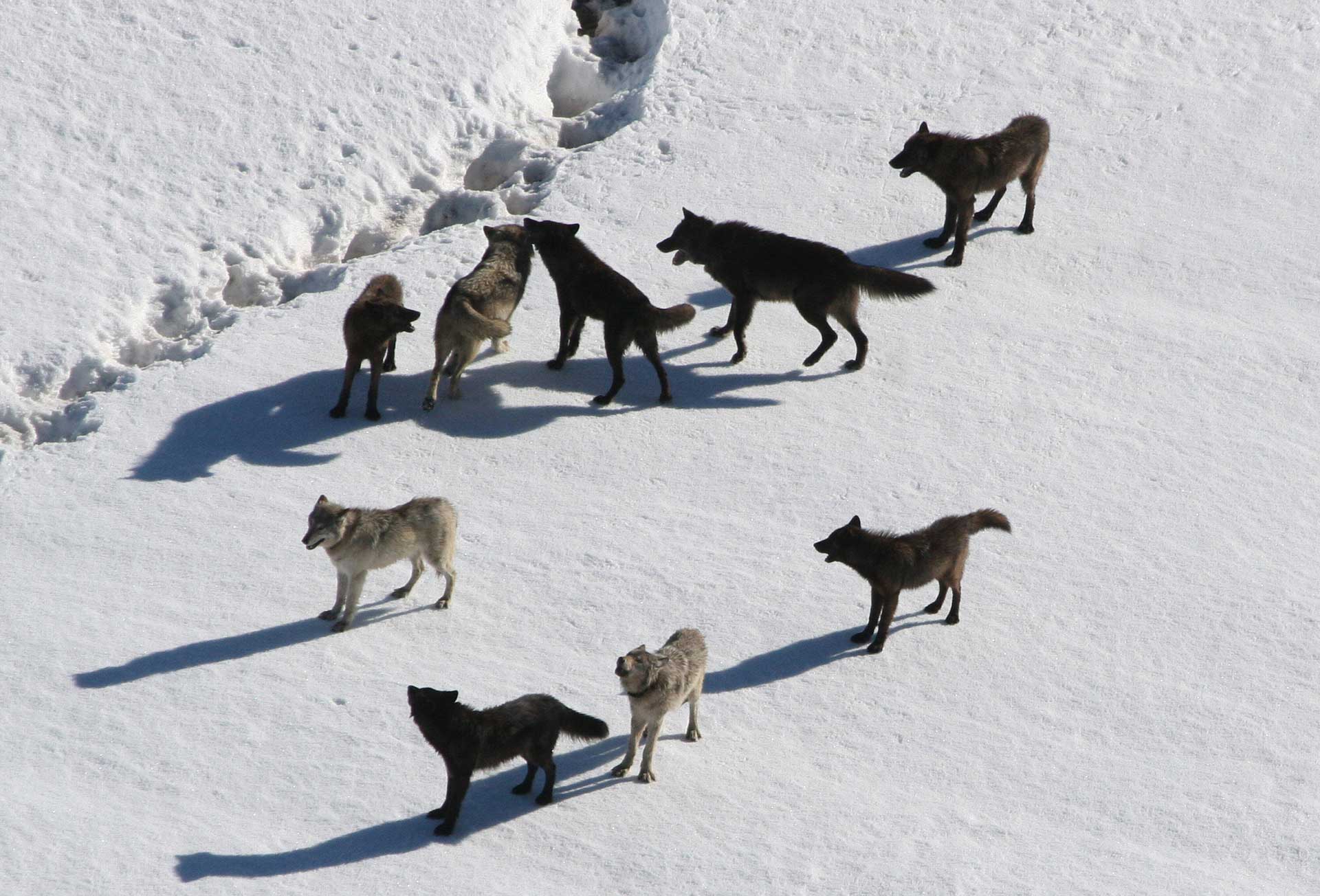
Mollie’s Pack is one of the best-known wolf families in the Greater Yellowstone Ecosystem. Its matriarch, Wolf 1090F, is 12 years old and believed to be the oldest living wolf in the area.
Scientists have studied her and her family for more than a decade, making Mollie’s Pack one of the most extensively documented wolf packs in the world. The pack is also the last remaining pack originally established during the historic wolf reintroduction effort more than 30 years ago.
Named for Mollie Beattie, the first woman to serve as director of the U.S. Fish and Wildlife Service, the pack has contributed to what scientists know about wolf behavior, family dynamics and the ecological role of wolves.
And now, those wolves are at risk of being legally killed.
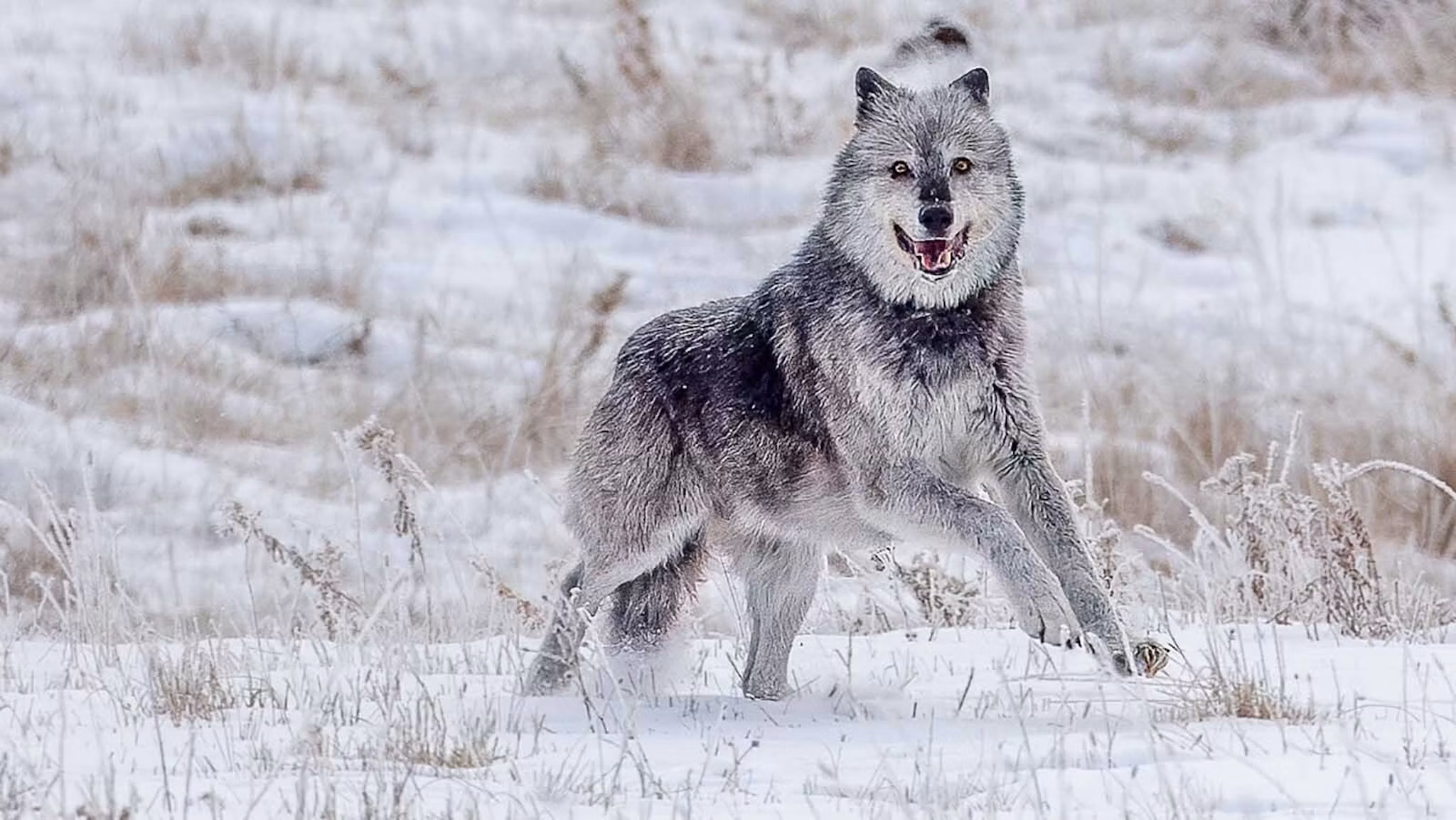
Wolf 1090F, of the Mollie’s pack in Yellowstone National Park, recently hit the age of 12 years. That makes her her the oldest living wolf in the park, and one of the oldest ever. (Courtesy Sylvia Borgonovo Photography)
A line on a map changed their status
For nearly all of her life, Wolf 1090F lived inside Yellowstone National Park. Recently, she and her pack established a den outside the park boundary, but still in Wyoming.
That seemingly simple change has major consequences: inside Yellowstone, the wolves are protected from hunting and trapping. But outside the park, Wyoming’s draconian wolf management rules apply: there are several “Trophy Game Areas” with a managed hunting season, and in the rest of the state, wolves can be killed at any time with no limits on how they are killed.
When the state’s hunting season opens this fall, members of Mollie’s Pack could legally be killed. But the wolves haven’t changed, not has their ecological importance or value to the public. Only their location relative to a jurisdictional boundary has changed.
That is exactly the kind of situation in which wildlife management requires judgment rather than simply applying a rule without considering the circumstances.
Wyoming can choose to protect them
The Wyoming Game & Fish Commission and Wyoming Game & Fish Department have an opportunity to respond to this extraordinary situation: they can recognize that Mollie’s Pack is not just another group of wolves moving through the landscape.
These are some of the most scientifically significant wolves in the Greater Yellowstone Ecosystem, and their family history is directly tied to one of the most important wildlife restoration efforts in American history.
Protecting them would not require Wyoming to abandon its entire wolf management framework. It would mean using targeted, science-informed management tools to protect an exceptional pack while officials assess the situation. There is also a nearby grazing allotment on the Shoshone National Forest that should be temporarily closed while appropriate management decisions are considered.
What you can do
Contact the Wyoming Game & Fish Commission, Wyoming Game & Fish Department and Shoshone National Forest.
Ask them to:
- temporarily close the relevant Trophy Game Management Zone to wolf hunting and trapping while Mollie’s Pack’s situation is assessed;
- recognize the pack’s exceptional scientific and conservation significance; and
- temporarily close the nearby Shoshone National Forest grazing allotment while appropriate management decisions are made.
You don’t have to live in Wyoming, be a wildlife biologist, or write a long letter. A simple respectful message explaining that you believe Wyoming should protect Mollie’s Pack and use targeted management tools to do so is enough.
Who to contact
Wyoming Game & Fish Commission
Mark.Jolovich@wyo.gov
Rusty.Bell@wyoboards.gov
Kenneth.Roberts@wyo.gov
John.Masterson@wyoboards.gov
Fonzy.Haskell@wyoboards.gov
Bill.Mai@wyoboards.gov
Ashlee.Lundvall@wyo.gov
Wyoming Game & Fish Department
Eric.Wiltanger@wyo.gov
Jeff.Davis@wyo.gov
Daniel.Thompson@wyo.gov
Shoshone National Forest
Kenneth.Coffin@usda.gov
You can also contact:
Wyoming Governor’s Office
Governor@wyo.gov
Yellowstone National Park
yell_public_affairs@nps.gov
 Three actions. One week.
These three situations are different, but they raise some of the same questions about how we manage wildlife. Do we make decisions based on the best available science, or proceed despite serious uncertainty? Do we treat wildlife populations as numbers on a spreadsheet, or consider the social structure, habitat and ecological conditions that determine whether those populations are actually healthy? Do we weaken protections before species have recovered, or recognize that conservation gains can be reversed?
And when wildlife policy affects animals that belong to all of us—not just the people who hunt, trap, ranch or live closest to them—do we make room for the public to have a meaningful voice?
You can make that voice heard this week. As a recap:
1. By close of business MT Wednesday, August 12
Comment on Montana’s proposed wolf quota.
Ask for a moratorium on wolf hunting and trapping until FWP can provide reliable, transparent and scientifically defensible population information.
2. By midnight ET Monday, August 17
Comment on the proposed changes to grizzly bear protections.
Tell the Trump administration not to weaken Endangered Species Act protections for a species that has not yet recovered.
3. This week
Contact Wyoming officials about Mollie’s Pack.
Ask them to protect Wolf 1090F and her family while the situation is assessed.
Wildlife policy is often decided in meetings most people never hear about, through rules most people never read, and by agencies that rarely hear from anyone outside the small group of people who regularly participate.
Pay attention. Speak up. And make sure wildlife has a voice in the decisions that determine whether they live or die.