
News & Commentary
Idaho Fish and Game Commissioner Charged with Poaching Violations
For Immediate Release: April 1, 2025
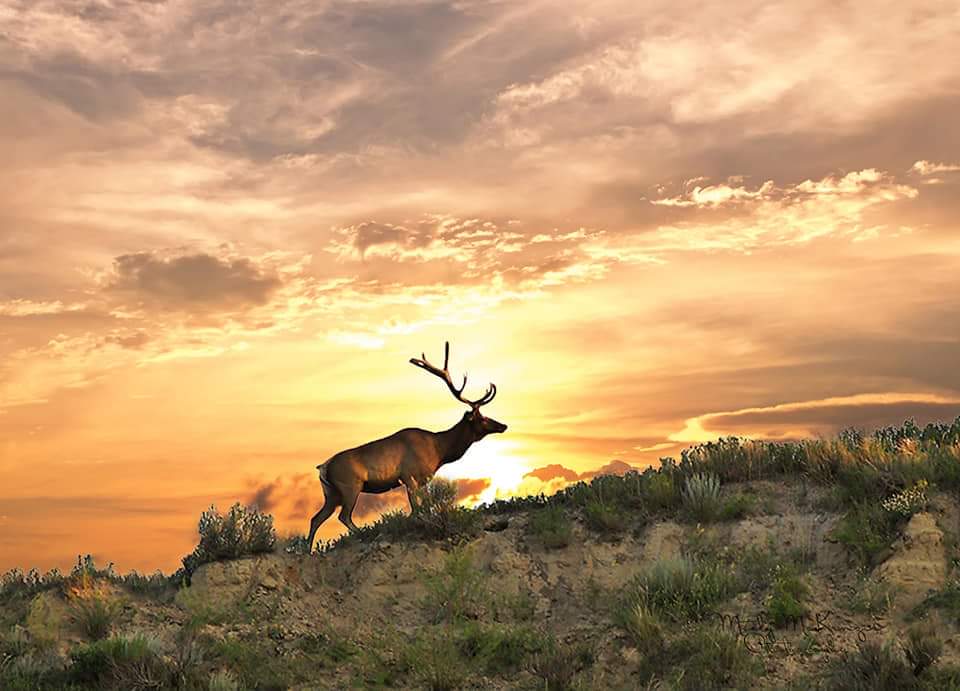
Idaho Fish and Game Commissioner Charged with Poaching Violations
Alleged Actions Raise Serious Concerns About Ethics and Accountability in Wildlife Governance
Boise, ID—An Idaho Fish and Game commissioner has been charged with multiple misdemeanor wildlife violations, including unlawful killing of elk, hunting without a valid tag, trespassing, and shooting from a motorized vehicle, according to court records. The commissioner, who helps oversee hunting regulations and wildlife policy in the state, has pleaded not guilty and the case is ongoing.
The charges stem from a December 2025 incident in which two bull elk were allegedly killed illegally, including one on private property without permission.
In response, Michelle Lute, PhD, executive director at Wildlife for All issued the following statement:
“This situation is deeply troubling. Wildlife commissioners are entrusted with stewarding public resources and setting the ethical tone for hunting and wildlife management. Their role requires modeling the highest standards of legal and ethical behavior. These allegations represent a profound breach of that responsibility.
“The alleged actions of this commissioner are not an isolated incident, and taken with other incidents we have tracked, raise serious questions about who is selected to lead our wildlife agencies and what standards they are held to. When individuals in positions of power are implicated in the very violations they are meant to regulate, it erodes public trust and undermines the legitimacy of governance systems.
“Most hunters follow the law and care deeply about wildlife. Ethical hunting—done for legitimate purposes such as feeding oneself and one’s family—requires respect for animals, landowners, and regulations that protect everyone. Alleged actions like these fall far outside those standards and endanger both public safety directly and the public’s trust in governing bodies meant to set and enforce the rule of law.
“We need stronger accountability, transparency, and reform in how wildlife commissioners are appointed and overseen. Commissioners vetted and appointed for their conservation expertise and values would promote the highest standards of conservation ethics, not flagrantly erode the bedrock of our institutions by acting as if they are above the law. Wildlife belongs to all of us, and the public deserves decision-makers who reflect that responsibility.”
###
About Wildlife for All
Wildlife for All is a national organization dedicated to reforming wildlife management to be more democratic, just, compassionate and focused on protecting wild species and ecosystems. Through research, advocacy, and education, we aim to protect wildlife and ensure that policies reflect the values of all Americans.
Mount Pigsah Coyote Killing Highlights Need for Coexistence Policies
Last week, a coyote was shot in one of Oregon’s most visited public landscapes.
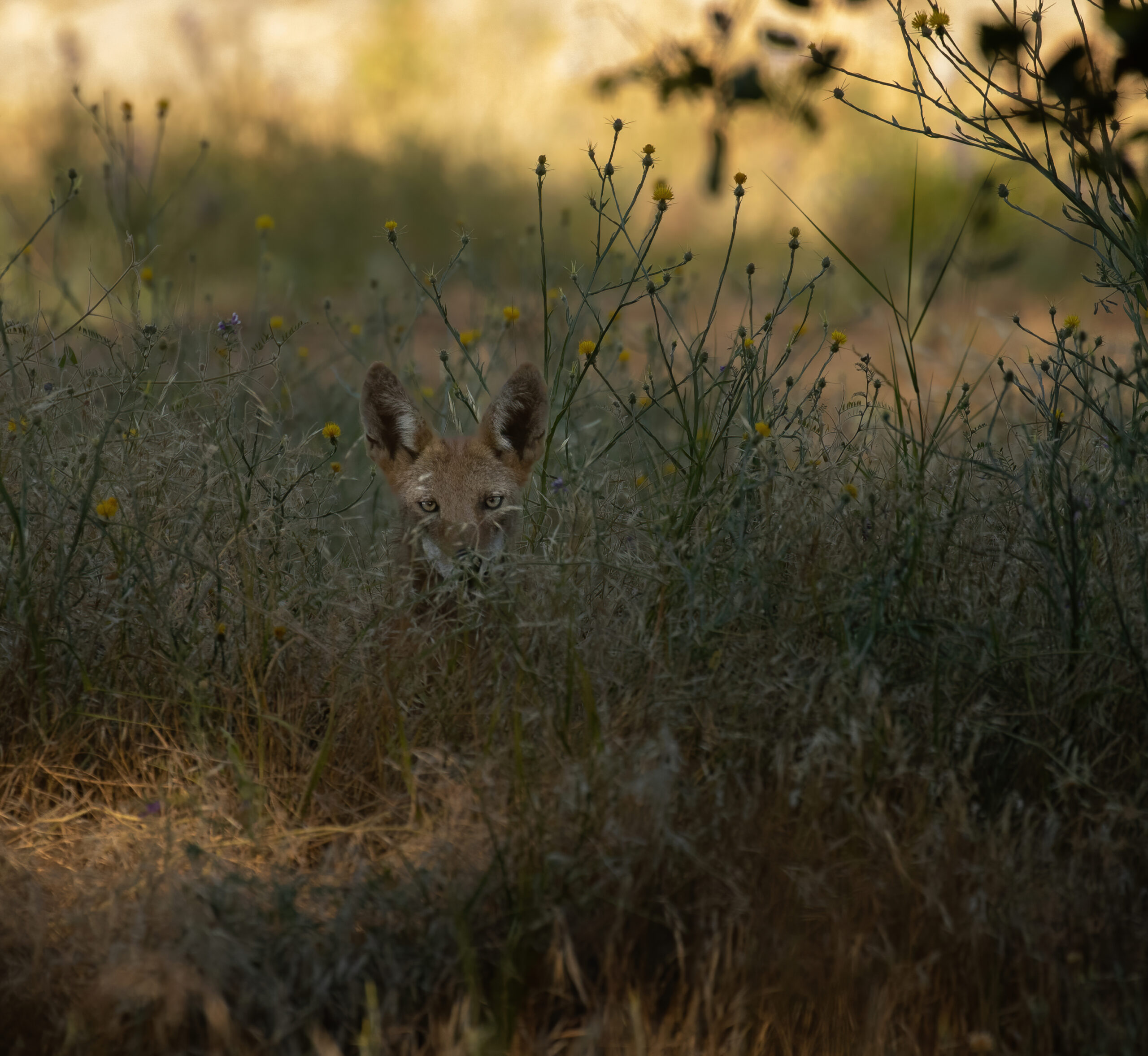
Howard Buford Recreation Area, known locally as Mount Pisgah, is a 2,000+ acre park outside Eugene that sees hundreds of thousands of visitors each year and includes active coyote denning habitat.
This is a shared landscape by design, which *should* make coexistence and prevention the core responsibility of wildlife management.
In this case, a Mount Pigsah coyote became habituated to people, likely due to food conditioning and constant human presence in a known denning area. These are well-established, preventable drivers of conflict, and they don’t emerge overnight. They develop when agencies fail to manage human behavior and habitat pressures early and consistently. 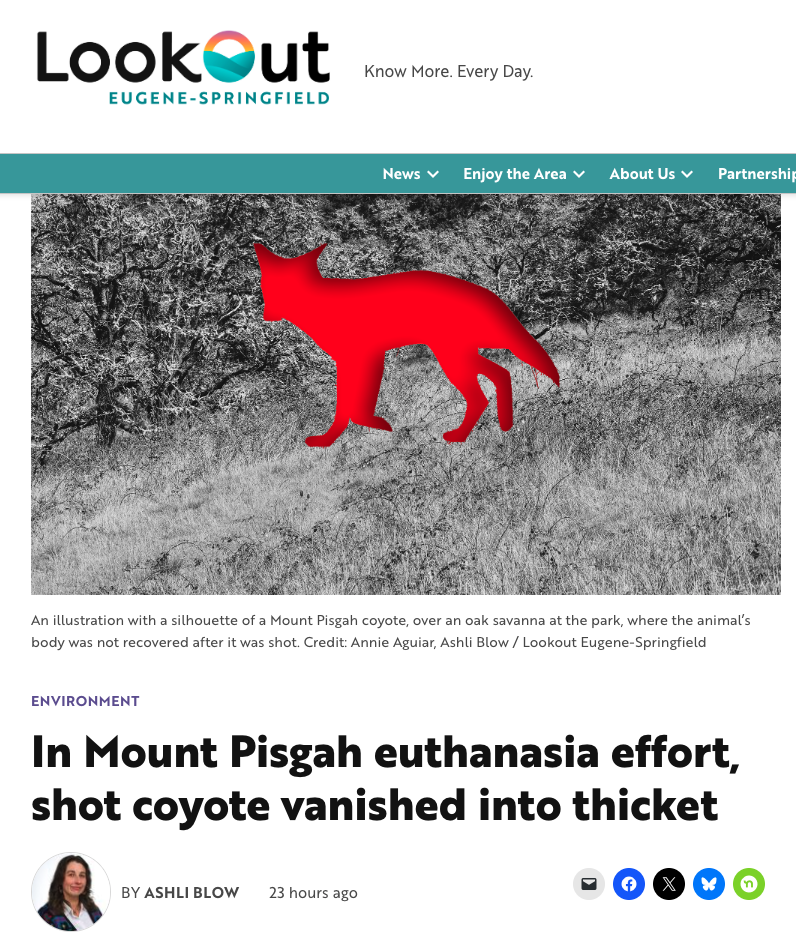
Instead of early intervention, the situation escalated to lethal control. A contractor shot the animal with a rifle; it fled into dense vegetation and was not recovered. Officials have described the outcome as humane.
That framing should concern anyone who expects wildlife management to be grounded in science and accountability.
This is what a reactive system looks like: conflict is allowed to develop, prevention is underused, and the response comes only at the point of crisis. At that stage, options are limited, outcomes are uncertain, and the costs are borne entirely by the animal.
In this case, the available information suggests those earlier steps were either insufficient or came too late to prevent escalation for this coyote.
More importantly, it reflects a deeper institutional pattern. Wildlife agencies routinely default to removing animals rather than addressing the human behaviors and landscape conditions that create conflict in the first place. That approach is not only less effective, it undermines public trust and fails to align with what the science actually supports.
In interviews following the shooting of this Mount Pigsah coyote, Wildlife for All Executive Director Michelle Lute emphasized that situations like this are preventable and pointed to well-established coexistence strategies that reduce risk before it escalates.
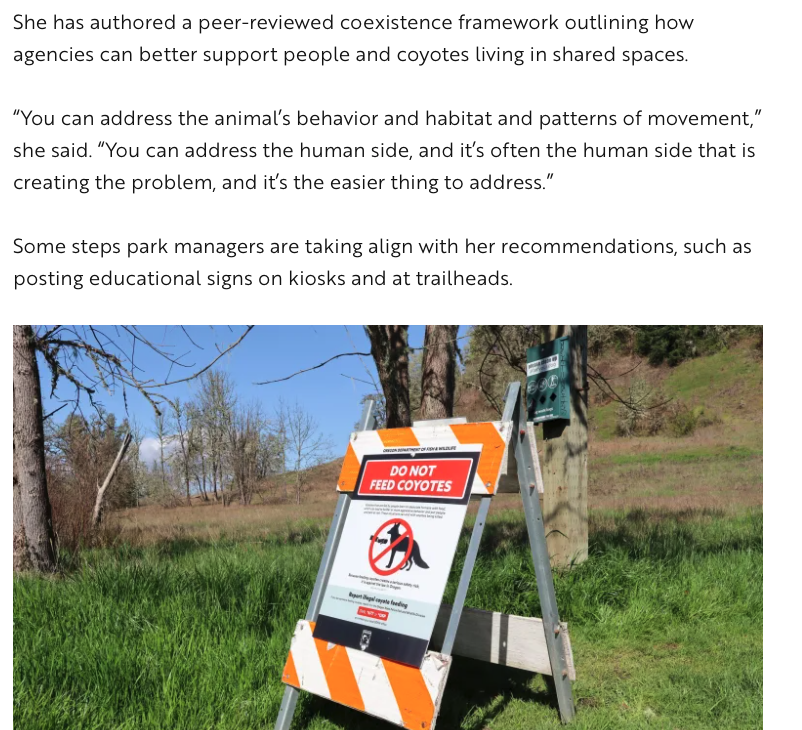 Coexistence is not abstract. It requires managing attractants, enforcing clear public guidance, protecting sensitive habitat during denning season, and planning for wildlife presence in heavily used areas. None of that is new, and none of it is optional in places like Mount Pisgah.
Wildlife conflict prevention requires investment, planning, and accountability. Killing an animal requires none of those things, which is why it so often becomes the default “fix.”
It also reinforces a cycle where agencies invest more in response than prevention, despite decades of research showing that coexistence strategies are more effective, more humane, and more aligned with public expectations.
Time and again, agencies respond at the point of crisis rather than investing in the conditions that prevent conflict in the first place. The science is clear that human behavior is one of the primary drivers of wildlife conflict … and one of the most solvable.
Lethal control should be rare and truly a last resort. When it becomes the point at which agencies finally act, it signals a system that is out of alignment with both science and public values.
This isn’t about a single incident. It’s about whether wildlife governance is structured to prevent harm, or simply respond to it after the fact.
Wildlife governance must evolve toward systems that prioritize prevention, accountability, and coexistence. This is exactly why Wildlife for All is working to transform state wildlife governance at its core. Incidents like this are not isolated; they are the predictable result of systems that prioritize reaction over prevention and narrow user groups over the broader public trust.
Real change means restructuring how agencies are funded, how decisions are made, and who those decisions serve, so that coexistence, science, and democratic values guide management from the start.
Our goal isn’t just resolving conflict after it happens; it’s building a world where conflict happens less in the first place because coexistence is the norm.
Idaho’s killing of three Panhandle wolves is a symptom of a systemic problem
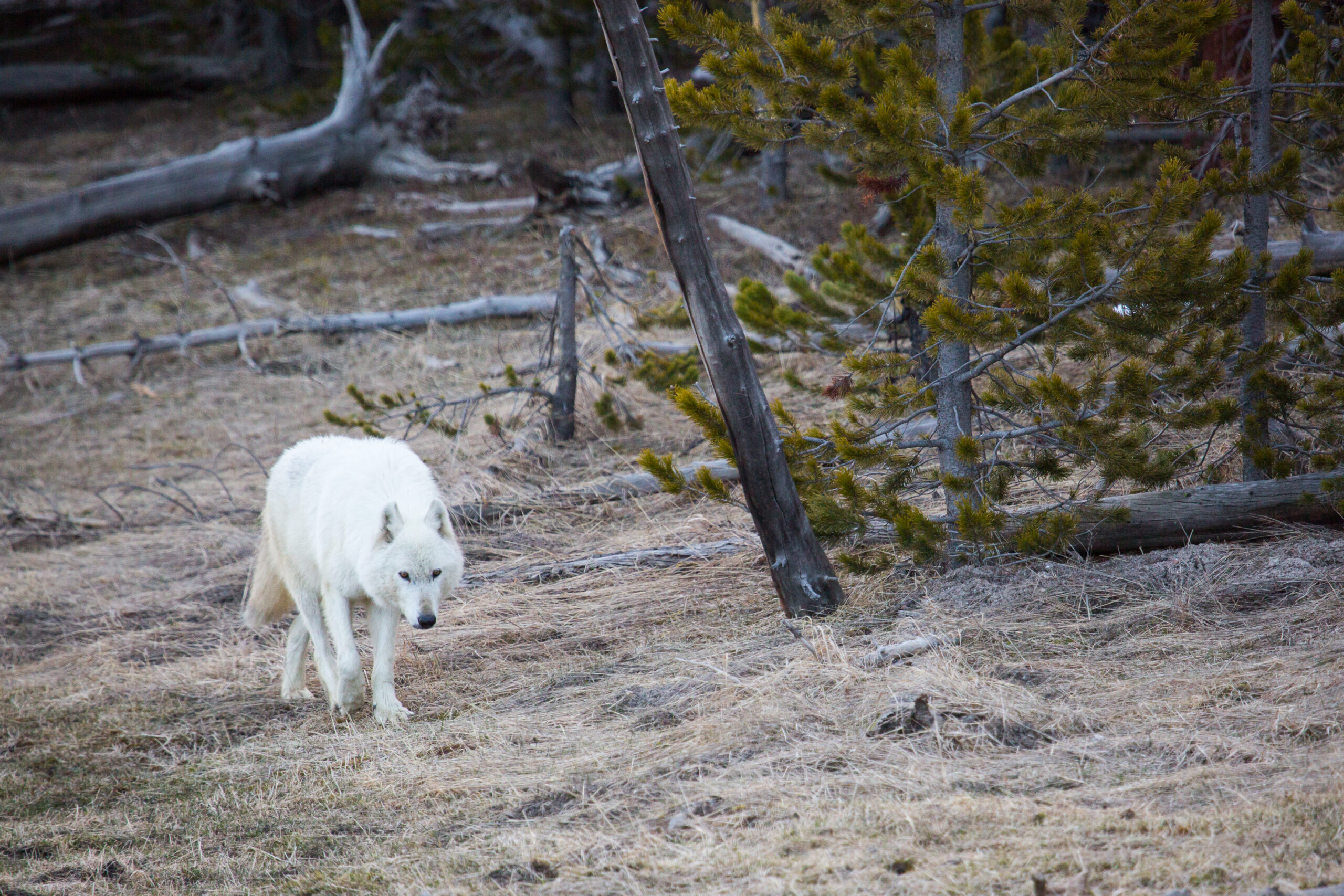
NPS photo
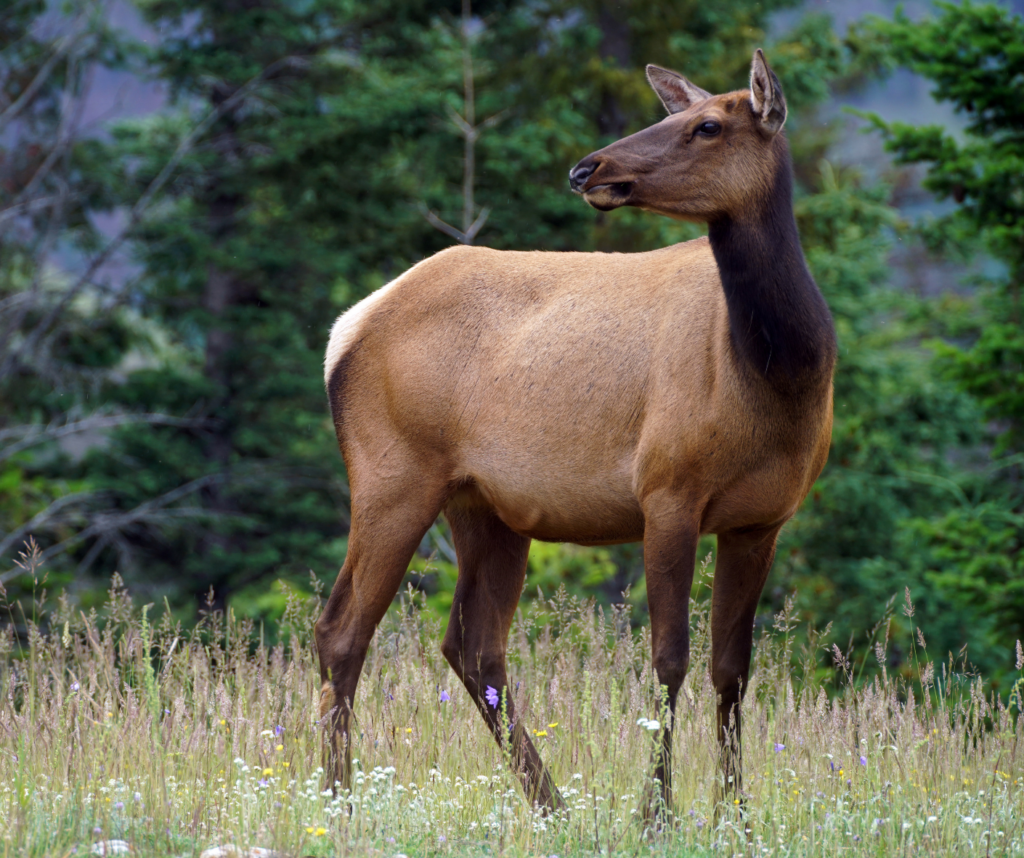
In February 2026, the Idaho Department of Fish and Game killed three wolves in the Panhandle region near Sandpoint, blaming them for an “underperforming” elk population. But anyone looking at the full picture sees that this response is an example of scapegoating.
Why wolves took the blame for elk declines
State officials point to fewer elk harvests and low calf ratios, and then they jump to a familiar conclusion: wolves are the problem. IDFG’s preferred wolf “management” methods are hunting and trapping, with additional lethal “control actions” in specific areas whenever elk herds are declining below management objectives. Local reporting, however, has raised questions about whether the records back the cited scale of wolf predation.
At the same time, other underlying factors that may be impacting elk herds go unaddressed. Within the same region, chronic wasting disease in both Idaho and Montana is spreading across nearby areas bounding this elk management unit. Logging and development has heavily altered existing elk habitat – fragmenting and degrading the forest cover elk rely on for shelter. Additionally, poaching is a documented problem, removing elk outside of “management”, and the agency itself admits gaps in data around alleged predation.
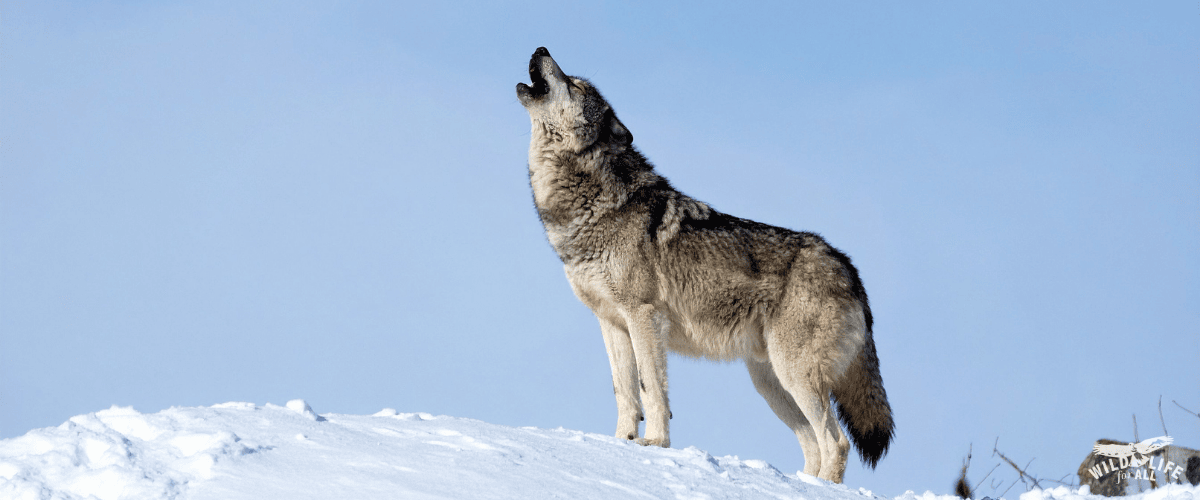
Wolves and other apex predators are crucial for maintaining environmental balance. Due to the risks inherent in chasing and killing large prey, wolves generally select elk based on physical condition, favoring not just calves, but also old, sick, wounded, or emaciated adults. Wolf-killed elk frequently have soft, gelatinous bone marrow – a sign this elk was metabolizing the last remaining fat reserves at the time of death. Weather and climate conditions also strongly influence elk vulnerability. In 2017, IDFG’s research in the Panhandle Region showed winter severity strongly influenced elk calf survival – with starvation, disease, and heavy parasite loads accounting for the difference during harsher, colder winters. In an environment with both mountain lions and wolves present, elk calves had very high survival rates during two mild winters. Ecosystems are too complex and interconnected to reduce to a simple predator-prey equation.
IDFG saw an “underperforming” elk herd and blamed wolves. This isn’t “science-based management,” it’s a pattern. This issue also runs deeper than Idaho – it’s a systemic problem with wildlife governance. Across the United States, state wildlife agencies tend to prioritize a small number of game species that generate hunting and angling license revenue. This same system that favors deer, elk, and pheasants also disfavors and devalues wolves, coyotes, bobcats, and other native carnivores on all levels.
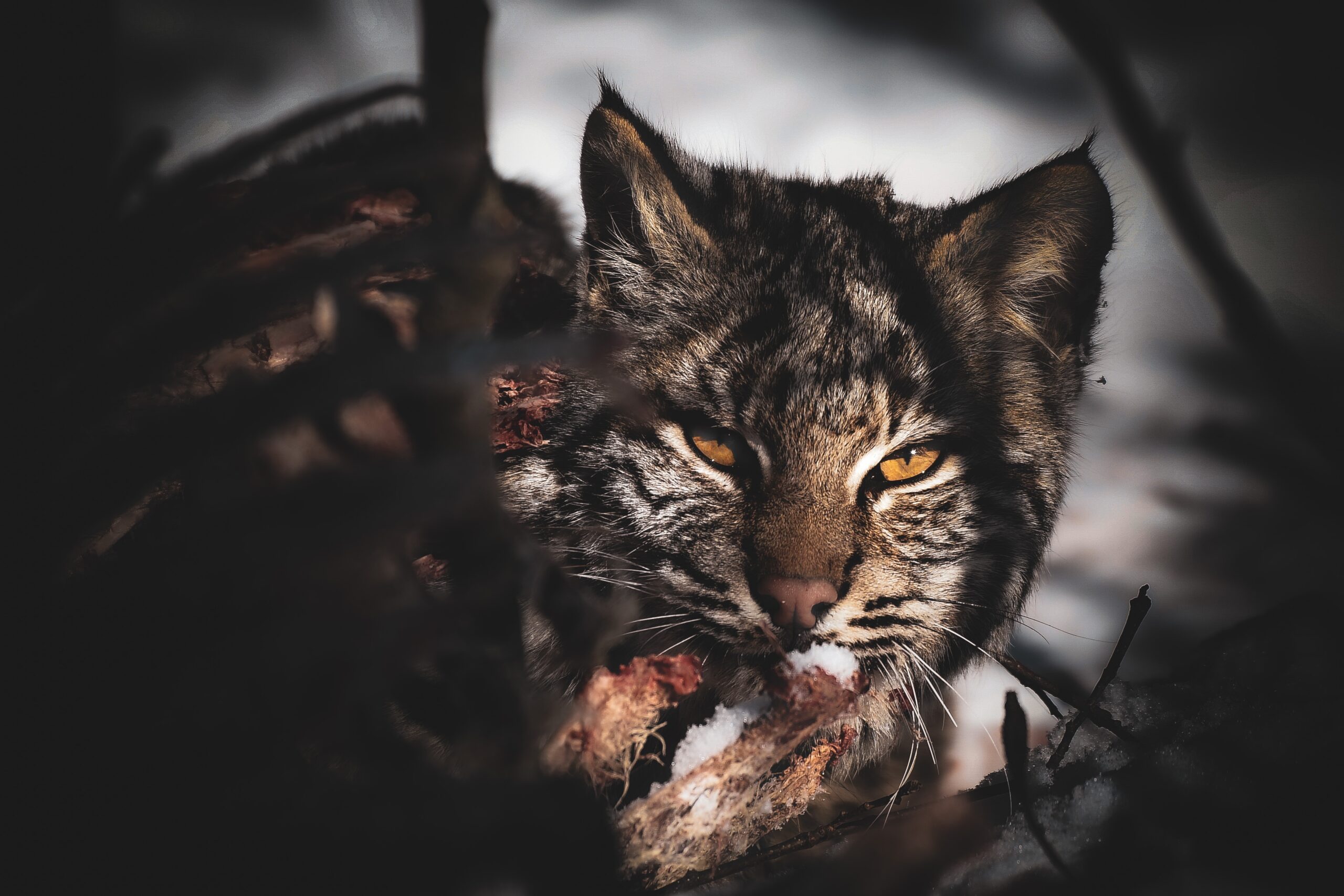
Native carnivores are vital to ecosystem health and intrinsically valuable in their own right. Despite broad public support for coexistence and growing evidence of their ecological importance, agencies frequently “manage” predators with fewer safeguards, weaker science standards, and more political pressure in comparison to other wildlife species. When disease, habitat loss, and human pressure stresses ecosystem health, state wildlife agencies default to the most visible scapegoat: wild predators. IDFG’s response to this declining elk herd is to directly kill more wolves and offer hunters more opportunities to kill black bears, mountain lions and wolves, issuing more tags and longer seasons – all framed as “wildlife management.”
Rewilding doesn’t mean zero management – it’s a different value system
State wildlife agencies’ practices aren’t value-neutral. The current wildlife governance system is built on two assumptions: nature needs constant intervention to function, and wildlife exists primarily for human purposes. This means many “nongame” wildlife species facing habitat loss, pollution, and other threats – think insect pollinators, bats, reptiles, amphibians, and songbirds – don’t receive adequate funding or resources. The growing number of SGCN (Species of Greatest Conservation Need) indicates that this system is inadequate to address growing biodiversity threats.
It’s common to present “rewilding vs. control” as a dichotomy – but framing it as a battle over whether humans should “manage” wildlife at all is misleading. Rewilding is not the absence of management. It’s a different value system about how we relate to the natural world. Rewilding challenges both the ideas that wildlife exists for human use and that functional ecosystems require constant human intervention. It’s grounded in science. Healthy ecosystems depend on relationships—predation, migration, competition—that make them more stable and resilient over time. Rather than a system that prioritizes elk over wolves or wild turkeys over bobcats, rewilding respects and values the ecological role and worth of all native wildlife on the landscape. This meaning valuing bobcats and beetles, turkeys and terrapins, wolves and warblers, elk and egrets.
Rewilding is also a moral position with a different set of values. For decades, wildlife governance in the U.S. has centered control over wildlife:
- setting quotas and seasons
- maximizing certain species we see economic value in
- suppressing predators
- managing ecosystems primarily for human use
Rewilding starts from a different premise, centering living alongside wildlife:
- Wildlife has value beyond human utility
- Wild animals are not just populations: they are living beings with their own lives, relationships, and roles, worthy of our understanding and respect.
- Ecosystems are not systems to control, but communities we are a part of.
Without that shift in values, wildlife “management” defaults back to what is most convenient, profitable, or familiar, regardless of ecological cost. Habitat degradation rarely gets an agency press release – because these narratives don’t fit into a state wildlife agency who wants to boost hunting quotas, and systemic change for true ecosystem health doesn’t generate license revenue. So native predators take the blame and the system reinforces it: lethal control, more tags, longer seasons, more killing framed as “management.” Meanwhile, the bigger, more complex problems go unaddressed. This is what broken state wildlife governance looks like: complex ecological problems reduced to simple narratives, public trust resources managed for perception, not reality, and decisions made before the full science is on the table. Wolves didn’t create these conditions: they’re living in them, and so are the elk.
So why does the status quo often dismiss rewilding? It challenges the foundation of the system by questioning whether constant control is necessary, if funding models tied to use and extraction are sufficient, and by demanding that wildlife governance reflect both science and values, not just tradition. Rewilding is not a fringe idea. It’s a response to ecological reality, and a call to realign our systems with it. Because our goal isn’t control; it’s a living world that can sustain itself and a society willing to respect its place within it.
Take action for wolves and elk
Rewilding asks something more of us: to shift from control to coexistence, from short-term outputs to long-term ecosystem health, and from managing wildlife as resources to respecting them as part of a living system. Join us in advancing wildlife governance that reflects science, ethics, and the full public trust—for all life.
Demand transparency from the Idaho Department of Fish and Game. Ask what evidence is driving these decisions, and what’s being ignored. Contact the commission at idfg.idaho.gov/about/commissioners (emails are here). If we keep managing symptoms instead of causes, wildlife and ecosystems will keep paying the price.
Lobo Week 2026 – Thinking Like a Mountain
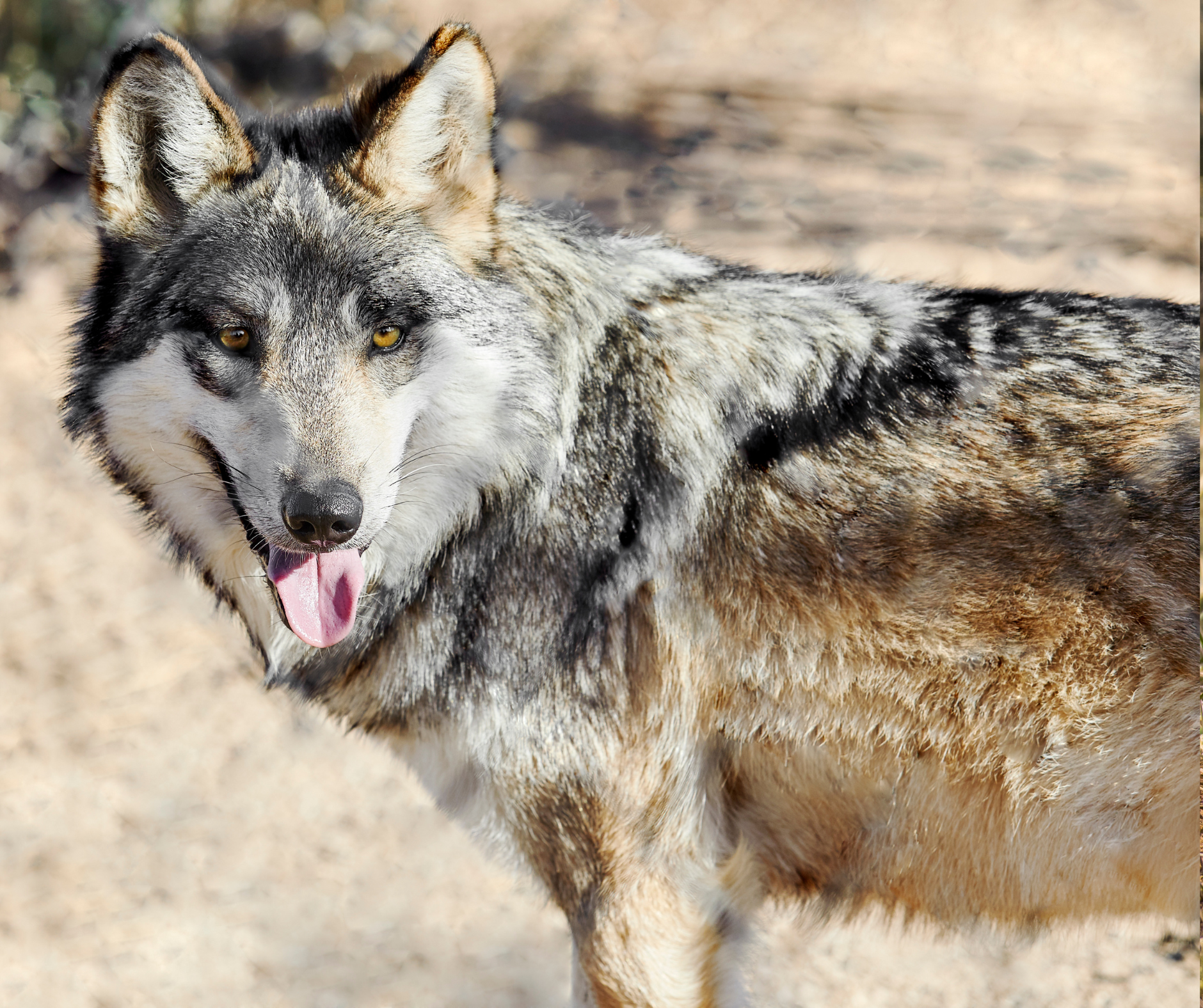
Lobo Week 2026 (March 22-29) raises awareness and advocacy for the endangered Mexican gray wolf, also known as the lobo. The week commemorates the release of 11 captive-raised lobos into the wild on March 29, 1998. Lobos avoided extinction by the narrowest of margins – their wild existence alone is remarkable.
This year, the U.S. Mexican gray wolf population grew from 286 to 319 wolves across Arizona and New Mexico. That’s good news – but lobos still face ongoing conservation challenges. Factors like low genetic diversity, illegal killing, political interference, and arbitrary boundaries continue to limit recovery.
The Making of an Endangered Species: A Historical Perspective
Dominant narratives of the North American Model champion sportsmen and the funding model they created as the world’s most successful conservation system and the 20th century’s greatest environmental achievement. According to this line of thinking, sport hunters were the first to sound the alarm about declining wildlife populations, saved wildlife from extinction, and continue to contribute more to conservation than anyone else. However, this is an incomplete and oversimplified framing of history. While recreational hunters and the game laws they championed were pivotal in preventing extinctions of ungulates like bison, pronghorn, and bighorn sheep, their focus was on game species, not ecological systems.
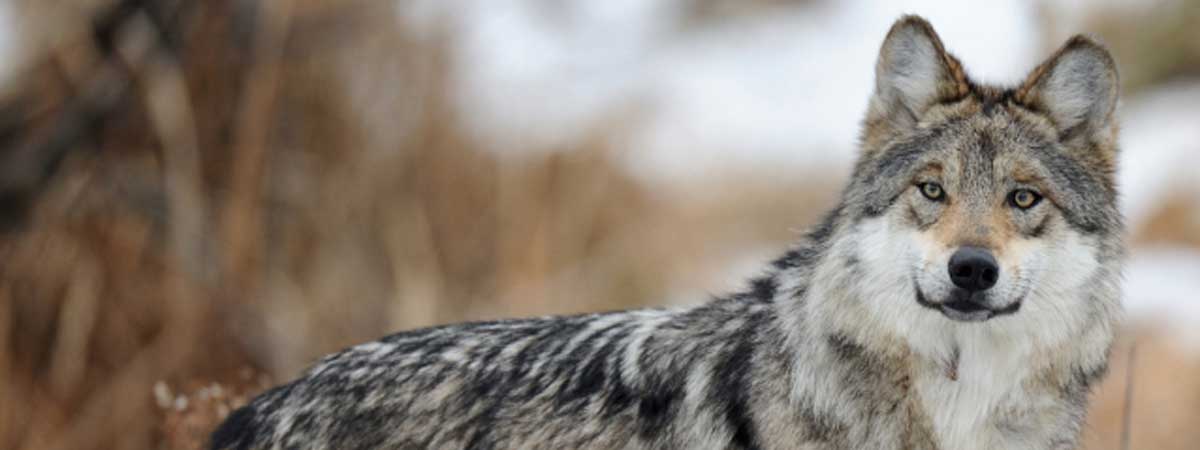
Written before the 1998 reintroduction, David E. Brown’s The Wolf In the Southwest: The Making of an Endangered Species is an indictment of a North American conservation failure: the refusal to value or protect Mexican gray wolves until the species was on the brink of extinction. Brown’s account details the history of the lobo’s deliberate extirpation from the Southwest up until the start of the captive breeding program.
In the early 20th century, as hunters began organizing for game laws and refuges, J. Stokely Ligon and Aldo Leopold ardently called for sportsmen to support the Bureau of Biological Survey’s federal predator extermination program. In the July 1919 official bulletin of the New Mexico Game Protective Association, Leopold insisted that hunters support the complete annihilation of every last mountain lion and wolf:
While Ligon never changed his views on wolves, Leopold famously did. His essay “Thinking Like a Mountain” highlighted the destructive impacts of eliminating predators and how wrong the prevailing view that “no wolves would mean hunter’s paradise” really was. As he eloquently stated, “only the mountain has lived long enough to listen objectively to the howl of a wolf.”

Quote from “Thinking Like a Mountain” | Image credit: National Wolfwatcher Coalition
While Leopold’s later writings became highly influential during the 1970s environmental movement, A Sand County Almanac (which includes “Thinking Like a Mountain”) received little attention when published in 1949. The value of native predators to ecosystems was considered a radical and unpopular idea at the time. As The Wolf In the Southwest emphasized,
“Sportsmen and their associations, state game and fish departments, the U.S. Forest Service, and the U.S. Biological Survey all abetted [predator eradication]; almost none among them resisted it. Nor were naturalists and protectionists a factor in hindering the wolf’s demise. No voice was raised for a rational and effective program to maintain a small but representative wolf population while one still existed….Unlike the bear, which had sportsmen allies (even the grizzly received some protection, although too little too late), wolves and lions held the animosity of ranchers and sportsmen.”
On behalf of the livestock industry, a 20th-century federal predator eradication campaign wiped out lobos across the U.S. – and then continued to kill any wolf that dispersed northward into Arizona or New Mexico. In 1942, a mated wolf pair discovered a den and raised pups on the western slope of Fort Huachuca, a military base in southern Arizona, where there were abundant white-tailed deer but no cattle nearby. The federal program insisted on killing these wolves anyway – perhaps the last lobos born in the Southwest U.S. before the captive recovery program – citing the “dangers” of allowing any wolves to re-establish and “get out of hand”.
By 1970, intense persecution eliminated lobos from most of their former range, but wolf bounties and federal predator-killing efforts remained in place. Even after the ESA listed the Mexican gray wolf as endangered, a trapper killed a lone wolf in Arizona’s Aravaipa Canyon in 1976 for a stockman’s $500 bounty. This wolf was likely the last one in Arizona before the 1998 reintroduction.
In 1977, the USFWS commissioned Roy McBride to estimate and document any remaining Mexican gray wolf populations. McBride found only a few scattered holdouts in remote, mountainous regions in Durango and Chihuahua. Because the terrain was largely inaccessible by vehicle and wolves were constantly on the move in these areas, a few individuals managed to survive. Upon this discovery, a captive breeding program began. Seven lobos captured in their last remaining stronghold became the founders of today’s wild population.

Cindy, a female wolf at the ABQ BioPark, was sent to Sevilleta National Wildlife Refuge for pre-release into the wild in 2021. Photo: ABQ BioPark.
Low Genetic Diversity and Poaching Undermine Recovery
Due to this population bottleneck, low genetic diversity poses one of the most immediate threats to lobos today. Over the last four years, though the wild Mexican gray wolf population increased, genetic diversity has decreased. Overall, captive wolves in the recovery program are 37% more genetically diverse than wild wolves. Cross-fostering efforts that place captive-born pups in wild wolf dens have seen only limited success. Releasing full family groups into the wild is the most effective way to increase the genetic diversity of a still-recovering population.
The USFWS has also continued to permit killing or removing genetically valuable wild wolves on behalf of the livestock industry. In some cases, targeted kill orders mistakenly kill the “wrong” wolf. The program also captures and relocates wolves that travel north of Interstate 40 or naturally disperse south from Colorado. These actions cost money and resources and undermine Mexican gray wolf conservation efforts.
Illegal killing also threatens wolf recovery. While state wildlife agencies take poaching incidents seriously (particularly of game species like elk, deer, and bighorn sheep), wildlife crime remains a major nationwide problem. For Mexican gray wolves in particular, federal agencies and biologists may be underestimating the scope of poaching mortality.
Mexican gray wolves are federally endangered and a state-listed Species of Greatest Conservation Need in Arizona and New Mexico. Many collared lobos, including sisters F836 and F838, are found illegally shot or simply disappear. Between 2017 and 2022, 61 lobos died from suspected poaching, but just two people were federally prosecuted, and three paid a fine.
Why Coyotes Also Matter
One contributing factor is a lack of protection or respect for coyotes, which resemble Mexican gray wolves. Both Arizona and New Mexico classify coyotes as predators and permit unlimited year-round coyote hunting, including within the Mexican wolf recovery zone. Few regulations govern hunting this smaller canid, except for 2019 statewide bans on coyote-killing contests. Additionally, the neighboring state of Utah still incentivizes killing coyotes through an agency-run bounty program. This similarity of appearance provides a dangerous loophole for illegal killing.
Conservation groups have attempted to address this issue in the past by requesting protections for coyotes in the recovery area. Coyotes and Mexican gray wolves both play critical roles in Southwest ecosystems. Both have faced intense persecution, and both are intrinsically valuable. While the USFWS claims that protecting coyotes would be an increased burden on law enforcement, and the two species’ resemblance doesn’t warrant “similarity of appearance” protections, several wolf mortalities stem from hunters apparently mistaking them for coyotes. While hunter education efforts are important, they don’t entirely solve the problem.
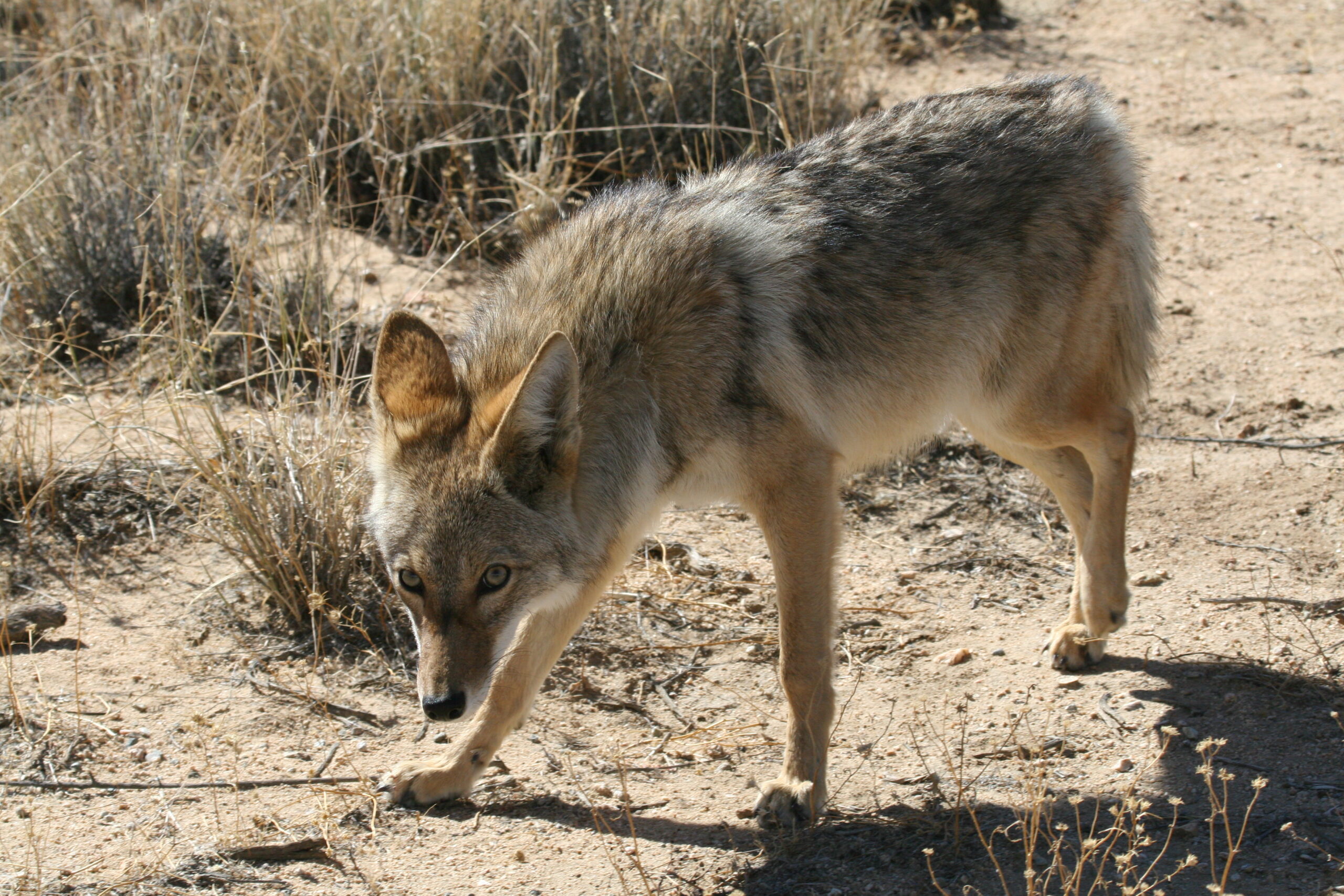
A coyote in the Southwestern U.S.
“Native wild canids, whether they are Mexican gray wolves or coyotes, are essential to ecosystems and neither need lethal management. Protecting both species makes pragmatic ecological and ethical sense.” – Michelle Lute, Wildlife For All Executive Director
The idea of protecting coyotes to reduce wolf poaching already has precedent. In 2004, Ontario created a buffer around Algonquin Provincial Park (the primary range of threatened Algonquin wolves) where both wolf and coyote hunting/trapping is prohibited. Outside this protected zone, Algonquin wolves, including individuals attempting to disperse outside the park, have low survival rates due to vehicle strikes and hunting. Prohibitions on hunting and trapping rare Algonquin wolves are ineffective unless these regulations also include the same protections for coyotes and wolf-coyote hybrids.
The Importance of Systemic Reform
State wildlife agencies play an important role in the recovery of threatened and endangered wildlife. Historically, though, Mexican gray wolves have declined when states led the recovery programs. Between 2003 and 2009, the wild population dropped from 55 to 42 under AZGFD until the USFWS resumed control. Agencies have also taken actions that actively undermined their conservation. In 2015 and 2016, state wildlife commissions in New Mexico and Arizona opposed and blocked the release of adult wolves into the wild. This limits new wolf releases to the cross-fostering method, which has had far lower success rates.
In the 2017 draft recovery plan, state agencies endorsed a hard population cap (200-300 wolves, later 325 wolves) in Arizona and New Mexico. However, the best available science indicates a stable long-term population requires at least 750 wolves spread across three distinct core populations of at least 200 wolves. The AZGFD also called for killing more endangered lobos due to predation on elk and unspecified “conflicts with human activities”. (Arizona’s elk herds are robust and remain stable around 35,000-45,000 animals. In contrast, the Mexican Wolf Interagency Field Team documented just 63 wolves in Arizona and 114 overall in 2017.)
Mexican gray wolves represent just one example of why bipartisan systemic reforms like New Mexico’s matter. Earlier this year, Senate Bill 104 strengthened the integrity and independence of New Mexico’s state wildlife commission. This legislation builds on previous reforms that, among other changes, establish a nonpartisan commission emphasizing scientific expertise and including tribal and conservation perspectives alongside ranching and hunting interests. Ensuring that decision-making is science-based and represents the public is pivotal for the future of lobos and all wildlife. In 2025, New Mexico modernized its mission to emphasize biodiversity protection for all wildlife, not just game species. The state also secured $10.5 million in funding for Species of Greatest Conservation Need (a large group that includes lobos). These systemic changes may be critical safeguards for New Mexico’s lobos if they lose federal protection in the future.
Overall, Americans strongly support endangered species recovery and continued ESA protections for gray wolves. The ongoing political and bureaucratic obstacles this endangered wolf faces represent a systemic failure of wildlife management agencies to value and protect native carnivores. To stymie the recovery of an endangered species is a betrayal of public trust.
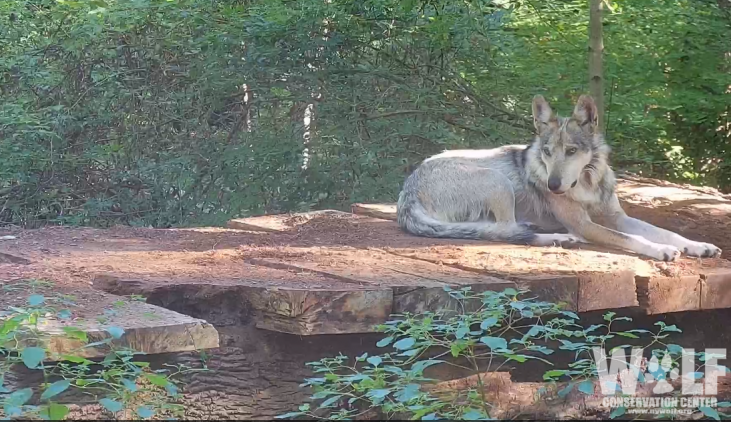
Webcam capture of Mexican gray wolf Ripley (M1925) at the Wolf Conservation Center
Lobo Week 2026
This year’s Lobo Week commemorates the 28th anniversary of the Mexican gray wolf’s return to the wild. This week is more than a celebration – it’s a call to action. Lobos need continued advocacy to secure their future. That means advocating for real recovery efforts for Mexican gray wolves, including releasing bonded pairs, allowing wolves to roam beyond I-40, holding poachers and Wildlife Services accountable, and protecting the Endangered Species Act.
For more ways to take action, be sure to follow Lobos of the Southwest and use their action toolkits to add your voice to current campaigns.
This article was contributed by Peggy Clark, a Geospatial Science/Ecology student at Radford University in Radford, Virginia. She appreciates her community and the wildlife who share it, and has sighted a coyote passing through her neighborhood.
State agencies’ dependence on fish stocking reveals need for updated funding structure
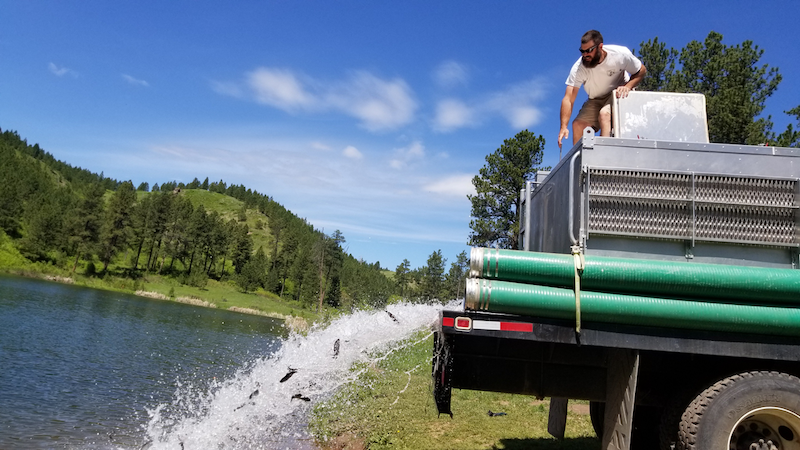
Rainbow trout stocking
A recent article from Vox, featuring Wildlife For All’s Michelle Lute and Mandy Culbertson, discusses fish stocking. State wildlife agencies regularly release brown trout, rainbow trout, largemouth bass, and other species into waterways. These fish are nonnative to local ecosystems. At the same time, agencies warn us about the dangers of invasive species.
What’s wild is that’s not a contradiction; it’s a system doing exactly what it was designed to do. Nonnative fish stocking persists largely due to funding – state wildlife departments depend heavily on revenue streams from fishing licenses. That creates a built-in incentive to keep stocking fish people want to catch, regardless of ecological costs. Due to structural dependence on sportfish species, agencies also use Dingell-Johnson grant funding for this purpose.
Some fish releases have had profound environmental consequences. From 1974 to 1985, the Virginia Department of Game and Inland Fisheries (now the Department of Wildlife Resources) introduced blue catfish into the Chesapeake Bay for sport fishing opportunities. Today, blue catfish are considered a highly invasive species in the Bay, out-competing many native fish and disrupting the ecosystem. Anglers prize blue catfish, making this fish an economic incentive for commercial fisheries. However, their proliferation also harms native species like striped bass, menhaden, shad, alewive, river herring, and blue crabs – and can disrupt critical habitat conservation work.
The science is clear: stocked fish can displace native species, restructure food webs, harm amphibians and birds, and erode genetic integrity through hybridization. In some places, like alpine lakes, they’re added to waters that never had fish at all, fundamentally rewriting those ecosystems. This isn’t conservation: this is what captured wildlife governance looks like. Instead of fixing degraded habitats, warming waters, and collapsing ecosystems, the system patches over the damage with species that keep revenue flowing.
Instead of addressing the root causes of biodiversity decline—habitat loss, warming waters, degraded ecosystems—we manage around the damage. We replace what’s been lost with what’s profitable. It’s easier to stock fish than to restore ecosystems. It’s more profitable to maintain demand than to rebuild biodiversity. So that’s what the system delivers.
So what’s the solution? It isn’t tweaking around the edges; it’s changing the structure. State wildlife agencies are public institutions and they should serve the public trust, not a funding model tied to extraction and use. That means funding that reflects all wildlife views and outdoor users, decision-making grounded in science and values, and accountability to ecosystem health, not just license sales. Because right now, they’re not managing wildlife. They’re managing revenue streams, and ecosystems are paying the price.
Join us in pushing for state wildlife governance that works for biodiversity, democracy, and all life, not just the bottom line.

What urban coyotes teach us about justice-centered conservation
What can researching coyotes in human-altered landscapes teach us about equitable conservation and improving access to nature? Dr. Chris Schell at the University of California-Berkeley studies urban wildlife, with a particular focus on coyotes. His initial interest in coyotes stemmed from a 2007 news story about a wild coyote that wandered into a Quiznos in downtown Chicago, eventually falling asleep in the drink cooler.
In his research project ”Navigating the Matrix”, he’s found how the coyotes’ behavior changes in urban areas with decreased green space available. His findings revealed a broader pattern. Factors like fewer trees, higher temperatures, and reduced access to nature in some urban communities are legacies of housing inequalities and discrimination in these areas. One prominent example is the racism and classism of historical redlining policies in the 1930s. Redlining maps deemed African American communities to be a “high risk” for investors and blocked them from accessing home mortgages.

Dr. Chris Schell | Photo Credit: Ryan Moriarty
Closing the nature gap
Historical practices of spatial segregation and divestment continue to have lingering impacts today, long after the 1968 Fair Housing Act made housing discrimination illegal. In urban areas, the benefits of ecosystem services are unevenly distributed and more prevalent in high-income, wealthy neighborhoods. These include trees providing shade and reduced carbon emissions, or nesting owls that help control rodent populations. Low-income and formerly redlined communities generally experience less biodiversity and tree cover, greater carcinogenic exposure, more pollution, more concrete surfaces and heat islands, and increased oil and gas well proximity. As a result, people in these areas have less access to parks, green spaces, and wildlife.
In wildlife and environmental conservation, addressing the nature gap matters. Unequal access can perpetuate a lack of representation in conservation spaces. Current wildlife governance systems profoundly lack diversity, both demographically and ideologically. Hunters, commissioners, and agency staff tend to be older, white men, with a traditionalist view of wildlife. State wildlife agencies’ R3 programs also tokenize minorities and women in their marketing campaigns, without making outdoor access more affordable or safe for those groups.
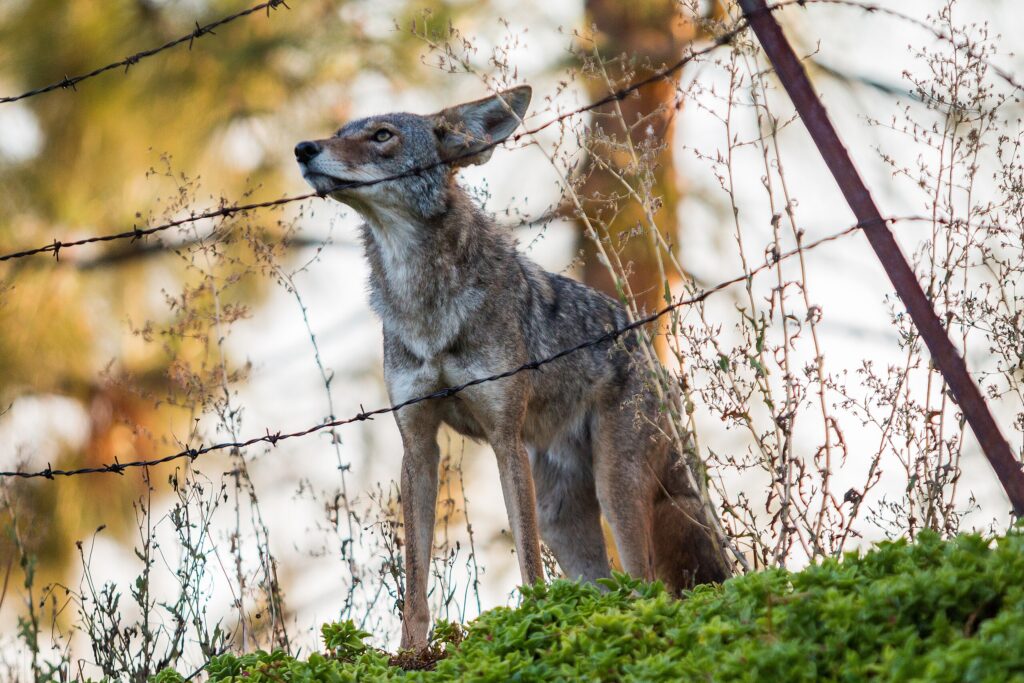
One reason Dr. Chris Schell is drawn to coyotes is the metaphor he sees between the African American experience and the resilience of coyotes, which he detailed in an episode of the Going Wild Podcast. Coyotes endure, despite all the challenges thrown at them. As he puts it:
“The amount of fear that we lump on coyotes is disproportionate to the amount of harm that they actually cause. Oftentimes folks will think of them as almost as big as wolves, right? But they’re probably about half that size. Coyotes are no bigger than a medium sized dog…You’re more likely to be attacked by a dog at any given point in time in your environment than you are to be attacked by a coyote but we don’t have nearly as much fear of domestic dogs as we do with coyotes and other carnivores.
The way in which folks talk about coyotes, they are oftentimes vilified as threats to human livelihood; as dangerous disease-ridden pests that need to be eradicated, euthanized, killed. And that’s exactly what the Black experience is, right? For the majority of Black America’s history, we’ve been vilified, taken advantage of, exploited, and Black bodies have been murdered. If I’m being honest with myself, a lot of us do the research that we do because we are on a journey of self-discovery. I am studying coyotes to learn more about the ways in which they persist, even though they’re being persecuted all of the time.”
The language used to discuss wildlife can reflect broader biases – such as comparing wolves or coyotes to gang members or vice versa. In 1989, the media used the terms “wilding” and “wolf pack” to describe the Central Park Five and the brutally violent crime they were wrongfully convicted of before their exoneration. These sensationalized depictions are harmful to both people and wildlife.
Urban Ecology and Environmental Justice
Urban Biodiversity and Equity: Justice-Centered Conservation in Cities, which Schell co-edited with fellow wildlife biologist Max Lambert, takes an integrative, interdisciplinary approach to urban ecology. In the first chapter, Schell and Lambert explain how cities can play a role in stemming the crisis of biodiversity loss – and how conservation can become more just. They identified the following challenges:
- Perceptions that urban residents are distanced/disconnected from the environment, wildlife, and conservation issues
- Environmental justice concerns are frequently linked to historical segregation and divestment policies, including redlining between 1933 and 1968. Impacted neighborhoods experience less biodiversity and reduced access to nature.
- Agencies and traditional conservation movements are often reluctant to incorporate antiracist and decolonized principles.
- The North American Model of Wildlife Conservation represents an inherently exploitative and exclusionary framework, which precludes most of the public from representation and the decision-making process.
- Conservation movements are often focused on remote nature and “untouched wilderness”. This mindset can also promote the erasure of Indigenous land stewardship practices. To solve the biodiversity crisis, de-centering myopic views of conservation is critical.
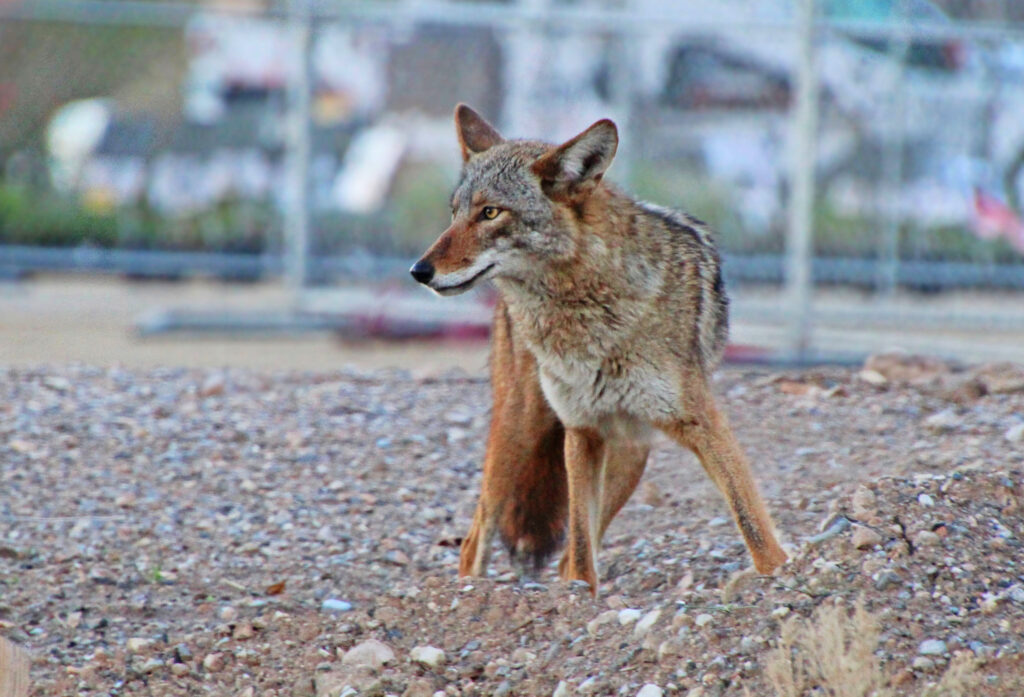
Ecological Benefits of Local Coyotes
The coyote is the United States’ most persecuted carnivore, in a country with a deep-rooted history of persecuting carnivores, and one of its most misunderstood species. It’s estimated that people kill at least half a million coyotes every year. Nevertheless, this canid has a knack for survival and endures as a resilient, successful predator throughout the continent.
Coyotes not only survived efforts to destroy them, but they also dramatically expanded their range eastward on their own paws. Natural range expansion does not make coyotes an “invasive species” – they are native to North America, and their expansion filled an ecological niche left vacant when eastern and red wolves were hunted to the edge of extinction. Along the Gulf Coast, eastern coyotes have high amounts of red wolf ancestry, exhibiting genetic and physical traits adapted to coastal wetland environments.
This resiliency and survival can be attributed, in part, to these clever canines’ impressive versatility. Coyotes can utilize a variety of food sources and inhabit a broad range of habitats, including urban areas. Today, coyotes reside within all U.S. states except Hawaii. (Delaware became the 49th state with coyotes in the 1990s). Across North America, there’s a good chance you already share the landscape with coyotes, whether you see them or not.
In urban and rural landscapes, coyotes can provide ecological benefits. By scavenging carcasses, they help accelerate nutrient cycling and clean up pathogens. In some environments, coyotes serve as apex predators, strengthening overall biodiversity. Coyotes limit the abundance of mesopredators (skunks, raccoons, and feral cats), who learn to avoid areas of high coyote activity. Though coyote sightings in residential spaces often evoke fears about health concerns, the actual risk of disease transmission from a coyote to humans or pets is low. Their presence alone does not equate a health risk, and it is uncommon for coyotes to contract rabies. Additionally, coyotes may help mitigate specific diseases by feeding on small rodents.
Cities Offer Plenty of Places for Coyotes to Hide
Other scientists have studied urban coyotes. Dr. Stanley Gehrt’s book Coyotes Among Us details the long-running Urban Coyote Research Project, which tagged and studied a total of 1433 different coyotes living in the Chicago metropolitan area between 2000 and 2022. Overall, study results indicate that coyotes get a bad rap that’s often undeserved. As the project’s website states, “a few individuals can sway people to believe that coyotes are bad, while the majority of animals go about their lives without ever being seen.”
The very first coyote captured and radio-collared (#1) was a young female in the suburb of Schaumburg. This female and her mate (#115, nicknamed Melonhead by researchers) both enjoyed long lifespans of at least eleven years. Together, the pair raised several litters in developed areas near the O’Hare International Airport or downtown Chicago. Coyotes are monogamous and maintain faithful, lifelong pair bonds. Despite living in proximity to people, these two coyotes were both street smart and skilled at staying out of trouble, going about their lives without conflict.
Urban settings offer numerous advantages for coyotes and present new challenges absent in rural environments. Despite the heightened danger of being struck by a vehicle (the number one threat to a coyote in Chicago), coyotes are versatile to the point that urban landscapes can actually be safer places for them to raise a family. Chicago’s coyotes, as individuals, experience overall higher annual survival rates and longer lifespans compared to those living in surrounding rural Illinois. Most states, including Illinois, permit virtually unrestricted, year-round coyote hunting. In contrast to the stable family structure exemplified by #1 and #115, this rural coyote population is characterized by constant turnover, migration, and the increased breeding and dispersal of yearling and subordinate coyotes.
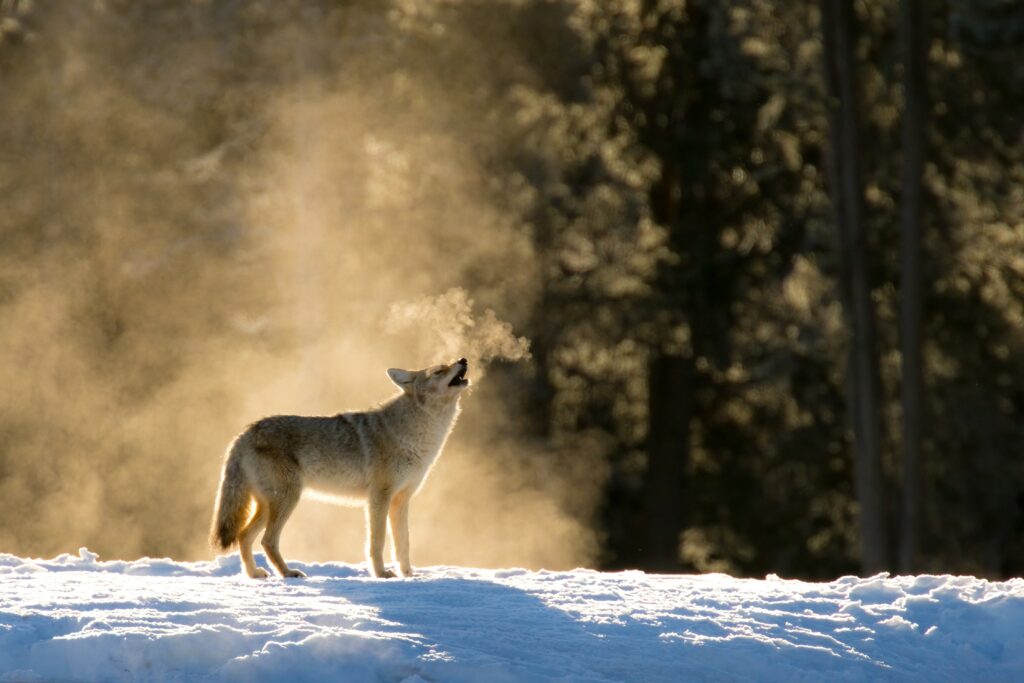
Coyotes are highly adaptable animals, so it’s not surprising that their survival strategies change in densely populated settings. While urban coyotes tend to be more bold and exploratory, most individuals prefer to avoid humans, shifting their activity to times of day when they are less likely to encounter people. They often utilize green spaces with relatively low human density, such as urban forested parks, cemeteries, railroads, and golf courses. In Chicago, sources of food (varying from rats to rotting produce) are more plentiful and consistently present year-round.
In addition to their long lifespans and higher survival rates, urban coyotes are often slightly heavier and larger, and have larger litter sizes compared to rural coyotes. However, the city-dwelling coyotes also experienced slightly higher levels of stress and restricted their daytime activity and foraging time. Compared to rural coyotes, urban coyotes are more nocturnal since they must take extra measures to avoid encountering humans.
Practical Coexistence in the Bay Area
While coyotes can adapt to urban landscapes and benefit from these altered spaces, some residents view their presence solely as a problem and unacceptable danger. In neighborhoods, coyotes are often perceived to be much larger than they are, and the actual level of risk they pose is often exaggerated. (Eastern coyotes are roughly the size of a Border Collie, and western coyotes are smaller.)
As Schell understands, the attitude that coyotes “don’t belong” is strongly tied to a sense of domination and control. City residents with higher economic standing or free-roaming outdoor cats may harbor negative attitudes towards coyotes. To reduce human-coyote conflicts, he recommends hazing coyotes to reinforce a healthy sense of caution around people, as well as coexistence practices like keeping domestic cats indoors for safety.
Hazing is most effective when it is proactive (conflict prevention), rather than reactive (direct response after a conflict has occurred). Coyote hazing involves using nonlethal tools for startling and scaring bold coyotes away from your property or neighborhood. Proactively discouraging coyotes from developing aggressive behavior means never feeding a wild coyote or encouraging dependence on human handouts. Potential attractants left outdoors, such as pet food, garbage, fallen fruit, and spilled birdseed, may indirectly encourage habituation behaviors. Leashing dogs during walks is also beneficial for their safety (and the coyotes). Coyotes are vigilant and protective of their own families, especially during breeding (January-March) and pup-raising seasons (April-June).
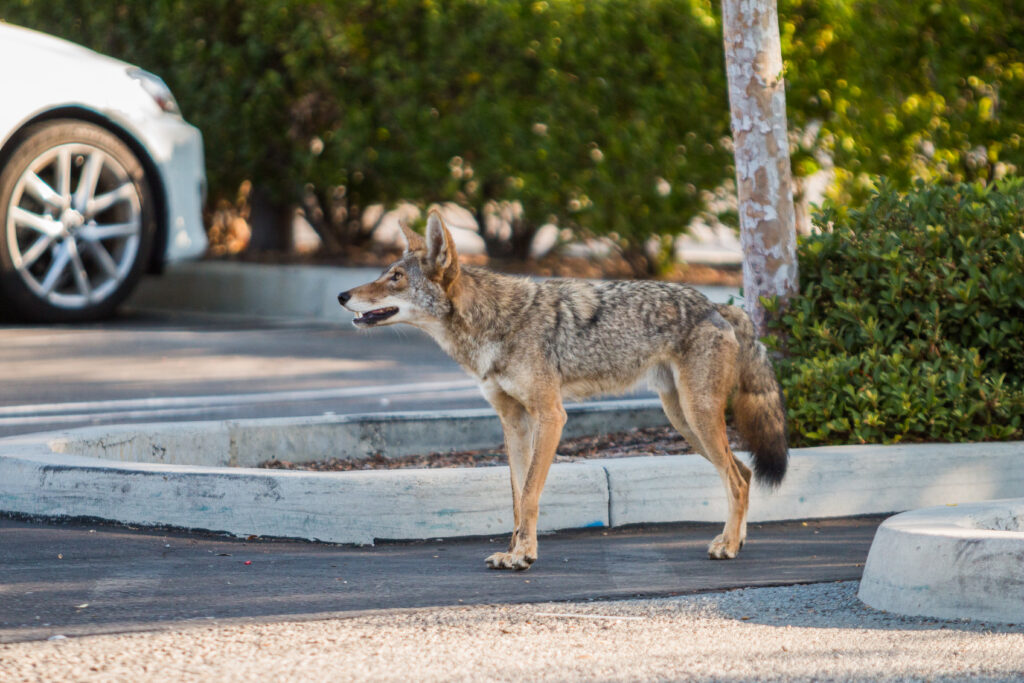
Coyotes can serve as a flagship species for wildlife coexistence and conservation in developed, urban spaces. To be an urban coyote is to be “hyper-polarizing” – they elicit a wide range of views from respect and admiration to fear and hate (or simply lack of awareness). Urban Biodiversity and Equity mentions coyotes in the city of San Francisco as a case study. Once locally extirpated, coyotes re-established themselves in San Francisco in the early 2000s. The city adopted a proactive coexistence approach: coyotes are here to stay, emphasizing non-lethal, proactive management to reduce conflicts.
In the first decade of the coyotes’ return to San Francisco, city authorities were inexperienced in how to manage human-coyote conflicts. Practices were inconsistent and primarily reactive. Protocols eventually changed to a citywide standardized approach and incident response framework. Domestic dogs approaching coyote dens with young pups were a major source of complaints. Seasonal signage has reduced this conflict factor by raising awareness of natural coyote behavior. Temporary closures of trails running by active den sites during pupping season are also effective.
In the Bay Area, clear and regular communication on coyotes is readily available. One-on-one conversations between staff and residents have also been effective at shifting perceptions of coyotes. Research on urban coyotes – like Schell’s lab – helps further improve education and conflict reduction. Knowledge on urban coyotes’ diets, pup dispersal, spatial/temporal use, movement, and health is invaluable.
Resilient, Not Expendable
As Chris Schell studied the ecology and behavior of coyotes in urban landscapes, he learned how their parenting behavior adapted across multiple litters and generations. He noticed parallels between the coyotes and his own experience as a father, shifting from a worried “helicopter parent” during the birth of his first child to a more confident approach with the arrival of his second child. In the Going Wild Podcast, he discusses raising resilient, joyful children who love the natural world and are fascinated by ladybugs and other insects in their garden.
The urban coyotes he studied similarly learned to adapt to their surroundings, find a niche, and even thrive in a world that was never built for them. The essence of the coyote, he explains, is their ability “to be joyous even in an environment that wants to suppress and squash your joy”. Coyotes persist, despite a long history of persecution within North America (and the fact that people sometimes treat them with disproportionate fear and hostility).
The coyotes’ resilience despite all the challenges thrown at them is remarkable and inspirational. Simultaneously, the way they are treated also represents a broken wildlife governance system. Across most states, coyotes can be killed year-round at any time, in unlimited numbers, by almost any means – including methods that would be considered unthinkable and grossly unethical if done to game species. State agencies rarely acknowledge coyotes’ ecological value or track populations. Too often, killing is prioritized over dispelling pervasive myths and misconceptions about coyotes and other carnivores.
The question isn’t whether these policies threaten the existence of coyotes as a species. (They haven’t.) It’s why one of North America’s most ecologically important species is also one of the least respected and is subjected to free-for-all killing with no oversight.
Coyote Awareness Week
This year’s Coyote Awareness Week is March 16-23. Coyotes have many lessons to teach us about persistence, coexistence, and the importance of a just and democratic conservation system. As coexistence organization Project Coyote states: “resilience should never be mistaken for expendability”.
To celebrate Coyote Awareness Week, download the official toolkit and social media resources. Counter myths and misconceptions about coyotes, snakes, and other highly misunderstood wildlife. Explore coyote research or follow a wildlife photographer. Check out Project Coyote’s coexistence resources on hazing, keeping coyotes wild, protecting backyard chickens, and ranching and farming alongside wildlife.
Explore Dr. Schell’s research on urban carnivores.
This article was contributed by Peggy Clark, a Geospatial Science/Ecology student at Radford University in Radford, Virginia. She appreciates her community and the wildlife who share it, and has sighted a coyote passing through her neighborhood.
Claire Loebs Davis Honored with Inaugural Don Molde Award for Courageous Wildlife Advocacy
 Wildlife for All Honors Claire Loebs Davis as Inaugural Recipient of the Don Molde Award for Courageous Leadership in Wildlife Advocacy
SEATTLE—Wildlife for All is proud to announce Claire Loebs Davis, co-founder, board president, and executive director of Washington Wildlife First, as the first-ever recipient of the Don Molde Award for Courageous Leadership in Wildlife Advocacy, recognizing her extraordinary contributions to wildlife protection and state wildlife governance reform.
The Don Molde Award was established to honor individuals across the nation who embody the fearless spirit of Nevada wildlife advocate Don Molde, who passed away in July of 2025. Don was a tireless champion for wildlife whose advocacy inspired generations, and the award celebrates leaders who continue his legacy by taking bold action in the face of opposition, achieving tangible conservation outcomes, and inspiring others to advance the cause of wildlife protection through courage, creativity, and resilience.
Loebs Davis has been at the forefront of wildlife advocacy in Washington, leading Washington Wildlife First in advocating for significant reforms in state wildlife governance despite facing many setbacks, attacks from entrenched special interests, and retaliation from the director of Washington’s wildlife department. Her leadership combines strategic vision, ethical integrity, and unwavering dedication to the public trust, serving as a model for conservation advocates nationwide.
“I am deeply honored to be the first recipient of the Don Molde Award, which should be seen as a credit to the dedicated board and staff of Washington Wildlife First,” said Loebs Davis. “We were proud to count Don among our supporters, and, like so many others, we were inspired by his courage in fighting to overturn entrenched power structures grounded in cruelty and consumption. One of the greatest compliments we ever received was when Don told us how impressed he was with our work, because he fully understood how hard it is to gain even an inch of ground for wildlife and the fierce backlash that follows even a modest amount of success.”
“Claire’s leadership is a testament to what can be achieved when courage meets vision,” said Michelle Lute, PhD, executive director of Wildlife for All. “Even as she faced intense attacks intended to silence her and derail progress, she persisted—often at great personal cost—to transform wildlife governance in Washington. Her resilience, strategic brilliance, and unwavering commitment have not only advanced protections for wildlife but have also inspired a new generation of advocates to fight for justice for all life.”
Wildlife for All received a strong list of nominations for advocates across the country, who cover a wide variety of wildlife protection issues. The selection committee noted that Loebs Davis stood out among the many excellent nominees, with nominators highlighting her exceptional qualities:
- Demonstrated courage: “Claire has fearlessly stood for wildlife against tremendous odds, at great personal and professional risk.”
- Innovation and creativity: “Claire is a creative strategist who does not limit herself to following paths that others have created or constrain herself to actions that others say are possible.”
- Resilience and persistence: “Her response to defeats is not to quit, but to find a way to win the next time. Claire personifies the phrase ‘And yet, she persists.’ She never loses sight of the goal of creating a better world for wildlife.”
- Scientific and ethical integrity: “Through dogged work, she has gained the mastery necessary to expose WDFW’s selective and biased use (and misuse) of science, in both court actions and advocacy campaigns.”
Loebs Davis noted there are many dedicated wildlife advocates in Washington and across the country who deserve this recognition. In particular, she pointed to current and former Washington wildlife commissioners who, since 2021, have faced relentless attacks for attempting to focus the state agency on its mission to protect, preserve, and perpetuate fish and wildlife. Over the past year, the agency’s director has collaborated with national trophy-hunting organizations to target those commissioners, directing his staff to spend hundreds of hours investigating and attempting to remove them.
“It requires a tremendous amount of courage and fortitude for our commissioners to be on the front lines fighting for Washington’s wildlife under this kind of pressure, and they are the ones who truly deserve our appreciation,” Loebs Davis said.
Wildlife for All invites supporters, allies, and members of the public to join in thanking Loebs Davis and other Washington wildlife advocates for their work, and celebrating the enduring legacy of Don Molde, whose example continues to inspire bold action in the service of wildlife.
###
About Wildlife for All
Wildlife for All is a national organization dedicated to reforming wildlife management to be more democratic, just, compassionate and focused on protecting wild species and ecosystems. Through research, advocacy, and education, we aim to protect wildlife and ensure that policies reflect the values of all Americans.
About the The Don Molde Award for Courageous Leadership in Wildlife Advocacy
The Don Molde Award for Courageous Leadership in Wildlife Advocacy honors individuals in the United States who take bold action to protect wildlife and advance conservation, often in the face of opposition or personal risk. Named in memory of longtime wildlife advocate and former Wildlife for All advisory board member Don Molde, the award recognizes leaders whose work inspires others, mobilizes communities, challenges entrenched systems, and achieves meaningful outcomes for species, habitats, and ecosystems. The award celebrates advocates who embody Molde’s legacy of courage, integrity, and unwavering commitment to wildlife.
Stop the Killing: Protect the Lost Copper Creek Pup
Colorado wolf 2404 is the lost Copper Creek pup who survived what no young wolf should: losing his family, a gunshot wound, and a year alone.
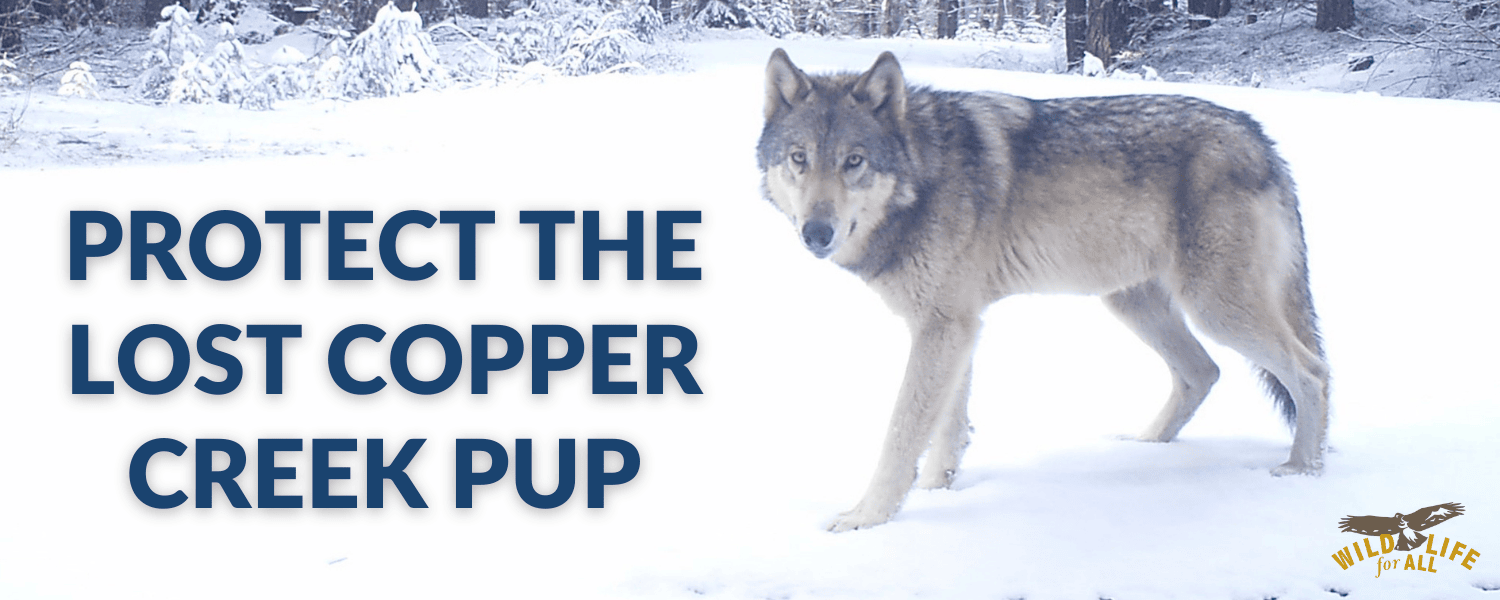
The wolf Colorado tried to kill—the one they shot and assumed was dead—is still alive.
Wolf 2404, the lost pup from the Copper Creek pack—the first pack to produce pups after wolves were restored to Colorado—has spent his entire life navigating persecution.
In August 2024, Colorado Parks and Wildlife captured the Copper Creek wolf pack to appease a rancher who wouldn’t close a carcass pit.
What happened next set off a chain of heartwrenching events that continues to unfold today.
Four pups were captured and relocated with their mother. The pack’s breeding male—wolf 2309-OR—later died from an illegal gunshot wound he had sustained before capture. The U.S. Fish and Wildlife Service opened an investigation into the illegal killing, which Wildlife for All condemned at the time as a serious threat to wolf recovery in Colorado.
 But there were five pups in the litter. One was never found, until fall of 2025 when he resurfaced in Rio Blanco County after allegedly killing a sheep.
That missing pup—this lost Copper Creek wolf—is the animal now at the center of renewed persecution in northwestern Colorado.
Against overwhelming odds, he survived his first winter alone. As we described last year in a Wildlife for All video explaining the situation, he should never have been left behind in the first place.
When he later preyed on sheep just trying to survive without parents to teach him how to hunt, Colorado Parks and Wildlife authorized lethal removal.
In August 2025, wildlife officials shot the young wolf using a rifle equipped with thermal optics. They never recovered his body. DNA evidence later confirmed he had been wounded.
But this young wolf survived against all odds.
Since then, officials have made additional attempts to kill him. According to records obtained by the Coloradoan, CPW conducted secret lethal removal operations in late 2025.
And we just learned that after a month-long search using drones and thermal imaging, Colorado Parks and Wildlife today suspended its attempt to kill the young wolf after failing to locate him in the rugged terrain of Rio Blanco County.
This young wolf’s story also reflects the broader pressures surrounding wolf recovery.
His father was illegally shot. One of his brothers was later killed by CPW. Another brother who naturally dispersed into New Mexico was captured and returned to Colorado simply for crossing a political boundary.
And throughout this time, livestock conflicts in the area continue to occur in places where basic coexistence measures have not consistently been implemented.
None of this means coexistence is impossible. In fact, research across the West shows the opposite: proactive nonlethal strategies—such as range riders, carcass removal, and deterrents—can dramatically reduce conflicts.
What this wolf represents now is something larger than a single animal.
His singular resilient life matters profoundly but he is also an undeniable reminder that wildlife recovery is not just about releasing animals back onto the landscape. It is about whether our institutions are willing to steward that recovery with transparency, science, and a commitment to coexistence.
Colorado voters chose to bring wolves back. The question now is whether the state will allow them to live.
They spent 30 days hunting one wolf with drones and thermal imaging—and failed. That’s not wildlife management. That’s futile persecution that ignores actual solutions.
Take action to protect the last Copper Creek pup. Tell CPW: no more lethal actions against this resilient wolf or any wolf—prioritize proactive coexistence solutions.
March Wildlife Commission Meetings
Speak up for wildlife at March Wildlife Commission Meetings.
March Wildlife Commission Meetings
March is when wildlife governance moves from early signals to real momentum. As spring approaches, so do some of the most consequential decisions of the year.
This month, 29 states are holding wildlife commission meetings, with policies advancing that will shape hunting rules, species protections, funding priorities, and agency accountability for months to come. What happens in these rooms will echo well beyond the season.
These meetings may not generate headlines, but they are where wildlife policy is made in real time, where science is either upheld or sidelined, where precaution is either applied or ignored, and where public trust is either strengthened or eroded.
Swinging strong into spring means showing up. Submitting a public comment. Logging in to listen. Speaking for the species and ecosystems that cannot advocate for themselves. Participation is how we keep wildlife governance transparent, accountable, and rooted in public values, not narrow interests.
March is an opportunity to build momentum, not lose it. Below, you’ll find a list of March wildlife commission meetings by state and date. VVisit our Resources Page and Advocacy Toolkit to prepare your comments or testimony—and carry the energy of spring into action for wildlife in 2026.
Oklahoma
Meeting Date: March 2
Location: Oklahoma Department of Wildlife Conservation 1801 N. Lincoln Blvd. Oklahoma City, OK 73105
Details: Click here for agenda and details
Notes: Meeting starts at 9 a.m. It’s not clear how to comment or speak; we suggest emailing the department to ask. It’s also unclear if there is a virtual participation option. Read more on their website.
Colorado
Meeting Date: March 4-5
Location: DoubleTree by Hilton Hotel Denver – Westminster, 8773 Yates Dr., Westminster, CO 80031
Details: Click here for agenda and details
Notes: Meeting starts at 8:30 a.m.. Written comments will be accepted at any time. However, to ensure sufficient time for consideration prior to the meeting, comments should be provided to the Division of Parks and Wildlife by noon on Friday, 2/27. Email the commission (though these won’t be counted in the official public record if received after noon on 11/7). The commission is expecting many public comments on the Center for Biological Diversity’s petition to end commercial fur sales.
Louisiana
Meeting Date: March 4
Location: LDWF Headquarters, Joe L. Herring Room, 2000 Quail Drive, Baton Rouge, LA 70808
Details: Click here for meeting details
Notes: Meeting starts at 9:30 a.m. A live audio/video stream of this meeting will be available via Zoom. To view via webinar, register here. On Tuesday, March 3the Oyster Committee meets at 9 a.m. at the New Orleans Lakefront Airport, 6001 Stars and Stripes Blvd, New Orleans, LA 70126. To listen in to the meeting, register via Zoom or dial 215-861-0674, password 806520#.
South Dakota
Meeting Date: March 5-6
Location: South Dakota State Library, Pierre, SD
Details: Click here for agenda and details
Notes: January 8, 1-5 p.m. CST | January 9, 8 a.m. – 12 p.m. CST. Livestream link. Zoom Meeting Link. To join via conference call, dial +16699009128,,91264176710# US Meeting ID: 912 6417 6710 Passcode: 970458 Video Conference ID: 91264176710@zoomcrc.com. Inform Gail Buus at gail.buus@state.sd.us by 1 pm CST if you plan to speak during the meeting. Testifiers should provide their full names, whom they are representing, city of residence, and which proposed topic they will be addressing. Written comments can be submitted here. Here are guidelines for submission. To be included in the public record, comments must include full name and city of residence and meet the submission deadline of seventy-two hours before the meeting (not including the day of the meeting).
Tennessee
Meeting Date: March 5-6
Location: Buffalo Ridge Refuge Hotel: Holiday Inn, 15368 Hwy. 13 South Hurricane Mills, TN 37078
Details: Click here for agenda and details
Notes: Meeting starts at 1 p.m. on March 5 and 9 a.m. on March 6. It is unclear how to watch remotely, or how to provide comments.
New Jersey
Meeting Date: March 10
Location: Assunpink Wildlife Management Area – Central Region Office, Large Conference Room,1 Eldridge Rd., Robbinsville Twp, NJ 08691
Details: Click here for details and agenda
Notes: The public is welcome to attend and participate in the public portion of each meeting. Meeting starts at 10 a.m. and will be held both in person and via GoToMeeting (audio only). Call in: +1 (312) 757-3121 | Access Code: 848-342-077. Per the website, public comments may be made in person or online and will be limited to 3 minutes per person. More information about the Commission is on its website, including a meeting guide and how to connect. For help, contact Kristen.Meistrell@dep.nj.gov.
Michigan
Meeting Date: March 11
Location: Lansing Community College, Downtown Campus, Michigan Room 1st Floor,600 North Grand Avenue, Lansing, MI 48933
Details: Click here for agenda (no agenda as of 3/2) and details.
Notes: 9:30 a.m. Persons registering to provide comments on a topic listed on the agenda on or before the Friday preceding the meeting will be allowed up to 5 minutes for their comments. Persons registering to comment on a topic not listed on the agenda, after the Friday preceding the meeting, or at the meeting will be allowed up to 3 minutes. If you are unable to attend the meeting but wish to submit written comments on agenda items, please write to Natural Resources Commission, P.O. Box 30028, Lansing, Michigan 48909, or email nrc@michigan.gov. Read more on the Commission website.
California – Marine Resources Committee
Meeting Date: March 12
Location: California Natural Resources Headquarters Building, 715 P Street, Second Floor, Sacramento, CA 95814
Details: Click here for agenda and details
Notes: Meeting starts at 8:30 a.m. Meeting documents here.
Washington
Meeting Date: March 12-14
Location: Hybrid: Zoom and location TBD in Walla Wall
Details: Click here for agenda and details (note no agenda available as of 3/2)
Notes: The agenda has many, many links to register for Zoom participant on the different days and how to comment on agenda items; you must look at this webpage to fully participate. Registration for those wishing to provide virtual comments closes at 5 p.m. the day before the meeting begins. Registrants will be called upon and typically have 3 minutes to speak. If you are unable to participate, you can submit your comments on the Commission contact page. If you haven’t pre-registered and wish to attend and speak in person, complete a Public Testimony Form, available at the registration table. The form must be submitted at least 15 minutes prior to the beginning of the agenda item you wish to testify on. Watch on Zoom. Watch livestream.
Arizona
Meeting Date: March 13
Location: Sierra Vista Fire Department Station #3, 675 Giulio Cesare Ave, Sierra Vista, Arizona 85635
Details: Click here for agenda and details
Notes: Meeting location opens at 7:45 a.m. Meeting begins at 8:00 a.m. Lunch Break at 12:00 p.m. Members of the public may view the meeting from any Department Regional Office. Members of the public attending in person wanting to speak on a specific agenda item may submit Speaker Cards (Blue Cards) if they wish to speak to the Commission and may only address the Commission by attending in person or from any regional office. Copies of any presentations, documents, etc. discussed during the meeting will be available by contacting sprice@azgfd.gov. No discussion or action will be taken by the Commission on topics raised in public comment. Any items requiring further discussion or action will be included on a future Commission meeting agenda. View live webcasts at www.azgfd.gov/commissioncam. Listen to the meeting by calling 404-397-1516, Access code: 280 046 234##.
Hawai’i
Meeting Date: February 13
Location: 1151 Punchbowl St. Room 132 (Kalanimoku Building), Honolulu, Hawai‘i
Details: Meeting agenda and details here. (Note no agenda available as of 2/2)
Notes: Meeting starts at 9.a.m. Attend in person and arrive at least 15 minutes prior to the meeting start time in order to add your name to the sign-in sheet. To speak virtually, email blnr.testimony@hawaii.gov. Include your name and the agenda item on which you would like to testify. Once your request has been received, you will receive an email with the Zoom link. Requests may be also made during the meeting. Meetings will be livestreamed at: https://youtube.com/c/boardoflandandnaturalresourcesdlnr. To submit a comment, email blnr.testimony@hawaii.gov no later than 24 hours prior to the scheduled meeting to ensure time for BLNR Member review.
Nevada
Meeting Date: March 13-14
Location: Lake Mead Water Safety Center, Lakeshore Rd, Boulder City, NV 89005
Details: Click here for agenda and details
Notes: If you wish to make public comment, please use this link for Friday, March 13. Passcode: 330462. For Saturday, March 14, use this link. Passcode: 310062. Submit written comments on items prior to the meeting at wildlifecommission@ndow.org or attend and make comment during the meeting. Any person who would like to comment to the Commission about a specific agenda item must make a written request to the Director at least four calendar days prior to the meeting. The time allotted for public comment and the number of speakers will be at the Commission’s discretion. Public comment will be taken on each action item following Commission discussion and before any action is taken; links coming once NDOW posts the meeting agenda. Persons attending virtually wishing to comment are invited to raise their virtual hands in the virtual meeting forum during the appropriate time; each person offering public comment during this period will be limited to not more than three minutes.
New Hampshire
Meeting Date: March 17
Location: Fish and Game Headquarters, 11 Hazen Drive in Concord, NH
Details: Click here for agenda and details
Notes:Commission meetings are regularly scheduled at 1 p.m. on the third Tuesday of every month at Fish and Game Headquarters, 11 Hazen Drive in Concord, NH. Meetings of the NH Fish and Game Commission are open to the public, unless otherwise noted.
Public Meetings:
- There will be a Governance Committee Meeting at 9 a.m. on March 17 at the NH Fish & Game Department, 11 Hazen Drive, Concord, NH 03301, in the Director’s conference room. This meeting is open to the public.
- There will be a Legislative Committee Meeting at 11 a.m. on March 17 at the NH Fish & Game Department, 11 Hazen Drive, Concord, NH 03301, in the east conference room. This meeting is open to the public.
Arkansas
Meeting Date: March 18-19
Location: Hot Spring, location TBD
Details: Click here for agenda and details (no agenda posted as of 3/2)
Notes: Unclear how to speak at meetings or provide virtual testimony or written comments. Watch the meeting on YouTube.
Massachusetts
Meeting Date: March 18
Location: MassWildlife Field Headquarters, 1 Rabbit Hill Road, Westborough, Massachusetts
Details: Click here for agenda and details.
Notes: Meeting starts at 1 p.m. Attendees can go in person or join via Zoom. After registering, you will automatically receive a confirmation email containing information about joining the webinar. Anyone wishing to be placed on the agenda to speak at the monthly business meeting must begin by notifying the Board in writing 2 weeks prior to the Board meeting; for more detailed information, contact Susan Sacco.
Special Meeting March 4: The preliminary selection subcommittee of the Fisheries and Wildlife Board will hold a public meeting to discuss changes to the job description for the MassWildlife Director position on Wednesday, March 4 at 2:30 p.m., at the MassWildlife Field Headquarters, 1 Rabbit Hill Road, Westborough, Massachusetts.
Virginia
Meeting Date: March 18-19
Location: 7870 Villa Park Dr, Suite 400, Henrico, VA 23228
Details: Click here for agenda and details (note no agenda or details besides location and time were available at time of webpage publishing)
Notes: Meeting starts at 9 a.m. Public comment on agenda items and non-agenda items are welcome at any regularly scheduled Board or Board Committee meeting. Please see the meeting schedule for dates and additional details. The following committees meet sequentially starting at 9 a.m. on March 18: Finance, Audit, and Compliance; Education, Planning and Outreach; Wildlife and Boat; and Law Enforcement.
Wyoming
Meeting Date: March 18-19
Location:Torrington (Tour Bird Farm)
Details: Click here for agenda and details. (No agenda available as of 3/2)
Notes: This meeting will be conducted in person and via Zoom. Please note there are different links for each day. If you wish to speak to the Commission and comment on an agenda item in person, please complete the comment form provided at the meeting. If you wish to speak to the Commission and comment on an agenda item via Zoom, please submit an Advanced Agenda Item Comment Form, which is attached to the agenda to toni.bell2@wyo.gov.
Oregon
Meeting Date: March 19-20
Location: Medford, location TBD
Details: Click here for details and agenda
Notes: Commission meetings begin at 8 a.m. and proceed chronologically through the agenda. If you wish to receive written materials prepared for any of the agenda items, please contact the Director’s Office in Salem at (503) 947-6044 or email ODFW.Commission@odfw.oregon.gov to request a packet for those items that interest you. Members of the public can view a livestream of the meeting via the agency’s YouTube channel or on the Commission page. Members of the public may also view a livestream of this meeting at ODFW Headquarters, 4034 Fairview Industrial Drive SE, Salem. Comment and testimony are limited to 3 minutes or less.The Fish and Wildlife Commission has moved to hybrid meetings, meaning that you have the option to attend in-person or virtually. Those who would like to provide virtual testimony on an Exhibit scheduled on this agenda must REGISTER no less than 48 hours (March 17 at 8 a.m.) in advance to receive a testimony link to the meeting. To provide testimony on an agenda item in-person, registration will also be available at the meeting. To provide testimony virtually or in-person during Public Forum you must contact the Director’s office no less than 48 hours (8 a.m. Wednesday January 14) in advance of the meeting for approval. Meeting is livestreamed here.
Alaska – Board of Game Southcentral Region Meeting
Meeting Date: March 20-25
Location: Kodiak
Details: Click here for agenda and details
Notes: Comment on regulation changes to trapping and hunting seasons and limits. The deadline for receiving comments is Friday, March 6.
Kentucky
Meeting Date: March 20
Location: #1 Sportsman’s Lane, Frankfort KY and Livestreamed Online
Details: Click here for agenda and details. (No agenda available as of 3/2)
Notes:The meeting will start at 8:30 a.m. (ET) in the Administration Building on the Kentucky Department of Fish and Wildlife Resources’ campus in Frankfort. It will be open to the public.The meeting also will be livestreamed and archived on the department’s YouTube channel at youtube.com/FishandWildlifeKY. A link to the livestream also will be posted on the department’s homepage at fw.ky.gov at the start of the meeting. Anyone wishing to address the Commission orally must sign in before the meeting and will have 3 minutes to speak during the public comment. Members of the public may submit emailed comments on Commission business items anytime to FW.PublicAffairs@ky.gov; these comments may include statements of support or opposition, or express concerns or questions. Emailed comments regarding a business item that are received before 5 p.m. at least two days before a scheduled meeting that includes opportunity for public comments may be read by staff during the public comment segment of the meeting. The Commission chair reserves the right to select representative comments to be shared orally or read from emails, subject to availability of time and potentially redundancy of comments.
Nebraska
Meeting Date: March 20
Location: Ponca State Park Resource and Education Center 88090 Spur 26, Ponca, NE
Details: Click here for meeting agenda (note none posted as of 3/2) and details.
Notes: Meeting starts at 8 a.m. Interested persons may attend and testify orally or by written submission at the public hearing. Interested persons or organizations may submit written comments prior to the hearing, which will be entered into the hearing record if they: 1) include a request to be included as part of the hearing record; 2) include the name and address of the person or organization submitting the comments; and 3) are received by Sheri Henderson at the Lincoln office, 2200 North 33rd Street, Lincoln, NE 68503-0370. It is unclear if the meeting will be livestreamed and if virtual participation is possible.
New Mexico
Meeting Date: March 20
Location:New Mexico Department of Wildlife Northwest Area Office, 7816 Alamo Rd. NW, Albuquerque, NM 87120
Details: Click here for details and agenda
Notes: Meeting starts at 9 a.m. Comment in person by signing up to speak via a card. Register in advance to attend this meeting virtually via Zoom. After registering, you will receive a confirmation email containing information about joining the webinar. The commission may hear verbal public comments from virtual attendees at this meeting. If comments are taken, you will be asked to virtually raise your hand and then acknowledged to speak when it is your turn. A live webcast of this meeting will be available on the commission’s Webcast page and on our YouTube Channel at https://www.youtube.com/user/NMGameandFish. Comments will not be taken on the live webcast or on YouTube.
Georgia
Meeting Date: March 24
Location: 2 Martin Luther King, Jr. Drive, SE Suite 1252 East, Atlanta, GA 30334
Details: Click here for details. (note the meeting agenda was not available at time of webpage publishing)
Notes: Meeting starts at 9 a.m. Watch online here. Join via Zoom by registering. Meeting ID: 876 6661 9346 | Passcode: 304473
Idaho
Meeting Date: March 24-25
Location: Idaho Department of Fish and Game Headquarters, Owyhee Room, 600 South Walnut Boise, Idaho
Details: Click here for agenda and details (note no agenda available as of 3/2)
Notes: 9:00 a.m. MT start. It is unclear if you can participate virtually; the agenda of past meetings have suggested virtual participation may be possible but provided no links.
Indiana
Meeting Date: March 24
Location: Fort Harrison State Park, The Garrison, 6002 North Post Road, Indianapolis, IN
Details: Click here for agenda and details.
Notes:10 a.m. ET/9 a.m. CT. All meeting agendas are posted a week prior to the meeting.
Texas
Meeting Date: March 25-26
Location: TBD
Details: Click here for agenda and meeting details
Notes: The site reads, “Live streaming video and audio will be available,” but links were not available at time of webpage publishing. Watch the live stream.
Missouri
Meeting Date: March 26-27
Location: MDC Headquarters, 2901 W Truman Blvd., Jefferson City, MO 65102
Details: Click here for agenda and details (no agenda available as of 3/2)
Notes: Meeting starts at 10 a.m. Any person who would like to comment to the Commission about a specific agenda item must make a written request to the Director at least four calendar days prior to the meeting. The time allotted for public comment and the number of speakers will be at the Commission’s discretion. Background documents related to open meeting agenda items are available for public viewing at Conservation Department Headquarters, Jefferson City, for eight calendar days prior to the meeting. Any person who would like to comment to the Commission about a specific agenda item must make a written request to the Director at least four calendar days prior to the meeting. Recording the open meeting is permissible, pursuant to any guidelines established by the Commission to minimize disruption to the meeting. Individuals wishing to record the open meeting by audiotape, videotape, or other electronic means should notify the Director at least four calendar days prior to the meeting so accommodations for such recording can be made. To view livestream of the open meeting, or to watch recordings of past meetings, go to http://on.mo.gov/2nodPJU
Hawai’i—Meeting 2
Meeting Date: March 27
Location: 1151 Punchbowl St. Room 132 (Kalanimoku Building), Honolulu, Hawai‘i
Details: Meeting agendas are posted at least 6 days prior to the date of the meeting but an agenda for this month was not available when this webpage was posted. Keep checking back on this webpage.
Notes: Meeting starts at 9.a.m. Attend in person and arrive at least 15 minutes prior to the meeting start time in order to add your name to the sign-in sheet. To speak virtually, email blnr.testimony@hawaii.gov. Include your name and the agenda item on which you would like to testify. Once your request has been received, you will receive an email with the Zoom link. Requests may be also made during the meeting. Meetings will be livestreamed at: https://youtube.com/c/boardoflandandnaturalresourcesdlnr. To submit a comment, email blnr.testimony@hawaii.gov no later than 24 hours prior to the scheduled meeting to ensure time for BLNR Member review.
South Carolina
Meeting Date: March 27
Location:107-108 Botany Bay Conference Room at Headquarters at 260 D. Epting Lane, West Columbia, SC 29172 – at State Farmer’s Market complex off of Highway 321
Details: Click here for agenda and details (no agenda available at time of webpage posting). Calendar invite here.
Notes: Meeting starts at 10 a.m. Anyone wishing to make comments to the Board please email your name and topic to board@dnr.sc.gov at least 24 hours in advance. Contact Sandy Rucker 803-734-9102 or ruckers@dnr.sc.gov for assistance. Please use the following link and select the “Watch Live” button if you would like to watch the Board meeting: https://www.dnr.sc.gov/
Show Up March 4 to Protect Colorado’s Furbearers
Tell the Colorado Parks & Wildlife Commission to stop the commercial sale of fur to protect Colorado’s furbearers.

Colorado Is at a Crossroads on Fur Sales. Show Up March 4.
On March 4, the Colorado Parks and Wildlife Commission will hear a citizen petition that could fundamentally change how wildlife is treated in this state.
The petition, submitted by the Center for Biological Diversity, would prohibit the commercial sale of furs and wildlife parts from Colorado’s native furbearers. This does not ban regulated hunting or trapping but instead, it ends the for-profit commercial market for pelts.
 What are Furbearers?
Across the U.S., state wildlife agencies reduce living beings to line items: inventory, targets, commodities.
Furbearers—species like beavers, bobcats, martens, foxes, coyotes, and others—become future pelts managed not through science or ecological understanding, but through a market-based lens.
The word “furbearer” is not neutral. It is an outdated economic label that collapses complex, ecologically vital species into a single question: What are they worth when killed?
That framing erases ecosystem services like wetland creation, prey regulation, nutrient cycling, disease buffering and replaces them with market logic.
When wildlife are defined by fur value instead of ecological function, management stops asking how ecosystems stay healthy and starts asking how much extraction can be justified.
That is not “science-based wildlife management.” It is commodity management.
In many states, agencies cannot tell the public how many individuals of these species exist, how populations are trending, or what ecological roles are being lost—yet still authorize widespread trapping and killing, often during the harshest months of the year. The only question being asked is: Are there “enough” animals left to allow more killing?
So let’s call it what it is: Trapping is just the cruelest, more commercial extraction dressed up as “tradition.”
The North American Model of Wildlife Conservation was meant to end commercial exploitation of wildlife, not quietly reintroduce it under state sanction. Yet many agencies still promote global fur markets and celebrate this killing as “heritage,” even when no science-informed plans exist to ensure long-term population stability.
Our wild neighbors are not merchandise. They are not a “renewable resource.” They are not surplus. They are not expendable.
If you believe wildlife should be managed as part of a living community—not a market—this is your invitation to create change.
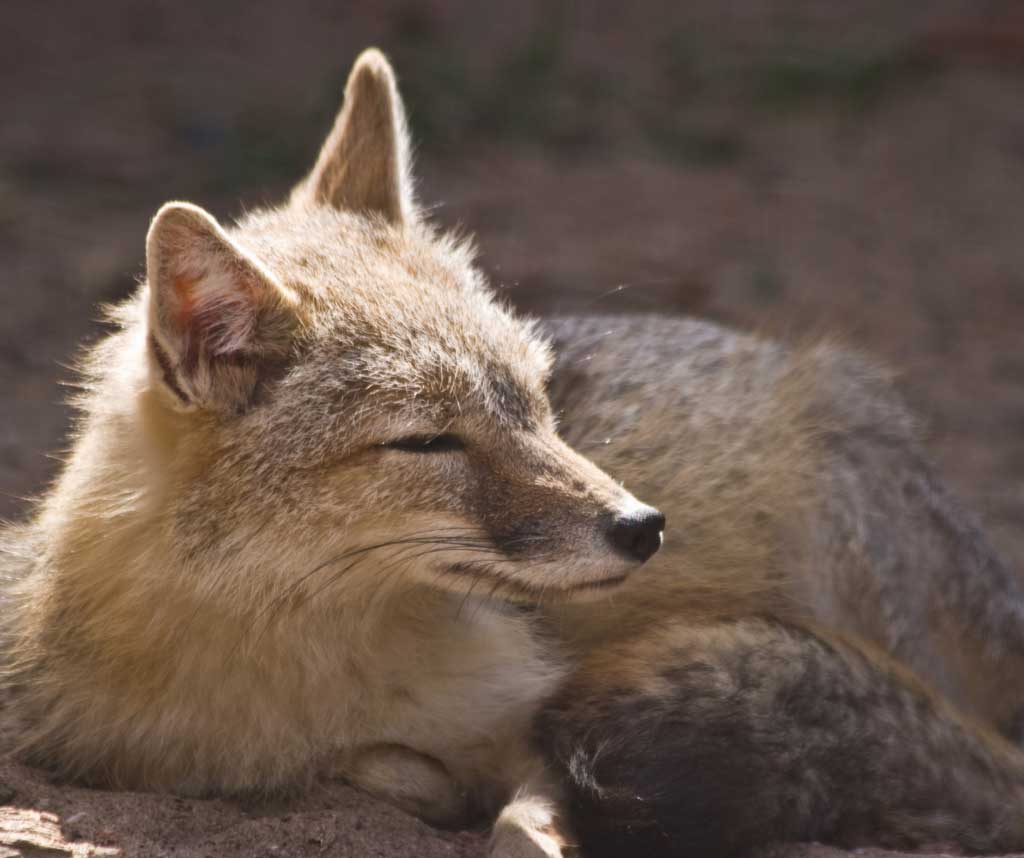 What Is The Petition?
Right now in Colorado, species like swift foxes, beavers, bobcats, coyotes, pine martens, ringtails, and more can be trapped in unlimited numbers and their pelts are then sold on the commercial market.
Unlike big game species, which cannot be sold commercially, furbearers remain a loophole in the system. The North American Model of Wildlife Conservation — the framework the hunting community touts that rebuilt wildlife populations after market hunting nearly wiped them out — was built on eliminating commercial wildlife markets.
Colorado already bans commercial markets for big game. This petition simply applies the same principle to furbearers.
Pro-trapping voices right now are arguing that furbearer populations are “healthy,” but here’s the problem with that strawman: there’s no data to back it up. Colorado does not have comprehensive, up-to-date population estimates for many of these species. What’s more, many are listed as Species of Greatest Conservation Need on Colorado’s State Wildlife Action Plan (and as we know, these lists grew immensely between 2015 and 2025).
At the same time, climate change is accelerating, habitat fragmentation is increasing, small carnivore populations are declining widely, and incidental trapping still occurs. When population data gaps exist, the precautionary approach is conservation, not expanded commercialization.
Eliminating the fur market removes the financial incentive to maximize harvest.
You will also hear erroneous conflations like Denver voters rejected a fur sales measure and that Coloradans rejected a hunting ban. This petition is neither of those: it does not ban hunting; it does not ban trapping outright; and it does not restrict wildlife management tools.
It simply addresses a regulatory loophole: the commercial sale of wildlife parts. Wildlife commissions update rules all the time. That’s their job.
Right now, your voice is needed. Trappers are organizing, and they plan to fill the hearing room. Commissioners notice who shows up and speaks out.
SHOW UP: March 4, 2026
CPW Commission Meeting
DoubleTree by Hilton – Westminster
8773 Yates Dr., Westminster, CO
🕗 Arrive early (6:30–8:00 a.m.) to sign up for public comment (1 minute each).
🕐 If you can’t speak, arrive by 1:00 p.m. and stand in solidarity.
❤️ Wear red.
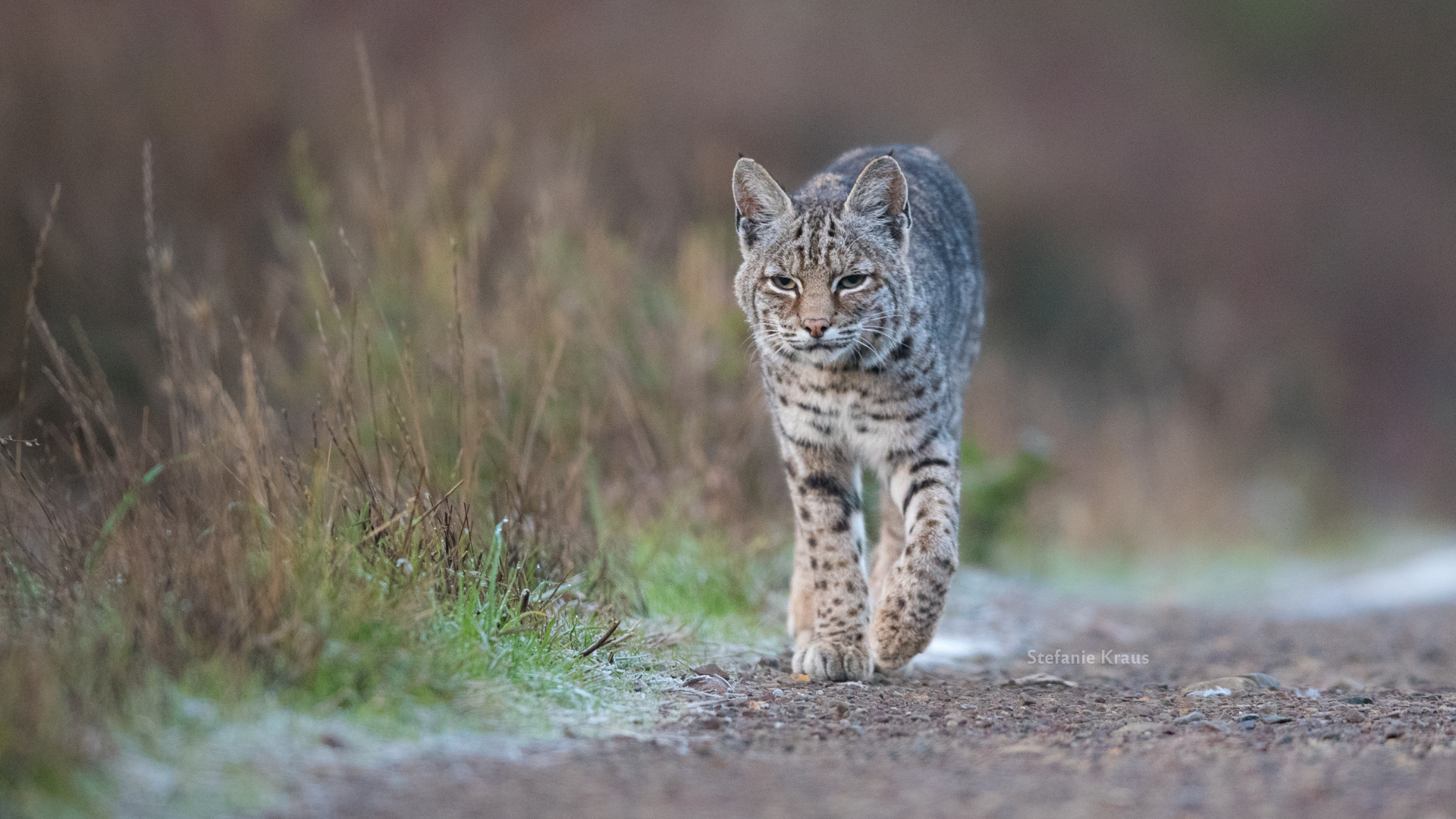
Bobcat in Marin County, California | Credit: Stefanie Kraus
If You Can’t Attend
- They’re expecting to have to limit in-person and virtual comments (priority given to in-person comments) so you can also submit a written comment: https://engagecpw.org/pwc-public-comment/surveys/pwc-public-comment-form
- Email the Commission: dnr_cpwcommission@state.co.us and write them individually:
- richard.reading@state.co.us
- James.Tutchton@state.co.us
- Eden.Vardy@state.co.us
- jess.beaulieu@state.co.us
- tai.jacober@state.co.us
- Dallas.May@state.co.us
- jack.murphy@state.co.us
- gabriel.otero@state.co.us
- kate.greenberg@state.co.us
- dan.gibbs@state.co.us
- frances.silvablayney@state.co.us
- john.emerick@state.co.us
- laura.l.clennan@state.co.us
Subject: Support the Petition to End Commercial Fur Sales in Colorado
Sample Email — Please Personalize
Dear Commissioners,
I urge you to support the petition to prohibit the commercial sale of wildlife fur in Colorado.
Commercial markets for wildlife historically drove population collapses across North America and contradict the core principles of science-based conservation. While regulated hunting and trapping remain management tools, the for-profit sale of wildlife parts creates unnecessary economic incentives that can undermine long-term sustainability, especially in the face of climate change and biodiversity loss.
Colorado has already banned commercial markets for big game. It is time to apply that same standard to furbearers.
Please adopt this rule and align Colorado’s wildlife policy with modern conservation science and public trust principles.
Sincerely,
[Name]
[City]
This Is Bigger Than Fur
This is about whether wildlife in Colorado is a public trust resource managed for long-term ecological integrity or treated as a commodity market by a small but vocal minority at the expense of long-term wildlife and ecosystem health.
The Commission needs to see that Coloradans care. Show up. Speak up. And submit a comment today.