
News & Commentary
Rewilding Earth Podcast – The High Stakes of State Wildlife Governance and the Fight for Direct Democracy with Michelle Lute
Host Jack Humphrey sits down with Michelle to dismantle the persistent myths surrounding state-level wildlife governance, exposing how the “hunting pays for conservation” narrative has evolved into a multi-billion-dollar illusion. They dive deep into the aggressive and entrenched political interests, including a highly insidious new ballot initiative in Colorado designed to strip citizens of their direct democracy rights on wildlife policy. Michelle outlines the critical shift toward organizing at the state level as the federal landscape grapples with chaos, introducing fresh structural solutions — such as independent, science-backed biodiversity commissions to advocate for the vast majority of species currently ignored by the traditional state wildlife governance model.
July Wildlife Commission Meetings
Speak up for wildlife at July Wildlife Commission Meetings.
July Wildlife Commission Meetings
July brings a dense calendar of state wildlife decision-making, with commission meetings, public comment deadlines, and regional advisory gatherings happening across the country. At least 25 states have scheduled activity this month, including a Montana wolf hunting rulemaking deadline and advisory meetings in states like Montana, Utah, and California.
Visit our Resources Page and Advocacy Toolkit to prepare your comments or testimony, and turn this moment into action for wildlife in 2026.
Louisiana
Meeting Date: July 1
Location: LDWF Headquarters, Joe L. Herring Room, 2000 Quail Drive, Baton Rouge, LA 70808
Details: Click here for meeting details
Notes: Meeting starts at 10 a.m. A live audio/video stream of this meeting will be available via Zoom.
Massachusetts
Meeting Date: July 8
Location: MassWildlife Field Headquarters, 1 Rabbit Hill Road, Westborough, Massachusetts
Details: Click here for agenda and details.
Notes: Meeting starts at 1:30 p.m. Attendees can go in person or join via Zoom. After registering, you will automatically receive a confirmation email containing information about joining the webinar. Anyone wishing to be placed on the agenda to speak at the monthly business meeting must begin by notifying the Board in writing 2 weeks prior to the Board meeting; for more detailed information, contact Susan Sacco.
** The preliminary screening committee for the position of Director of the Division of Fisheries and Wildlife (MassWildlife) will meet in-person meeting at 9 a.m. on Wednesday, July 1 9:00 a.m., at MassWildlife Field Headquarters, 1 Rabbit Hill Road, Westborough, Massachusetts. It is not clear if this meeting is open to the public.
Michigan
Meeting Date: July 8
Location: Lansing Community College, West Campus Rooms M119-121, 5708 Cornerstone Drive, Lansing, MI 48917
Details: Click here for agenda and details.
Notes: Meeting starts at 9 a.m. Persons registering to provide comments on a topic listed on the agenda on or before the Friday preceding the meeting will be allowed up to 5 minutes for their comments. Persons registering to comment on a topic not listed on the agenda, after the Friday preceding the meeting, or at the meeting will be allowed up to 3 minutes. If you are unable to attend the meeting but wish to submit written comments on agenda items, please write to Natural Resources Commission, P.O. Box 30028, Lansing, Michigan 48909, or email nrc@michigan.gov. Read more on the Commission website. Watch the livesteam here.
Iowa
Meeting Date: July 9
Location: Des Moines, specific location TBA
Details: Click here for details and agenda (no agenda as of 6/30).
Notes: The meeting starts at 10 a.m. Comments regarding agenda items may be submitted for public record to Alicia.Plathe@dnr.iowa.gov or 6200 Park Ave Ste 200, Des Moines IA 50321 up to 24 hours prior to the business meeting.
Missouri
Meeting Date: July 9-10
Location: MDC Headquarters, 2901 W Truman Blvd., Jefferson City, MO 65102
Details: Click here for agenda and details (no agenda available as of 6/30)
Notes: Meeting starts at 10 a.m. Any person who would like to comment to the Commission about a specific agenda item must make a written request to the Director at least 4 calendar days prior to the meeting. The time allotted for public comment and the number of speakers will be at the Commission’s discretion. Background documents related to open meeting agenda items are available for public viewing at Conservation Department Headquarters, Jefferson City, for 8 calendar days prior to the meeting. To view livestream of the open meeting, or to watch recordings of past meetings, go to http://on.mo.gov/2nodPJU
South Dakota
Meeting Date: July 9-10
Location: Webster, SD / Zoom
Details: Click here for agenda and details (note no agenda available as of 6/30)
Notes: No meeting details posted as of 6/30 for virtual participation; keep checking the links above. Inform Gail Buus at gail.buus@state.sd.us by 1 p.m. CT if you plan to speak during the meeting. Testifiers should provide their full names, whom they are representing, city of residence, and which proposed topic they will be addressing. Written comments can be submitted here. Here are guidelines for submission. To be included in the public record, comments must include full name and city of residence and meet the submission deadline of seventy-two hours before the meeting (not including the day of the meeting).
Pennsylvania
Meeting Date: July 10
Location: PGC Headquarters – 2001 Elmerton Avenue, Harrisburg, PA 17110
Details: Click here for agenda and details (note no agenda or details available as of 6/30)
Notes: Public comment is accepted in person only on a first-to-register, first-to-speak basis. Watch live on YouTube.
Hawai’i
Meeting Date: July 11
Location: 1151 Punchbowl St. Room 132 (Kalanimoku Building), Honolulu, Hawai‘i
Details: Meeting agenda and details here. (Note no agenda available as of 6/30)
Notes: Meeting starts at 9.a.m. Attend in person and arrive at least 15 minutes prior to the meeting start time in order to add your name to the sign-in sheet. To speak virtually, email blnr.testimony@hawaii.gov. Include your name and the agenda item on which you would like to testify. Once your request has been received, you will receive an email with the Zoom link. Requests may be also made during the meeting. Meetings will be livestreamed at: https://youtube.com/c/boardoflandandnaturalresourcesdlnr. To submit a comment, email blnr.testimony@hawaii.gov no later than 24 hours prior to the scheduled meeting to ensure time for BLNR Member review.
Wyoming
Meeting Date: July 14-15
Location: Sheridan
Details: Click here for agenda and details. (No agenda available as of 6/30)
Notes: This meeting will be conducted in person and via Zoom. Please note there are different links for each day. If you wish to speak to the Commission and comment on an agenda item in person, please complete the comment form provided at the meeting. If you wish to speak to the Commission and comment on an agenda item via Zoom, please submit an Advanced Agenda Item Comment Form, which is attached to the agenda to toni.bell2@wyo.gov.
Arkansas
Meeting Date: July 15-16
Location: Little Rock, AR
Details: Click here for agenda and details (note no agenda available as of 6/30)
Notes: Unclear how to speak at meetings or provide virtual testimony or written comments. Watch the meeting on YouTube.
Idaho
Meeting Date: July 15-16
Location: Jerome, ID
Details: Click here for agenda and details (note no agenda available as of 6/30)
Notes: 9:00 a.m. PT start. Virtual participation typically available via Zoom; details not yet available at time of webpage posting.
California – Marine Resources Committee Only
Meeting Date: July 16
Location: California Natural Resources Headquarters Building, 715 P Street, Second Floor, Sacramento, CA 95814 or at the Scripps Institute of Oceanography Eckart Building, 8755 Biological Grade, Room TBD, La Jolla, CA 92037
Details: Click here for agenda and details
Notes: Meeting starts at 8:30 a.m. Join via Zoom here.
Colorado
Meeting Date: July 16-17
Location: Sky Ute Casino and Resort, 14324 CO-172, Ignacio, CO 81137
Details: Click here for agenda and details
Notes: Meeting starts at 8:30 a.m.. Written comments will be accepted at any time. However, to ensure sufficient time for consideration prior to the meeting, comments should be provided to the Division of Parks and Wildlife by noon on July 9. The virtual comment sign-up deadline is 7/10 at noon MT; link is not yet available but keep checking back. Email the commission (though these won’t be counted in the official public record if received after noon on 7/9). Watch the livestream.
Office Hours: With Commission Chair Rich Reading from 4-6 p.m. Wednesday, Jul 15at the Durango Public Library, 1900 3rd Ave, Durango, CO 81301. No registration is required.
Tennessee
Meeting Date: July 17
Location: TWRA Nashville Hotel, AC Hotel Brentwood
Details: Click here for agenda and details (note no agenda available as of 6/30)
Notes: Start time not listed. It is unclear how to watch remotely, or how to provide comments.
Washington – CANCELLED
Meeting Date: July 17
Location: Zoom
Details: Click here for agenda and details (note no agenda available as of 6/30)
Notes: The agenda has many, many links to register for Zoom participant on the different days and how to comment on agenda items; you must look at this webpage to fully participate. Registration for those wishing to provide virtual comments closes at 5 p.m. the day before the meeting begins. Registrants will be called upon and typically have 3 minutes to speak. If you are unable to participate, you can submit your comments on the Commission contact page. If you haven’t pre-registered and wish to attend and speak in person, complete a Public Testimony Form, available at the registration table. The form must be submitted at least 15 minutes prior to the beginning of the agenda item you wish to testify on. Watch on Zoom. Watch livestream.
Indiana
Meeting Date: July 21
Location: Pokagon State Park, Potawatomi Inn, Angola, IN
Details: Click here for agenda and details (note no agenda was available as of 6/30)
Notes:10 a.m. ET/9 a.m. CT. All meeting agendas are posted a week prior to the meeting.
New Hampshire
Meeting Date: July 21
Location:Fish and Game Headquarters, 11 Hazen Drive in Concord, NH
Details: Click here for agenda and details
Notes: Commission meetings are regularly scheduled at 1 p.m. on the third Tuesday of every month at Fish and Game Headquarters, 11 Hazen Drive in Concord, NH. Meetings of the NH Fish and Game Commission are open to the public, unless otherwise noted.
Ohio
Meeting Date: July 22
Location: Wildlife District 1 Office, 1500 Dublin Rd., Columbus, OH
Details: Click here for agenda and details (note no agenda available as of 6/30)
Notes: Meeting begins at 6 p.m. Comments for open forums during Ohio Wildlife Council meetings must be about a current rule proposal. If you have a topic that is not a current rule proposal, please email the council with your comment or question or speak to a council member before or after a meeting. If the topic falls within the wildlife, fish, or law section, feel free to reach out at our open houses or email the Division of Wildlife at wildinfo@dnr.ohio.gov. Speakers must register by 5 p.m. the Monday before the meeting via the Public Comment Form, which must be submitted to wildlife.council@dnr.ohio.gov. Along with the form, submit any handouts you plan to provide. Speakers are limited to 3 minutes. There will be a maximum of ten speaker slots available. PowerPoint presentations are not permitted.
Mississippi
Meeting Date: July 23
Location: TBD
Details: Unknown, not on website but stated out loud in June webcast recording
Notes: Location not on website. Unclear if remote participation is possible.
Montana – Comment Deadline Only
Meeting Date: August 19
Comment Deadline: July 23
Link to comment: August Meeting Information Page
Notes: On the meeting page’s drop-down menu, select items to submit your comment. We suggest commenting on: 2026 Nongame Workplan and 2026 Furbearer/Wolf Hunting and Trapping Seasons, Quotas, and Regulations –> note that this proposal is not yet on the site as of 6/30, despite this comment period opening on 6/25.
There are two dedicated methods to submit public comment to the Fish and Wildlife Commission on meeting agenda topics PRIOR TO the meeting: Online Portal (SurveyMonkey) or Mail-in of Public Comments. Public comment opportunity will be offered during the meeting. In-person comments can be made at the meeting venue or at any FWP Regional Office throughout the state.
Hawai’i—Meeting 2
Meeting Date: July 25
Location: 1151 Punchbowl St. Room 132 (Kalanimoku Building), Honolulu, Hawai‘i
Details: Meeting agendas are posted at least 6 days prior to the date of the meeting but an agenda for this month was not available when this webpage was posted. Keep checking back on this webpage.
Notes: Meeting starts at 9.a.m. Attend in person and arrive at least 15 minutes prior to the meeting start time in order to add your name to the sign-in sheet. To speak virtually, email blnr.testimony@hawaii.gov. Include your name and the agenda item on which you would like to testify. Once your request has been received, you will receive an email with the Zoom link. Requests may be also made during the meeting. Meetings will be livestreamed at: https://youtube.com/c/boardoflandandnaturalresourcesdlnr. To submit a comment, email blnr.testimony@hawaii.gov no later than 24 hours prior to the scheduled meeting to ensure time for BLNR Member review.
Utah
RAC meeting items for August 20th meeting:
July 28 – CR
July 29 – NR
All agendas and meeting dates available here: https://wildlife.utah.gov/meetings (drop-down menus). Utah’s Commission next meets on 8/20 but the RAC meetings inform the agenda items for the Commission and are the best opportunity to submit public comment. Continue to push back against Utah’s flawed and misguided plan to kill mountain lions year-round in several game management units.
Vermont
Meeting Date: July 29
Location: National Life Dewey Conference Room, 1 National Life Drive, Montpelier, VT 05620
Details: Click here for agenda and details (note: no agenda as of 6/3o)
Notes: Meeting starts at 5 p.m.
Action: Rules on Reporting Big Game, Tagging Big Game, Bow and Arrow and Crossbow Standards, and Leashed Tracking Dogs
is 5:30 pm Friday, July 17 at the VTrans Dill Building, 2178 Airport Rd, Barre, VT. To join remotely please use this link or call 802-828-7667, phone conference ID 197 953 406#
North Carolina
Meeting Date: July 30
Location: Commission Room, 5th Floor, 1751 Varsity Drive, Raleigh, NC
Details: Click here for agenda and details (note no agenda available as of 6/30)
Notes: The board will meet at 9 a.m. Members of the public may join via Zoom by registering in advance; keep checking the meeting page for this link.
West Virginia
Meeting Date: July 30
Location: WVU Potomac State College – Davis Conference Center,101 Fort Avenue, Keyser, WV 26726
Details: Click here for agenda and details
Notes: Meeting starts at 6 p.m. Send comments to wvnrcommission@wv.gov. To send written comments, contact: West Virginia Division of Natural Resources Director’s Office, 324th Avenue, South Charleston, WV 25303. The meeting will be livestreamed on the West Virginia Department of Commerce’s YouTube channel and will be available starting the day of the meeting. The livestream is view-only. To provide public comments, you must attend in person at one of the six district locations listed above. If you can’t watch the meeting live, a recording will be posted and remain available until the next scheduled Commission meeting, so you can watch it at your convenience.
In-Person Locations
District 1 – 1110 Railroad St, Farmington, WV 26571
District 2 – 1 Depot St, Romney, WV 26757
District 3 – 738 Ward Rd, Elkins, WV 26241
District 4 – 2006 Robert C. Byrd Dr, Beckley, WV 25801
District 5 – 112 California Ave, Charleston, WV 25305
District 6 – 76 Conservation Way, Parkersburg, WV 26104
⚠️ Important Note About Public Comments: The livestream is view-only. To provide public comments, you must attend in person at one of the six district locations listed above.
Five overlooked consequences of Colorado’s Initiative 302
 Interested Parties Memo: Five overlooked consequences of Colorado’s Initiative 302
TO: Interested Parties
DATE: June 26, 2026
Initiative 302 is being marketed as a constitutional right-to-hunt-and-fish amendment. However, the language of this initiative appears to remove wildlife policy from Colorado’s citizen ballot initiative process, limits what issues on which lawmakers and wildlife commissioners can set policy, and places undefined terms into the state constitution that may ultimately have to be interpreted by courts in costly litigation.
Supporters have described these amendments as “a lock on the door.” The central question for Colorado voters is: What future wildlife policies—and whose voice—will be locked out?
As your newsroom evaluates coverage of this proposal, here are five issues worth examining.
1. Initiative 302 would limit who can shape wildlife policy in Colorado.
Initiative 302 does more than establish a constitutional right to hunt and fish, which is typically interpreted as a privilege not a right. It would also place new constitutional limits on who can shape wildlife policy in Colorado and what future policymakers are allowed to do. Those limits could affect not only citizen ballot initiatives, but also the legislature, the Colorado Parks and Wildlife (CPW) Commission, and future agency wildlife regulations drafted by CPW.
It vests all decision-making authority related to wildlife with the legislature and Commission while limiting those decisions to a narrow list of approved purposes. The proposed language restricts wildlife decisions to “regulate hunting, fishing, and wildlife management if necessary for sound scientific wildlife conservation and management,” public safety, and preserving hunting and fishing opportunities “of all species.”
Notably, those purposes include preserving hunting and fishing opportunities but do not clearly define how other wildlife values may be considered if they conflict with these. For example, if protecting pollinators, migratory birds, or other nongame species requires limiting a wildlife management practice that affects hunting opportunities, the amendment provides little guidance about which objective takes precedence. The amendment could restrict policymakers’ ability to respond to new science, changing public values, or emerging wildlife issues.
This concern is not theoretical. Nebraska adopted a right-to-hunt amendment in 2012. Less than two years later, the governor cited it as a reason to veto legislation that would have banned Nebraska’s controversial mountain lion hunt due to the low population in the state, warning that the measure could conflict with the state’s new constitutional protections and invite litigation.
2. Initiative 302’s proponents have identified the types of policies they want to stop.
Supporters of Initiative 302 have publicly acknowledged that one purpose of these constitutional amendments is to make future pro-wildlife policy changes more difficult.
In a recent interview with Field & Stream, Travis Thompson, Director of Policy and Coalitions for the International Order of T. Roosevelt (IOTR), described constitutional right-to-hunt amendments as “a lock on the door” that makes it much harder for future hunting restrictions to advance. As evidence that the strategy works, Thompson pointed to Florida’s recently adopted constitutional amendment, crediting it with helping stop a proposed nighttime shark fishing restriction on Marco Island that had been considered to protect sea turtles from lights during nesting season.
If the organizations promoting Initiative 302 believe these amendments are effective because they stop future wildlife protections from being adopted, voters deserve to understand that this is not simply a symbolic “right to hunt” amendment but is intended to severely restrict what wildlife policies may be adopted in the future, what species are prioritized, and what uses of wildlife supercede other values and rights.
3. The amendment appears designed to limit future wildlife ballot initiatives.
Colorado voters have been able to weigh in on wildlife policy through ballot initiatives. This amendment appears intended to prevent future wildlife measures from doing the same. The practical effect could be to remove wildlife policy from future citizen initiatives, a stated goal of the amendment’s proponents (full podcast here).
Future wildlife initiatives could face constitutional challenges simply because they conflict with the narrow framework created by this amendment. Whether courts would ultimately interpret the language that way remains an open question.
Colorado’s Constitution expressly reserves to the people the power to propose laws and constitutional amendments through the initiative process. (Colo. Const. art. V, § 1.) The possibility that the amendment could restrict future voter-led initiatives deserves careful scrutiny.
4. The amendment asks voters to lock vague language into the Colorado Constitution and leave future courts to decide what it means.
State reviewers and independent legal experts have noted that several key terms are undefined, creating uncertainty about how courts may interpret the language in the future. As a result, future disputes may arise over which wildlife policies fall within those categories and which do not.
If adopted, Initiative 302 could invite litigation over:
- The scope of wildlife policymaking authority
- The meaning of key terms in the amendment’s language
- Whether future ballot initiatives are permissible
- Whether future wildlife regulations enacted by the wildlife commission or laws passed by the legislature comply with constitutional requirements
Initiative 302 may create years of legal disputes over what policies are still allowed and whose definitions are the ones rules, laws, and the courts should follow.
As an example, “sound science” is left undefined in Initiative 302, but in practice hunting advocates often use it to mean population modeling focused on maintaining game species at levels that maximize sport harvest opportunities without causing population collapse rather than assessing broader ecological health. This is a narrower framework than the full scope of ecosystem science that many wildlife conservation organizations ask CPW to consider in policy.
Colorado voters deserve to understand that amending the state constitution with 302 could shift future wildlife debates from public forums into courtrooms.
5. Constitutions are supposed to protect rights, not take them away.
Constitutions are meant to protect fundamental rights and establish enduring principles of government. They should not be amended without a clear understanding of what rights are being expanded—or restricted—for future generations.
Before signing or supporting this amendment, Coloradans deserve a full discussion about whether reducing public influence over wildlife policy is something that belongs in the state constitution.
Initiative 302 also raises a broader constitutional question: Why should wildlife be treated differently from other public policy issues? Colorado voters retain the power to propose ballot initiatives on issues ranging from taxes and education to water and air quality. Why should wildlife alone be removed from that tradition of direct democracy? Why does wildlife policy merit a unique constitutional exemption from the citizen initiative process when other shared public resources remain subject to public debate and voter action? And do Coloradans really want to amend their constitution in a way that may give them fewer opportunities to shape wildlife policy than they have today?
Wildlife for All has tracked the adoption of similar ballot measures across states and has documentation on how these have altered public participation in wildlife decision-making. We encourage reporters and editorial boards to review the amendment language carefully and seek analysis from constitutional scholars and wildlife law experts before characterizing Initiative 302 solely as a “right to hunt and fish” measure.
###
To arrange interviews with legal experts and wildlife governance specialists, please contact Wildlife for All.
A Refuge In Name Only

Photo by Jim Stark
A Refuge in Name Only:
Why the USFWS Proposal to Open 95% of National Wildlife Refuge Lands to Hunting, Fishing, and Trapping Is Misguided
The first time I visited Quivira National Wildlife Refuge in Kansas, I was hoping to photograph one of North America’s rarest birds.
My father and I had driven several hours to reach the refuge during peak migration season. We arrived before dawn, set up our cameras in the dark, and waited for sunrise over the wetlands. Quivira is one of the most important stopovers in the Central Flyway and one of the few places in the country where visitors have a chance to see endangered whooping cranes during migration. Roughly one-fifth of the entire wild population stops there each year.
As the horizon began to brighten, the silence shattered. Shotguns erupted across the refuge. More blasts punctuated the early morning quiet every few seconds.
…We hadn’t realized we had arrived on the opening weekend of duck season.

Migrating birds at Cheyenne Bottoms Wildlife Area. USFWS is proposing to open 95% of National Wildlife Refuge lands to hunting, fishing, and trapping.
Within minutes, all the birds—ducks but also plovers, pelicans, stilts, avocets, herons, cranes, and more—were flushing from the marshes and circling overhead. The peaceful wildlife spectacle we had traveled to witness was replaced by a steady cadence of gunfire echoing across a landscape we had thought was set aside for wildlife conservation.
That was the first time I heard, “hunting is conservation.”
Eventually we learned that the whooping cranes we hoped to see were nearby at the state-run Cheyenne Bottoms Wildlife Area, where hunting restrictions are implemented when cranes are present. We were fortunate enough to find them there, observe and photograph them, and salvage the trip.
But the experience left me with a question that has only become more relevant over time: What is a wildlife refuge for? And why are endangered birds undertaking one of the most demanding migrations on Earth forced to navigate a landscape where hunting pressure overlaps with some of the most critical periods of their annual cycle?
Neither my father or I had expected that a national wildlife refuge, particularly one famous for endangered migratory birds, would simultaneously function as a hunting destination. Perhaps that was naive, but how many other members of the non-hunting public hold similar beliefs?
To me, our experience illustrates a broader reality. Across the country, millions of Americans visit wildlife refuges to watch birds, photograph wildlife, hike, learn, conduct research, or simply experience wild places.
Yet right now, we are moving toward a future in which nearly every refuge in America is managed primarily around expanding opportunities to kill wildlife because a sweeping new proposal from the U.S. Fish and Wildlife Service would make approximately 95 percent of National Wildlife Refuge System lands available to hunting, fishing, and trapping.
What’s Happening?
On May 26, the U.S. Fish and Wildlife Service (USFWS) announced that it would open or expand hunting and fishing opportunities across more than 92 million acres of National Wildlife Refuge System lands. If adopted, approximately 95% of all refuge lands nationwide would be available for hunting, fishing, and trapping.
The proposal affects 107 refuges and four national fish health centers across 32 states and creates more than 1,450 new or expanded hunting and fishing opportunities. It would also eliminate longstanding refuge-specific protections by aligning many refuge regulations with state hunting regulations, including allowing practices that refuges have historically restricted because of their impacts on wildlife and habitat.
To achieve this, the proposal includes more than 500 revisions and deletions to the existing Code of Federal Regulations, advancing a broader effort to standardize refuge management around state wildlife laws rather than the unique ecological needs and conservation purposes of individual refuges.
The comment period closes June 26.
At first glance, the proposal may sound administrative, but it actually represents a significant shift in how the federal government views the purpose of the National Wildlife Refuge System and who these public lands are meant to serve.
For more than a century, national wildlife refuges have functioned as places where wildlife conservation comes first. This proposal moves in the opposite direction, prioritizing the expansion access for a small subset of users while weakening the refuge-specific conservation standards that distinguish wildlife refuges from other public lands. The result is a future in which “refuge” becomes little more than a label.
 What Makes a Wildlife Refuge Different?
The National Wildlife Refuge System was created because Americans recognized that wildlife needed places where protection of wildlife was the primary goal. Congress reinforced that mission through the National Wildlife Refuge System Improvement Act of 1997, which established conservation, management, and restoration of fish, wildlife, and plants as the mission of the refuge system for present and future generations.
Hunting and fishing are permitted on many refuges today, but only after refuge managers determine that those activities are compatible with the specific conservation purposes of that refuge. The system was intentionally designed around refuge-by-refuge decision making because every landscape, species assemblage, and ecological challenge is different.
The new proposal weakens that approach because rather than asking what wildlife in a particular refuge needs, the proposal increasingly asks how refuge regulations can be brought into alignment with state hunting regulations.
The stated goal is to remove what the administration calls “unnecessary barriers” to hunting and fishing access. Some changes include refuge-specific changes like opening up new species to hunting, like alligators, or allowing hunting from tree stands, while others are more broad-sweeping, like rolling back restrictions on lead ammunition and fishing tackle.
That seemingly simple change carries profound consequences because wildlife refuges were never intended to function as extensions of state hunting programs. They were created to provide an additional layer of protection where ecological needs, scientific expertise, and long-term conservation goals could take precedence.
We should also acknowledge that, for decades, refuge management has drifted away from rigorous refuge-by-refuge conservation analysis and toward a system in which hunting receives increasingly preferential treatment. The current proposal accelerates that trend by replacing refuge-specific decision-making with broader alignment to state hunting regulations.
When refuge regulations are expected to sacrifice their original mission to mirror state regulations, they lose much of the reason they exist.

Photo by Jim Stark
Wildlife Refuges Are Part of Interconnected Systems
National wildlife refuges are interconnected ecological infrastructure that spans this entire continent. Migratory birds, large mammals, pollinators, fish, and countless other species depend on networks of protected habitats crossing states, regions, and international borders.
A refuge in Oregon is connected to a refuge in California. A wetland in Kansas is connected to breeding grounds in Canada and wintering habitat on the Gulf Coast. Species move through entire landscapes. This is especially true for migratory birds.
The United States has already lost billions of birds over the past half century. Habitat loss, climate disruption, pollution, disease, and development continue to place immense pressure on migratory populations.
Refuges function as critical places where birds can rest, feed, and recover during migration. Expanding hunting pressure while simultaneously reducing conservation safeguards moves in the wrong direction at a time when wildlife needs stronger protections, not weaker ones.
The Lead Ammunition Rollback
One of the most troubling aspects of the proposal is its rollback of restrictions on lead ammunition and fishing tackle.
Lead poisoning remains one of the most well-documented threats to wildlife. Eagles, condors, swans, cranes, loons, and many other species ingest lead fragments directly or consume contaminated prey and carcasses. In fact, 2022 research published in Science found that nearly half of all bald and golden eagles in the United States show evidence of chronic lead exposure.
Lead restrictions on refuges were adopted because the science is clear. Wildlife suffers when lead enters ecosystems yet rather than strengthening those protections, the proposal would move backward.
The question is not whether non-toxic alternatives exist because they do. So why would the federal government would reverse science-informed protections that were specifically designed to reduce preventable wildlife mortality on places designed to conserve and protect wildlife?

This Is Not Business as Usual
Supporters of the proposal have argued that hunting has long been allowed on national wildlife refuges and that administrations of both parties have periodically expanded hunting and fishing opportunities.
That’s true, hunting does occur in refuges. The issue here is whether the federal government should treat hunting, fishing, and trapping access as the default condition across nearly the entire refuge system.
Even some longtime refuge managers have raised concerns about the direction of the proposal. Former U.S. Fish and Wildlife Service Director Steve Williams, who led the agency under President George W. Bush and oversaw expansions of hunting and fishing opportunities on dozens of refuges, recently questioned whether the agency has the capacity to implement this approach while fulfilling its conservation responsibilities.
During his tenure, refuge planning processes included analyses of hunting and fishing opportunities, and new access was added where appropriate. What concerns him now is the broader context: significant staffing reductions, budget cuts, and a policy framework that increasingly presumes refuges should be open to hunting and fishing unless specifically closed.
Historically, refuge managers evaluated whether hunting was compatible with a refuge’s conservation purposes. The current proposal moves toward the opposite presumption, that expanded access should be the norm, restrictions the exception, and conservation activities should take a backseat to recreation access as Footloose Montana founder Anja Heister notes.
At a time when wildlife populations face mounting pressures and federal conservation agencies are losing staff and resources, expanding recreational uses while reducing management capacity raises a legitimate question: who will ensure that conservation remains the primary mission of the National Wildlife Refuge System?
Following the Influence
This proposal did not emerge in a vacuum. For years, organizations including Safari Club International, the U.S. Sportsmen’s Alliance, state outfitter associations, and trapping organizations have advocated for greater hunting access on federal lands and greater alignment between federal and state regulations.
Recent meetings, lobbying efforts, policy recommendations, and Interior Department directives reveal a clear pattern: reducing refuge-specific protections and increasing deference to state wildlife agencies. And as we’ve documented, those agencies are often heavily influenced by hunting interests themselves.

Jim Stark, the author’s father, taking a photograph at Quivira National Wildlife Refuge.
Wildlife for All has long documented how state wildlife governance systems frequently fail to reflect the values of the broader public. Most wildlife commission seats are still disproportionately occupied by hunters, anglers, agricultural interests, and industry representatives, despite the fact that most Americans do not hunt or trap (though they do watch and photograph wildlife).
This proposal extends that same governance problem onto federal lands. Instead of strengthening independent conservation standards, it alarmingly imports the shortcomings of state wildlife governance into one of the nation’s most important conservation systems.
Who Are Wildlife Refuges For?
This is ultimately the question Americans should be asking because the overwhelming majority of refuge visitors are not hunters.
They are birders, photographers, hikers, educators, researchers, families, and people seeking a connection to the natural world. They are people who believe wildlife has value beyond recreation and harvest.
The USFWS’ own data confirms this: from 2018-2023, 59% of visitors came to watch wildlife, 56% to hike, 46% to birdwatch, and 39% to take photographs. In contrast, 18% of visitors came to fish (another 5% for saltwater fishing), 5% for waterfowl hunting, 2% for big game hunting, and another 2% for upland/small game hunting.

Source: “REPORT: NATIONAL WILDLIFE REFUGE SYSTEM, CHARACTERIZING THE EXPERIENCES OF VISITORS TO NATIONAL WILDLIFE REFUGES, 2018-2023 NATIONAL-LEVEL RESULTS”
More broadly, Americans contribute billions of dollars to conservation through taxes, outdoor recreation spending, wildlife viewing activities, philanthropy, and public support for conservation programs.
The public has invested heavily in protecting these lands and all users are stakeholders. Yet this proposal prioritizes expanding opportunities for a small minority of users while reducing safeguards for the wildlife those refuges were established to protect.
That is not conservation; it is a political choice, and it is one that deserves public scrutiny.
The Bigger Picture
Wildlife refuges are not simply parcels of land on a map. They are one of the few remaining places where wildlife conservation is supposed to come first.
At a moment when biodiversity loss is accelerating, migratory bird populations are declining, climate pressures are intensifying, and federal conservation agencies are experiencing significant staffing and funding reductions, weakening refuge protections sends exactly the wrong message.
Right now, Doug Burgum and Brian Nesvik are signaling that nearly the entire National Wildlife Refuge System should be managed for the continual expansion of hunting and fishing, not actual conservation.
A refuge should be more than a place where wildlife survives until the next season opens; it should be a place where wildlife can truly find refuge.
How to Comment
Wildlife for All encourages supporters to submit comments opposing this proposal and urging the U.S. Fish and Wildlife Service to:
- Maintain refuge-specific conservation protections
- Uphold science-informed wildlife management
- And ensure that national wildlife refuges remain places where the needs of wildlife—not special interests—comes first.
The U.S. Fish and Wildlife Service is accepting public comments on this proposal through June 26, 2026. Comments should reference docket number FWS-HQ-NWRS-2026-1223 and must be submitted through the federal rulemaking process; comments submitted by email or fax will not be considered.
Remember, effective comments are specific and substantive. Rather than simply stating support for or opposition to the proposal, identify the particular refuge, species, management practice, or regulatory change you are addressing.
For example, you may wish to comment on expanded hunting or trapping access, the rollback of lead ammunition restrictions, refuge-specific conservation protections, or the proposal’s reliance on state wildlife regulations.
Explain what concerns you, what changes you support, and how the final rule could better uphold the conservation mission of the National Wildlife Refuge System.
 Mandy Culbertson is the communications director for Wildlife for All and an amateur, though enthusiastic, wildlife photographer.
Community action helped save a South Carolina bobcat population
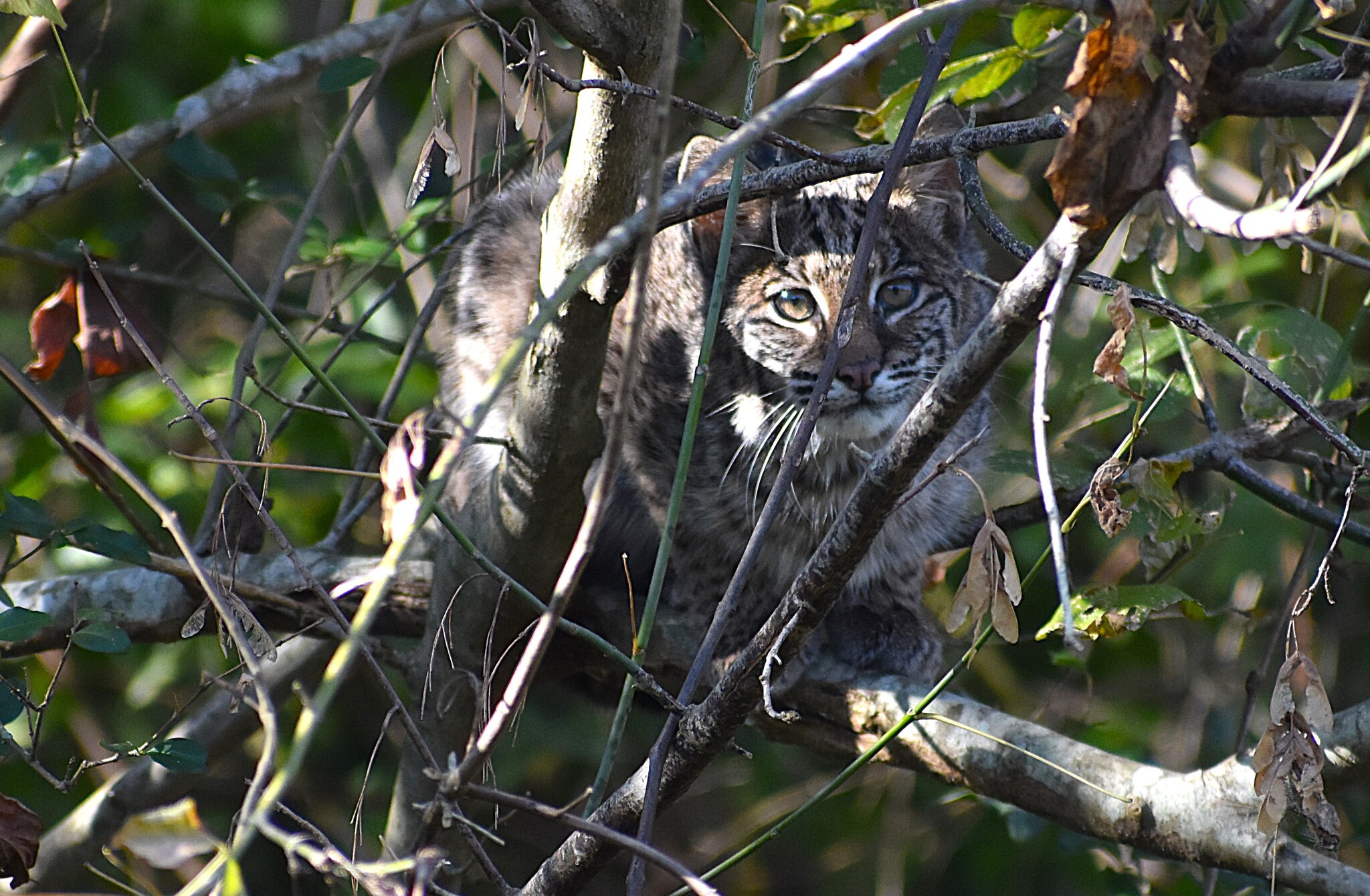 A wild bobcat in South Carolina. Credit: bill777 (CC license)
Across much of their range, bobcats are ecosystem indicators. Because bobcats regularly travel 2-7 miles per day through their territories and disperse longer distances, their presence is often a sign of quality wildlife habitat and corridor connectivity – especially in Eastern states, where they are one of the few top predators present. Like coyotes, bobcats are large enough to limit smaller mesopredators, while also adept at living in more fragmented landscapes (due to smaller territory requirements) compared to larger predators like cougars, jaguars, and wolves. These versatile wildcats can adapt to a variety of habitats, including coastal islands, playing a crucial ecological role in those areas.
Island ecosystem guardians
One of those places is Kiawah Island, a 15.14 square mile barrier island and golfing resort community 21 miles southwest of Charleston, South Carolina. For years, the island was home to stable populations of approximately 30-35 bobcats and 600-700 deer. Local biologists have monitored and tracked the cats for decades. As this coastal barrier island provides excellent habitat, it supports higher bobcat densities than mainland South Carolina. While the island is more developed today compared to the early 2000s, bobcats have adapted, and large areas of land are permanently protected and remain pristine. Bobcats prefer the marsh edges and secondary dunes, away from developed areas, but roam throughout the island.
These wildcats are crucial to the island’s biodiversity. In 2005, a collaborative study between Kiawah and the University of Georgia found that bobcats helped maintain the white-tailed deer population at a stabilized, healthy level. The presence of bobcats – the island’s resident apex predator – was the main source of fawn mortality. Under normal conditions, bobcat survival rates were very high, and the deer herd was healthy and in excellent condition. Kiawah’s bobcats did an exceptional job balancing deer abundance so that deer population control was largely unnecessary – not the case in many urbanized areas that lost their wild predators.
A sudden decline
Every year, local conservancy biologists anesthetize and fit some bobcats with temporary radio collars programmed to eventually drop off. This data helps identify important wildlife habitat areas, monitor the population, and inform guidelines for habitat preservation and improvement. Normally almost every collared bobcat survived, year after year. Bobcat populations self-regulate, and are protected from hunting or trapping on the island.
However, between 2017 and 2020, bobcats suddenly started dying. Survival rates dropped precipitously. Wildlife biologists found multiple bobcats who died from internal bleeding, without signs of outward trauma. Toxicity analysis of the deceased bobcats determined the cause – second generation anticoagulant rodenticides. At least one radio-collared female died while giving birth. High levels of rat poison killed not just this bobcat, but her four kittens – a devastating loss for Kiawah’s small population. By 2020, the population dropped below 10.
Since bobcats are a keystone species, their abrupt decline had rippling ecological effects. The ecosystem was no longer balanced. Without their natural predator, deer densities on the island surged to 111 per square mile, threatening native plant biodiversity. When too numerous, deer can overbrowse and severely degrade plant communities, especially within developed landscapes. Kiawah Island began culling deer to reduce overpopulation, a cost that had been unnecessary when the bobcat population was stable and healthy.
What are second-generation anticoagulant rodenticides?
Both first and second-generation anticoagulant rodenticides are highly potent. These toxins inhibit Vitamin K production, causing internal bleeding and fatal hemorrhaging in rodents. Pest control operators widely use and distribute them in “bait boxes” outside buildings. First-generation anticoagulants include chlorophacinone, diphacinone and warfarin. Second-generation anticoagulants – developed in the 1970s to poison rats resistant to first-generation compounds – include brodifacoum, bromadiolone, difenacoum, and difethialone.
While both poisons take several days to kill rodents, second-generation anticoagulants are stronger, linger for longer periods of time in animal tissues, and pose higher secondary poisoning risks. Despite their widespread use, anticoagulants are highly toxic to wildlife and accumulate in food webs. After eating poison bait, rodents become lethargic, making them easy targets and appealing meals to wildlife. Top predators are especially impacted because the toxins accumulate up trophic levels – a process known as biomagnification. Bobcats consume large numbers of rodents and also hunt smaller predators like weasels. After eating enough poisoned rats or small carnivores, they eventually accumulate a lethal dose.

A community bobcat guardian program began
Kiawah Island’s residents respect and value their bobcats, and understood the urgency of immediate action. Addressing the rat poison issue was the top priority before reintroduction could be considered. Introducing new bobcats makes little difference unless the island’s ecosystem is healthy and viable for them. Occasionally, a new bobcat will also cross the Kiawah River from the mainland independently.
Initially, Kiawah Island planned on passing a local ordinance to immediately protect their bobcats from rat poison. Rat poison was largely unregulated under state law, and precise usage data wasn’t publicly available. However, in South Carolina, only Clemson University’s Department of Pesticide Regulation can legally issue any regulatory action on rodenticides. In many states, laws broadly prohibit towns and municipalities from enacting local restrictions on rat poisons or other pesticides – which benefits pesticide industries at the expense of wildlife. Narrow exemptions exist for imminent danger to human health or endangered species, but bobcats lack federal or state endangered species protection. Kiawah Island submitted a request in 2020 to enact a local temporary rodenticide ban as bobcat numbers were dangerously low, but Clemson DPR denied their proposition, claiming “no chronic misuse violations” occurred.
Prior to the bobcat decline, the island’s golf courses gained nationwide attention from hosting PGA championships. As Kiawah’s popularity increased, more people began renting properties. Most of these homeowners or renters hired pest control and landscaping companies, and these businesses’ standard protocols had caused the sharp rodenticide influx. In many cases, pest control companies had pre-emptively set out and regularly replenished rat poison outside homes – regardless of whether homeowners were experiencing any issues with rodents.
Because the community was barred from locally regulating rodenticides on the island, conservation efforts relied on voluntary participation. Earlier in 2020, the community launched a Bobcat Guardian program, with education and outreach efforts raising awareness of the issue. Residents already liked the bobcats and understood their ecological importance, but making the clear connection between rat poison and bobcat deaths was pivotal. Even when used correctly under label instructions, these slow-acting poisons posed high secondary risks to wildlife. Soon many local businesses, residents, and 20 Charleston-area rodent control companies signed the Bobcat Pledge, agreeing to stop using rat poisons harming these wildcats. Renters and residents began hiring only Bobcat Guardian program landscapers and pest control providers. Over the following years, the rodenticide deaths stopped.
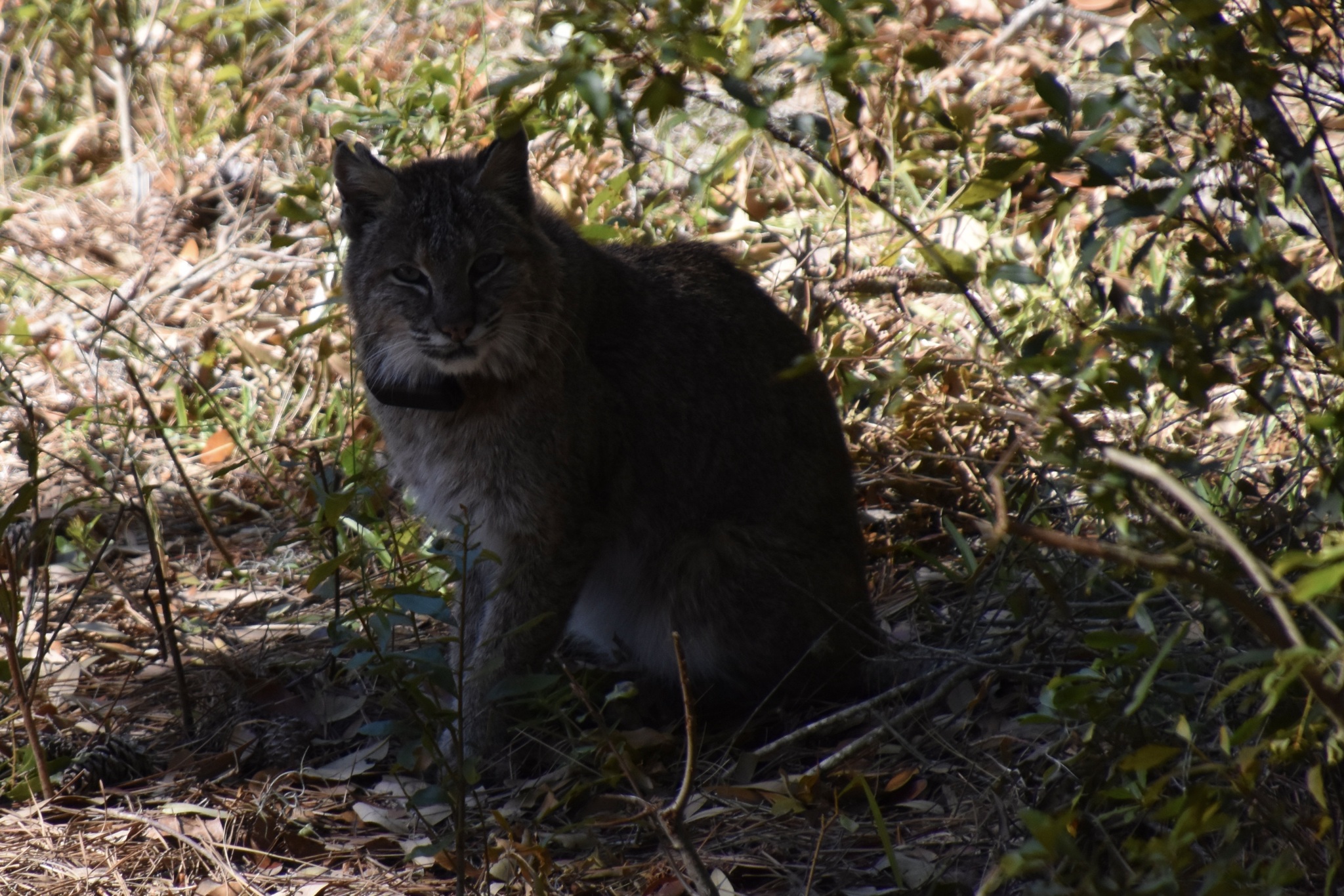 Radio-collared bobcat on Kiawah Island, South Carolina. Credit: Jordan Haber (CC photo)
Awareness and research led to state-level reform for South Carolina
Meghan Keating, a doctoral research student at Clemson, studied toxicology and annual survival rates of Kiawah’s radio-collared bobcats, comparing data with similar studies in other states. Her recently published research confirmed rat poison – not development – was the primary factor for the bobcats’ decline. As the population continues to recover, maintaining the Bobcat Guardian program remains necessary for the bobcats’ long-term survival. The paper’s abstract states: “Based on population projections, our study presents some of the strongest evidence to date that AR exposure can contribute to population declines in wild carnivores.”
These findings shifted state regulations. In 2025, Clemson DPR issued an indefinite statewide moratorium classifying second-generation anticoagulant rodenticides as state-restricted pesticides. This means that in South Carolina, purchases are now restricted to certified applicators only, and sales must be recorded and require a dealer license to sell. These modest reforms marked an important reversal from 2020 and showed that the harmful impacts of rat poisons were gaining recognition and traction.
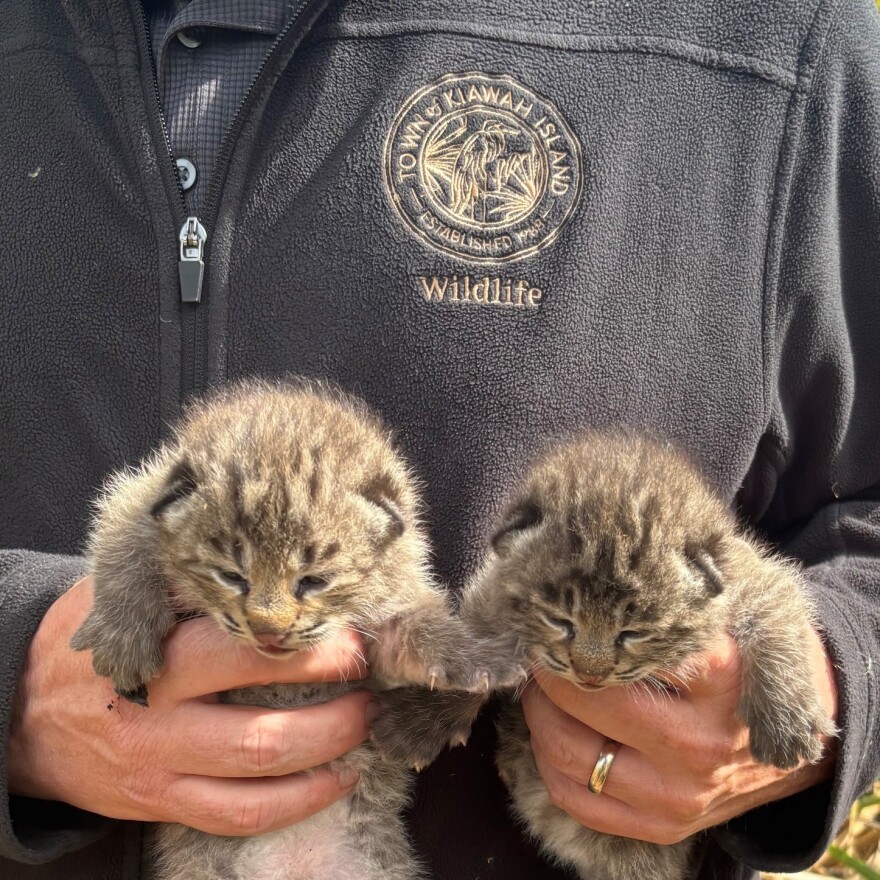
Wildlife officials show off the first bobcat cubs of the season on Kiawah Island, an important milestone in protecting their dwindling population in the area. Photo Credit: Town of Kiawah Island
However, without community intervention, it’s likely Kiawah’s bobcat population would have been lost entirely by now. Today, these elusive wildcats still roam the island and are making a comeback. While it took time to have a measurable effect, the program successfully increased survival rates, helping the population slowly recover to 20-25 bobcats by 2024. This year, on April 28, 2026, local biologists discovered a den with healthy kittens born to a radio-collared female. The two young bobcats, a male and female, represent hope for a rebuilding population and an encouraging sign for their continued recovery.
Rat poisons have many alternatives
It is difficult to ban rodenticides entirely, particularly in cities where rats pose a significant public health issue. However, awareness of these poisons is increasing, and non-toxic alternatives for rodent issues are emerging. Wildlife rehabilitators, particularly those caring for birds of prey, are a reliable source for learning environmentally friendly solutions. Some good general practices include:
Proactive exclusion: making buildings uninviting for rodents is more cost-effective than removing existing rodents.
- Seal holes in roofs, walls, and foundations to remove access to entry or easy nesting areas
- Eliminate entry points around pipes and electrical wires
- Clean up spilled grain, birdseed, pet food and other potential rodent attractants
- Eliminate easy access to nesting materials like shredded paper and fabric
Natural repellents and nontoxic alternatives
- Use botanical repellents such as peppermint, lavender, citronella, eucalyptus, or balsam fir oils – soak cotton balls in oil and place near entry points. (Rodents hate these smells because they interfere with navigation)
- Cayenne or chili pepper also work – mix with water and dish soap to create a mixture and spray anywhere rodents are active.
- Some cities are using rodent fertility control in the form of palatable soft bait or liquid to decrease populations. This is a humane and nonlethal Integrative Pest Management practice, and only affects rodents with no secondary impacts on wildlife
- Nontoxic forms of lethal rodent control are available – avoid using glue traps, which also entrap small birds and snakes
Native predators are natural allies
- Owls, hawks, bobcats, foxes, and coyotes help manage outdoor rodent populations for free
- Encourage birds of prey by planting trees, leaving dead ones standing, or building nest boxes for owls or kestrels
- Bobcat conflicts are uncommon, but carnivore coexistence practices allow residents to benefit from having native predators around while also keeping pets, backyard chickens and livestock safe.
- Keep wildlife wild and don’t feed them
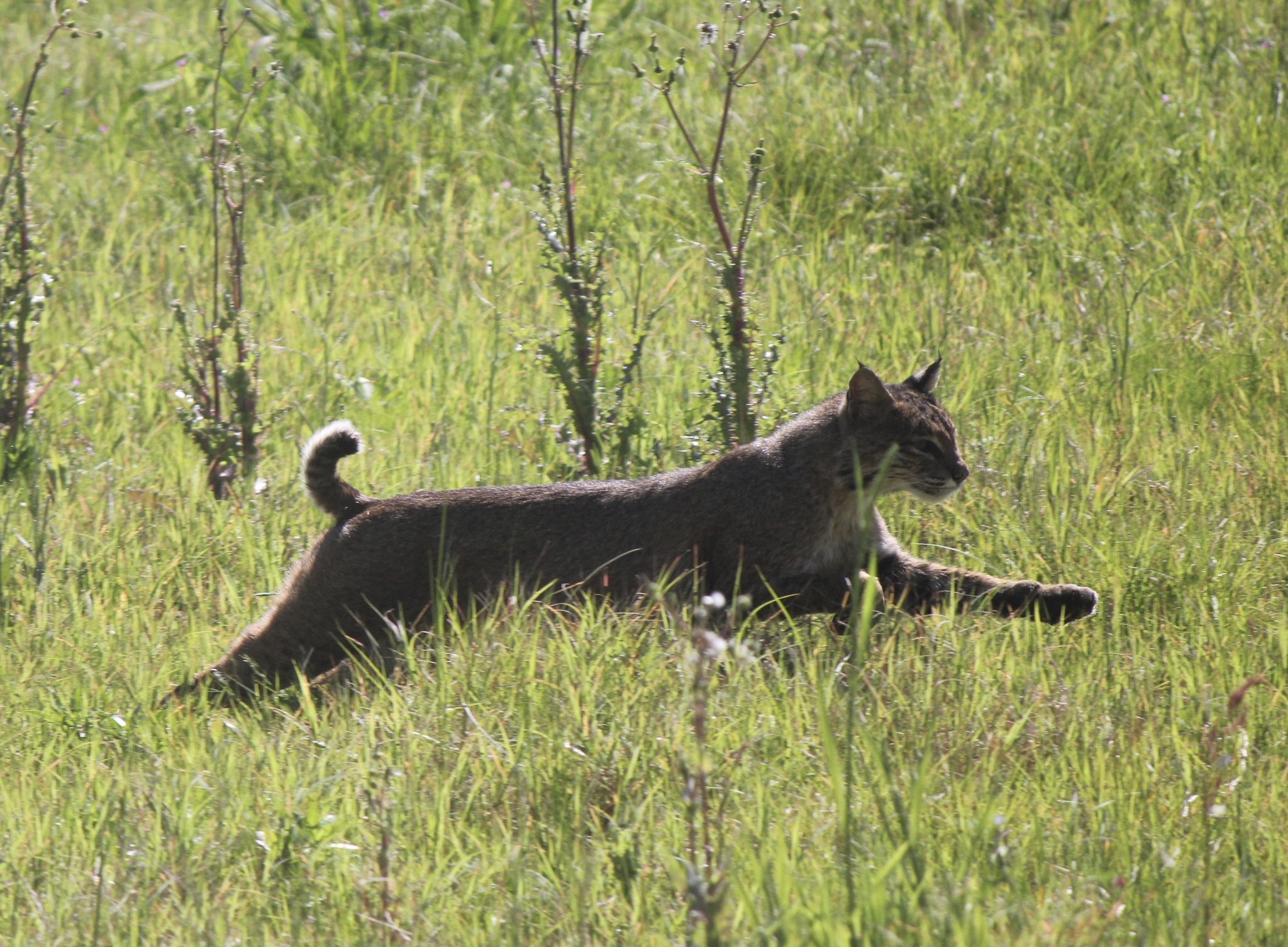
A bobcat at the Savannah NWR in South Carolina. Credit: thequirkyquail (CC photo)
State-level and local wildlife advocacy matters
Bobcats receive relatively little advocacy across much of their wide range, despite their ecological importance. While these wildcats’ adaptability and elusive behavior contributes to their survival, resilience does not make them invulnerable or expendable. In areas near urban or suburban development, habitat fragmentation, vehicle collisions, and rodenticides are usually the biggest threats to localized bobcat populations. Conversely, in some rural regions, bobcats may have excellent habitat but also contend with local intolerance and unrestricted hunting pressure, as well as state agencies’ lack of reliable standards for population monitoring. While bobcats generally cause very few conflicts with humans (in many cases people don’t even realize they share land with these wild neighbors), some areas still stigmatize the wildcats as dangerous or undesirable. Historically, bobcats faced intense persecution and bounties in most states almost immediately after European colonization. Social perceptions of bobcats matter.
Despite barriers to direct local regulation, Kiawah’s bobcats still had several factors in their favor. Local residents already viewed bobcats positively. They were an important symbol of the island to many in the community. In addition, the bobcats were being studied over a small-scale local area for decades. As the island’s main deer predator, their absence was easy to notice and pinpoint. This helped Kiawah begin a rapid, successful grassroots response. Many bobcat populations don’t receive the same attention or awareness.
Rural and urban development and management practices intrinsically shape local wildlife ecology. Beyond habitat conditions, social contributions influence conservation, especially for carnivores. These include local perceptions of wildlife, culture, expectations, prior experiences, worldviews and values.
Take action for local wildlife
Many people view the Endangered Species Act and other federal legislation as the ultimate backstop for wildlife protections. However, conservation means more than just protecting land and preventing extinction – it also involves responding to early warning signs on a local scale, and making changes when necessary.
If you’re ready to take action for your local wildlife, check out our Action Hub resources and join our free Building Power for Wildlife Justice cohort to help create positive change and challenge narratives. Local advocacy can help shift perceptions about bobcats, coyotes, and other misunderstood wildlife, and raise awareness of the effects of anticoagulant rodenticides.
State-level rodenticide regulations directly impact local bobcats, hawks, owls, coyotes, and entire food webs. Let elected officials in your state know this issue matters to you and that you support limiting anticoagulant poisons that harm wildlife.
Peggy Clark is a Geospatial Science & Biology student at Radford University in Radford, Virginia and volunteer writer for Wildlife for All. Peggy is a dedicated wildlife advocate who uses her talents to connect threads and investigate topics geared towards bringing justice to state wildlife governance.
Advocates condemn Mexican gray wolf killings, commend law enforcement efforts
For immediate release: June 15, 2026

Advocates condemn Mexican gray wolf killings, commend law enforcement efforts
SANTA FE, N.M. – The U.S. Fish and Wildlife Service investigated the deaths of two Mexican wolves and served a federal search warrant in April of this year, according to a report in yesterday’s Albuquerque Journal. The wolves – a five year-old father and a yearling son from the Sawtooth Pack – were caught in private traps on private land in two separate incidents in the spring of 2025.
The article provides details about the extensive search conducted by federal agents at properties near Datil, New Mexico. While New Mexico law prohibits trapping on public lands, livestock producers are permitted to use leg-hold traps on private property, and are often used primarily to target coyotes. The rules for Mexican gray wolves require that a person encountering a dead or injured Mexican gray wolf needs to report the incident to the Service within 24 hours and not disturb the area where the animal was located. Wolves caught in traps are expected to be treated with “due care” to avoid injury or death to a wolf, which constitute take under federal Endangered Species Act (ESA) protections.
The Albuquerque Journal story did not mention any potential penalties that the suspects might be facing, but harming or killing a Mexican gray wolf is a violation of the federal ESA and can result in criminal fines of up to $50,000, up to one year in jail, and civil penalties of up to $25,000 per offense.
“We applaud the diligence of law enforcement officers in pursuing accountability for these wolves’ deaths, and we sincerely hope that the U.S. Attorney’s Office in New Mexico takes the opportunity to demonstrate that one cannot simply kill endangered species with impunity,” said Greta Anderson, deputy director of Western Watersheds Project. “These wolves mattered – to their families, to the species, and to the majority of Americans who want to see wolves recovered.”
“A strong enforcement response to these killings will send a message far beyond this case,” said Michelle Lute, PhD in wolf conservation and executive director of Wildlife for All. “At a time when federal leaders are signaling that laws can be ignored or weakened, it’s especially important that prosecutors and wildlife agencies make clear that endangered species protections remain the law. Accountability is essential to deterring future violations and ensuring that those who would harm wildlife understand there are real consequences.”
“The Mexican gray wolf remains one of the most endangered mammals in North America, and every illegal killing undermines years of recovery work,” said Claire Musser, executive director of the Grand Canyon Wolf Recovery Project. “These wolves were part of a family that was contributing to the species’ future. We applaud federal investigators for their diligence and hope this case demonstrates that endangered species laws carry real weight. Recovery depends not only on releasing wolves into the landscape, but on ensuring that those who unlawfully harm them are held accountable.”
“In addition to being members of a still highly imperiled and protected species, these two wolves were killed with disturbing human brutality and cruelty”, said Mary Katherine Ray, Wildlife Chair for the Rio Grande Chapter of the Sierra Club. “We are very appreciative of the law enforcement agents’ investigation and hope the perpetrator(s) can be brought to justice not only for killing endangered wolves, but also for the heinous way the acts were committed.”
“The deaths of these two wolves are heartbreaking and serve as an important reminder that Mexican wolves still face significant challenges. Saving a species like the Mexican wolf is a true team effort, requiring collaboration from captive breeding facilities, conservation organizations, and wildlife agencies, and we’re heartened to see such a coordinated response in the face of such devastating acts,” said Regan Downey, director of education and advocacy at the Wolf Conservation Center, a participant in the SAFE (Saving Animals From Extinction) Mexican Wolf program.
“The details of these grisly murders demonstrate that, despite the fact that lobos have been an important and iconic part of New Mexican landscapes for millenia, they are still actively and gruesomely persecuted,” said Leia Barnett, New Mexico Conservation Lead for WildEarth Guardians. “The public outcry and formal investigation are proof that wolves are valued as native carnivores and that our bedrock environmental laws like the Endangered Species Act shall not be flouted.”
There is a total of $104,500 being offered in reward for persons providing information leading to the conviction of Mexican wolf killers. Individuals with information they believe may be helpful are urged to call one of the following agencies: USFWS Special Agents in Pinetop, Arizona, at (346) 254-0515.
###
Western Watersheds Project is a nonprofit conservation organization with more than 50,000 members and supporters who care about protecting western public lands for watersheds and wildlife.
The Grand Canyon Wolf Recovery Project is a nonprofit dedicated to bringing back wolves to help restore ecological health in the Grand Canyon region, while also recognizing wolves as sentient beings with intrinsic value and worth.
WildEarth Guardians protects and restores the wildlife, wild places, wild rivers, and health of the American West.
Wildlife for All is a national organization dedicated to reforming wildlife management to be more democratic, just, compassionate and focused on protecting wild species and ecosystems. Through research, advocacy, and education, we aim to protect wildlife and ensure that policies reflect the values of all Americans.
The mission of the Sierra Club is to explore, enjoy, and protect the wild places of the earth; to practice and promote the responsible use of the earth’s ecosystems and resources; and to educate and enlist humanity to protect and restore the quality of the natural and human environment.
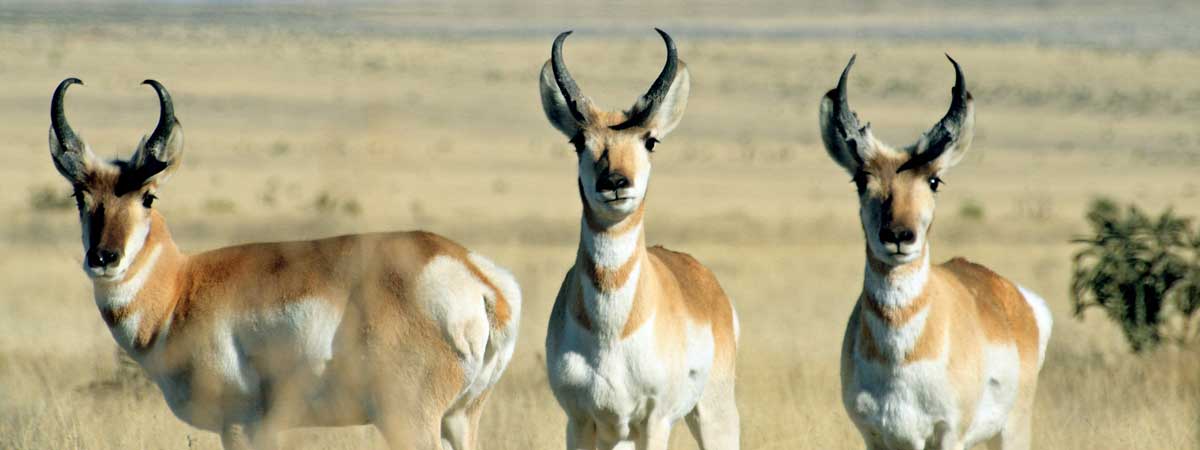
If we care about elk, mule deer, and pronghorn, habitat is key
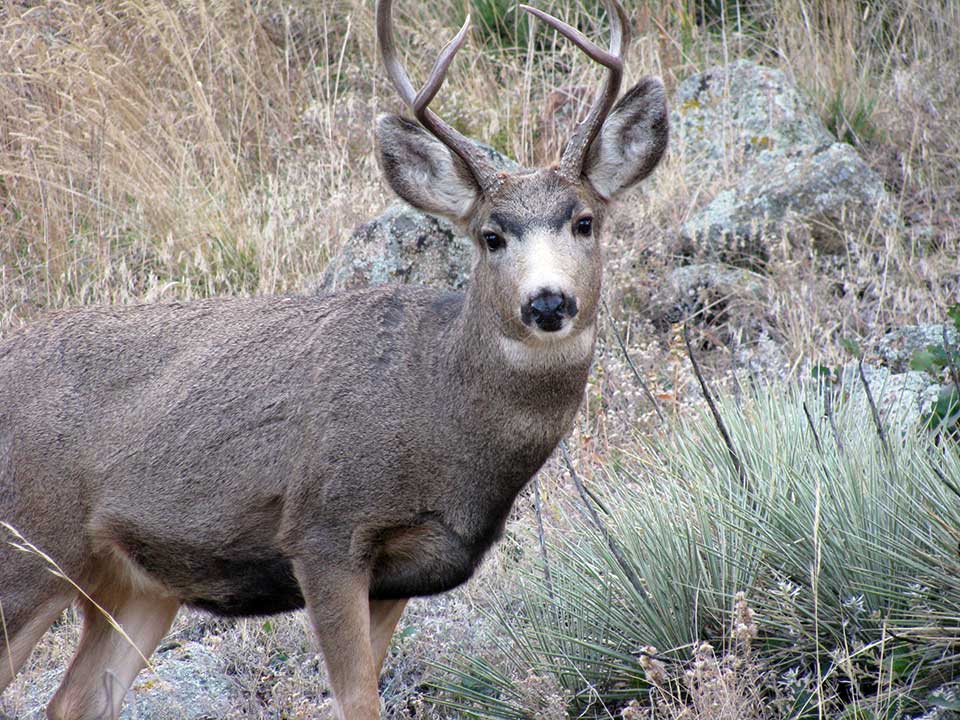
Wildlife declines rarely have a single cause. But one thing is clear: you can’t bulldoze migration corridors, fragment habitat, industrialize winter range, and expect wildlife populations to stay healthy. Pronghorn, mule deer, and elk all seasonally migrate between higher and lower elevations to access and feed on better quality forage. Protecting these migration corridors and habitat integrity is pivotal for these species to thrive.
Oil and Gas Lease Sales Threaten Critical Habitat
This month, the Bureau of Land Management (BLM) is offering 156,000 acres of Colorado public land – and key elk habitat – up for oil and gas leasing. Located near Dinosaur National Monument, these parcels include crucial migration corridors, winter range, and habitat for one of North America’s largest elk herds. Mule deer and pronghorn also call the area home, along with numerous species of conservation concern, including sage grouse, swift foxes, black-footed ferrets, and ferruginous hawks. Oil and gas extraction and development here threatens key habitat all these wildlife share.
This Colorado lease sale represents just one of several areas slated for oil and gas extraction across Western states. Legislation and revocations from the current administration explicitly prioritize livestock and nonrenewable energy industries over outdoor recreation, wildlife conservation, and other uses of public lands. In sharp contrast, the public majority of voters across these states favor conservation and recreation over extractive use.
Habitat loss and fragmentation remain among the greatest threats facing wildlife. Yet these actions rarely receive the same level of public attention or urgency that is directed at native carnivores. Predators often take blame when deer or elk herds struggle. Meanwhile the real causes of herd decline are rarely mentioned. Factors like habitat loss, fragmentation, roads, energy development, recreation pressure, drought, severe winter, and climate change all reshape western ecosystems to the detriment of the wildlife who live there. Yet whenever ungulate populations decline, predators such as wolves, coyotes, and cougars are often blamed first, even as critical habitat continues to fragment and degrade.
Carnivores Continue to be Convenient Scapegoats
For years, wolves have been erroneously blamed for declining elk populations across the West. In Idaho, the state wildlife agency regularly kills gray wolves as “control actions” in remote National Forest areas where they deem wolf hunting and trapping pressure to be insufficient. These wolf-killing actions, carried out on public lands, occur whenever Idaho elk herds are “underperforming” below management objectives. While underlying factors like logging and poaching are documented problems, the agency continues to blame local declines on wolf predation. In regions of the Northern Rockies, killing wolves to supposedly increase elk is even incentivized through bounty payments.
Colorado’s small wolf population is continually politicized, scrutinized and threatened due to management policies prioritizing lethal control over basic coexistence measures. Meanwhile, the federal government is moving forward with major oil and gas lease sales in Colorado’s prime elk habitat.
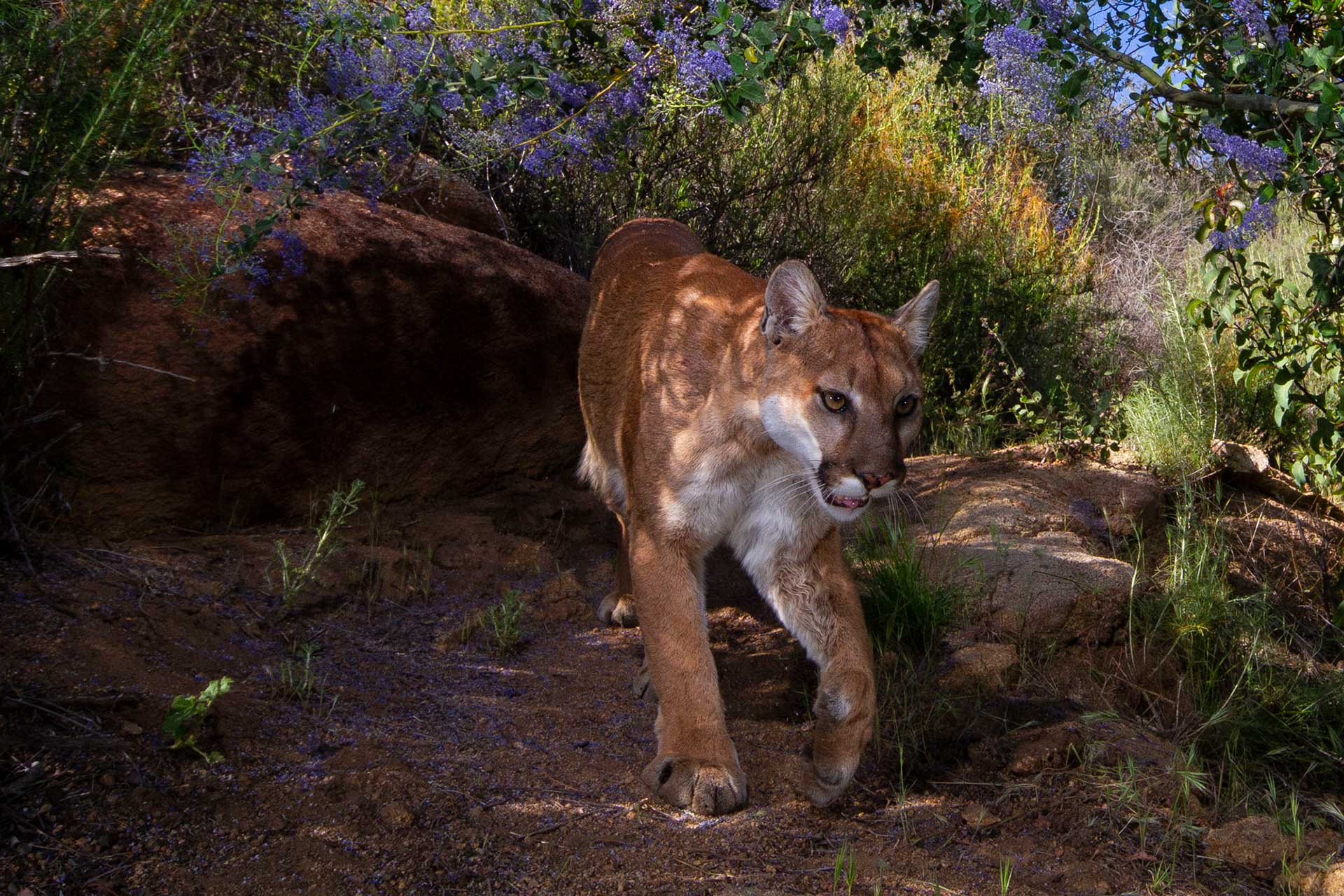
This scapegoating impacts other native carnivore species as well. Across many Western states like Utah and Nevada, state wildlife agencies respond to declines in mule deer herds by aggressively killing cougars and coyotes in the hopes of enhancing mule deer numbers. While often euphemistically called “experimental removal” or “studies”, these actions are indiscriminate, lack independent oversight, fail to account for confounding variables, and shift blame for declines onto another “convenient” native species.
Killing predators in hope of increasing deer or elk numbers is largely ineffective. Deer and elk populations rarely occur far enough below carrying capacity for natural predation to have adverse effects. Habitat, forage, weather, and climate stress primarily shape population trends, not native predators. Yet these patterns continue – largely because hunting advocacy groups, associations and their constituents often lobby state wildlife agencies to perpetuate high hunting and culling pressure on carnivores they consider competition for ungulates they hunt.
Both Issues Are Structural
The administrative push for more oil and gas leases on public lands and the scapegoating of carnivores are interconnected issues. They are symptoms of a system that prioritizes human use, extraction, and consumption of natural resources. Too often, this system does not reflect public values and interests, and represents unjust and undemocratic structures.

When wildlife governance centers extraction and use, it becomes easier to justify ignoring or devaluing species that don’t generate license revenue, don’t have powerful constituencies, or don’t fit traditional management priorities. Jazmin Sunny Murphy, a research associate at the Wolf Conservation Center’s Integrative Ecology and Coexistence Lab, sums up these interconnections in her essay “Ethical Exception”:
“The dominant social paradigm of Western culture holds technological innovation, energy dominance, and expansion of civilization as its highest values. The cost, at this day and age, and as it has always been, is the health of the natural environment. Authorities, unfortunately, see the environment in terms of economic value – what services it can and cannot provide which further human prosperity.
… One of the reasons why coyotes do not receive the same ethical consideration that many other species do is because wildlife managers and many consumptive users view the species as a threat to economic stability and capital gain. The coyote is purely competition for game species or a threat to livestock. There is no in-between or room for consideration of the species as an animal functioning naturally in its native environment. When an animal, or any being for that matter, is reduced to no more than a nuisance, there is no obligation to treat said animal as anything more. The moral responsibility to respect or value life is absent where no such life exists. The coyote becomes a caricature: a playing card of lobbyists fighting not for wildlife and environmental justice, but for the unfettered reign of the natural world.”
Blaming ungulate declines on native carnivores ignores the broader environmental issues behind lower ungulate numbers. This approach ignores the complexity of ecological systems that go beyond predator-prey relationships. It treats one native species as lesser than another and centers consumptive use over holistic ecosystems.
What’s more, it ignores that the presence and diversity of native predators benefits these very species through trophic balance and keeping herds healthier. For instance, wolves’ coursing strategy allows them to detect individual elk in poor condition or with subtle signs of sickness and disease. Bobcats and cougars can help mitigate Chronic Wasting Disease contamination – a disease which is 100% fatal to deer, elk, and other cervids – through their ability to safely consume CWD-infected animal tissue, destroying the disease prions during the digestive process.

Predators are essential to healthy ecosystems and intrinsically valuable on their own. Yet state wildlife agencies regularly ‘manage’ these species using fewer safeguards, weaker science standards, and more political pressure compared to other wildlife.
As wildlife biologist Dr. Mark Elbroch states in his book The Cougar Conundrum:
“Be careful consumers of agency statistics and how agencies interpret results, especially given that current politics and money play a role in the narrative that predators are causing deer and elk declines. Research that highlights how many elk and deer mountain lions kill, or emphasizes mountain lion predation is additive, is meaningless in the absence of data showing the true effect of predation on deer and elk population growth rates…Weather and forage quality are the primary drivers of ungulate population numbers, and it is too easy to make mountain lions scapegoats for other difficult issues, such as drought, new subdivisions and natural gas development, that are the real causes of deer population declines across the West.”
Public Lands Belong To All
The Bureau of Land Management manages 245 million acres of federal land across the United States. The public deserves a say in the future of public lands – not just extractive industries and corporations. Public land belongs to us all. It does not belong to a foreign mining corporation, lobbyists, or handful of politicians willing to trade it away for short-term gain.
If we care about elk, mule deer, and pronghorn populations, we have to focus the conversation and public attention on the real drivers of wildlife decline, rather than the politically convenient scapegoats. Habitat has to be part of the conversation every time. Whenever you hear wildlife described in terms of their “usefulness’, pause and consider what values shape that framing, who benefits from keeping that definition narrow, and what is excluded.
Be a Voice For Wildlife, Habitat, and Public Lands
• Contact your members of Congress and tell them public lands should be managed for wildlife, recreation, and future generations—not treated as sacrifice zones.
• Support organizations defending migration corridors and challenging harmful BLM leasing decisions.
• Pay attention to wildlife commission meetings and public land planning processes before decisions are finalized.
• Help shift the conversation from scapegoating predators to protecting habitat.
Peggy Clark is a Geospatial Science & Biology student at Radford University in Radford, Virginia and volunteer writer for Wildlife for All. Peggy is a dedicated wildlife advocate who uses her talents to connect threads and investigate topics geared towards bringing justice to state wildlife governance.
Replacing fear-based narratives with mountain lion coexistence
“Emergency” declarations of wildlife escalate fear rather than solve problems
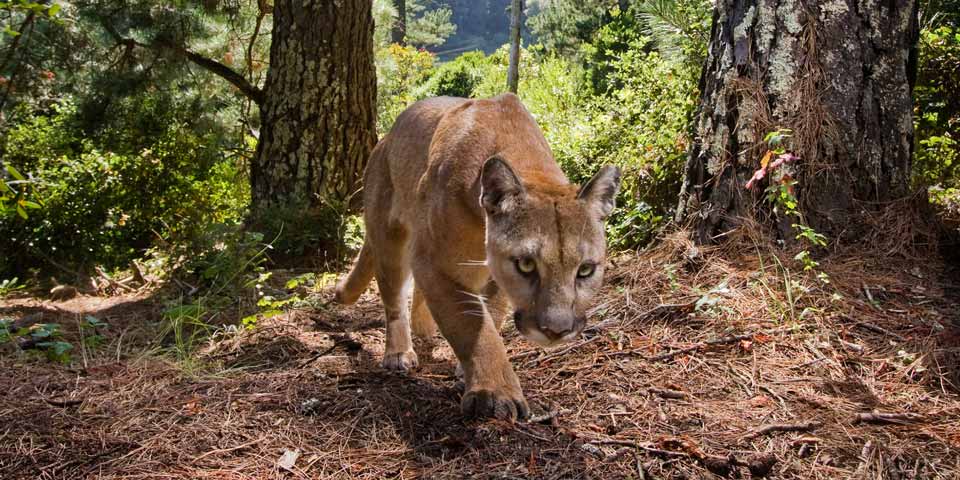
A pattern is emerging across the country – manufactured “emergencies” around native carnivores. The most recent example involves mountain lions in Lassen County, California. Last month, a sheriff invoked “imminent threat” declarations for mountain lions, citing multiple sightings in a rural neighborhood in the Gold Run area, a deer kill near a fence line, and claims that the mountain lions were “clearly comfortable with human presence”.
These declarations are part of a growing political strategy that treats coexistence as impossible, inflames public fear, and uses “emergency” rhetoric to justify increasingly extreme responses to wildlife, including lethal force outside normal permitting systems. Healthy ecosystems require functional predator-prey dynamics. Healthy democracies require transparent public institutions that can withstand fear-based political pressure. Fear-based narratives often bypass meaningful public discussion and distract from the real question: whether wildlife decisions are transparent, accountable, informed by current science, and reflective of the broader public’s values.
Randy Robbins, a Lassen County resident and local wildlife photographer, stated, “I kind of feel like most of us who live here in this little neighborhood can see through this, for the political football that it is. There’s always been mountain lions around here. They’ve never been an imminent threat.” Robbins noted that the area was home to a resident female mountain lion and her yearling offspring, among the wildlife he had photographed over the years. He expressed concern that the sheriff’s fear-based rhetoric might lead to their unnecessary deaths.

Lassen County Mountain Lion | Photo Credit – Randy Robbins
Mountain lion coexistence highlights understanding and respect over fear
Mountain lion sightings near rural communities do not equal an imminent threat, nor does it mean they have necessarily “lost their natural fear” of humans. Lassen County has always been home for mountain lions, and has excellent habitat and wild prey (mule deer) for these elusive wild cats. While the sheriff later said the “imminent threat” had faded after no actual conflicts with people, pets or livestock occurred, state wildlife officials pointed out that the mountain lions in the area had never demonstrated threatening behavior.
A recent article from the California-based Felidae Conservation Fund puts the risks into perspective: you are more likely to be killed by eating contaminated cantaloupes or rocking and tilting vending machines than mountain lions. In mountain lion country, the risks associated with driving a vehicle or striking a deer on the road are far greater. Human fatalities from mountain lions, while highly publicized, are actually very rare (in California, only 4 occurred in the last 40 years). The majority of conflicts with people involve young, inexperienced mountain lions and individual cats suddenly startled and frightened by passing humans. Lethal control does not make people or pets safer, and may actually worsen conflicts by causing stable mountain lion families and social structures to break down.
While often stereotyped as vicious, solitary killers, mountain lions are intelligent cats exhibiting complex social structures and even altruistic behavior. They are keystone species whose prey caches benefit a wide variety of wildlife, from scavenging eagles and black bears to numerous beetle species. As apex predators, they naturally occur at low densities, but can regularly interact and share food with others of their kind, which increases social recognition and can help individuals find mates. Key to this social stability is the presence of an established, resident male occupying a territory, whose loss disrupts social networks. Loss of an adult female also carries rippling impacts if she has dependent cubs. Inexperienced, orphaned young may either starve or come into conflicts with people while looking for food.
In general, mountain lions go out of their way to avoid people. They shift their behavior to travel longer distances and become more nocturnal in areas with human activity. Researchers found that mountain lions moved more cautiously through areas with audio speakers playing human voices, while showing no hesitation in response to the same audio speakers playing frog calls. In some instances, mountain lions may even flee from cached kills upon hearing human voices.
Understanding mountain lion ecology and behavior is key to coexistence and proactively avoiding conflicts. One example is building secure enclosures for domestic sheep and goats at night, which protects them from mountain lion predation. In California, some organizations have even donated and constructed these pens for rural communities. Mountain lions are already adjusting their behavior in response to human presence – we can do the same.
Countering fear-based wildlife misinformation starts at the local level

This story is about more than just one sheriff’s warning about mountain lions; it’s about a pattern. We’ve watched “emergency” declarations become a political tool in wildlife conflicts across the West for Mexican gray wolves, gray wolves, grizzlies, and mountain lions. When local officials frame coexistence challenges as immediate crises requiring extraordinary action, often before facts are fully established, and often in ways that escalate fear rather than solve problems, coexistence, respect and understanding for wildlife are undermined. While the media frames each action as individual, it’s important we recognize this pattern and call it for what it is: baseless fearmongering.
Fear-inflamed narratives don’t stay local. They travel upward. County resolutions influence state pressure campaigns, and can lead to federal riders and legislation attacking wildlife protections altogether. What starts as “public safety concerns” in one county can become justification for dismantling protections nationwide.
These moments matter because conflict with wildlife is real, and communities deserve support, resources, coexistence infrastructure, and frankly, serious conversations about real solutions. “Emergency” rhetoric does the opposite. It becomes political strategy, distorts public understanding and pushes wildlife policy further away from science, proportionality, and democratic accountability. People are starting to recognize the pattern. If we don’t challenge fear-based political narratives at the local level, they become policy at the state and federal level.
Pay attention to your county commissions, your sheriffs, your wildlife commissioners, and your state legislators. Several of the biggest attacks on wildlife protections don’t start in Congress. They start with local officials testing how much fear they can manufacture, and how little accountability they’ll face for it. And for too long, our movement has sidelined this work in favor of a federal focus that has left our wildlife vulnerable.
If you’re ready to change that, check out our Action Hub resources and join our free Building Power for Wildlife Justice cohort to help create positive change and shift narratives in your local area. Check out this resource for more information on mountain lion coexistence.
June Wildlife Commission Meetings
Speak up for wildlife at June Wildlife Commission Meetings.
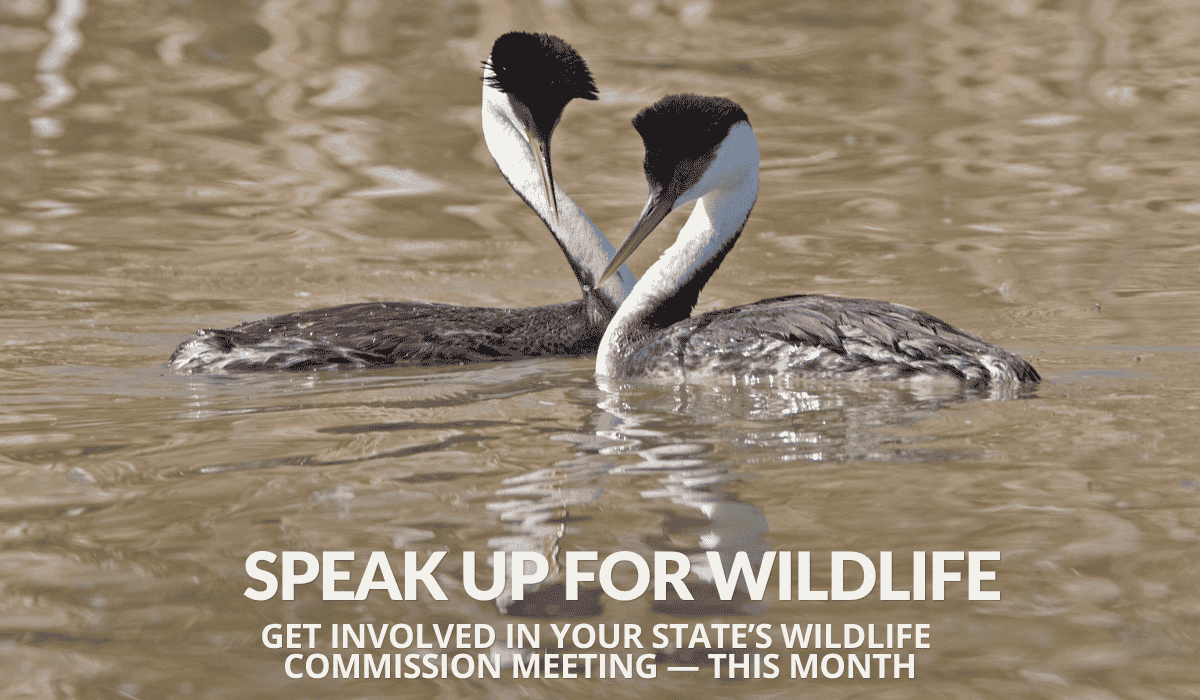
June Wildlife Commission Meetings
We’re halfway through the year; are you involved in your state? If not, you still have time.
This month, 27 state wildlife commissions are holding meetings that will shape how wildlife is managed across the country. If you’ve been paying attention to how these systems work, you already know the problem: decisions are often made without broad public input, even though wildlife is a public trust resource.
That only changes if people show up, speak on the record, and make it clear that these decisions are being watched. Below, you’ll find a list of May wildlife commission meetings by state and date. Visit our Resources Page and Advocacy Toolkit to prepare your comments or testimony, and turn this moment into action for wildlife in 2026.
Delaware
Meeting Date: June 2
Location:Little Creek Hunter Education Training Center, 3018 Bayside Drive, Dover
Details: Click here for agenda and details
Notes: Meeting starts at 6:30 p.m. This will be a hybrid meeting with an in-person option in Dover and a virtual option via Teams. To join virtually via Teams, click here and enter Meeting ID: 265 386 661 731 893 Passcode: uT9fw6op. Join by phone (audio-only) dial 1-302-504-8986 and enter code 278375675#. For more information, contact the DNREC Wildlife Section, at 302-739-9912 or Joe Rogerson at Joseph.Rogerson@delaware.gov or 302-739-9912.
Louisiana
Meeting Date: June 2
Location: LDWF Headquarters, Joe L. Herring Room, 2000 Quail Drive, Baton Rouge, LA 70808
Details: Click here for meeting details
Notes: Meeting starts at 10 a.m. A live audio/video stream of this meeting will be available via Zoom.
South Carolina
Meeting Date: June 4
Location:107-108 Botany Bay Conference Room at Headquarters at 260 D. Epting Lane, West Columbia, SC 29172 – at State Farmer’s Market complex off of Highway 321
Details: Click here for agenda and details .
Notes: Meeting starts at 10 a.m. Anyone wishing to make comments to the Board please email your name and topic to board@dnr.sc.gov at least 24 hours in advance. Contact Sandy Rucker 803-734-9102 or ruckers@dnr.sc.gov for assistance. Please use the following link and select the “Watch Live” button if you would like to watch the Board meeting: https://www.dnr.sc.gov/
Maine
Meeting Date: June 10
Location:353 Water Street, Room 400, Augusta, ME
Details: Click here for agenda
Notes: Meeting starts at 9:30 a.m. Those wishing to attend remotely (Microsoft Teams) please contact Becky.Orff@maine.gov for log in information.
Michigan
Meeting Date: June 10
Location: Lansing Community College, West Campus Rooms M119-121, 5708 Cornerstone Drive, Lansing, MI 48917
Details: Click here for agenda and details.
Notes: Meeting starts at 9:30 a.m. Persons registering to provide comments on a topic listed on the agenda on or before the Friday preceding the meeting will be allowed up to 5 minutes for their comments. Persons registering to comment on a topic not listed on the agenda, after the Friday preceding the meeting, or at the meeting will be allowed up to 3 minutes. If you are unable to attend the meeting but wish to submit written comments on agenda items, please write to Natural Resources Commission, P.O. Box 30028, Lansing, Michigan 48909, or email nrc@michigan.gov. Read more on the Commission website. Watch the livesteam here.
Nebraska
Meeting Date: June 11-12
Location: 105-107 Midplains Community College North Campus 1101 Halligan Drive North Platte NE
Details: Click here for meeting agenda and details.
Notes: June 11 informational meeting agenda (and hatchery tour info) here. Meeting on 6/12starts at 8 a.m. Interested persons may attend and testify orally or by written submission at the public hearing. Interested persons or organizations may submit written comments prior to the hearing, which will be entered into the hearing record if they: 1) include a request to be included as part of the hearing record; 2) include the name and address of the person or organization submitting the comments; and 3) are received by Sheri Henderson at the Lincoln office, 2200 North 33rd Street, Lincoln, NE 68503-0370. It is unclear if the meeting will be livestreamed and if virtual participation is possible.
South Dakota
Meeting Date: June 11-12
Location: Madison, SD / Zoom
Details: Click here for agenda and details (note no agenda available as of 6/3)
Notes: No meeting details posted as of 6/3 for virtual participation; keep checking the links above. Inform Gail Buus at gail.buus@state.sd.us by 1 p.m. CT if you plan to speak during the meeting. Testifiers should provide their full names, whom they are representing, city of residence, and which proposed topic they will be addressing. Written comments can be submitted here. Here are guidelines for submission. To be included in the public record, comments must include full name and city of residence and meet the submission deadline of seventy-two hours before the meeting (not including the day of the meeting).
Utah
Meeting Date: June 11
Location: Eccles Wildlife Education Center, 1157 South Waterfowl Way, Farmington, Utah
Details: Click here for agenda (not available on 6/3) and details. Meeting materials for Commission and RAC meetings here.
Notes: Unless otherwise noted, all Wildlife Board meetings are on Thursdays at the Eccles Wildlife Education Center, 1157 South Waterfowl Way, Farmington. Board meetings begin at 9 a.m, unless otherwise indicated. Feedback occurs at Regional Advisory Council (RAC) meetings. If you wish to comment during a RAC or Board meeting, you must attend the meeting in person — you may not submit comments online during the meeting. When you come to the meeting, pick up a comment card, fill it out and speak at the podium when your name is called. Find the full schedule here. Agendas and minutes are here. Watch live: https://youtube.com/live/PB0dsu8FmIo
Action: Continue to push back against Utah’s flawed and misguided plan to kill mountain lions year-round in several game management units.
Washington
Meeting Date: June 11-13
Location: Hybrid: Zoom and location TBD in Olympia
Details: Click here for agenda and details (note no agenda available as of 6/3)
Notes: The agenda has many, many links to register for Zoom participant on the different days and how to comment on agenda items; you must look at this webpage to fully participate. Registration for those wishing to provide virtual comments closes at 5 p.m. the day before the meeting begins. Registrants will be called upon and typically have 3 minutes to speak. If you are unable to participate, you can submit your comments on the Commission contact page. If you haven’t pre-registered and wish to attend and speak in person, complete a Public Testimony Form, available at the registration table. The form must be submitted at least 15 minutes prior to the beginning of the agenda item you wish to testify on. Watch on Zoom. Watch livestream.
Hawai’i
Meeting Date: June 12
Location: 1151 Punchbowl St. Room 132 (Kalanimoku Building), Honolulu, Hawai‘i
Details: Meeting agenda and details here. (Note no agenda available as of 5/1)
Notes: Meeting starts at 9.a.m. Attend in person and arrive at least 15 minutes prior to the meeting start time in order to add your name to the sign-in sheet. To speak virtually, email blnr.testimony@hawaii.gov. Include your name and the agenda item on which you would like to testify. Once your request has been received, you will receive an email with the Zoom link. Requests may be also made during the meeting. Meetings will be livestreamed at: https://youtube.com/c/boardoflandandnaturalresourcesdlnr. To submit a comment, email blnr.testimony@hawaii.gov no later than 24 hours prior to the scheduled meeting to ensure time for BLNR Member review.
Kentucky
Meeting Date: June 12
Location: #1 Sportsman’s Lane, Frankfort KY and Livestreamed Online
Details: Click here for agenda and details.
Notes:The meeting will start at 8:30 a.m. (ET) in the Administration Building on the Kentucky Department of Fish and Wildlife Resources’ campus in Frankfort. It will be open to the public.The meeting also will be livestreamed and archived on the department’s YouTube channel at youtube.com/FishandWildlifeKY. A link to the livestream also will be posted on the department’s homepage at fw.ky.gov at the start of the meeting. Anyone wishing to address the Commission orally must sign in before the meeting and will have 3 minutes to speak during the public comment. Members of the public may submit emailed comments on Commission business items anytime to FW.PublicAffairs@ky.gov; these comments may include statements of support or opposition, or express concerns or questions. Emailed comments regarding a business item that are received before 5 p.m. at least two days before a scheduled meeting that includes opportunity for public comments may be read by staff during the public comment segment of the meeting. The Commission chair reserves the right to select representative comments to be shared orally or read from emails, subject to availability of time and potentially redundancy of comments.
Montana
Meeting Date: June 12
Location: Montana Heritage Center in Helena (225 N. Roberts St.) and virtually via Zoom
Details: Click here for agenda and details.
Notes: Meeting starts at 9 a.m. This regular meeting of the Fish and Wildlife Commission is scheduled to be held virtually via Zoom. The Commission will take public comment on agenda items for registered commenters via Zoom. If you wish to make a comment via Zoom, register here: https://myfwp.mt.gov/fwpPub/mtg//fishandwildlifecommission06122026 .
Action: Several topics were late additions and will have their own comment period: Elk Hunting Access Agreements, Beaver Translocations, Mountain Lion Regs – CMR & ULB, Mtn Lion Amendment #1 – Burrows, Mtn Lion Amendment #2 – Brooke. The comment period for these 4 topics and the amendments will run through June 7. There are two dedicated methods to submit public comment to the Fish and Wildlife Commission on meeting agenda topics PRIOR TO the meeting: Online Portal (SurveyMonkey) or Mail-in of Public Comments. Public comment opportunity will be offered during the meeting. In-person comments can be made at the meeting venue or at any FWP Regional Office throughout the state. Register to comment via Zoom here.
New Hampshire
Meeting Date: June 16
Location:Fish and Game Headquarters, 11 Hazen Drive in Concord, NH
Details: Click here for agenda and details
Notes: Commission meetings are regularly scheduled at 1 p.m. on the third Tuesday of every month at Fish and Game Headquarters, 11 Hazen Drive in Concord, NH. Meetings of the NH Fish and Game Commission are open to the public, unless otherwise noted.
Arkansas
Meeting Date: June 17-18
Location: AGFC Auditorium Little Rock, AR
Details: Click here for agenda and details
Notes: Unclear how to speak at meetings or provide virtual testimony or written comments. Watch the meeting on YouTube.
California
Meeting Date: June 17-18
Location: California Natural Resources Headquarters Building, 715 P Street, Second Floor, Sacramento, CA 95814
Details: Click here for agenda and details
Notes: Meeting starts at 8:30 a.m. Join via Zoom here.
Maryland
Meeting Date: June 17
Location: Department of Natural Resources Wildlife and Heritage Service, 580 Taylor Avenue, Tawes State Office Building, E-1, Annapolis MD 21401
Details: Click here for agenda and details. (Note no agenda was posted on 6/3)
Notes: Google Meet available for virtual participation. Note: Unless notified otherwise, all meetings will be held via Google Meet. When meeting in person, they will be held in the C-4 Conference Room of the Department of Natural Resources—Tawes State Office Building beginning at 10:30 a.m. Available parking is located at the Navy Stadium Parking Lot. Send written comments to wac.dnr@maryland.gov.
Massachusetts
Meeting Date: June 17
Location: MassWildlife Field Headquarters, 1 Rabbit Hill Road, Westborough, Massachusetts
Details: Click here for agenda and details.
Notes: Meeting starts at 10 a.m. Attendees can go in person or join via Zoom. After registering, you will automatically receive a confirmation email containing information about joining the webinar. Anyone wishing to be placed on the agenda to speak at the monthly business meeting must begin by notifying the Board in writing 2 weeks prior to the Board meeting; for more detailed information, contact Susan Sacco.
North Carolina
Meeting Date: June 17-18
Location: Commission Room, 5th Floor, 1751 Varsity Drive, Raleigh, NC
Details: Click here for agenda and details.
Notes: The board will meet at 9 a.m. Members of the public may join via Zoom by registering in advance; keep checking the meeting page for this link.
Vermont
Meeting Date: June 17
Location: National Life Dewey Conference Room, 1 National Life Drive, Montpelier, VT 05620
Details: Click here for agenda and details (note: no agenda as of 6/3)
Notes: Meeting starts at 5 p.m.
Kansas
Meeting Date: June 18
Location: J.O. Sundstrom Conference Center, 102 N Main Street, Lindsborg, KS
Details: Click here for agenda and details.
Notes: Meeting starts at 12 p.m. You can watch and comment via Zoom; register here. Register by entering your first and last name and email address. Once registered, you will be provided a link to “Join the Meeting.” You will be muted upon entering the meeting. To comment or ask a question, use the “Raise Hand” feature or type your question into the Chat. Dial 1-877-853-5257 for call-in. When a meeting ID is requested, When a meeting ID is requested, enter 848 9980 1958#, and when a participant ID is requested, enter #. Watch the live video/audio stream at https://ksoutdoors.com/commission-meeting. Each Kansas Wildlife and Parks Commission meeting includes two opportunities for public comment. No sign-up is needed, simply approach the microphone when invited. You can also submit public comment without attending Commission meeting via this form.
Oklahoma
Meeting Date: June 22
Location: Oklahoma Department of Wildlife Conservation 1801 N. Lincoln Blvd. Oklahoma City, OK 73105
Details: Click here for agenda (no agenda as of 6/3) and details
Notes: Meeting starts at 9 a.m. It’s not clear how to comment or speak; we suggest emailing the department to ask. It’s also unclear if there is a virtual participation option. Read more on their website.
Wisconsin
Meeting Date: June 24
Location: TBA
Details: Click here for agenda and meeting details (note no agenda available as of 6/3)
Notes: The meeting will begin at 8:30 a.m. The public is encouraged to watch live on YouTube. The Natural Resources Board will meet in-person. Remote testimony from the public via Zoom may be accepted for this meeting. In person public appearances are also welcome. Members of the public can submit their request to testify remotely, in person, or their written comments by the posted deadline date for Board consideration, typically one week before the meeting date. Please contact Ashley Bystol, NRB Liaison, at 608-267-7420 or by email at DNRNRBLiaison@wisconsin.gov with NRB-related questions, to request information, submit written comments or to register to testify at a meeting.
New Mexico
Meeting Date: June 25
Location: Eastern New Mexico University, 1500 S. Avenue K, Portales, NM 88130
Details: Click here for details and agenda
Notes: Meeting starts at 9 a.m. Comment in person by signing up to speak via a card. Register in advance to attend this meeting virtually via Zoom. After registering, you will receive a confirmation email containing information about joining the webinar. The commission may hear verbal public comments from virtual attendees at this meeting. If comments are taken, you will be asked to virtually raise your hand and then acknowledged to speak when it is your turn. A live webcast of this meeting will be available on the commission’s Webcast page and on our YouTube Channel at www.youtube.com/user/NMGameandFish. Comments will not be taken on the live webcast or on YouTube.
Oregon
Meeting Date: June 25-26
Location: Virtual only
Details: Click here for details and agenda
Notes: Commission meetings begin at 8 a.m. and proceed chronologically through the agenda. If you wish to receive written materials prepared for any of the agenda items, please contact the Director’s Office in Salem at (503) 947-6044 or email ODFW.Commission@odfw.oregon.gov to request a packet for those items that interest you. Members of the public can view a livestream of the meeting via the agency’s YouTube channel or on the Commission page. Members of the public may also view a livestream of this meeting at ODFW Headquarters, 4034 Fairview Industrial Drive SE, Salem. Comment and testimony are limited to 3 minutes or less.The Fish and Wildlife Commission has moved to hybrid meetings, meaning that you have the option to attend in-person or virtually. Those who would like to provide virtual testimony on an Exhibit scheduled on this agenda must REGISTER no less than 48 hours in advance to receive a testimony link to the meeting. To provide testimony on an agenda item in-person, registration will also be available at the meeting. To provide testimony virtually or in-person during Public Forum you must contact the Director’s office no less than 48 hours in advance of the meeting for approval. Meeting is livestreamed here.
Arizona
Meeting Date: June 26
Location: Region VI, no specific location posted as of 6/3
Details: Click here for agenda and details (no agenda as of 6/3)
Notes: Meeting location opens at 7:45 a.m. Meeting begins at 8:00 a.m. Lunch Break at 12:00 p.m. Members of the public may view the meeting from any Department Regional Office. Members of the public attending in person wanting to speak on a specific agenda item may submit Speaker Cards (Blue Cards) if they wish to speak to the Commission and may only address the Commission by attending in person or from any regional office. Copies of any presentations, documents, etc. discussed during the meeting will be available by contacting sprice@azgfd.gov. No discussion or action will be taken by the Commission on topics raised in public comment. Any items requiring further discussion or action will be included on a future Commission meeting agenda. View live webcasts at www.azgfd.gov/commissioncam. Listen to the meeting by calling 404-397-1516, Access code: 280 046 234##.
Hawai’i—Meeting 2
Meeting Date: June 26
Location: 1151 Punchbowl St. Room 132 (Kalanimoku Building), Honolulu, Hawai‘i
Details: Meeting agendas are posted at least 6 days prior to the date of the meeting but an agenda for this month was not available when this webpage was posted. Keep checking back on this webpage.
Notes: Meeting starts at 9.a.m. Attend in person and arrive at least 15 minutes prior to the meeting start time in order to add your name to the sign-in sheet. To speak virtually, email blnr.testimony@hawaii.gov. Include your name and the agenda item on which you would like to testify. Once your request has been received, you will receive an email with the Zoom link. Requests may be also made during the meeting. Meetings will be livestreamed at: https://youtube.com/c/boardoflandandnaturalresourcesdlnr. To submit a comment, email blnr.testimony@hawaii.gov no later than 24 hours prior to the scheduled meeting to ensure time for BLNR Member review.
Nevada
Meeting Date: June 26-27
Location: Washoe County Administrative Complex, Building A, Commission Chambers, 1001 E. Ninth Street, Reno, NV 89512
Details: Click here for agenda (no agenda as of 6/3) and details
Notes: Links to make comments on specific days will be in the agenda, and they do require preregistration. Submit written comments on items prior to the meeting at wildlifecommission@ndow.org or attend and make comment during the meeting. Any person who would like to comment to the Commission about a specific agenda item must make a written request to the Director at least four calendar days prior to the meeting. The time allotted for public comment and the number of speakers will be at the Commission’s discretion. Public comment will be taken on each action item following Commission discussion and before any action is taken; links coming once NDOW posts the meeting agenda. Persons attending virtually wishing to comment are invited to raise their virtual hands in the virtual meeting forum during the appropriate time; each person offering public comment during this period will be limited to not more than three minutes.
Unknown dates but these states typically meet every month:
Georgia
Meeting Date: ??
Location: ??
Details: Click here for details and agenda
Notes: Meeting starts at 9 a.m. Watch online here. Comments are in person only. Join via Zoom by registering. Meeting ID: 837 1224 2696 | Passcode: 702784
Iowa
Meeting Date: ??
Location: ??
Details: Click here for details and agenda (no meeting date posted as of 6/3).
Notes: The meeting starts at 10 a.m. Comments regarding agenda items may be submitted for public record to Alicia.Plathe@dnr.iowa.gov or 6200 Park Ave Ste 200, Des Moines IA 50321 up to 24 hours prior to the business meeting.
Mississippi
Meeting Date: ??
Location: ??
Details: Click here for details and agenda
Notes: ??
Recentering Wildlife Governance
Wildlife for All Executive Director Dr. Michelle Lute’s new article for The Wildlife News examines why state wildlife governance systems across the United States are increasingly out of alignment with modern ecological realities and public expectations. As federal wildlife protections face mounting political and legal challenges, more wildlife policy decisions are shifting to state commissions, legislatures, and agencies — many of which still operate under outdated governance structures rooted in narrow funding models, consumptive-use priorities, and political inertia.
The piece explores how these systemic pressures shape predator policy, biodiversity management, disease risk, public trust accountability, and ecosystem health. It also highlights emerging reforms in states like Colorado, Washington, New Mexico, Missouri, and Oregon that point toward more democratic, science-informed, coexistence-centered approaches to wildlife governance.
Rather than focusing on isolated controversies, the article argues that today’s wildlife conflicts are symptoms of deeper structural problems, noting that meaningful reform will require diversified funding, modernized governance, ecosystem-based management, transparency, and stronger public engagement.
As biodiversity loss and climate disruption intensify, Michelle’s article makes the case that rebuilding wildlife governance is now inseparable from rebuilding democratic accountability itself. Read it now.