

State wildlife agencies should focus their efforts on conserving ecosystems and protecting endangered and threatened species.
Why State Wildlife Agencies Must Modernize
As we stand on the precipice of the sixth mass extinction—this one driven by human activity—wildlife management decisions are more critical than ever.
Earth’s biodiversity is in crisis. Scientists estimate that species are going extinct at rates hundreds to thousands of times higher than the natural background rate, largely due to human activities such as habitat destruction, climate change, pollution, and overexploitation.
As ecosystems crumble under the pressure of human-caused disruptions, the extinction of species creates a ripple effect, destabilizing the delicate balance of our planet. Simply put, if our wild neighbors don’t survive, neither do we.
In light of this, state wildlife agencies should focus their efforts on conserving ecosystems and protecting threatened and endangered species. However, these agencies often prioritize increasing populations of game species for improved hunter opportunities over protecting biodiversity. Why? Mainly because their work is driven in large part by an outdated model that relies on hunting and fishing license sales, hardly a sustainable or equitable funding source.
This approach, focused on short-term gains, can have devastating long-term consequences for ecosystems already under immense pressure. Moreover, these myopic policies—focused mostly on game animal propagation as if they are cash crops—are harmful to biodiversity protection and ultimately misguided in a time when conservation should be our top priority.
The Source of the Problem: Outdated Funding Mechanisms
The current funding model for state wildlife agencies is heavily reliant on hunting and fishing license revenue. With the decline of hunting, trapping, and fishing across the U.S., this is becoming increasingly unsustainable and limits the scope of wildlife conservation.
Moreover, this funding structure creates an inherent bias in wildlife management decisions, prioritizing game species over broader biodiversity and ecosystem health. State wildlife agencies are often incentivized to manage wildlife to maximize trophy hunting (and all types of hunting and fishing that require a license be purchased) opportunities, even though non-consumptive uses, such as wildlife watching and biodiversity conservation, are growing in popularity and contributing significantly to local economies.
Already, much of this funding is actually generated by non-hunting and fishing sources. For instance, despite misconceptions to the contrary, 73% of Pittman-Robertson funds come from non-hunting sources. Our research shows PR funds only account for approximately 15% of SWA revenues on average (though that percentage is increasing). And across all states, about 53% of agency revenues on average are generated by hunters and anglers, though this average does vary greatly in specific states with some holding more diversified revenue streams than others.
Diversifying funding to include sources like general tax revenues, outdoor recreation fees, or dedicated conservation funds would allow state agencies to manage wildlife for the benefit of all species and users. These new, equitable sources of funding could ensure that state agency employees, who are often underfunded and overworked, are given adequate resources to fulfill their mission. Further, broader funding (and accompanying authority) would allow non-game species, which are often overlooked in policy priorities despite being the majority of species managed by states, to receive more attention and protection. Expanding funding to non-hunters also reflects the values of a broader public, who overwhelmingly support wildlife conservation efforts.
Introduced Species for Trophy Hunting: A Dangerous Distraction
In some cases, to increase trophy hunting opportunities, state wildlife agencies introduce non-native species, which can disrupt local ecosystems. These introductions can often be catastrophic, leading to competition or hybridization with native species, habitat degradation, and a decrease in biodiversity.
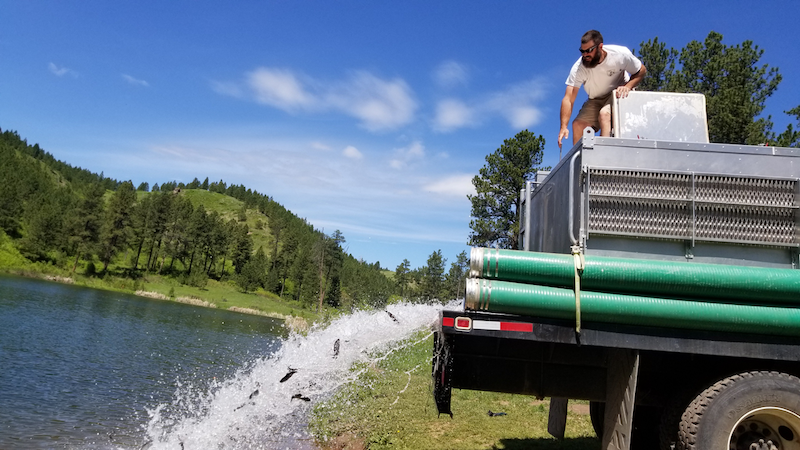
A truck dumps hatchery-raised rainbow trout into a lake in Montana.
Pheasants were introduced to North America from Asia in the late 1800s to provide trophy hunting opportunities. While these birds are prized by hunters, they often don’t thrive in introduced spaces, leading state agencies to spend time and tax dollars raising these birds just so they can be shot en masse when their season opens.
Another example is the European brown trout, which has been widely introduced into rivers and lakes in the U.S. to enhance recreational fishing. The problem? These trout often outcompete native fish species, such as cutthroat trout, for food and habitat. Brown trout also prey on native amphibians and aquatic insects, further disrupting the ecological balance. The introduction of brown trout highlights how prioritizing recreational fishing opportunities can harm native species (like this situation in Wyoming where pelicans were shot to protect a stocked lake) and degrade freshwater ecosystems.
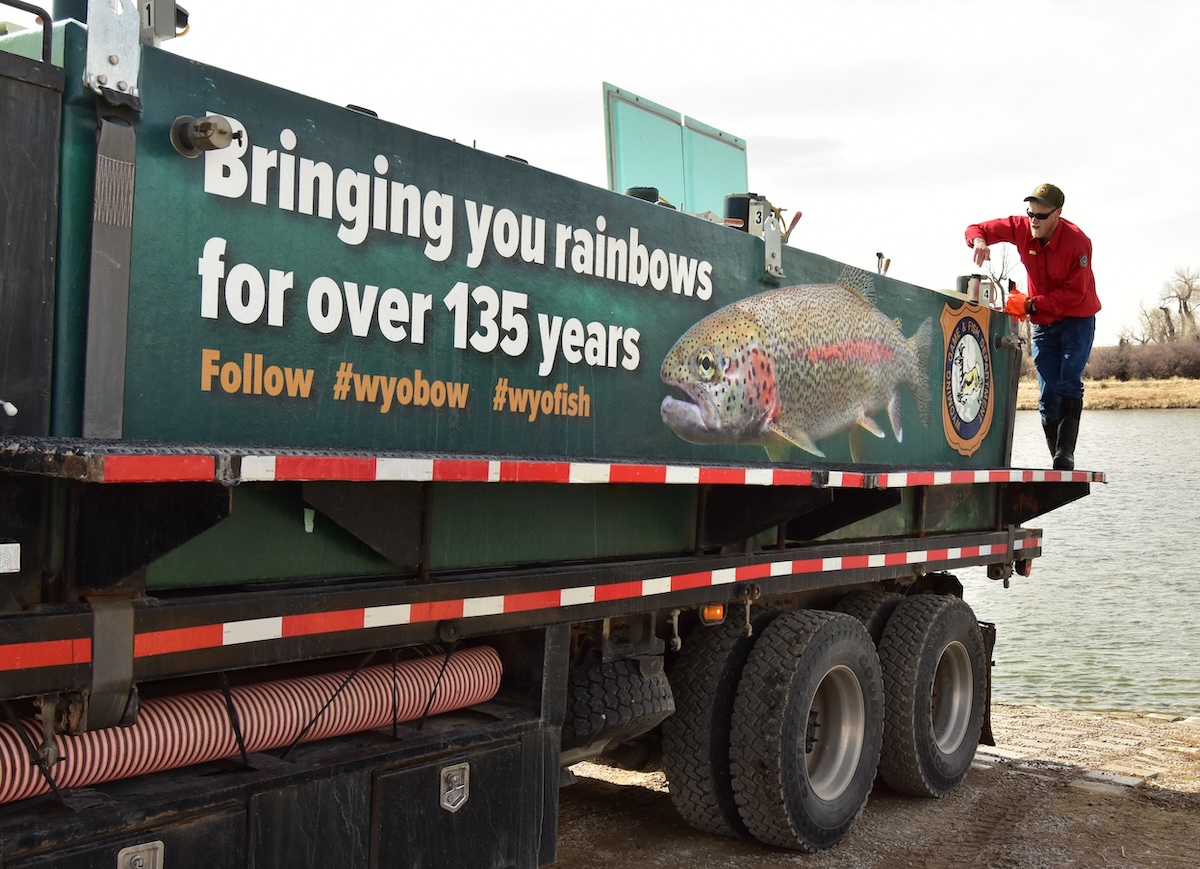
Rainbow trout are perhaps the poster children of state wildlife management with the wrong priorities. They are only native to Pacific drainages and probably more widely raised and stocked than browns as GMOs (triploid, sterile so they won’t hybridize with native trout) fish. In fact, they are so widely stocked that IUCN includes them on its list of 100 most invasive species in the world.
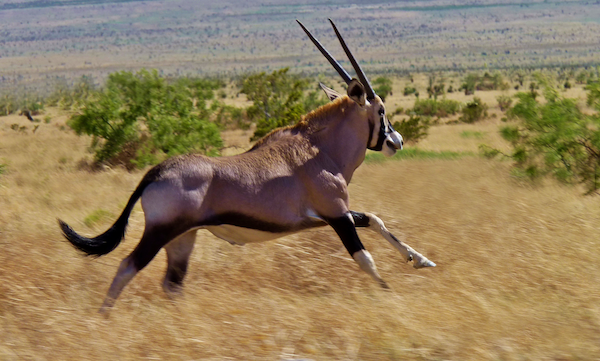
An Arabian oryx runs on BLM land near Las Cruces, New Mexico.
Perhaps the most glaring examples of harmful introductions are non-native ungulates like oryx, aoudad, and ibex, who have been released in parts of the American Southwest to create trophy hunting opportunities. These species, originally from Africa and Europe, have thrived in desert regions of the U.S., but their presence has come at a high cost.
- Oryx (also known as gemsbok) were introduced to New Mexico’s White Sands Missile Range in the 1960s. These large antelope were brought over from Africa to create an exotic trophy hunting experience. Now, oryx populations are expanding beyond their introduction site, threatening the sensitive desert ecosystem and competing with native species like mule deer for food and water. Yet, they are very popular with hunters and generate revenue for the New Mexico Department of Game and Fish. And perhaps most tellingly, the National Park Service had to erect a oryx fence around White Sands National Monument (now a National Park) to keep oryx out.
- Aoudad (or Barbary sheep) are native to North Africa but were introduced to the U.S. for trophy hunting in the mid-20th century. Aoudad populations are self-sustaining in Texas and New Mexico, where they outcompete native species like bighorn sheep for habitat and resources. The rapid spread of aoudad, which are well-adapted to harsh conditions, has made it even more difficult to restore and protect the populations of native desert bighorn sheep, of which some subpopulations are already imperiled (Peninsular bighorn sheep and Sierra Nevada bighorn sheep are endangered). NMDGF offers over the counter tags for Barbary sheep in the Sacramento Mountains where they want to establish bighorn sheep.
The False Promise of Hunter-Focused Wildlife Management
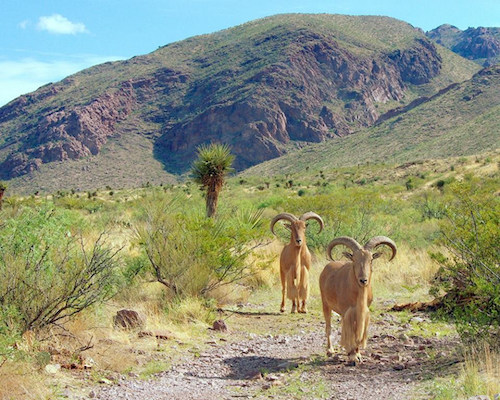
Barbary sheep in the mountain of Pena Blanca WSA, New Mexico BLM lands.
State wildlife agencies often argue that the introduction of non-native species and the focus on increasing hunter opportunities generate revenue that can be reinvested into conservation.
While it’s true that hunting licenses and fees contribute to the current model of state wildlife funding, this argument misses a critical point: conservation must focus on protecting ecosystems as a whole, not just managing game populations for human benefit. Prioritizing trophy hunter satisfaction over ecological integrity is just wrong and only furthers the decline of life on Earth.
It’s time for state wildlife agencies to modernize. In the face of the sixth mass extinction, every decision made by wildlife agencies should aim to restore and protect natural ecosystems, not exploit them. By focusing on short-term economic gain, we risk losing the very biodiversity that sustains life on Earth.
A Better Path Forward: Future-Focused Conservation
To address the biodiversity crisis, wildlife agencies must shift their priorities. They should focus on:
- Protecting and restoring native species: Agencies should concentrate on protecting the species and habitats that are most at risk, particularly in regions like the Southwest where fragile ecosystems are already under strain.
- Promoting coexistence: Education and programs that encourage coexistence between humans and wildlife—especially large predators like wolves, mountain lions, and bears—should be prioritized. These apex species are crucial for maintaining ecological balance, yet they are often marginalized in favor of game species.
- Sustainable funding for conservation: Rather than relying so heavily on hunting and fishing revenue, wildlife agencies need our help to advocate for diversified funding sources from state legislatures and the federal government. This could include conservation taxes, grants, and partnerships with environmental organizations. A broader funding base would allow agencies to prioritize biodiversity and ecosystem health without being beholden to the wash-rinse-repeat cycle of selling licenses, attracting more people to buy licenses, then selling more licenses. (Call us crazy, but that doesn’t seem like a good use of state wildlife agency time or dollars.)
- Science-based management: Decisions on wildlife management should be grounded in ecological science and ethics of coexistence, with the long-term goal of ecosystem health and biodiversity conservation.
It’s Time to Modernize State Wildlife Management
As we stand on the precipice of the sixth mass extinction—this one driven by human activity—wildlife management decisions are more critical than ever. Prioritizing hunter opportunity over conservation is shortsighted and harmful, especially when it involves the introduction of non-native species that further destabilize ecosystems. To protect biodiversity and ensure the health of our planet, wildlife agencies must shift their focus to long-term conservation goals.
The time has come for state wildlife agencies to shift their focus from merely catering to hunters and instead embrace their role as stewards of biodiversity. Only then can we hope to protect the intricate web of life that sustains our planet.
Biodiversity is the foundation of life, and without it, our world—and humanity—will suffer the consequences. The time to act is now, before it’s too late.