
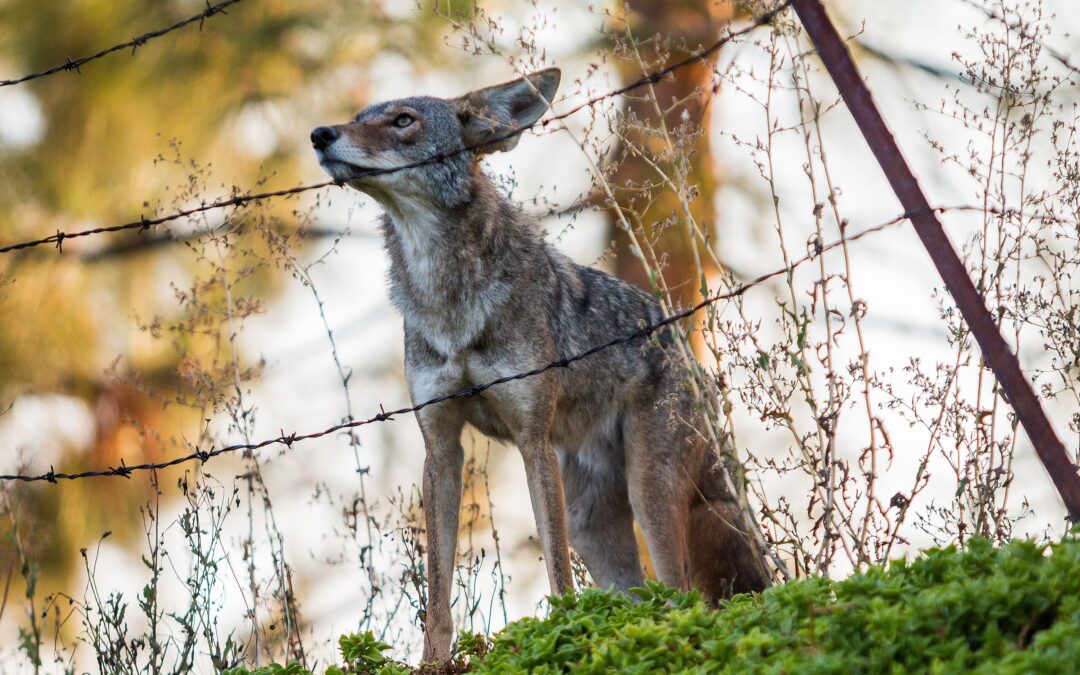
The coyote is the United States’ most persecuted carnivore, in a country with a deep-rooted history of persecuting carnivores, and one of its most misunderstood species. It’s estimated that people kill half a million coyotes every year. Nevertheless, this canid has a knack for survival and endures as a resilient, successful predator throughout the continent. Coyotes not only survived efforts to destroy them, but they also dramatically expanded their range eastward on their own paws. Natural range expansion does not make coyotes an “invasive species” – they are native to North America, and their expansion filled an ecological niche left vacant when eastern and red wolves were hunted to the edge of extinction. Along the Gulf Coast, eastern coyotes have high amounts of red wolf ancestry, exhibiting genetic and physical traits adapted to coastal wetland environments.
This resiliency and survival can be attributed, in part, to these clever canines’ impressive versatility. Coyotes can utilize a variety of food sources and inhabit a broad range of habitats, including urban areas. Today, coyotes reside within all U.S. states except Hawaii. (Delaware became the 49th state with coyotes in the 1990s). Across North America, there’s a good chance you already share the landscape with coyotes, whether you see them or not.
The Ecological Importance of Local Coyotes
In urban and rural landscapes, coyotes can provide ecological benefits. By scavenging carcasses, they help accelerate nutrient cycling and clean up pathogens. In some environments, they take on the role of apex predator, strengthening overall biodiversity. Coyotes limit the abundance of mesopredators (skunks, raccoons, and feral cats), who learn to avoid areas of high coyote activity. Though coyote sightings in residential spaces often evoke fears about health concerns, the actual risk of disease transmission from a coyote to humans or pets is low. Their presence alone does not equate a health risk and it is uncommon for coyotes to contract rabies. Additionally, coyotes may help mitigate specific diseases by feeding on small rodents.
Dr. Stanley Gehrt’s book Coyotes Among Us details the long-running Urban Coyote Research Project, which tagged and studied a total of 1433 different coyotes living in the Chicago metropolitan area between 2000 and 2022. Overall, study results indicate “a few individuals can sway people to believe that coyotes are bad, while the majority of animals go about their lives without ever being seen.” The very first coyote captured and radio-collared (#1) was a young female in the suburb of Schaumburg. This female and her mate (#115, nicknamed Melonhead by researchers), both enjoyed long lifespans of at least eleven years. Together, the pair raised several litters in developed areas near the O’Hare International Airport or downtown Chicago. Coyotes are monogamous and maintain faithful, lifelong pair bonds. Despite living in close proximity to people, these two coyotes were both street smart and skilled at staying out of trouble, going about their lives without conflict.
Urban settings both offer numerous advantages for coyotes and present new challenges absent in rural environments. Despite the heightened danger of being struck by a vehicle (the number one threat to a coyote in Chicago), coyotes are versatile to the point that urban landscapes can actually be safer places for them to raise a family. Chicago’s coyotes, as individuals, experience overall higher annual survival rates and longer lifespans compared to those living in surrounding rural Illinois. Most states, including Illinois, permit virtually unrestricted, year-round coyote hunting and don’t monitor their killing. In contrast to the stable family structure exemplified by #1 and #115, this rural coyote population is characterized by constant turnover, migration, and the increased breeding and dispersal of yearling and subordinate coyotes.
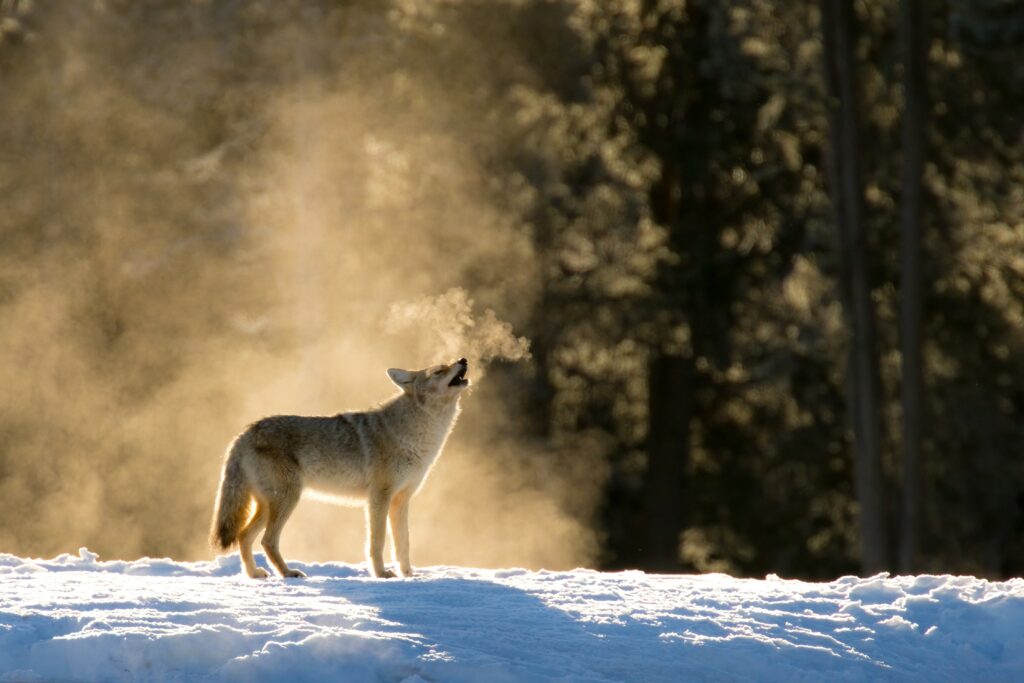
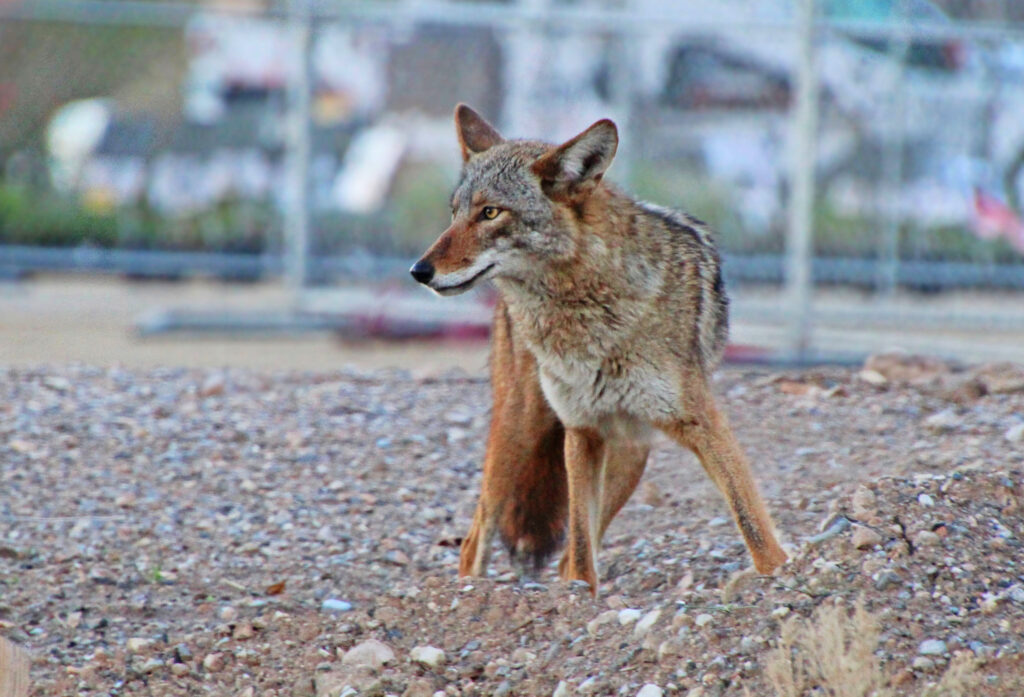
Coyotes are highly adaptable animals, so it’s not surprising their survival strategies change in densely populated settings. While urban coyotes tend to be more bold and exploratory, most individuals prefer to avoid humans, shifting their activity to times of day where they are less likely to encounter people. They often utilize green space with relatively low human density such as urban forested parks, cemeteries, railroads, and golf courses. In Chicago, sources of food (varying from rats to rotting produce) are more plentiful and consistently present year-round. In addition to their long lifespans and higher survival rates, urban coyotes are often slightly heavier and larger, and have larger litter sizes compared to rural coyotes. However, the city-dwelling coyotes also experienced slightly higher levels of stress, and restricted their daytime activity and foraging time. Compared to rural coyotes, the urban coyotes are more nocturnal since they must take extra measures to avoid encountering humans.
Coyotes and Environmental Justice
Learning and understanding about coyotes in cities intersects with other important environmental issues as well. Dr. Chris Schell at the University of California-Berkeley studies urban wildlife, coyotes in particular. Schell’s initial interest in coyotes started from a 2007 news story about a wild coyote wandering into a Quiznos in downtown Chicago before falling asleep in the drink cooler.
In his research, he’s found how the coyotes’ behavior changes in urban areas with less green space available to them – and reflects the housing inequalities and discrimination that affected his community. One example is the racism and classism of historical redlining policies, which deemed African American communities to be a “high risk” for investors, and blocked them from accessing home mortgages. In the 1930s, redlining maps regularly described the presence of African American, Jewish, Chicano, immigrant, or low-income residents as an “infiltration” that lowered the desirability of an area.
Historical practices of spatial segregation and divestment continue to have lingering impacts today, long after the 1968 Fair Housing Act made housing discrimination illegal. In urban areas, the benefits of ecosystem services are unevenly distributed and more prevalent in high-income, wealthy neighborhoods. These include trees providing shade and reduced carbon emissions, or nesting owls that help control rodent populations. Low-income and formerly redlined communities generally experience less biodiversity and tree cover, greater carcinogenic exposure, more pollution, more concrete surfaces and heat islands, and increased oil and gas well proximity. People in these areas tend to have less access to parks, green spaces, and wildlife.
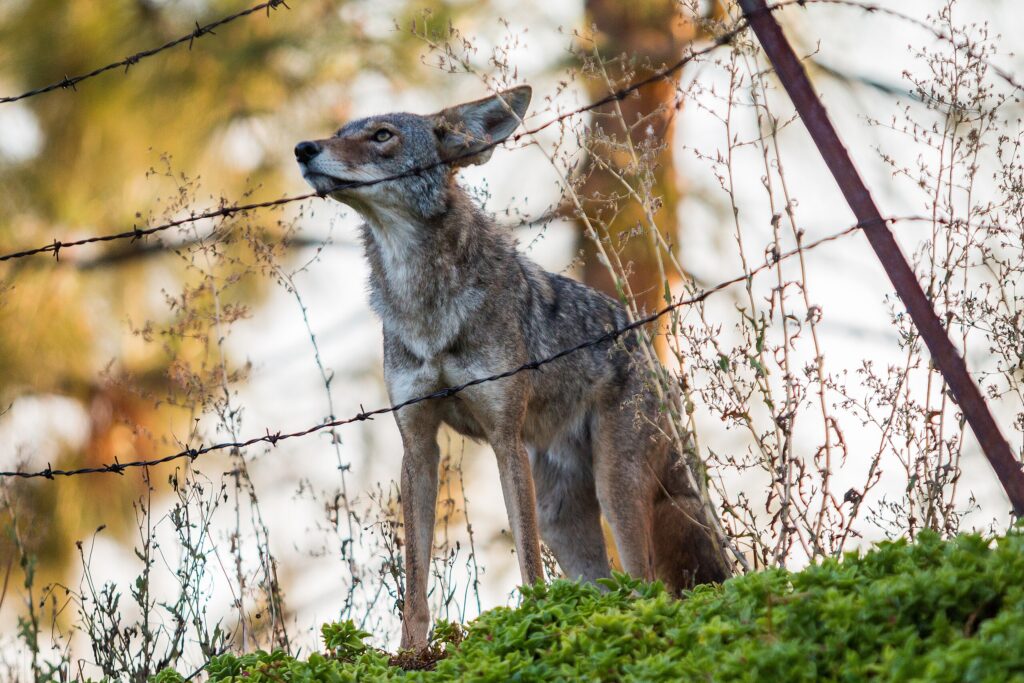
One reason Dr. Chris Schell is drawn to coyotes is the numerous parallels he sees between the African American experience and the resilience of coyotes, as he detailed in an episode of the Going Wild Podcast. In neighborhoods, coyotes are often perceived to be much larger than in reality, and the actual level of risk they pose is often exaggerated. (Eastern coyotes are roughly the size of a Border Collie, and western coyotes are smaller.) He communicates with respect and empathy for coyotes. In his words:
“The way in which folks talk about coyotes, they are oftentimes vilified as threats to human livelihood; as dangerous disease-ridden pests that need to be eradicated, euthanized, killed. And that’s exactly what the Black experience is, right? For the majority of Black America’s history, we’ve been vilified, taken advantage of, exploited, Black bodies have been murdered. If I’m being honest with myself, a lot of us do the research that we do because we are on a journey of self-discovery. I am studying coyotes to learn more about the ways in which they persist, even though they’re being persecuted all of the time.”
Language used to discuss wildlife can also be racialized – like wolves or coyotes being compared to gang members or vice versa. In 1989, media used the terms “wilding” and “wolf pack” to describe the Central Park Five and the brutally violent crime they were wrongfully convicted of before their exoneration. This rhetoric is not new. In the early twentieth century, the Bureau of Biological Survey likened bobcats, cougars, and coyotes to criminals, marauders, and public enemies to gain support for federal predator-killing programs, with one newspaper article calling these species the “gangsters of the animal kingdom”.
Urban Biodiversity and Equity, which Schell co-edited with fellow wildlife biologist Max Lambert, takes an integrative, interdisciplinary approach to urban ecology. In the first chapter, Schell and Lambert explain how cities can play a role in stemming the crisis of biodiversity loss. They identified the following challenges:
- Perceptions that urban residents are distanced/disconnected from the environment, wildlife and conservation issues
- Environmental justice concerns linked to historical segregation and divestment policies, such as redlining between 1933 and 1968. Impacted neighborhoods experience less biodiversity and reduced access to nature.
- Agencies and traditional conservation movements are often reluctant to incorporate antiracist and decolonized principles. The North American Model of Wildlife Conservation represents an inherently exploitative and exclusionary framework, prioritizing utilitarian, settler-colonial worldviews and interactions with wildlife.
- Conservation movements are often focused on remote nature and “untouched wilderness”. This mindset can also promote erasure of Indigenous land stewardship practices. To solve the biodiversity crisis, decentering myopic views of conservation is critical.
Practical Coexistence
While coyotes can adapt to urban landscapes and benefit these altered spaces, some residents view their presence solely as a problem and unacceptable danger. As Schell understands, the attitude that coyotes “don’t belong” is strongly tied to a sense of domination and control. Schell notes that city residents with higher economic standing or free-roaming outdoor cats often harbor negative attitudes towards coyotes. To reduce human-coyote conflicts, he recommends hazing coyotes to reinforce a healthy sense of caution around people, as well as coexistence practices like keeping domestic cats indoors for safety.
Hazing is most effective when it is proactive (conflict prevention), rather than reactive (direct response after a conflict has occurred). Coyote hazing involves using nonlethal tools for startling and scaring bold coyotes away from your property or neighborhood. Proactively discouraging coyotes from developing aggressive behavior means never feeding a wild coyote or encouraging dependence on human handouts. Potential attractants left outdoors such as pet food, garbage, fallen fruit and spilled bird seed may indirectly encourage habituation behaviors. Leashing dogs during walks is also good for their own and the coyotes’ safety. Coyotes are vigilant and protective of their own families, especially during breeding (January-March) and pup raising seasons (April-June).
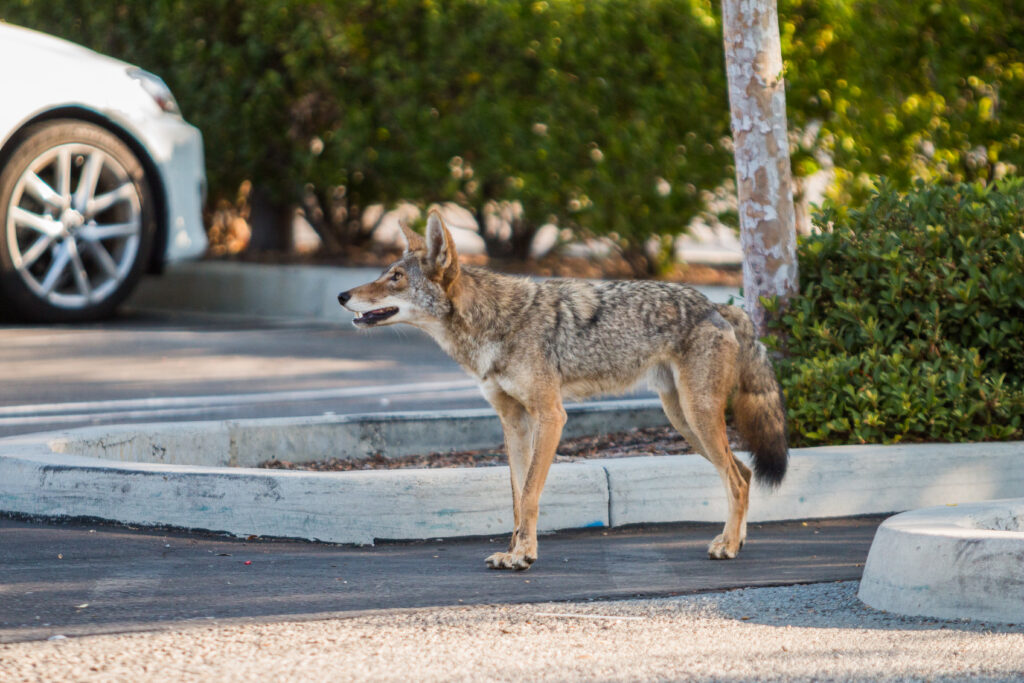
Coyotes can serve as a flagship species for wildlife coexistence and conservation in developed, urban spaces. To be an urban coyote is to be “hyper-polarizing” – they elicit a wide range of views from respect and admiration to fear and hate (or simply lack of awareness). Urban Biodiversity and Equity mentions coyotes in the city of San Francisco as a case study. Once locally extirpated, coyotes re-established themselves in San Francisco in the early 2000s. The city adopted a proactive coexistence approach: coyotes are here to stay, emphasizing non-lethal, proactive management to reduce conflicts.
In the first decade of the coyotes’ return to San Francisco, city authorities were inexperienced in how to manage human-coyote conflicts. Practices were inconsistent and primarily reactive. Protocols eventually changed to a citywide standardized approach and incident response framework. Domestic dogs approaching coyote dens with young pups were a major source of complaints. Seasonal signage has reduced this conflict factor by raising awareness of natural coyote behavior. Also effective are temporary closures of trails running by active den sites during pupping season. In the Bay Area, clear and regular communication on coyotes is readily available. One-on one conversations between staff and residents have also been effective at shifting perceptions of coyotes. Finally, findings from scientific research on urban coyotes – including pup dispersal, spatial/temporal use, movement, diet, and health – helps further improve education and conflict reduction.
Resilient, Not Expendable
As Chris Schell studied the ecology and behavior of coyotes in urban landscapes, he learned how their parenting behavior adapted across multiple litters and generations. He noticed parallels between the coyotes and his own experience as a father shifting from a worried “helicopter parent” during the birth of his first child to a more confident approach with the arrival of his second child. He discusses raising resilient, joyful children who love the natural world and are fascinated by ladybugs and other insects in their garden. Urban coyotes similarly learned to adapt to their surroundings, find a niche, and even thrive in a world that was never built for them, despite the species’ long history of persecution within North America (and the fact that they are sometimes met with disproportionate fear and hostility in those urban areas). Coyotes are highly intelligent, family oriented animals and often express joy and playfulness wherever they live.
The coyote’s resilience despite all the challenges thrown at them is remarkable and can be inspirational. But the way they are treated also represents one of the clearest examples of a broken wildlife governance system. Across most states, coyotes can be killed year-round at any time, in unlimited numbers, by almost any means – including methods that would be considered unthinkable and grossly unethical if done to game species. Despite their importance to ecosystems, there is no acknowledgement of their ecological value or meaningful tracking of populations. Killing is prioritized over dispelling pervasive myths and misconceptions about coyotes and other carnivores. The question isn’t whether these policies threaten the existence of coyotes as a species. (They haven’t.) It’s why one of North America’s most ecologically important species is also one of the least respected and subjected to free-for-all killing with no oversight.
This year’s Coyote Awareness Week is March 16-23. This week, we honor the coyote’s resilience, ecological and intrinsic value, and raise awareness of the value of conflict reduction over lethal control. As coexistence organization Project Coyote states: “resilience should never be mistaken for expendability”.
To celebrate Coyote Awareness Week, download the official toolkit and social media resources. Counter myths and misconceptions about coyotes, snakes, and other highly misunderstood wildlife. Explore coyote research or follow a wildlife photographer. Check out Project Coyote’s coexistence resources on hazing, keeping coyotes wild, protecting backyard chickens, and ranching and farming alongside wildlife.
This article was contributed by Peggy Clark, a Geospatial Science/Ecology student at Radford University in Radford, Virginia. She appreciates her community and the wildlife who share it, and has sighted a coyote passing through her neighborhood.