

Wolves are back in the crosshairs
September 2026 Newsletter
I’m not one for trends, but honoring Dolly Parton is one popular train I can get on.
The first album I ever owned was a gifted cassette tape of White Limozeen. I grew up in Indiana in the 1980s, so of course I loved Dolly Parton, and horses.
There was a lot to love about Dolly. Her Imagination Library and other philanthropy are deservedly celebrated, but her generosity extended to animals and wildlife, too. She supported Eagle Mountain Sanctuary, which has helped rehabilitate and return bald eagles to the wild. In 2003, the U.S. Fish and Wildlife Service recognized her with a Partnership Award for her conservation work.
But what I’ve always admired most about Dolly is that she didn’t wait for the world to make room for her. She made her own room—and then opened the door for others.
“If you don’t like the road you’re walking, start paving another one,” she famously said.
That feels like a pretty good motto for wildlife advocates.
The road we’ve inherited in wildlife management was paved a long time ago, for a relatively small group of people, around a relatively narrow idea of who wildlife is for and who gets to make decisions about it. We’re building another road: one where wildlife thrive in our shared ecosystems, where all knowledge matters more than tradition and special interests, and where the public—not just the people with the loudest voices or the most political power—has a meaningful say in how wildlife is conserved.
Dolly was called a lot of things over the years. Cheap and dumb blonde. But also Smoky Mountain Songbird, Iron Butterfly. She became a hero not only to little girls in rural America, but to all kinds of people, including many of the most vulnerable and disenfranchised. She understood something that every trailblazer eventually learns: when you challenge the status quo and speak up for the underdog, you’re going to become a target.
Our partners know that, too. Across the country, people are standing up to entrenched interests and paving new roads for wildlife. They’re organizing, challenging outdated laws, demanding that wildlife agencies serve the public rather than a narrow constituency, and insisting that animals deserve better than business as usual. It’s not always easy, and it’s rarely glamorous. But somebody has to start laying the pavement.
We’ll never get Dolly for President, as many of us may have hoped. But we’ll always have her music, her exemplary model, and her reminder that when the road ahead isn’t working, we don’t have to stay on it.
We can build another one.
Rest in power, Country Queen, Smoky Mountain Songbird, Iron Butterfly—and hero for all.
P.S. I’m not trying to start any fights, but her best song is Cracker Jack, about rescuing a stray dog who becomes her best friend. Dissenting opinions can be submitted to info@wildlifeforall.us
What We’ve Been Up To

Colorado’s “right to hunt” amendment is now Amendment 83
Colorado’s proposed “right to hunt and fish” amendment has a new number: Amendment 83.
This dangerous measure would put language about hunting, fishing, and “traditional methods” (read: trapping, hounding, and baiting) directly into Colorado’s Constitution. Voters deserve to understand what that means, and why constitutionalizing wildlife policy could have consequences far beyond a ballot slogan.
This amendment is part of a national movement, pushed by the same far-right interests, and would change who gets a voice in decisions that affect Colorado’s wildlife, public lands, and communities.
Learn more about Amendment 83 at KeepColoradosVoice.com.

Wolves Are Back in the Crosshairs
After decades of recovery, wolves are once again facing a political campaign to erode all protections and make killing them easier, as we are watching happen in the Northern Rockies states.
President Trump’s Sept. 4 executive order directs the federal government to consider removing Endangered Species Act protections for gray wolves (beyond the Northern Rockies range where they are already delisted) and Mexican gray wolves. It also calls on federal agencies to pressure states to eliminate their own protections and loosen standards for lethal wolf removal.
This is not science-informed wildlife management. It is a return to the old idea that predators are problems to be eliminated.
Wolves are essential members of healthy ecosystems. Their future should be determined by science, not political pressure from those who want fewer wolves on the landscape.

Mexican Wolves Need Protection, Not Politics
The Mexican gray wolf has spent decades coming back from the brink of extinction. Its wild population has grown to 319, but it remains one of the most endangered canids in the world, with serious genetic and other threats to its recovery.
And the threat isn’t hypothetical. Just days before Trump’s executive order, Wildlife for All joined conservation partners in calling out the U.S. Fish and Wildlife Service for authorizing the removal—and in one case, killing—of Mexican gray wolves from grazing allotments with chronic livestock conflicts.
Then came the executive order, directing the federal government to reconsider protections for Mexican and gray wolves and pushing states toward weaker protections and greater authority to kill wolves.
Within hours, Wildlife for All responded with a coalition press release calling for Mexican wolf recovery to be based on science—not politics.
The message is simple: Mexican wolves need more protection, not more killing.

We will fight to make sure the future of the lobo is determined by what wolves need to recover—not by what politicians want to do to them.
Tell CPW: Stop Killing Colorado’s Wolves
Colorado’s wolves are being killed, and we cannot stand by and watch this needless slaughter continue.
Colorado Parks and Wildlife has now killed 5 wolves this year from the fledgling population in the state. One was killed last month, but three more have been killed in the last week alone despite CPW claiming they wanted to evaluate if lethal control works (hint: we know it doesn’t).
Colorado’s recovering wolf population is still small and struggling, and every wolf lost to agency actions or illegal killing matters. The state should prioritize proactive, meaningful, sustained coexistence measures and revise the wolf management plan.
Join us in taking action to demand actual coexistence. Tell the Colorado Parks and Wildlife Commission: Stop the killing.

Montana Shows Us What’s at Stake
We don’t have to imagine what happens when politics drives wolf management. Look at Montana.
In August, Montana’s Fish & Wildlife Commission approved a quota allowing hunters and trappers to kill 300 wolves—despite 92% of public commenters opposing the proposed regulations as our joint press release explains. The decision came even as Montana Fish, Wildlife & Parks acknowledged that its previous population model had substantially overestimated the number of wolves in the state.
Wildlife for All called out the decision for what it is: wolves being treated as a commodity for special interests rather than as wildlife held in trust for all Montanans.
Montana is a warning. If federal protections disappear, we know that states will fail to protect wolves. We need wildlife conservation that puts science, ecological health, and the public interest ahead of politics and the interests of those who want to kill wildlife.

Tracking Bears—and Learning to Live With Them
Closer to home, WFA Executive Director Michelle has been tracking black bears in her community and working to help protect them as encounters with people increase. It’s a reminder that wildlife coexistence isn’t an abstract policy issue—it’s something communities across the country are navigating every day.
Bears are adapting to a landscape increasingly shaped by people. We need to adapt, too. Keeping bears wild and keeping people safe starts with prevention: securing attractants, giving bears space, and knowing how to respond when we encounter them.
During this difficult time for bears, we encourage everyone living in or visiting bear country to learn more about coexistence. BearWise offers practical, science-based guidance for living responsibly with black bears, from securing garbage and livestock to safely responding to an encounter.
What's Coming Up
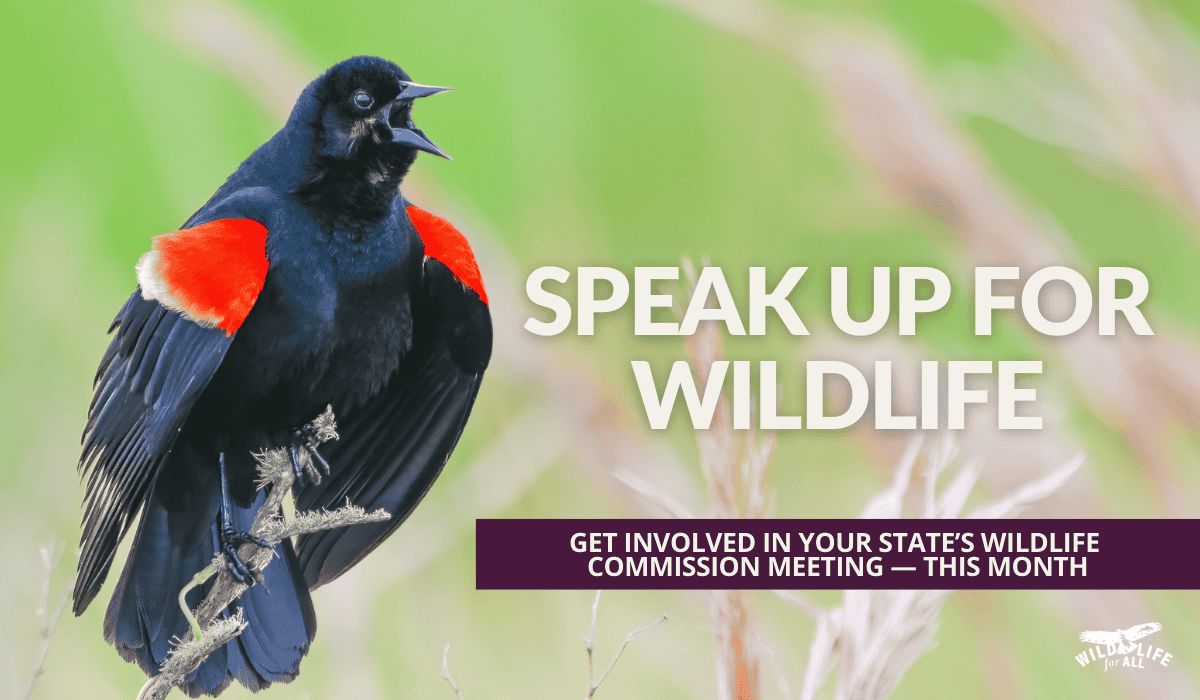
Your voice matters at wildlife commission meetings
Wildlife decisions are being made in state commission meetings every month, and too often, our voices aren’t the ones showing up.
Our September commission roundup highlights what’s on the agenda, what to watch, and how you can participate. Take a few minutes to read the roundup, then check your state wildlife agency’s meeting schedule and consider showing up.
Remember: you don’t have to be an expert to participate. You’re a member of the public, and your perspective belongs in the room.
Read the September commission roundup and make your voice heard.
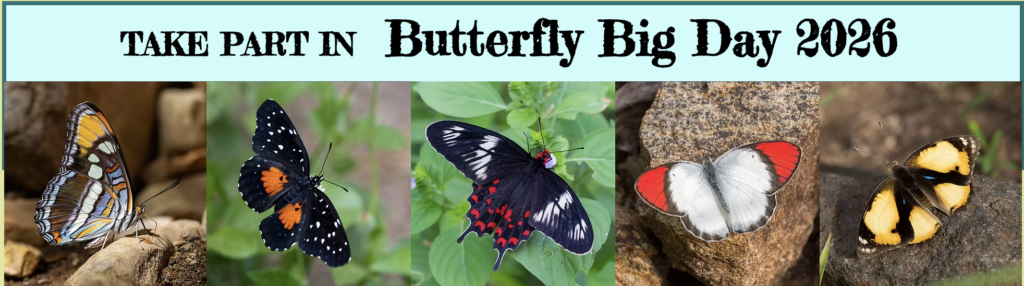
Join Butterfly Big Day on Sept. 12
On Sept. 12, people around the world will be looking for butterflies, and you can join them.
Butterfly Big Day is an international effort to document butterflies and raise awareness about the importance of pollinators. Participation is simple: spend some time outside, photograph the butterflies you find, and submit your observations to iNaturalist.
You don’t need to be a butterfly expert. Just head outside, pay attention, and see who you find.
Learn more and join the Urban Butterfly Initiative’s Butterfly Big Day.
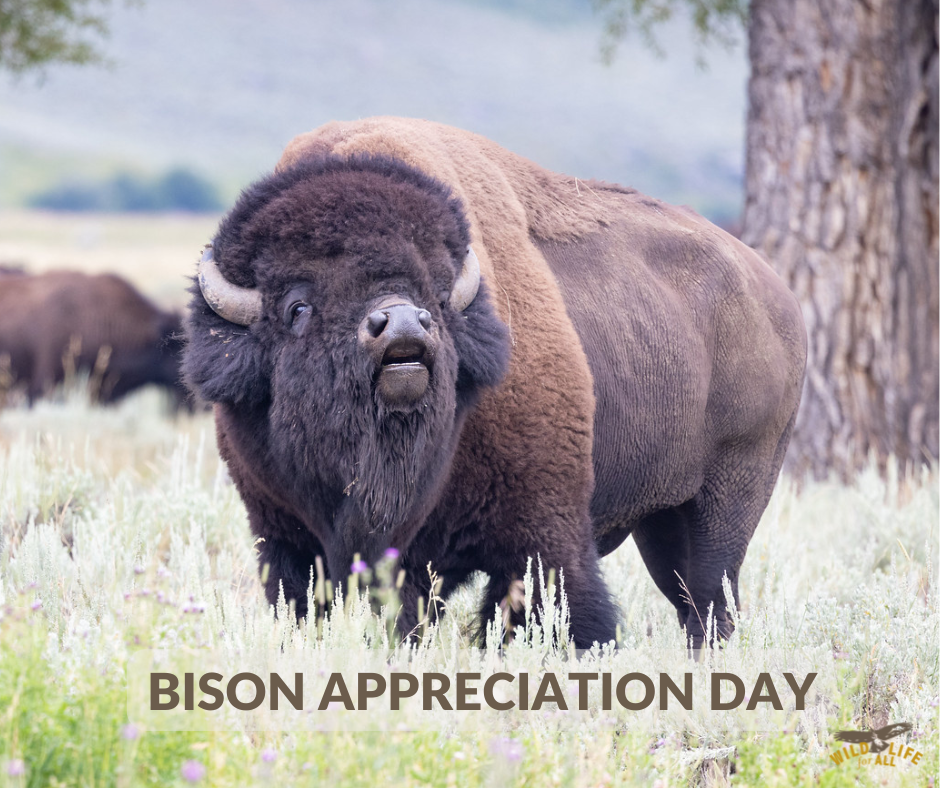
A win for Montana’s bison
There’s good news for more than 900 bison grazing on public lands in Montana.
Last month, we shared that the Trump administration had moved to end American Prairie’s grazing permits, potentially forcing hundreds of bison off federal lands. On Sept. 4, a federal judge granted a preliminary injunction and temporary restraining order allowing the bison to remain on three federal grazing allotments while the case proceeds.
It’s an important victory—for now. The court’s order preserves two bison herds and gives American Prairie a chance to continue making its case.
We’ll keep watching this fight over who and what our public lands are for.

Indiana Shows Up for Bobcats
Indiana’s bobcats have only recently returned after decades of decline. Now the state is considering increasing the bobcat kill quota from 250 to 400 and expanding the season to include hunting as well as trapping.
But on Aug. 27, hundreds of people showed up for the public hearing to say that Indiana’s bobcats deserve better.
That’s what public participation looks like: people taking the time to show up, speak out, and demand that wildlife decisions serve the public interest.
The hearing is over, but the fight isn’t. We’ll keep watching what happens next, and celebrating the people who refuse to stay silent.

Defend Our Roadless Lands
Some of America’s most important wildlife habitat remains free from roads and development. The Roadless Rule protects roughly 45 million acres of national forest, providing wildlife habitat, migration corridors, and refuge from human disturbance.
The Trump administration wants to eliminate these protections and open the door to more roads, logging, mining, and drilling.
Public lands belong to all of us—and wildlife depends on them, too.
Tell the USDA: Keep our roadless forests protected. Submit your *substantive and original* comment by Sept. 21.

Be There for Wildlife Every Month
Wildlife doesn’t get a break—and neither can we.
From wolves facing renewed attacks on their protections to bobcats, bears, and other wildlife confronting increasingly political management decisions, Wildlife for All is working every day to change the systems that put wildlife at risk.
Monthly donors make that work possible. A small recurring gift gives us reliable funding to respond quickly when wildlife needs a voice, organize communities, and keep pushing for lasting change.
Become a monthly donor and be there for wildlife all year long.
In the Media
From the Blog
The Importance of a Veto to Mexican Gray Wolf Recovery
Mexican Gray Wolf Killed in Illegal Trap
Montana Wolves: Commission Approves 300 Wolf Quota
Take Action: Speak Up for Indiana Bobcats
USFWS Authorizes Killing Mexican Gray Wolves for Problem Grazing Operations
Trump Issues Executive Order to Strip Protections from Mexican Gray Wolves
Past Newsletter Entries
December 2025 Newsletter
Monthly Wildlife for All Newsletter
November 2025 Newsletter
Monthly Wildlife for All Newsletter
October 2025 Newsletter
Monthly Wildlife for All Newsletter