

Tell the Colorado Parks & Wildlife Commission to stop the commercial sale of fur to protect Colorado’s furbearers.

Colorado Is at a Crossroads on Fur Sales. Show Up March 4.
On March 4, the Colorado Parks and Wildlife Commission will hear a citizen petition that could fundamentally change how wildlife is treated in this state.
The petition, submitted by the Center for Biological Diversity, would prohibit the commercial sale of furs and wildlife parts from Colorado’s native furbearers. This does not ban regulated hunting or trapping but instead, it ends the for-profit commercial market for pelts.
 What are Furbearers?
Across the U.S., state wildlife agencies reduce living beings to line items: inventory, targets, commodities.
Furbearers—species like beavers, bobcats, martens, foxes, coyotes, and others—become future pelts managed not through science or ecological understanding, but through a market-based lens.
The word “furbearer” is not neutral. It is an outdated economic label that collapses complex, ecologically vital species into a single question: What are they worth when killed?
That framing erases ecosystem services like wetland creation, prey regulation, nutrient cycling, disease buffering and replaces them with market logic.
When wildlife are defined by fur value instead of ecological function, management stops asking how ecosystems stay healthy and starts asking how much extraction can be justified.
That is not “science-based wildlife management.” It is commodity management.
In many states, agencies cannot tell the public how many individuals of these species exist, how populations are trending, or what ecological roles are being lost—yet still authorize widespread trapping and killing, often during the harshest months of the year. The only question being asked is: Are there “enough” animals left to allow more killing?
So let’s call it what it is: Trapping is just the cruelest, more commercial extraction dressed up as “tradition.”
The North American Model of Wildlife Conservation was meant to end commercial exploitation of wildlife, not quietly reintroduce it under state sanction. Yet many agencies still promote global fur markets and celebrate this killing as “heritage,” even when no science-informed plans exist to ensure long-term population stability.
Our wild neighbors are not merchandise. They are not a “renewable resource.” They are not surplus. They are not expendable.
If you believe wildlife should be managed as part of a living community—not a market—this is your invitation to create change.
 What Is The Petition?
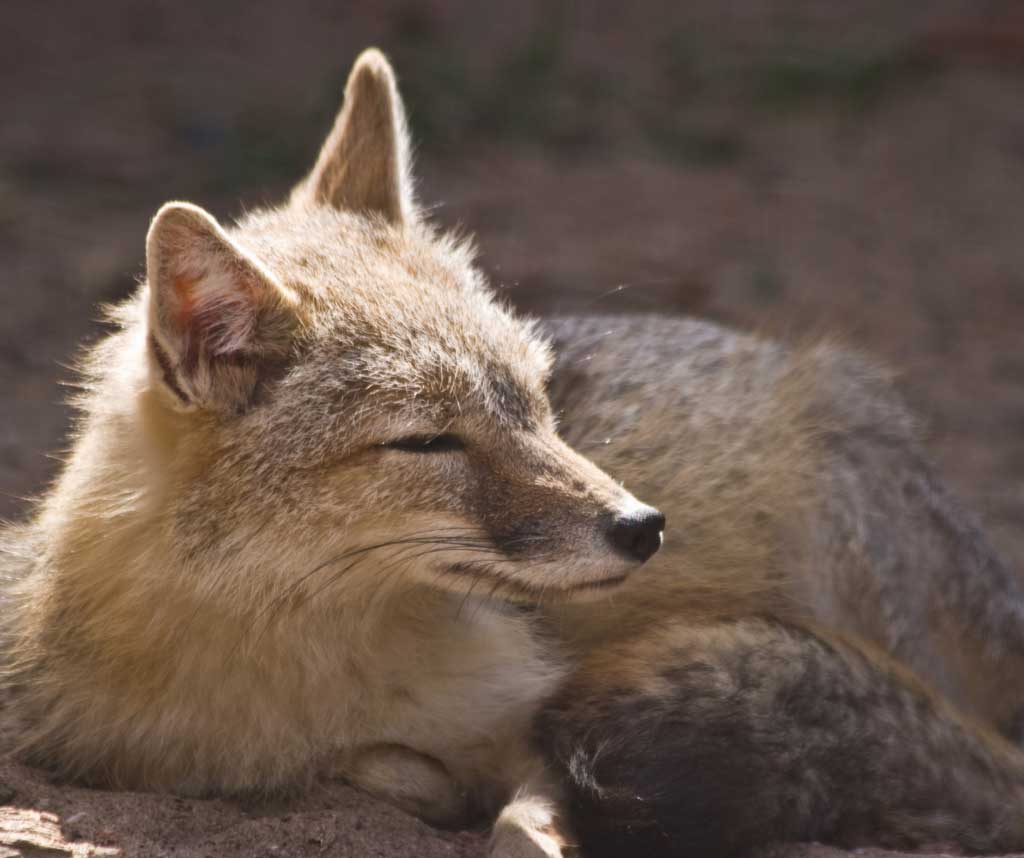
Right now in Colorado, species like swift foxes, beavers, bobcats, coyotes, pine martens, ringtails, and more can be trapped in unlimited numbers and their pelts are then sold on the commercial market.
Unlike big game species, which cannot be sold commercially, furbearers remain a loophole in the system. The North American Model of Wildlife Conservation — the framework the hunting community touts that rebuilt wildlife populations after market hunting nearly wiped them out — was built on eliminating commercial wildlife markets.
Colorado already bans commercial markets for big game. This petition simply applies the same principle to furbearers.
Pro-trapping voices right now are arguing that furbearer populations are “healthy,” but here’s the problem with that strawman: there’s no data to back it up. Colorado does not have comprehensive, up-to-date population estimates for many of these species. What’s more, many are listed as Species of Greatest Conservation Need on Colorado’s State Wildlife Action Plan (and as we know, these lists grew immensely between 2015 and 2025).
At the same time, climate change is accelerating, habitat fragmentation is increasing, small carnivore populations are declining widely, and incidental trapping still occurs. When population data gaps exist, the precautionary approach is conservation, not expanded commercialization.
Eliminating the fur market removes the financial incentive to maximize harvest.
You will also hear erroneous conflations like Denver voters rejected a fur sales measure and that Coloradans rejected a hunting ban. This petition is neither of those: it does not ban hunting; it does not ban trapping outright; and it does not restrict wildlife management tools.
It simply addresses a regulatory loophole: the commercial sale of wildlife parts. Wildlife commissions update rules all the time. That’s their job.
Right now, your voice is needed. Trappers are organizing, and they plan to fill the hearing room. Commissioners notice who shows up and speaks out.
SHOW UP: March 4, 2026
CPW Commission Meeting
DoubleTree by Hilton – Westminster
8773 Yates Dr., Westminster, CO
🕗 Arrive early (6:30–8:00 a.m.) to sign up for public comment (1 minute each).
🕐 If you can’t speak, arrive by 1:00 p.m. and stand in solidarity.
❤️ Wear red.
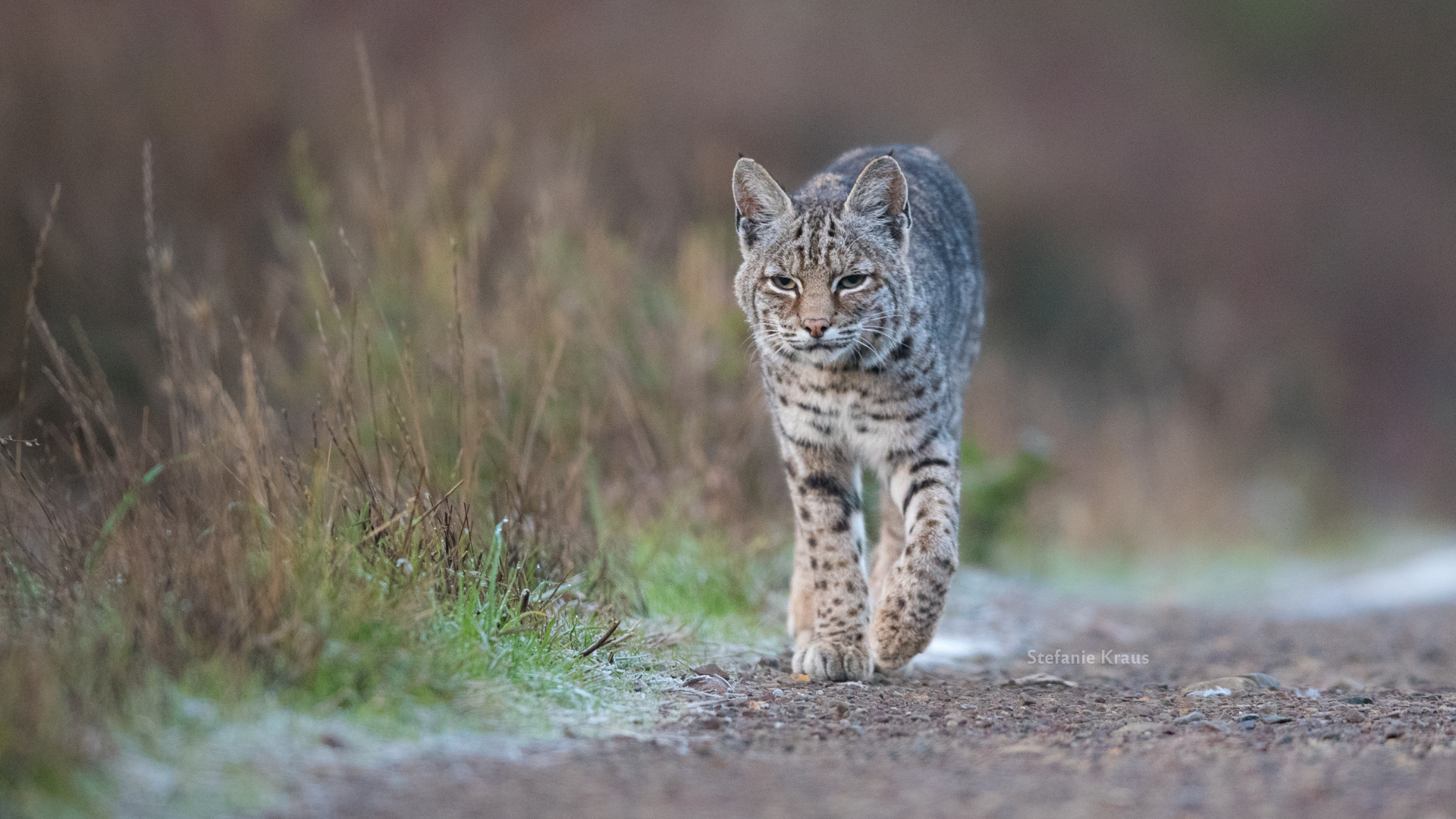
Bobcat in Marin County, California | Credit: Stefanie Kraus
If You Can’t Attend
- They’re expecting to have to limit in-person and virtual comments (priority given to in-person comments) so you can also submit a written comment: https://engagecpw.org/pwc-public-comment/surveys/pwc-public-comment-form
- Email the Commission: dnr_cpwcommission@state.co.us and write them individually:
- richard.reading@state.co.us
- James.Tutchton@state.co.us
- Eden.Vardy@state.co.us
- jess.beaulieu@state.co.us
- tai.jacober@state.co.us
- Dallas.May@state.co.us
- jack.murphy@state.co.us
- gabriel.otero@state.co.us
- kate.greenberg@state.co.us
- dan.gibbs@state.co.us
- frances.silvablayney@state.co.us
- john.emerick@state.co.us
- laura.l.clennan@state.co.us
Subject: Support the Petition to End Commercial Fur Sales in Colorado
Sample Email — Please Personalize
Dear Commissioners,
I urge you to support the petition to prohibit the commercial sale of wildlife fur in Colorado.
Commercial markets for wildlife historically drove population collapses across North America and contradict the core principles of science-based conservation. While regulated hunting and trapping remain management tools, the for-profit sale of wildlife parts creates unnecessary economic incentives that can undermine long-term sustainability, especially in the face of climate change and biodiversity loss.
Colorado has already banned commercial markets for big game. It is time to apply that same standard to furbearers.
Please adopt this rule and align Colorado’s wildlife policy with modern conservation science and public trust principles.
Sincerely,
[Name]
[City]
This Is Bigger Than Fur
This is about whether wildlife in Colorado is a public trust resource managed for long-term ecological integrity or treated as a commodity market by a small but vocal minority at the expense of long-term wildlife and ecosystem health.
The Commission needs to see that Coloradans care. Show up. Speak up. And submit a comment today.