Select Page

News & Commentary

Whose values count most in determining Vermont’s fish and wildlife priorities, regulations and public policies?
Whose values count most

By Walter Medwid

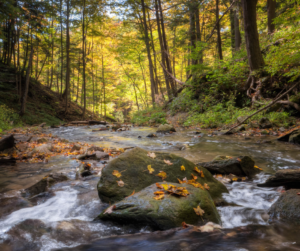
In this op-ed Medwid writes, “Vermonters should rethink the focus of the Fish & Wildlife Department. Threats to biodiversity and shifting human values challenge the underpinnings of the department and the Fish & Wildlife Board…Whose values count most in determining Vermont’s fish and wildlife priorities, regulations, and public policies?”

Read more in the Vermont Digger 

Refocus Fish and Wildlife mandate on conservation
By Fred Koontz

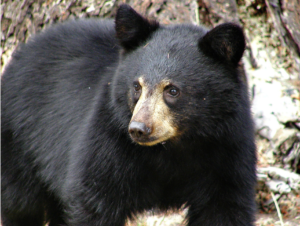
In this op-ed by former Washington Fish and Wildlife Commission member Fred Koontz, he describes the current state of the state’s Department of Fish and Wildlife as a ‘political quagmire.’ This piece explores the internal struggles of the state agency and commission, often fueled by a ‘preservation-versus-harvest dichotomy’ and a 28 year old legislated mandate that needs to be revised in order to stop the rapid decline in biodiversity. “States are obligated to protect wildlife for current and future generations. The sad truth is that we are failing.”

Read more in The Seattle Times


New Mexico and wildlife — still more work to do

By Chris Smith

On April 1st, Roxy’s Law, which bans traps, snares, and poisons on public lands, went into effect in New Mexico. Despite this progress, New Mexico isn’t the beacon of wildlife management that it should be. The state still opposes Mexican wolf restoration in the Southern Rockies, and the governor appoints and fires commissioners at her whim, creating instability within the primary wildlife decision making body. “Let’s take the next step and push for a state wildlife agency that serves all the people and wildlife of New Mexico.”

Read more in the Santa Fe New Mexican


Roxy’s Law a win, but wildlife governance needs reform

By Charles Fox

Last year, New Mexico passed Roxy’s Law, which will ban traps, snares, and poisons on public lands. The state Legislature also recently banned coyote-killing contests. However, the Department of Game and Fish allowed these cruel practices to continue for years despite massive opposition. New Mexico state wildlife management lacks accountability, inclusivity, responsiveness, and transparency. “The Game Department’s backward policies are badly out of step with mainstream society and show little sign of improving. There is no excuse for repeating the mistakes and abuses of the past, no matter how longstanding.”

Read more in the Albuquerque Journal


Stop the slaughter of predators: Reform wildlife management

By David Stalling, author of “From The Wild Side”

In the most recent post from his blog “From The Wild Side: Wild Thoughts from an Untamed Heart,” David discusses the immediate need for wildlife governance reform, citing the specific atrocities happening right now in the state of Montana.

“So while the state of Montana is working to enhance some nonnative species, it is simultaneously carrying out a war against other native species. This sums up the flaws to our current system of wildlife management, and why it must change.”

Read more at From The Wild Side


Press Release: Game of Groans – Fossil fuel lobbyist appointed to New Mexico Game Commission

For Immediate Release

March 1, 2022

Contacts:

Chris Smith, WildEarth Guardians, 505-395-6177, csmith@wildearthguardians.org
Mary Katherine Ray, Wildlife Chair, Rio Grande Chapter Sierra Club, 575-537-1095, mkrscrim@gmail.com

Kevin Bixby, Executive Director, Wildlife for All, 575-649-7260, kevin@wildlifeforall.us
Erik Schlenker-Goodrich, Western Environmental Law Center, 575-613-4197, eriksg@westernlaw.org

Game of Groans: Fossil fuel lobbyist appointed to New Mexico Game Commission. Wildlife advocates decry extractive industry’s disproportionate representation

SANTA FE, NM—Today, an oil and gas lobbyist appointed by Gov. Michelle Lujan Grisham joined the New Mexico Game Commission. In a move that only intensifies the conservation community’s frustration towards the Commission and the Lujan Grisham administration, the governor selected a senior ExxonMobil employee, Deanna Archuleta, to serve on the public commission that oversees wildlife policy in the state. Archuleta previously worked for XTO Energy, a Texas-based fracking company.

The earth is currently undergoing a mass extinction event and biodiversity collapse largely driven by the climate crisis. Fossil fuel extraction and consumption is the largest contributor to climate change. And ExxonMobil is among the corporations that have covered up the impacts of fossil fuel burning, successfully lobbied against fossil fuel regulations, and delayed meaningful action to slow devastating global warming.

“This appointment is disappointing to conservationists and wildlife advocates who want to see New Mexico’s biodiversity protected in the face of the fossil fuel-caused climate crisis,” said Chris Smith, southwest wildlife advocate for WildEarth Guardians. “My only source of optimism is that Commissioner Archuleta might be able to undo or mitigate some of the monumental damages caused by her employer over the past decades.”

In addition to fueling the global climate crisis, oil and gas development in New Mexico, with an associated 60,000 oil and gas wells, has directly harmed state wildlife. Oil and gas extraction in the Permian Basin has fragmented the shinnery oak habitat of the lesser prairie chicken, a once-abundant grouse now awaiting listing under the federal Endangered Species Act. In 2017, a ruptured pipeline spilled 18,000 barrels of “produced water”—the toxic byproduct of fracking—into the Delaware River, wiping out a population of endangered native mussels called the Texas hornshell. ExxonMobil subsidiary XTO–Archuleta’s previous employer–operates 1,507 oil and gas wells in New Mexico and was recently fined by the New Mexico Oil Conservation Division for failure to comply with reporting and operating conditions at five underground injection wells in Eddy County.

“The highest duty of a member of the New Mexico Game Commission is to ensure that the state’s wildlife is protected as a public trust on behalf of all people, now and for future generations,” said Kevin Bixby, executive director of Wildlife for All. “It is hard to imagine that someone could fulfill this responsibility while working for an industry that is busy making the planet uninhabitable for all species, including humans.”

“This appointment is further evidence of the governor’s far-too-cozy relationship with oil and gas industry leadership,” said Erik Schlenker-Goodrich, executive director of the Western Environmental Law Center. “With a challenging November election looming where she very much needs to boost enthusiasm amongst conservation voters, I’d suggest her administration needs an immediate and rapid course correction to ensure that her number one priority is New Mexico, not the oil and gas industry. This decision to appoint ExxonMobil’s senior director of federal relations to the New Mexico Game and Fish Commission certainly does not constitute that course correction–it comes across as precisely the opposite.”

“How dispiriting that the governor has chosen a person to serve on the Game Commission with such a clear conflict of interest when it comes to wildlife conservation,” said Mary Katherine Ray, wildlife chair for the Sierra Club Rio Grande Chapter. “Moreover, this appointment represents such a lost opportunity to choose someone instead with the background and education to champion wildlife and conservation needs.”

Last April, after the sudden death of Commissioner David Soules, eight leading New Mexico wildlife groups and scientists sent a letter to Gov. Lujan Grisham recommending three highly qualified citizens to fill the conservation seat left empty by Soules’ tragic passing. The letter prompted no meaningful response and appears to have been effectively ignored.

Former Gov. Susana Martinez also installed oil and gas lobbyists and other extractive industry representatives on her Game Commission.

__________________________________

Click HERE for more information on the issue

Kevin Bixby of Wildlife for All featured on Ahi Va podcast

Wildlife for All’s Executive Director, Kevin Bixby, and Andre Miller, Western Lands Policy Analyst for Western Resource Advocates talk with Jesse Duebel on the Ahi Va podcast about the greatest threats to wildlife and what a more robust funding model for conservation can do to mitigate those threats.

Listen to Podcast ►

Opinion: Wildlife running for their lives

By Deborah Slicer.

This opinion piece talks about the ongoing wolf hunts around Yellowstone and the dysfunctionality of Montana’s wildlife management system. The article examines Montana’s Fish, Wildlife, and Parks commission, which primarily consists of campaign donors for the current governor, and whose interests represent the oil and gas industry, privatization of wildlife and public land, agriculture, and hunting. There are no seats for Tribal nations and no one representing the majority non-consumptive wildlife community.

This article can be read at the Missoulian.


Latest dismissal reveals need to reform Game Commission

By Kevin Bixby, Executive Director of Wildlife for All and Jesse Deubel, Executive Director of the New Mexico Wildlife Federation.

Following the governor’s latest dismissal of one of her appointed members, there are currently three empty seats on the 7-member New Mexico State Game Commission. This op-ed, published in the Albuquerque Journal, talks about the commission’s history, the dysfunctional way in which members are selected and how the commission operates, and explores the need to either abolish or reform the commission.

This article can be read at The Albuquerque Journal.


Experts propose new methods for managing Wisconsin wildlife

This radio story from Public News Service features Wildlife for All Executive Director Kevin Bixby and Board member Adrian Treves. This story covering the gray wolf relisting decision looks beyond the immediate ruling to the systemic problems with wildlife management today. It introduces the concept of the public trust doctrine as an alternative paradigm for wildlife governance, addresses the idea that commissions ought to be reformed, and raises the issue of financial dependency of wildlife agencies on license buyers.

You can read more at Public News Service.