
News & Commentary
September 2022 Newsletter

September 2022 Newsletter
From the Desk of the Executive Director: It’s National What Day? Coming soon: 2023 Calendar Photo Contest, Do You Know: American’s Wildlife Values results in your state, Our Coalition Partner: Attorneys For Animals, Join Now.
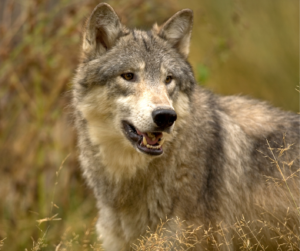
Letter To The Editor: Gov Gordon’s Praise Of Wyoming Wolf Management Is Wrong
By Kristin Combs
“Wyoming’s policies are bad for Wyoming wolves and residents, and the Governor should stop pretending otherwise.”
This compelling letter, written by Wildlife for All coalition member Kristin Combs, challenges Wyoming Governor Gordon’s claims that wolf management in the state deserves praise. Combs explores the many ecological and economic benefits of wolves, while disproving the Governor’s claims that wolves are recovered and that the state is using best available science in its management practices.
“No matter what Governor Gordon claims, Wyoming has proven itself unable and unwilling to effectively manage our state’s wolves, and our residents deserve better.”
The Sale of a Product Responsible for Bloodshed and Fear Is Still Tied to Our Wildlife
By Christopher Ketcham
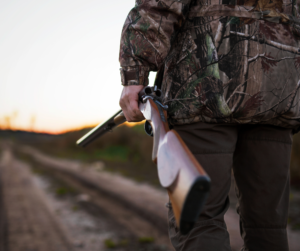
85 years ago, hunters were one of the primary user groups of public lands, and so the passage of the Pittman-Robertson Act seemed reasonable. However, over the past century, hunters have become a minority among gun owners, which begs the question, “Should the sale of a product that today is responsible for so much bloodshed, mayhem, fear and social division be tied to the financing of conservation?”
Why Republicans Turned Against the Environment

By Paul Krugman
In this op-ed in the New York Times, Paul Krugman argues that the current opposition of Republican politicians to environmental protection is not based on ideology or contributions from polluters, but rather because the environment has become part of a culture war with its roots in issues of race and ethnicity. Although Krugman focuses on climate policy, the same argument could be made about wildlife policy, as described in this excellent article in the New Yorker.
Symposium: Modernizing State Wildlife Management to Restore Wildlife Resiliency
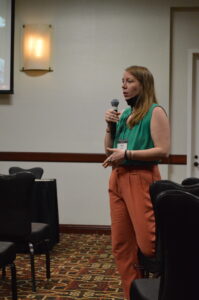
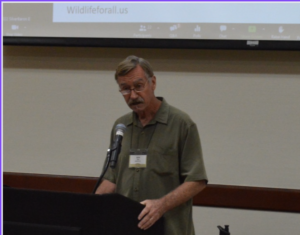
Wildlife for All presented a symposium at the 2022 North American Congress of Conservation Biology in Reno, Nevada on July 18,2022. Panelists included Kevin Bixby, Wildlife for All; Michelle Lute, Project Coyote; Jeremy Bruskotter, The Ohio State University; and Don Molde, Nevada Wildlife Alliance.
Video Presentation: It’s Time to Decouple Conservation from the Gun Lobby

Kevin Bixby
Let’s Talk Hunting: Part 2
By Don Molde
August 2022 Newsletter
August 2022 Newsletter
From the Desk of the Executive Director: What Is Wildlife Conservation, News: Wildlife for All brings reform message to prestigious science conference, Did You Know: R3 efforts, Our Coalition Partner: Project Coyote, Join Now.
Roadblocks to good wildlife management: beavers could be the answer to flooding and drought issues caused by climate change

Op-Ed: It’s Time to Decouple Wildlife Conservation From the Gun Lobby’s Agenda

By Kevin Bixby, Wildlife for All Executive Director
It’s time to get guns out of wildlife conservation.
The firearms industry and state wildlife agencies have been joined at the hip since Congress passed the Pittman-Robertson (PR) Act in 1937. The law redirected an existing federal tax on firearms and ammunition to the states to help restore depleted game populations.
At the time, taxing firearms to produce more game animals to benefit hunters under a “user pays” model made sense. It was assumed that most gun owners were hunters, and hunters were seen as the main “users” of wildlife.
For more information on the topic please read the article that inspired this op-ed:
Violent Entanglements: The Pittman-Robertson Act, Firearms, and the Financing of Conservation