
This is what wildlife advocacy looks like
August 2026 Newsletter
Lately, I have been thinking a lot about perseverance—not the heroic kind, but the ordinary, sometimes exhausting kind that asks us to keep tending to what matters even when the larger circumstances feel overwhelming.
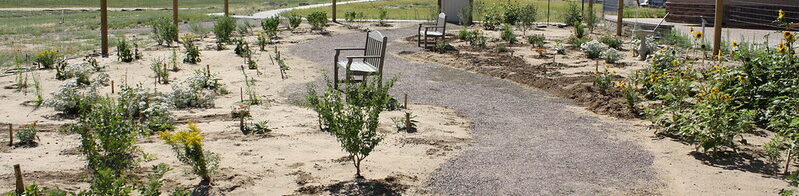
This summer, I have been trying to grow some of my own food and restore native plants on my little quarter acre of New Mexico. It is rewarding work, but this year it has also been a lesson in persistence. The monsoon rains still haven’t arrived in any meaningful way, so I have been carrying bucket after bucket of water from the kitchen sink and bathtub out to the garden and yard. It is a small act, repeated over and over, to keep something alive while waiting for the rains.
And the rain is desperately needed—not just for my garden, but for the forests, grasslands, wildlife, and communities threatened by the wildfires raging nearby.
There is something about carrying those buckets that has felt strangely connected to the work we are doing at Wildlife for All. The problems confronting us can seem impossibly large: a changing climate, collapsing ecosystems, attacks on democratic institutions, and political movements that seek to turn frustration and fear into power. It is easy to wonder whether the small things we do can possibly make a difference.
But that is precisely where perseverance matters. We cannot control when the rain comes. We cannot put out every fire ourselves. We cannot solve every crisis. We can, however, carry the next bucket.
Those individual actions become meaningful when they connect to the actions of others. A bucket of water becomes a garden. A garden becomes habitat. A conversation becomes a coalition. A coalition becomes political power.
And political power matters because frustration with broken systems can lead in very different directions.
As Heather Cox Richardson wrote on July 22, “Fascism has always been a vehicle for frustration with a system that was failing the people. But it has never been a solution for fixing that system.”
That distinction is at the heart of so much of what we are fighting for at Wildlife for All. People are right to be frustrated when institutions fail them. They are right to demand change when systems are unresponsive, undemocratic, or captured by narrow interests. But the answer is not to abandon democracy or hand more power to those who lie, control and exclude.
It is to make democracy work better.
That is one reason our work to defeat Colorado’s Initiative 302 matters. The proposed constitutional amendment would establish a constitutional right to hunt and fish and declare hunting and fishing the “primary and preferred means” of managing wildlife populations. But the fight over Initiative 302 is about more than hunting and fishing. It is also about who gets to make decisions about wildlife, how those decisions are made, and whether we preserve the ability of people and their representatives to adapt those decisions as science, ecosystems, and public values change.
Direct democracy is worth protecting—not because every initiative is good, but because people must retain the ability to participate meaningfully in the decisions that shape their communities and their shared natural world.
So this month, I am thinking about buckets of water.
About doing the next small thing when the larger task feels impossible. About staying connected—to one another, to the land, to the future we are trying to protect. About refusing to let exhaustion become resignation.
The rains will come when they come. Until then, we carry water.
With perseverance,
Michelle
P.S. You lovely folks have been asking for a way to share our newsletters so we’ve added them to our website. Thank you for helping spread the word for the wild!
What We’ve Been Up To

Perseverance in Action
Sometimes change takes years—not because an idea isn’t worthwhile, but because institutions move slowly.
In June 2021, Wildlife for All advisor Fred Koontz, then serving on the Washington Fish & Wildlife Commission, began advocating for a more contemporary definition of conservation—one that moved beyond the traditional emphasis on the sustained use of animals. He solicited input and helped start a conversation that continued for years.
Now, five years later, that persistence has paid off. A working group from the Society for Conservation Biology North America’s Policy Committee has developed the new definition of conservation, announced publicly this week and headed for discussion at the organization’s annual meeting.
The wheels of progress sometimes move slowly. And persistence matters.
Thank you for speaking up for Chaco Canyon
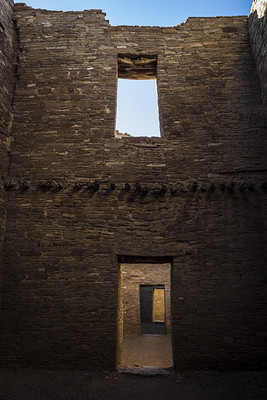
For more than a thousand years, Indigenous people have cared for and shaped the landscape surrounding Chaco Canyon, home to massive stone great houses, ancient roads, and thousands of archaeological and sacred Tribal sites. The area is also important habitat for wildlife who rely on this fragile desert ecosystem.
This summer, the Bureau of Land Management proposed removing protections from nearly 336,000 acres surrounding Chaco for potential oil, gas and mineral development, even though its own analysis found little meaningful oil and gas potential there.
We asked you to speak up, and more than 500 of you submitted comments. Thank you for making your voices heard for Chaco.
Speak Up for Montana’s Wolves
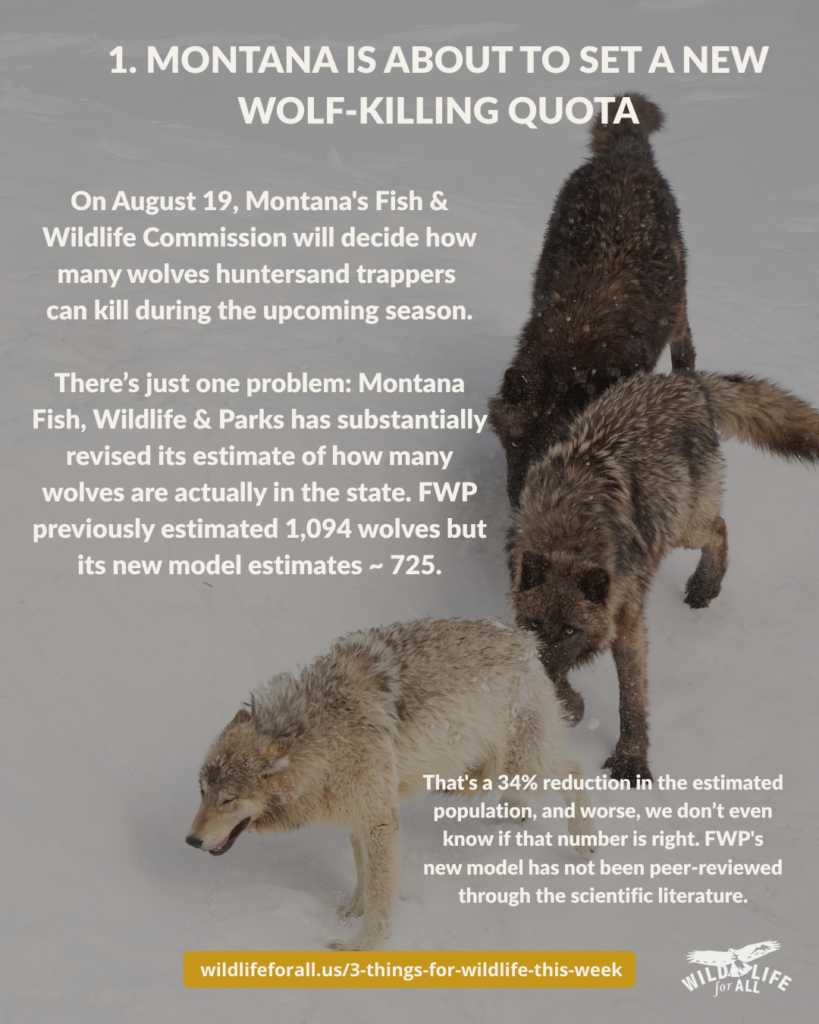
Montana is considering new wolf regulations that would allow more killing of wolves amid serious concerns about how the state estimates its wolf population and how the Commission is failing to respond to widespread public opposition.
Wildlife for All is calling for a moratorium on wolf hunting and trapping and for an end to Montana’s policies that treat wolves as targets for recreational killing.
You can still speak up via Zoom comment, but the deadline to sign up is August 18.
Sign up now and tell Montana’s Fish and Wildlife Commission: Stop the killing. Protect wolves as public-trust wildlife and put science, stewardship, and the public interest ahead of a narrow constituency.
Florida’s wildlife agency investigated its critics
A state wildlife agency is supposed to protect the public trust, not investigate the people who challenge it.
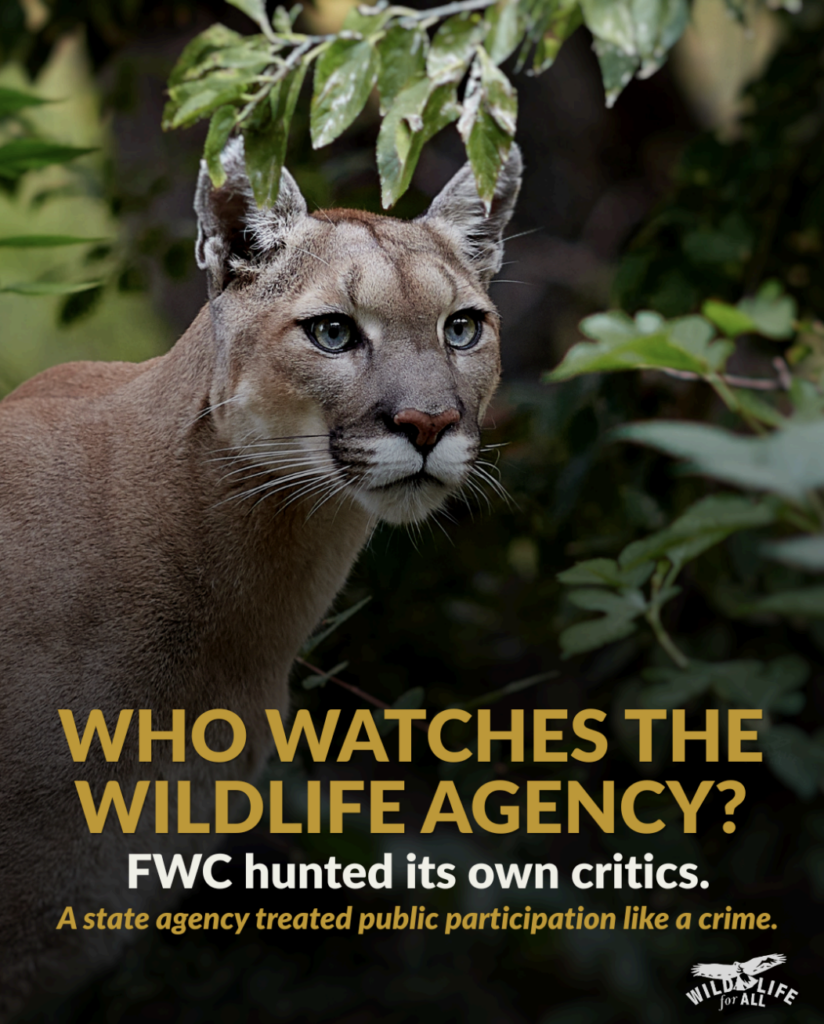
New reporting found that the Florida Fish and Wildlife Conservation Commission accessed protected driver records for critics of the agency, including advocates who opposed Florida’s black bear hunt and spoke at public meetings. Many of the searches reportedly occurred shortly after people testified, organized, or criticized FWC policies online. The searches were documented as “Criminal Investigation.”
Read that again: People participated in the democratic process, and then a state law enforcement agency searched their personal records. That should concern everyone who cares about accountable government.
When government power is used against people for exercising their First Amendment rights, it sends a chilling message to everyone else: stay quiet or we’ll come after you.
If you’ve spoken out at a wildlife commission meeting, submitted public comments, or advocated for wildlife and are concerned about retaliation, we’d like to hear from you. Reply to this email and let us know.
The public should never have to choose between speaking up and feeling safe doing so.
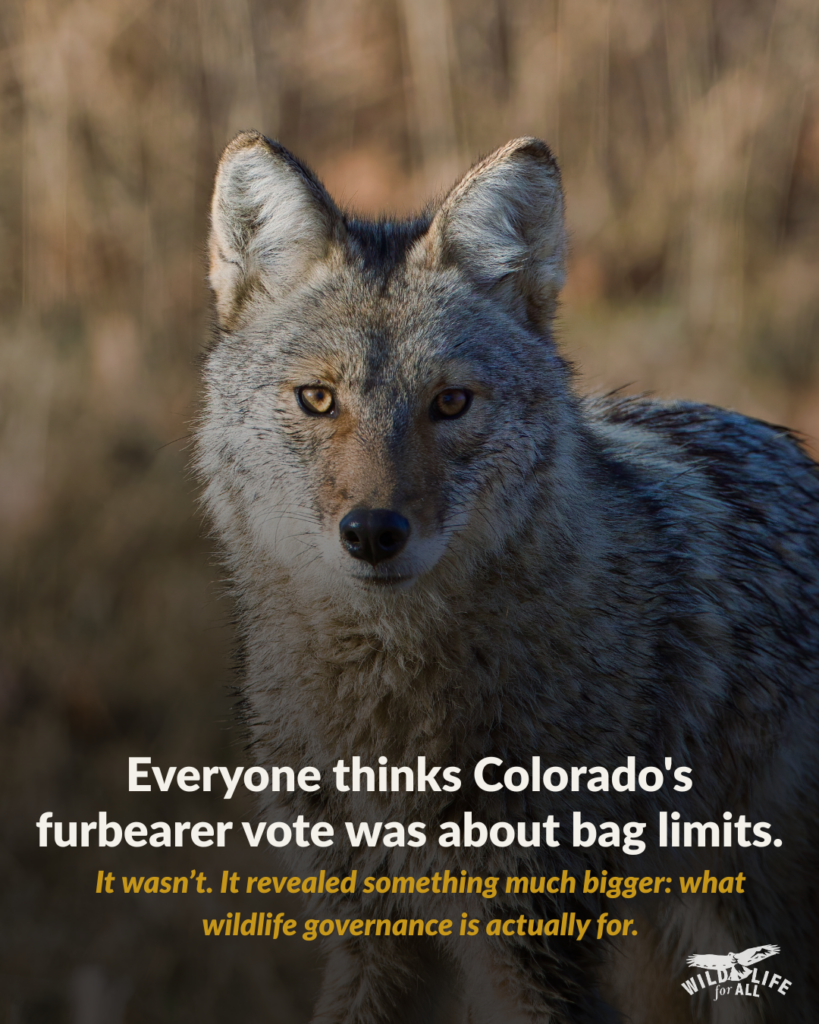
Colorado furbearers ignite debate on the role of science
Colorado’s Commission voted 6–5 in July to establish a daily bag limit of two animals for each of the state’s 17 furbearer species, a significant change from having no limits on take. It also voted 6–5 to abandon a petition to end commercial fur sales, reversing a March decision to begin rulemaking.
Some framed the debate as whether the Commission followed science. But wildlife policy is never about science alone. Science informs population trends, habitat and mortality; it doesn’t determine which outcomes we as a society should value.
Have you seen a Colorado furbearer? Reply to this email and send us your photos or stories so we can show decision-makers how many Coloradans value these animals alive.
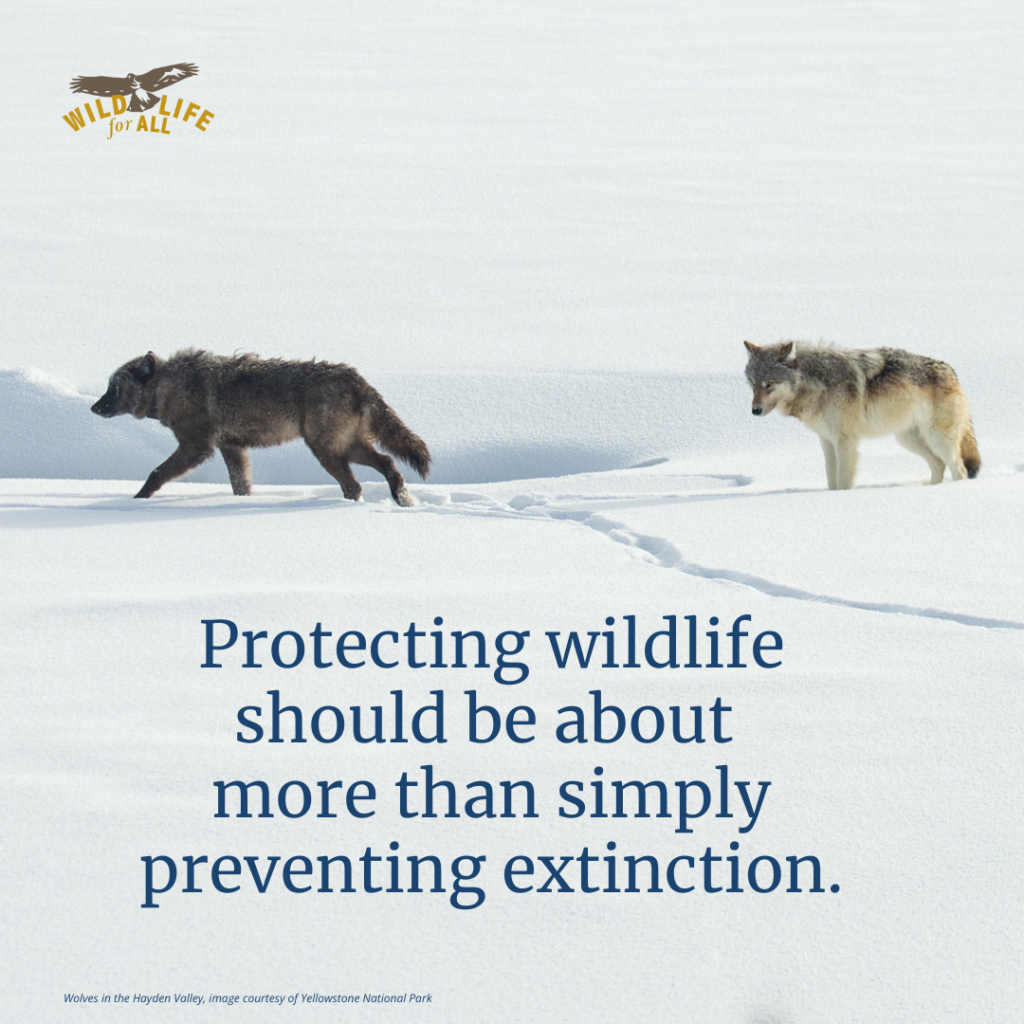
ESA definition of “harm” finalized
You cannot protect a species while allowing the destruction of the places it needs to survive. Yet that is exactly the contradiction at the heart of the Trump administration’s latest attack on the Endangered Species Act.
The administration finalized a rule eliminating the Endangered Species Act’s longstanding protections against habitat destruction as “harm” to listed species. It has also rolled back protections for threatened species and changed the criteria used when deciding whether species qualify for protection, opening the door for economic considerations to play a greater role.
Habitat loss is one of the leading drivers of extinction. Removing habitat protections while imperiled species are still struggling to survive makes recovery harder, if not impossible.
Wildlife can’t recover if we destroy the places they need to live, but there is still something you can do: contact your members of Congress. Ask them to support legislation to restore the ESA’s habitat protections and reverse these rollbacks.
The attacks may feel overwhelming. But this is exactly when perseverance matters, so keep speaking up, organizing, and demanding better.
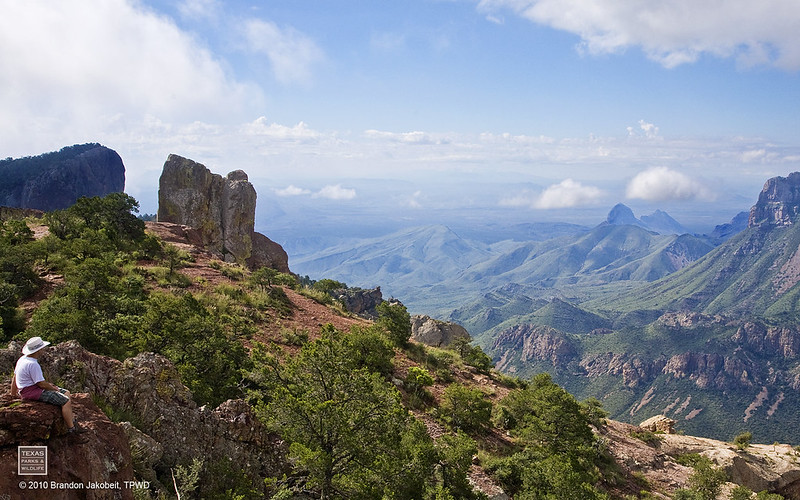
Perseverance for a Borderless Future
The fight over the border wall is another reminder that some of the most important conservation work requires us to think beyond the immediate moment.
In Big Bend, contractors have now begun clearing native vegetation for border infrastructure in one of the wildest and most ecologically intact landscapes along the U.S.-Mexico border. And in southern Arizona, tree sitters are putting their own bodies on the line to protect a 200-year-old cottonwood, the last surviving tree in a grove that once formed a canopy across the border.
Their perseverance matters not only because of what they may save today, but because of what they are standing for: a future in which the border does not permanently divide ecosystems, communities, and wildlife who have never recognized it.
Walls can seem permanent when they are being built. History tells us otherwise. Borders change. Walls fall. What remains is the landscape, and the people willing to imagine and work toward a future in which it can be connected again.
That kind of long-term vision is itself an act of perseverance.
What's Coming Up
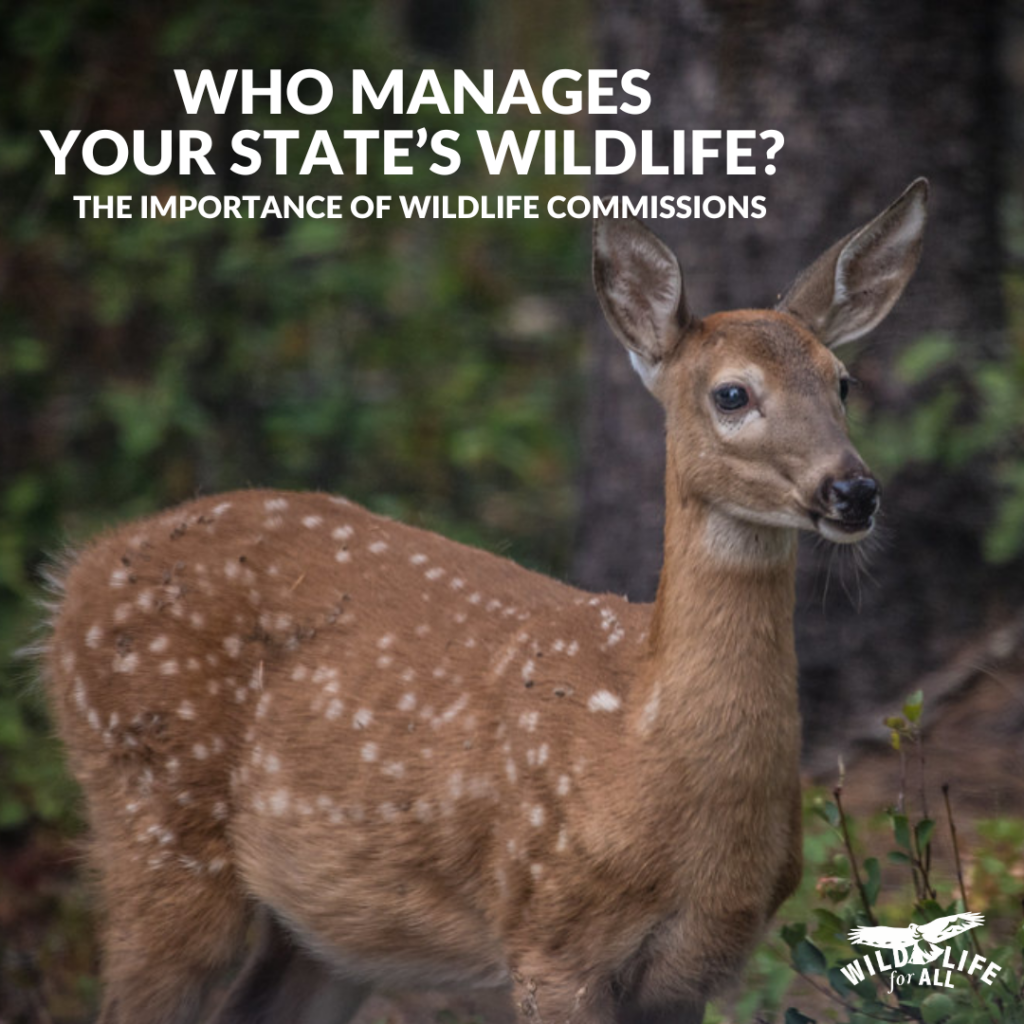
Attend August wildlife commission meetings
Federal protections are being rolled back, making state wildlife decisions more important than ever. This month, wildlife commissions and advisory bodies across the country are considering hunting and trapping regulations, species management, conservation plans and other policies that will shape wildlife for years to come.
You don’t have to be a wildlife biologist, lawyer, or policy expert to participate. We’ve gathered August’s wildlife commission meetings, advisory meetings and public comment opportunities in one place, with information about what’s being considered and how you can speak up.
Find your state’s meeting and take action.
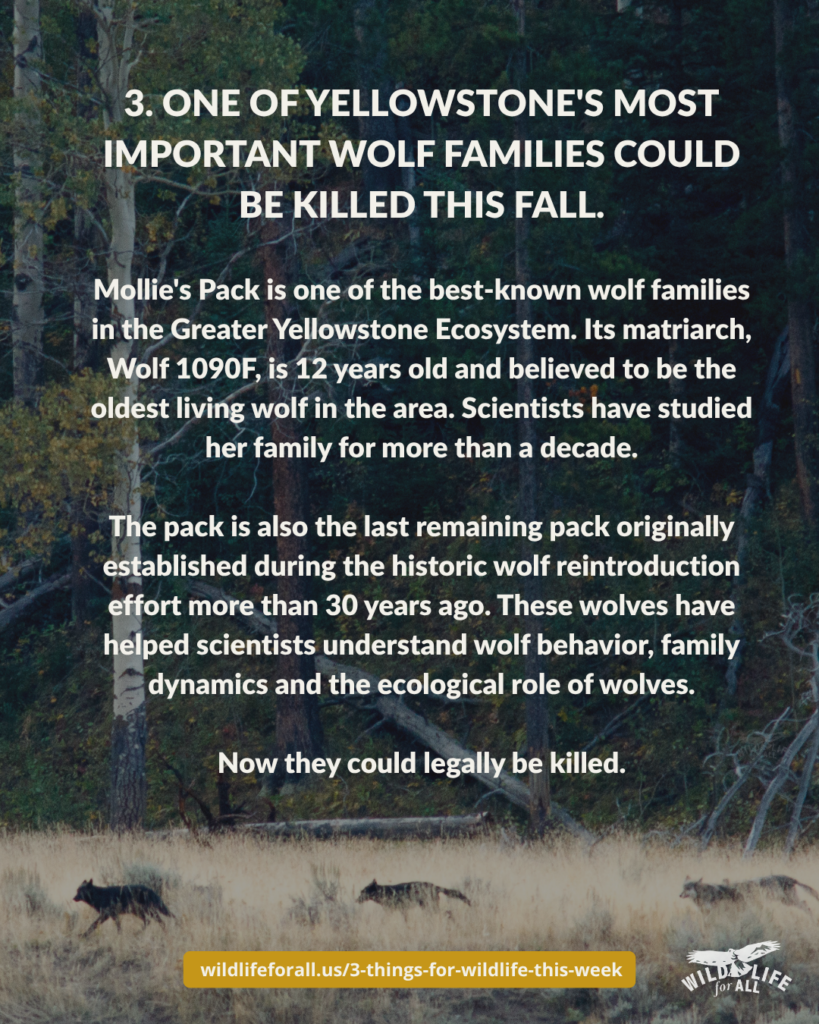
Help protect Mollie’s Pack before Wyoming’s hunting season begins
Mollie’s Pack is one of the best-known wolf families in the Greater Yellowstone Ecosystem. Its matriarch, Wolf 1090F, is 12 years old and believed to be the oldest living wolf in the region. Scientists have studied the family for more than a decade, making them one of the most extensively documented wolf packs in the world.
Recently, the pack established a den outside Yellowstone National Park, where Wyoming’s draconian wolf hunting rules apply. That means members of this scientifically significant family could legally be killed when hunting season begins.
Ask Wyoming officials to save Mollie’s Pack from the crosshairs of wolf haters.
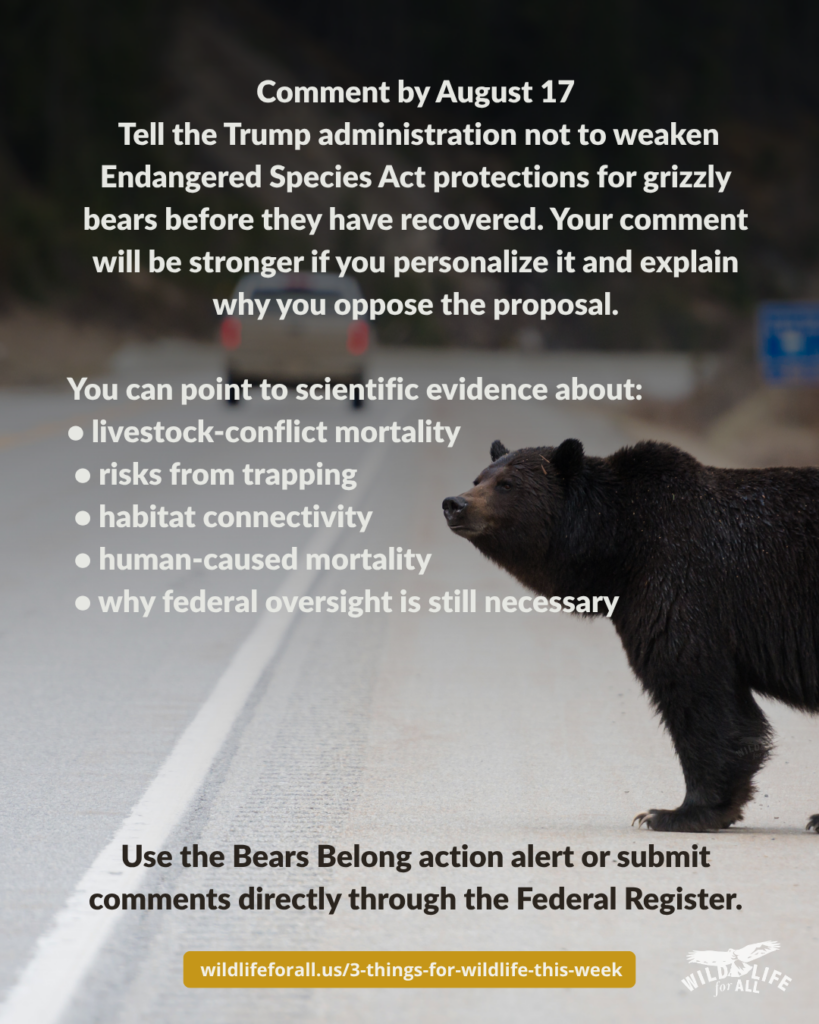
Grizzly bears need real recovery: comment today
The Trump administration is proposing changes that would weaken Endangered Species Act protections for grizzly bears, giving states greater authority to manage bears and expanding exceptions to the law’s prohibition on “take.”
Grizzlies remain threatened and occupy only a fraction of their historic range. They still face human-caused mortality, habitat fragmentation and other significant threats. Just 18 months ago, the U.S. Fish and Wildlife Service rejected petitions to delist grizzlies, concluding that removing federal protections would be premature.
More state authority to kill bears is not a recovery strategy. Tell the administration to keep protections strong. Comments are due by midnight ET, Monday August 17.
When wildlife reformers are attacked, it tells us something about the system
Pro-wildlife commissioners and advocates are facing attacks in both Colorado and Washington, and the similarities are worth noticing.
In Colorado, Commissioner Becky Niemiec, PhD, has been targeted over her advocacy for more transparent and representative wildlife governance. Critics have mischaracterized her work and attacked her personally. This even showed up in the July commission meeting with incredibly disrespectful comments coming from Colorado Parks and Wildlife staff.
In Washington, commissioners Lorna Smith, Melanie Rowland, John Lehmkuhl, Barbara Baker, and Woody Myers, and one former member, Tim Ragen, were subjected to an investigation over their communications with wildlife advocates, spurred by pro-trophy hunting organizations. If you’re in Washington, you can get involved with Washington Wildlife First’s ‘Not My WDFW’ campaign.
People should be free to question government, organize, and advocate without being treated as threats. Don’t let intimidation silence wildlife advocacy.
Show up. Submit public comments. Attend commission meetings. Support commissioners and advocates who are willing to ask hard questions. And when you see attacks on people participating in the process, don’t assume someone else will push back. A healthy wildlife governance system depends on all of us being willing to use our voices for change.
M-44s Return
Federal officials are expanding the use of M-44 cyanide ejectors—devices that spray a lethal poison into the mouths of animals attracted by bait. M-44s have long been criticized for killing non-target wildlife, injuring pets, and even exposing people to toxic cyanide. Rather than investing in coexistence and nonlethal conflict prevention, this decision doubles down on outdated predator control methods that put wildlife, companion animals, and communities at risk. Wildlife for All will continue supporting our partners at Predator Defense and advocating for science-informed, humane approaches to reducing conflicts with carnivores.
Native Wildlife Loses Ground
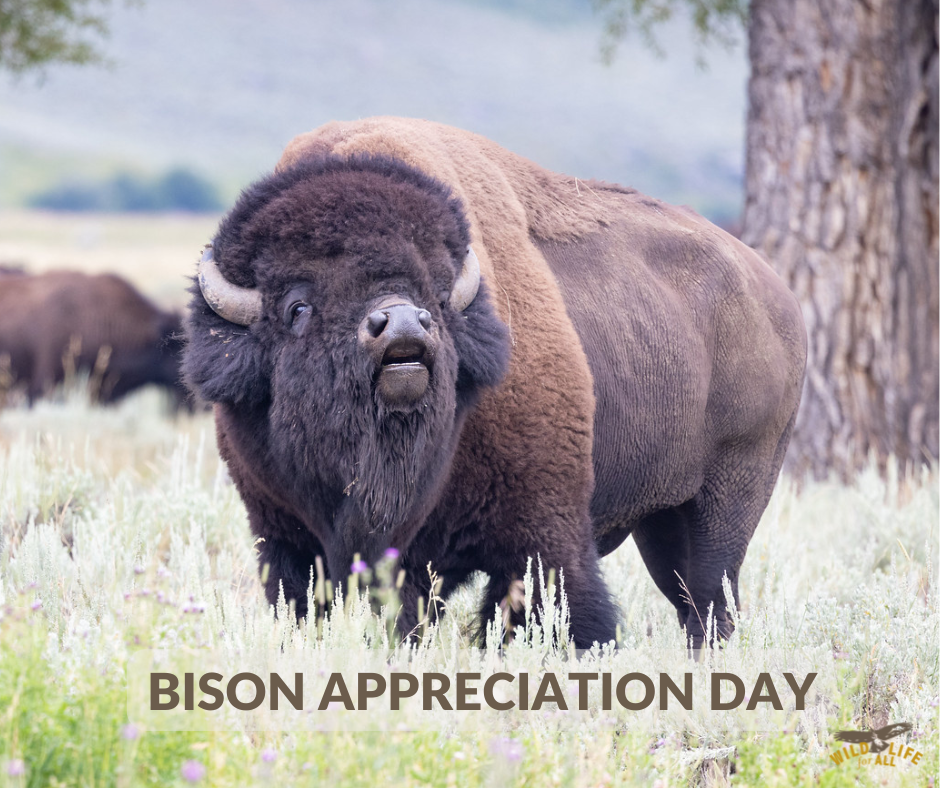
The federal government recently revoked permits allowing conservation organization American Prairie to graze bison on public lands in Montana, reversing years of progress toward restoring one of North America’s keystone species to its native grasslands. The decision prioritizes livestock production over ecological restoration and raises concerns that similar policies could threaten future bison restoration efforts, including those led by Tribal Nations. It is another reminder that who governs wildlife—and whose interests shape those decisions—has profound consequences for the future of our public lands. But rest assured, our partners are fighting back.
Help Turn Attention Into Change
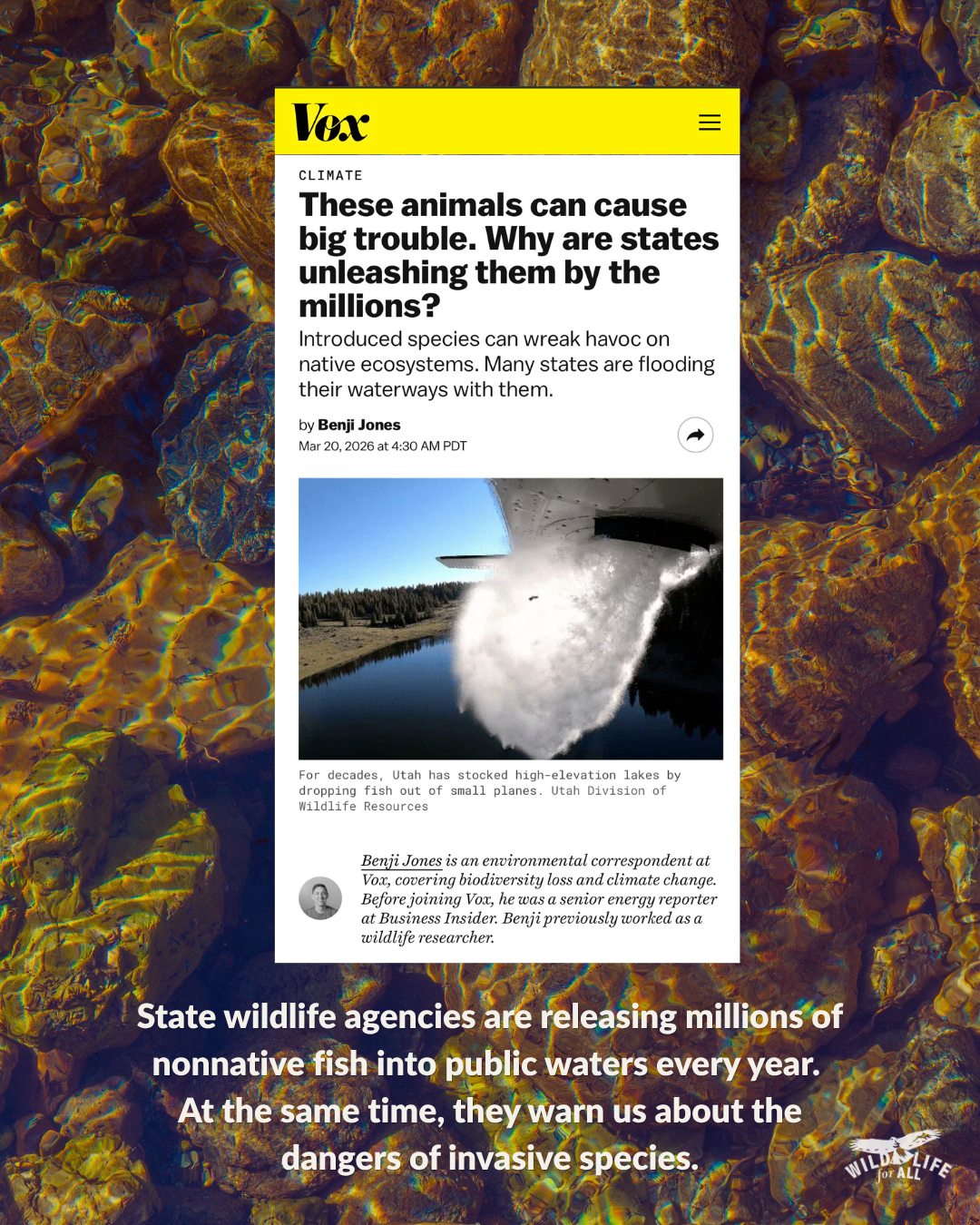
For years, Wildlife for All has been exposing the systems that leave too much of America’s wildlife behind. Now, major Vox investigations are bringing those same issues to millions of people—from wildlife agency funding to fish stocking to the failure to adequately protect imperiled species.
Wildlife for All helped Vox connect the dots between these stories and the larger need for wildlife governance reform.
But national attention is only the beginning. We need your support to turn that attention into lasting change.
Please make a gift today to help build a wildlife conservation system that works for all wildlife.
In the Media
Podcast: The High Stakes of State Wildlife Governance and the Fight for Direct Democracy
This US state has become an unexpected epicenter of the global extinction crisis
Supporters submit signatures to enshrine right to hunt, fish
Battle swirls around fate of Mexican Grey Wolves
Colorado voters could face record load of ballot measures
ICYMI: A Colorado trophy hunter recently criticized Wildlife for All’s opposition to Initiative 302, describing our leadership as “a who’s who of animal welfare activists.”
Guilty as charged… and thanks!
We’re proud to stand up for animals. And apparently even the opposition recognizes our effectiveness since we’ve made their who’s who list. We’ll add it to our résumé. (We don’t want to link to their site to give them more traffic … )
From the Blog
Five overlooked consequences of Colorado’s Initiative 302
Right-to-Hunt Amendments: New Analysis Examines National Trend
Release | Agencies Pursue Mexican Wolf Downlisting
What Walks This Way? Rediscovering the Wild Lives Around Us
The far-right political network behind Colorado’s Initiative 302
Conservation organizations support Juneteenth Fee-Free Day at National Parks
August Wildlife Commission Meetings
3 Things You Can Do for Wildlife This Week
What Initiative 302 Could Mean for Local Wildlife Decisions and Public Safety
Past Newsletter Entries
February 2026 Newsletter
Winter in America, Again
January 2026 Newsletter
The Next Round Starts Now: Wildlife and Democracy in 2026
December 2025 Newsletter
Monthly Wildlife for All Newsletter