These aren't Isolated Tragedies. They're a System Failing Wildlife
This month has been difficult.
Across the country, we’ve watched stories emerge that are heartbreaking on their own—and even more troubling when viewed together. A coyote tortured on video. Father and son Mexican gray wolves trapped and killed in New Mexico. Wildlife refuges being opened to more hunting and trapping. An initiative in Colorado that could undo decades of progress for wildlife protections, while silencing the majority of Coloradans who care about wildlife. All because our wildlife management systems are failing and continue to prioritize lethal control over coexistence, and exploitation over democracy.
These aren’t disconnected incidents.
They reflect a culture and a system that too often treats wildlife as targets instead of living beings, and too often values the interests of a few over the shared values of diverse constituencies. We’ve seen this time and again, when cruelty is normalized, accountability becomes harder to achieve.
Wildlife for All exists to change those systems.
Our work isn’t only about responding to the latest tragedy. It’s about changing the laws, commissions, and institutions so that these tragedies don’t happen in the first place. Whether we’re advocating for stronger trapping protections, pushing for representative wildlife commissions, training the next generation of wildlife advocates, or challenging policies that undermine science and democracy, we’re working toward a future where compassion, ecological stewardship, and public accountability guide wildlife conservation.
I don’t know if I’m alone in feeling this way, but my experience of 2026 has been like a fog lifting. From confusion about how to respond to all the federal threats, to a painful, unsettling clarity that we are in an existential crisis.
The fight is for life, literally. For true liberty and justice. For wildlife. For all.
For the wild,
Michelle Lute
Executive Director | Wildlife for All
What We’ve Been Up To
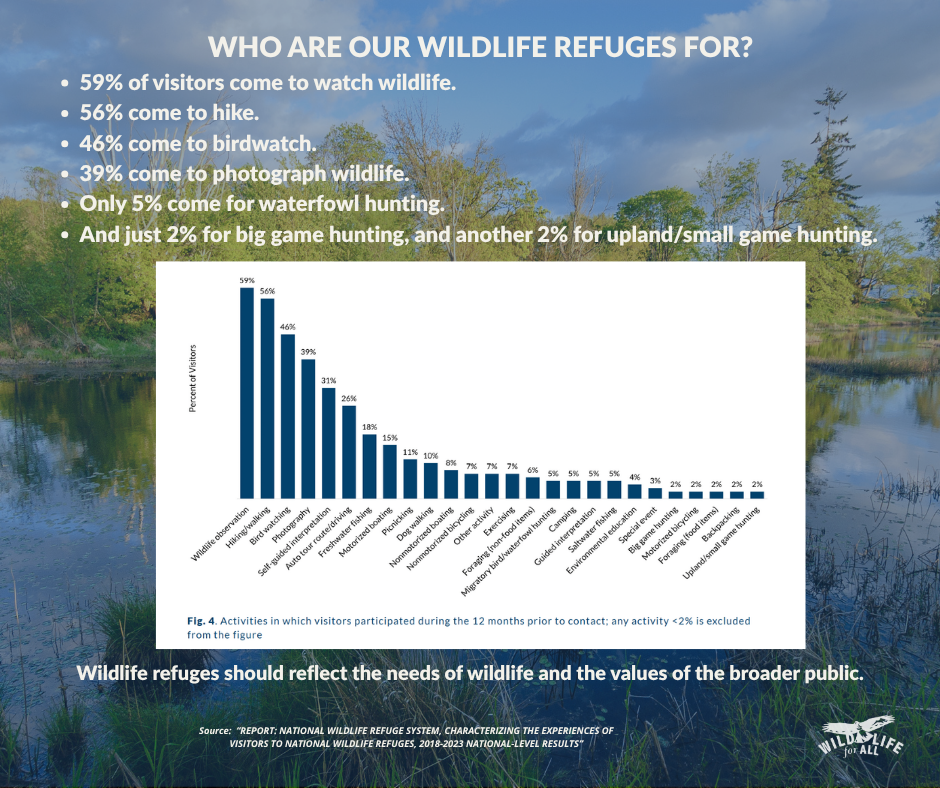
National Wildlife Refuges Belong to Wildlife
The U.S. Fish and Wildlife Service recently proposed opening roughly 95% of National Wildlife Refuge lands to hunting, fishing, and trapping, expanding across places established first and foremost to conserve wildlife. Millions of people visit refuges to birdwatch, photograph wildlife, hike, learn, and experience nature. We encouraged supporters to speak up for the Refuge System’s conservation mission before the June 26 deadline, and hundreds used our Action Hub to submit comments. Nearly 20,000 comments were submitted nationwide.
Thank you to everyone who took action. Wildlife refuges should remain places where wildlife conservation comes first, and public participation remains one of the strongest tools we have to defend that mission. We’ll keep you informed as this proposal advances through the system.
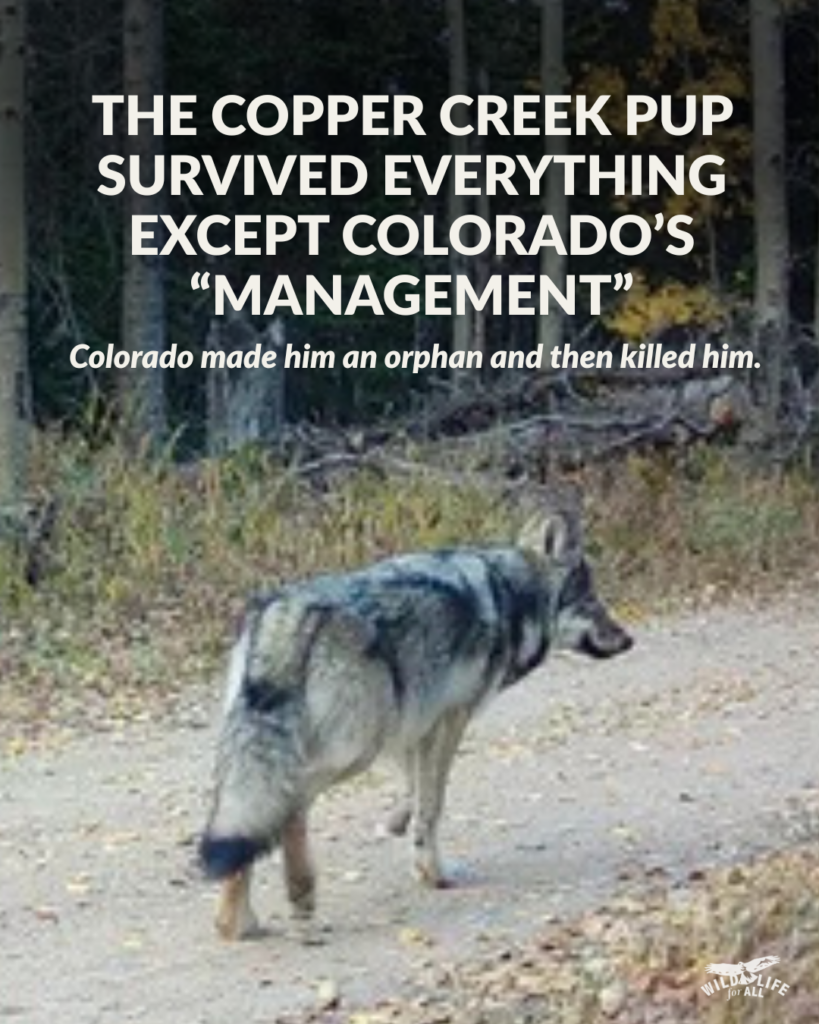
The Copper Creek Pup Deserved Better
Last month, Colorado officials killed the orphaned Copper Creek wolf pup after months of pursuing him with helicopters, drones, thermal imaging, and sharpshooters. His death is heartbreaking, but it also raises larger questions about how wolf restoration is being implemented. Colorado cannot claim it needs more wolves for recovery while repeatedly removing wolves already on the landscape.
There’s still time to tell the Colorado Parks and Wildlife Commission that lethal control should never become a substitute for coexistence, and that nonlethal conflict prevention must be fully implemented, evaluated and improved.
Submit your comments by July 9 via email. The Copper Creek pup is gone, but the policies that failed him are still very much alive.
Accountability Matters for Mexican Gray Wolves
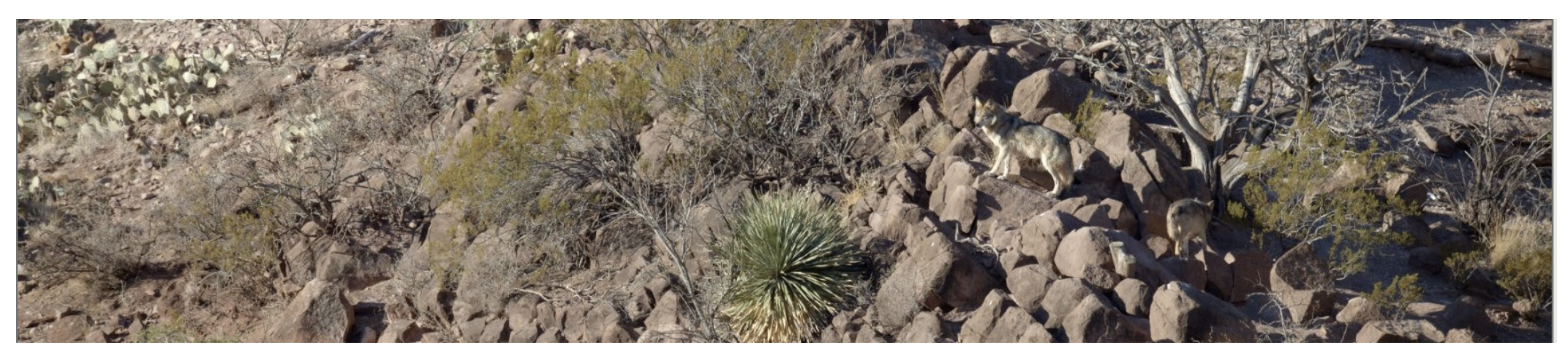
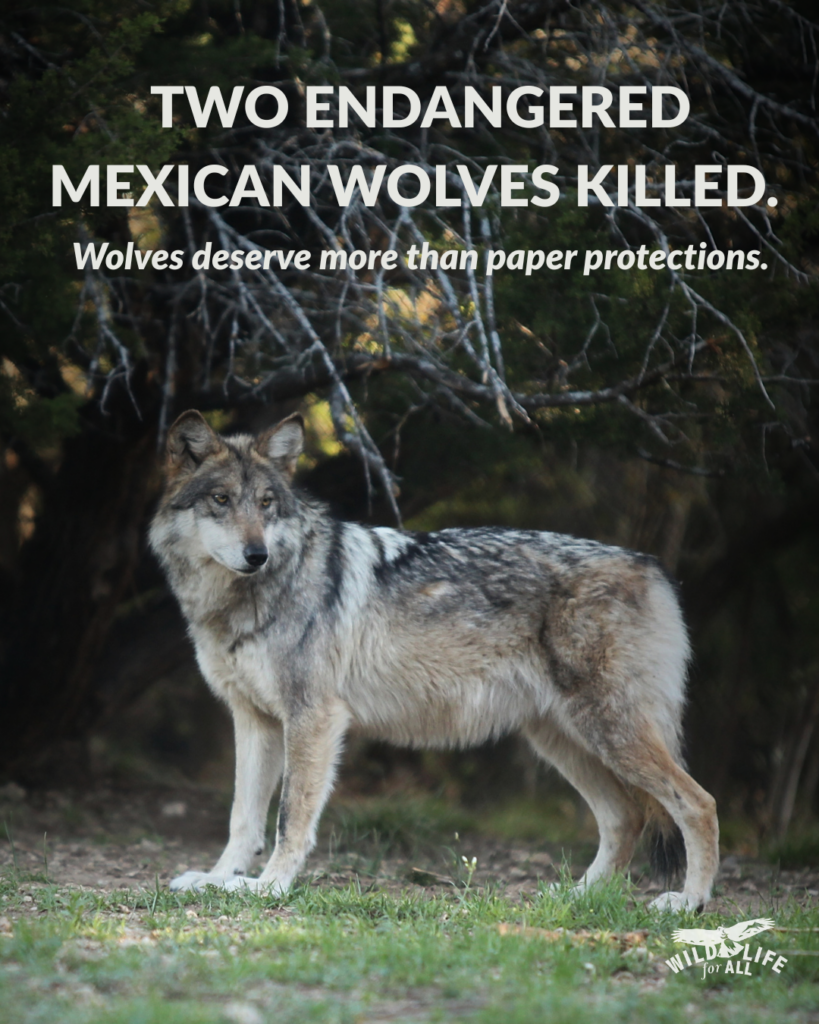
Two endangered Mexican gray wolves from New Mexico’s Sawtooth Pack—a father and his yearling son—were illegally killed after becoming trapped in separate incidents. Federal investigators recently executed search warrants as part of the ongoing investigation, an important step toward accountability.
Additional reports have surfaced of at least 23 trapped lobos just since 2022. Only six of those were investigated but of those six, at least four wolves died as a result. These are just the incidents we know about and, given the vast landscapes wolves roam, there are surely more that are never discovered.
Wildlife recovery doesn’t end when animals are released into the wild; it depends on protecting them once they’re there. Every illegal killing is a setback for one of North America’s most endangered mammals.
WFA is exploring every available avenue to help ensure those responsible are held accountable and that loopholes are closed so that indiscriminate traps won’t continue to endanger our wildlife. We’ll keep our supporters updated as this case develops.
Texas Shows Why Good Data Matters
Texas Parks and Wildlife proposed something remarkably simple: require reporting of mountain lion harvests so biologists could begin understanding the state’s population. Before the proposal could even be considered, it was pulled from the Commission agenda following backlash from opponents worried the data might eventually lead to future regulations.
Texas remains the one of the only states where mountain lions are treated as nongame wildlife with virtually no statewide harvest limits or reporting requirements. Collecting basic information shouldn’t be controversial. Wildlife decisions are strongest when they’re informed by good data, transparency, and a willingness to learn, not fear of what the data might reveal. If you’re in Texas, make sure you’re showing up to commission meetings and providing comments that support transparency and ecological science to help protect lions.
One Video Isn’t the Whole Story
After disturbing footage surfaced showing hunting influencer Aron Snyder abusing an injured coyote, much of the conversation focused on one individual. We argued that the harder question is why contempt toward predators has become so normalized in some hunting spaces.
Carnivores are often portrayed as enemies rather than as native wildlife playing important ecological roles, making cruelty easier to excuse or overlook.
And focusing only on one person’s actions risks missing the broader culture that shapes these attitudes. Lasting change requires more than accountability for individuals; it requires changing the stories we tell about predators and recognizing that all wildlife deserves moral consideration.
Take action: look up carnivore policies in your state and start advocating for change with our Wildlife Commission Advocacy Toolkit. We have to change the narrative to change the future for carnivores.
A Win for AZ Mexican Gray Wolf Recovery
Arizona Gov. Katie Hobbs vetoed legislation that would have blocked the transportation of Mexican gray wolf pups into Arizona, preserving one of the most important tools available for recovering this endangered species. Conservationists warned the bill would have undermined decades of recovery work and set a dangerous precedent. Governor Hobbs’ veto protects an important conservation tool and reminds us that informed public advocacy can make a real difference for wildlife when policymakers choose to listen.
What's Coming Up
July Is Packed with Wildlife Decisions
At least 25 states have commission meetings, public comment periods, or advisory meetings scheduled, including major decisions affecting wolves, trapping, and wildlife management across the country. These meetings shape policy long before most people hear about the outcomes, which is why public participation matters.
Is your state meeting this month? Find out, and get ready.
Speak Up for Public Lands by July 13
The Bureau of Land Management is proposing sweeping changes to grazing regulations affecting more than 155 million acres of public lands. Among other changes, the proposal would reduce opportunities for public participation, weaken accountability for habitat damage, and make it easier to expand livestock grazing while limiting conservation-focused management. Public lands belong to all of us, and the decisions that shape them should reflect that.
The public comment period closes July 13. Use Western Watersheds Project’s excellent comment toolkit, which explains the proposal in plain language and helps you submit an effective comment.
Defend Independent Science
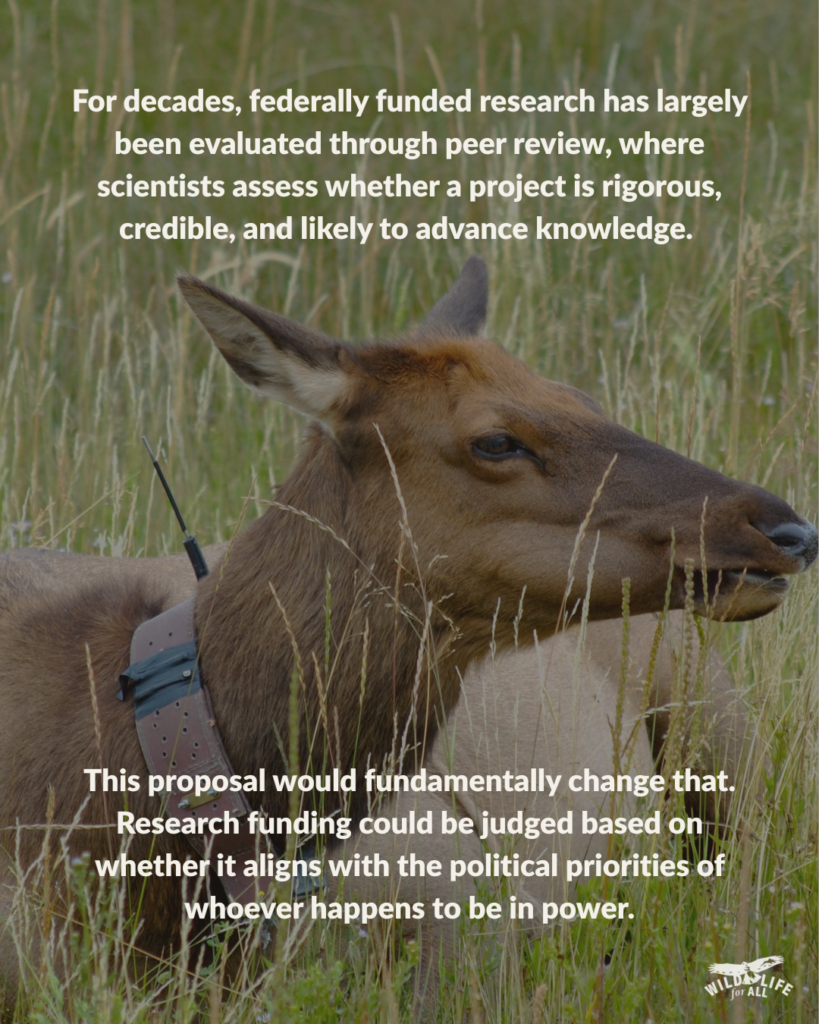
The Office of Management and Budget has proposed changes that could allow political priorities—not independent peer review—to influence which federally funded research receives support. While the proposal extends far beyond wildlife conservation, the consequences could affect everything from climate science and biodiversity research to public health and natural resource management. Scientific research serves the public best when it’s evaluated on its merits rather than political ideology.
This public comment period *also* closes July 13. If you value independent science and evidence-informed decision-making, this is an important opportunity to speak up.
Indiana Bobcats Get Another Chance
After nearly 200 public comments were submitted, Indiana officials announced they’ll hold another public hearing and comment period before making decisions about proposed bobcat trapping regulations. That’s encouraging news. Public participation helped slow the process and created additional opportunities for Hoosiers to weigh in before decisions are finalized.
Bobcats have only recently returned to parts of Indiana after decades of decline, making proactive conservation especially important.
Follow the Hoosier Chapter of the Sierra Club for notification and details regarding the next comment period.Then please speak up for Indiana’s bobcats!
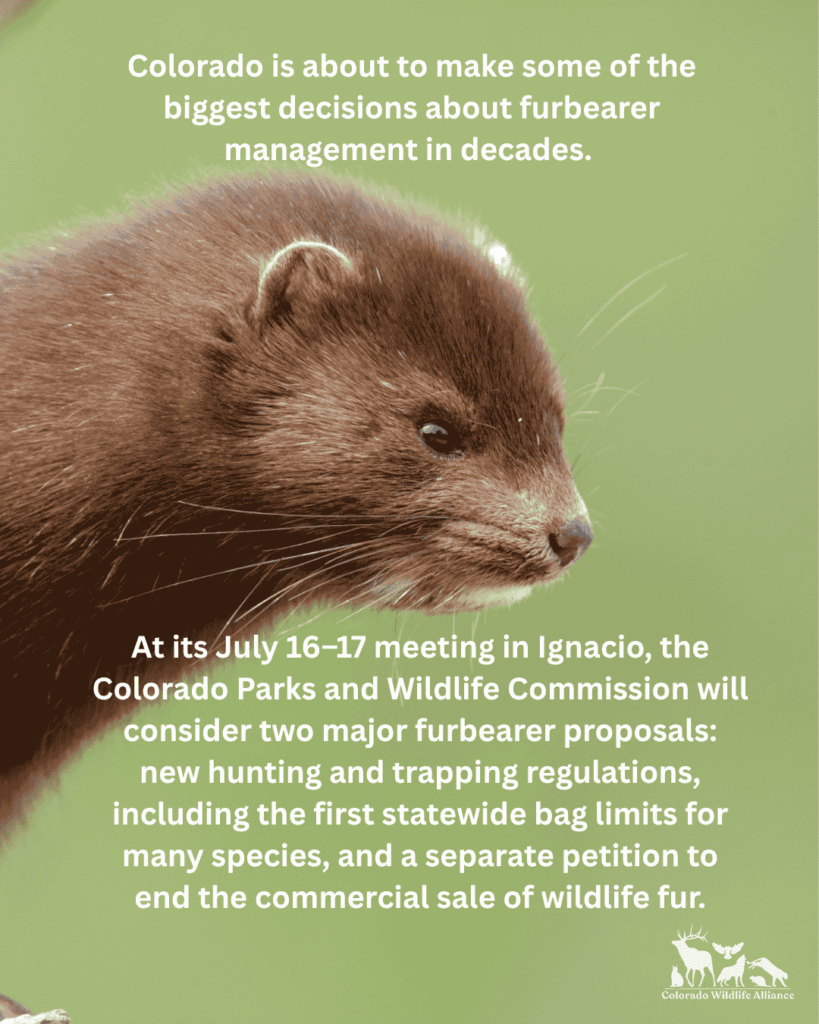
Colorado Faces Big Decisions on Furbearers
On July 16th and 17th, the Colorado Parks and Wildlife Commission will consider some of the most significant furbearer reforms in decades. Commissioners will vote on proposals including statewide bag limits for many furbearer species, improved harvest reporting, mandatory beaver check-ins, and a separate petition to end the commercial sale of pelts from wild furbearers.
These proposals represent an opportunity to modernize wildlife management by improving accountability, recognizing the ecological importance of furbearers, and treating wildlife as a public trust rather than a commercial commodity.
Written comments are due TODAY, July 9 if you want commissioners to receive them before the meeting.
Double Your Impact for the Fight Ahead
This fall, Colorado voters could decide the future of wildlife governance.
Initiative 302 is being promoted as a “right to hunt and fish” amendment, but its effects could reach far beyond hunting. By placing broad rights to vague “traditional methods” into the state constitution, it could make it more difficult to advance future wildlife protections, protect past victories, and ensure wildlife conservation reflects science, public values, and the needs of all Coloradans.
Wildlife for All is leading efforts to stop this movement before it sweeps the entire country. The proponents of these efforts have said they want to pass Right To Hunt constitutional amendments in every state and put “a lock on the door” to close wildlife policy off from democratic process forever.
Your matched donation will help us educate voters, mobilize advocates, and defend democratic, science-informed wildlife governance in Colorado—and create a model for stopping similar efforts in other states.
Will you make a matched gift today and help us meet the challenge?
In the Media
Advocates Condemn Mexican Gray Wolf Killings, Commend Law Enforcement Efforts
Father And Son Mexican Gray Wolves Found Dead In New Mexico; Federal Investigation Underway
Introduced Bill Would Restore Juneteenth And MLK Day As Fee-Free Days
35 Organizations Supported by Millions of Americans Uplift Juneteenth Fee-Free Day at National Parks
Casting a kind eye on the ‘bad guy’ | Feature on WFA Volunteer Peggy Clark
Interested Parties Memo: Five Overlooked Consequences Of Colorado’s Initiative 302