
News & Commentary
Mexican Gray Wolf Numbers Reach 319 in Southwest
Mexican Gray Wolf Numbers Reach 319 in Southwest | For Immediate Release, February 25, 2026
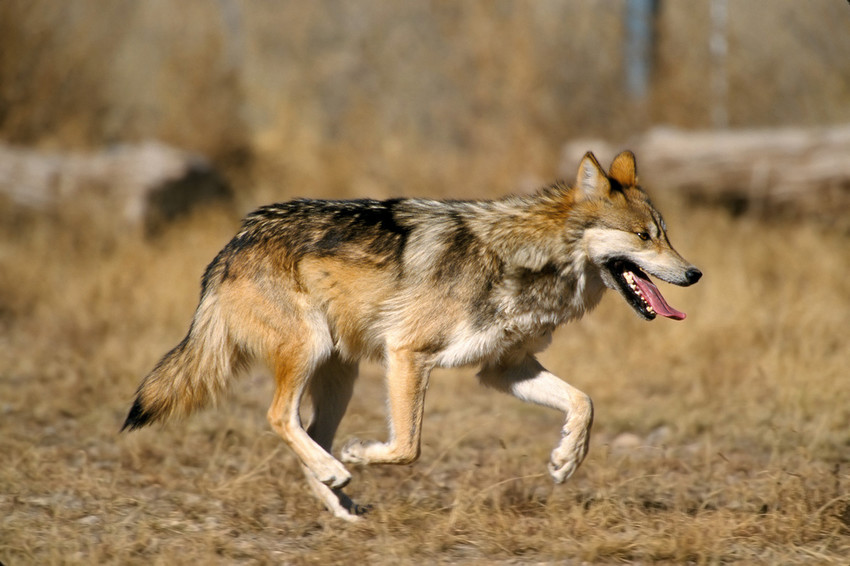
Mexican gray wolf photo available for media use with appropriate credit: Jim Clark/USFWS. Image is available for media use.
Mexican Gray Wolf Numbers Reach 319 in Southwest
SILVER CITY, N.M.— The Arizona and New Mexico wildlife agencies today jointly announced that the number of endangered Mexican gray wolves in the Southwest grew by 33 last year — to 319 in 2025 from 286 in 2024.
“It’s inspiring that there are now hundreds of Mexican wolves in the Southwest, especially considering there were zero roaming the wild just three decades ago,” said Michael Robinson, a senior conservation advocate at the Center for Biological Diversity. “I used to fear they’d all get wiped out by a major wildfire or a spate of illegal killings, but now I’m confident they won’t disappear in my lifetime. The big danger is that politics will strip these still-imperiled wolves of their Endangered Species Act protections before they’re truly recovered.”
Federal and state wolf killings for the livestock industry are shrinking the genetic heritage bequeathed by just seven founding wolves spared from destruction decades ago. These include last year’s killings of three genetically valuable wolves — one a nursing mother and the other two mere pups — all from different packs. Now, the southwestern wolf gene pool retains less than a third of the genetic diversity passed down from those seven founding wolves.
“We are heartened that the population of Mexican wolves has grown this past year, though it is still very small,” said Mary Katherine Ray, wildlife chair for the Rio Grande chapter of the Sierra Club. “Importantly, it isn’t just a numbers game. The wildlife agencies must do more to improve the genetic health of the population which is going down even as their numbers go up.”
Inbreeding is worsening not just because of agency killings but also through the ongoing failure to adequately transfer genetic diversity from captive wolves to the wild population through releases. The captive population retains 37% more genetic diversity than the wild population.
Wolf experts have called for releasing captive-born, well-bonded male/female pairs with their pups, which is how the population was first established. Sixty-seven percent of adult pairs in such family pack releases survived and raised additional pups born in the wild after the pups were released with them. In contrast, the practice that started in 2016 of taking captive-born pups from their parents to release them into wild wolves’ dens has so far resulted in 79% of the pups simply disappearing.
“An increase in wolf numbers is encouraging, but headcounts alone do not mean recovery,” said Michelle Lute, Ph.D., executive director of Wildlife for All. “Mexican gray wolves remain genetically imperiled, and human-caused mortality continues to undermine their future. Until agencies prioritize strict protections and release bonded family groups to strengthen the gene pool, these wolves will remain vulnerable.”
“True recovery is not achieved the moment a population number is met; it’s achieved when wolves are genuinely welcomed back into the ecological and cultural fabric of the Southwest,” said Claire Musser, executive director of the Grand Canyon Wolf Recovery Project. “Wolves should be considered equal stakeholders in their own recovery. That means protecting them, restoring their genetic health and funding proactive, preventative practices that allow communities and wolves to thrive together.”
“Despite the adversity facing the species, not to mention the threat of federal abandonment, the Mexican gray wolf continues to pace toward recovery,” said Craig Miller, senior representative at Defenders of Wildlife. “Today, the threats are very real, and stripping Endangered Species Act protections now would mean dead wolves and a derailed recovery. Recent hard-won population gains should be celebrated, not twisted into a justification for premature delisting that jeopardizes the Mexican gray wolf’s survival.”
“As the fragile Mexican wolf population continues to grow, I am hopeful that humans will make choices that further the recovery of this iconic species,” said Sally Paez, staff attorney for New Mexico Wild. “In addition to wolf management based on science, we must fight for policies that prioritize healthy forests and ecosystems, habitat connectivity and functioning watersheds to allow wolves to survive and thrive.”
“As with any endangered species, especially one that was totally eradicated from the wild just a few decades ago, an increase in population is worth celebrating,” said Leia Barnett, New Mexico conservation lead for WildEarth Guardians. “But 319 wolves does not guarantee a healthy, thriving population. We hope the agencies will do more to address the political, geographic and genetic barriers that continue to hinder, and in some cases threaten, actual scientific recovery of this imperiled, iconic species.”
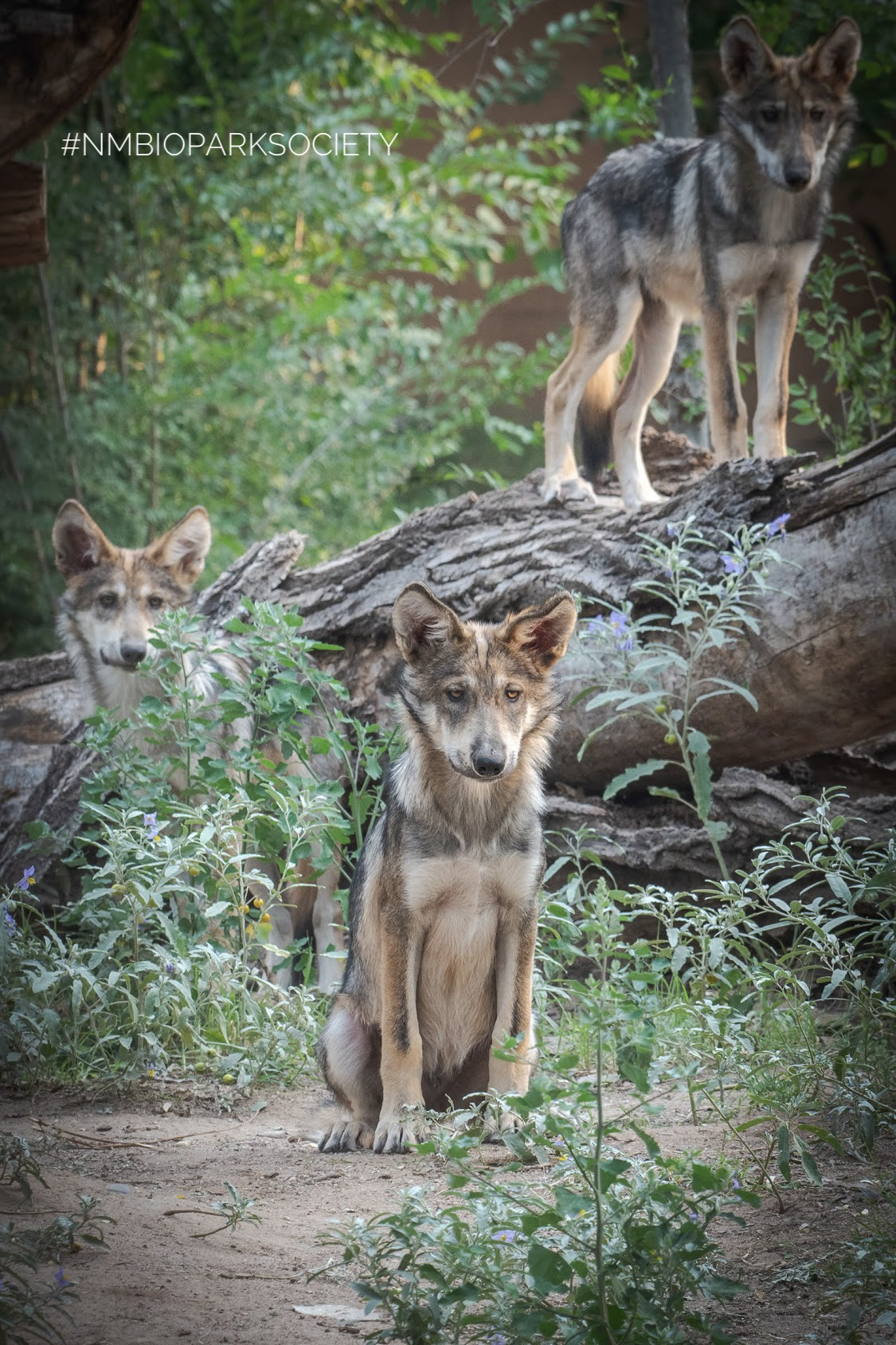
Mexican gray wolf pups born in May 2020 at the Albuquerque BioPark. Photo by ABQ Bio Park.
Background
Under the Mexican wolf’s recovery plan, after eight years of the population averaging 320 wolves or more, and after 22 captive-born wolves have survived to breeding age after their releases, the possibility of Endangered Species Act delisting would be evaluated.
Under the science-based criteria of the Endangered Species Act, delisting requires that a species must actually be out of danger, regardless of whether the numerical recovery criteria have been met. Even as the number of Mexican wolves rises, scientists say the threats facing their genetic health is actually moving the species further away from recovery.
###
The Center for Biological Diversity is a national, nonprofit conservation organization with more than 1.8 million members and online activists dedicated to the protection of endangered species and wild places.
Defenders of Wildlife is dedicated to the protection of all native animals and plants in their natural communities. With nearly 2.1 million members and activists, Defenders of Wildlife is a leading advocate for innovative solutions to safeguard our wildlife heritage for generations to come.
The Grand Canyon Wolf Recovery Project is a nonprofit dedicated to bringing back wolves to help restore ecological health in the Grand Canyon region, while also recognizing wolves as sentient beings with intrinsic value and worth.
New Mexico Wild is a nonprofit 501(c)(3) grassroots organization dedicated to the protection, restoration, and continued enjoyment of New Mexico’s wildlands and wilderness areas.
The Sierra Club’s mission is to explore, enjoy, and protect the Earth’s wild places, and promote the responsible use of the Earth’s ecosystems and resources.
WildEarth Guardians protects and restores the wildlife, wild places, wild rivers, and health of the American West.
Wildlife for All is a national organization dedicated to reforming wildlife management to be more democratic, just, compassionate and focused on protecting wild species and ecosystems. Through research, advocacy, and education, we aim to protect wildlife and ensure that policies reflect the values of all Americans.
Trump Administration Allows Ranchers to Kill Endangered Mexican Wolf
New Permit From Trump Administration Allows Seven Ranchers to Kill Endangered Mexican Wolf
For immediate release, Feb. 24, 2026
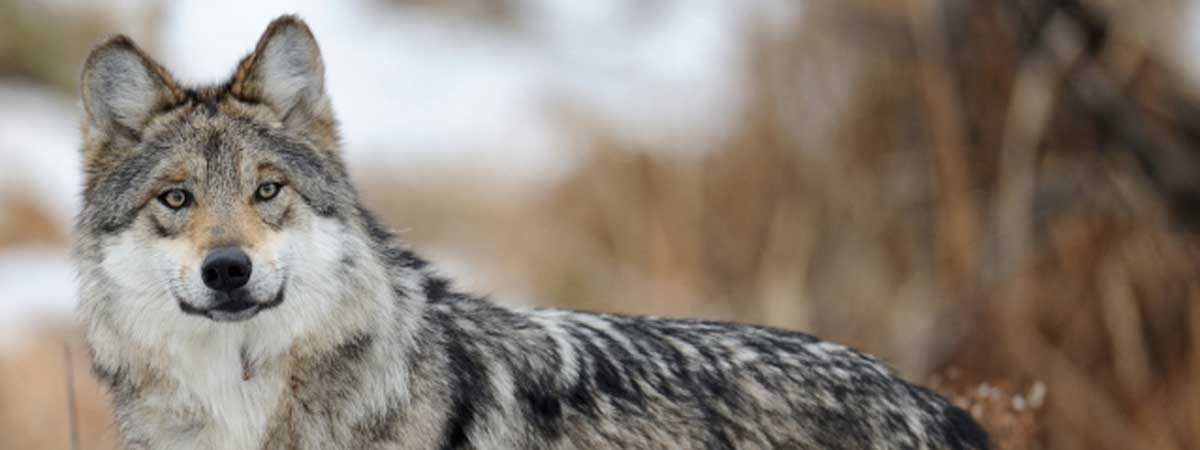
Trump Administration Allows Ranchers to Kill Endangered Mexican Wolf
ALBUQUERQUE, N.M. – A newly revealed U.S. Fish and Wildlife Service document allows Catron County ranchers to kill any one endangered Mexican gray wolf who happens to be in the area of two grazing allotments near Quemado, N.M. The permit doesn’t identify which wolf the ranchers can shoot, nor does it specify livestock lost to wolves preceding this kill authorization.
Several wolf families are in the area, including a likely pregnant, genetically valuable female wolf of the Elk Horn pack who was named Nora by the Endangered Wolf Center in Missouri before she was released into the Arizona wild as a pup in 2020. Nora is one of the 21% of genetically valuable captive-born pups known to have survived such releases without their birthparents.
“The permit allows the permittees to kill any wolf they see on private or federal land, in retribution for alleged and undisclosed livestock losses. This is not how to solve livestock-related conflict and it’s certainly not how species are recovered,” said Greta Anderson, deputy director of Western Watersheds Project. “It’s basically a blank check for the revenge killing of any Mexican wolf who wanders by, and it’s outrageous.”
The kill authorization allows any of seven individuals, including a Catron County commissioner, to shoot and kill any wolf on any of six large tracts of private land in an area north of the Gila National Forest. It also allows shooting a wolf on nearby public lands if supposedly in the act of attacking livestock.
“Nora’s rare genes gave her a shot at freedom but mean nothing to government officials whose main concern is sacrificing wildlife and public lands for livestock industry convenience,” said Michael Robinson, a senior conservation advocate at the Center for Biological Diversity. “It’s both sad and maddening to watch another reckless lobo execution in the making and to know that Nora, not to mention the unborn pups she may be carrying, might never again follow the scent of elk in the morning breeze nor contribute to the future of her imperiled subspecies.”
“Nora was released from the Mexican Wolf Saving Animals From Extinction (SAFE) program to help boost the genetics of her imperiled species. And now the very agency tasked with Mexican wolf recovery is allowing political pressure to influence their efforts? This is unacceptable. We trust you with the well-being of these wolves,” said Regan Downey, director of education and advocacy at the Wolf Conservation Center, a SAFE participant.
Peer-reviewed research has consistently found that killing wolves does not reliably reduce livestock depredations and can destabilize wolf pack structure in ways that increase conflict. Removing breeding adults or disrupting social cohesion can fragment packs and lead to inexperienced wolves targeting easier prey such as livestock.
“This is not a conflict-reduction strategy — it’s political appeasement. Broad kill permits do nothing to address the root causes of livestock losses and risk setting back recovery,” explained Michelle Lute, PhD in wolf management and executive director of Wildlife for All. “The standard should be demonstrated use of effective nonlethal tools, not simply the absence of attractants. If recovery is the goal, coexistence must come first.”
The permit relies on a standard of “no evidence of attractants,” which sets a minimal threshold rather than requiring proactive prevention. According to Lute, an evidence-based approach would require documented implementation of effective nonlethal measures — such as range riders, carcass removal, fladry, and guardian animals — before lethal action is authorized.
“The issuance of this kill permit simply confirms what we already know about how lobos are ‘managed’ in the wild: it’s not science, it’s politics,” said Leia Barnett, New Mexico Conservation Lead for WildEarth Guardians. “It’s disconcerting but unsurprising to see wildlife agencies employing regressive, ineffective tools that harm lobo recovery efforts all at the behest of the livestock industry. Lobos and all the Americans who love them are asking for better.”
“Killing wolves at random is not an effective way to protect livestock, nor is it effective at curbing calls for even more killing by wolf hating livestock interests,” said Mary Katherine Ray, Wildlife Chair for the Rio Grande Chapter of the Sierra Club. “It is a way to inflict cruelty on wolves and their bonded family packs and squander important and irreplaceable genetic diversity. That it would be allowed on public land by the agency tasked with lobo recovery is beyond disheartening.”
“This is not conflict prevention, it’s conflict escalation. Removing breeding adults destabilizes packs, increases risk, and sets recovery back years. Nora survived against extraordinary odds to strengthen the genetics of her imperiled species,” said Claire Musser, executive director of the Grand Canyon Wolf Recovery Project. “To authorize her death now, without requiring meaningful prevention standards, is reckless. We need enforceable nonlethal requirements and transparent accountability, not broad permissions that gamble with the future of Mexican gray wolves.”
Mexican gray wolves were eliminated from the wild in the U.S. and Mexico by a 20th century U.S. government wolf trapping and poisoning program on behalf of the livestock industry. This unique subspecies was saved through breeding of just seven wolves after passage of the Endangered Species Act in 1973. Federal wolf killing after the 1998 reintroduction has reduced genetic diversity and authorizing ranchers to kill wolves threatens additional damage.
###
New Mexico Again Advances Wildlife Reform with SB104
New Mexico Advances the Final Piece of Wildlife Governance Reform
New Mexico is once again demonstrating what 21st-century wildlife governance can look like.
On Feb. 11, the New Mexico Senate unanimously passed Senate Bill 104 (39–0), legislation that strengthens the independence and integrity of the State Wildlife Commission. The bill clarifies the process for removing commissioners: while the governor may initiate removal, the final decision would rest with the New Mexico Supreme Court.
That may sound procedural but this has been an important missing piece in transparent wildlife governance in the state. In the past, New Mexico has struggled with abrupt removals of commissioners and at times, even failed to have quorums for wildlife commission meetings.
When commissioners can be removed at will, political pressure can override evidence, public trust erodes, and long-term conservation suffers. SB104 ensures that removal decisions are subject to judicial review and grounded in clear standards: incompetence, neglect of duty, or malfeasance.
Even more importantly, this is not a partisan issue. The unanimous New Mexico Senate vote reflects broad agreement that wildlife governance must be stable, accountable, and insulated from political swings.
This new reform effort in SB104 builds directly on last year’s landmark reform bill: SB5, the most comprehensive overhaul of the state’s wildlife governance structure in more than a century. That 2025 law modernized the mission of the agency to serve all wildlife, not just game species; established professional qualifications and a nominating committee for commissioners; expanded representation; and secured dedicated funding for Species of Greatest Conservation Need.
Together, these reforms move New Mexico toward a model in which wildlife is managed for biodiversity, ecosystem health, and the public trust, not just one for narrow interests. They strengthen democratic oversight and public accountability while protecting scientific integrity.
The implications extend beyond New Mexico. States across the country are grappling with outdated wildlife governance systems built for a different era. New Mexico is showing that reform is possible, and that bipartisan consensus can exist around strengthening public institutions.
There is still work ahead. SB104 now moves to the House in the final days of the legislative session: only a little more than a week remains in this year’s 30-day legislative session. But the Senate’s unanimous vote sends a clear message: safeguarding the independence and professionalism of wildlife commissions is not controversial. It is common sense.
Wildlife governance reform is not about headlines. It is about durable systems that serve all life, now and in the future. And in that regard, New Mexico continues to lead.
Charges Against Hunting Influencer Raise Questions About Wildlife Violations
When Wildlife Laws Are Optional for Some, the System Is the Problem
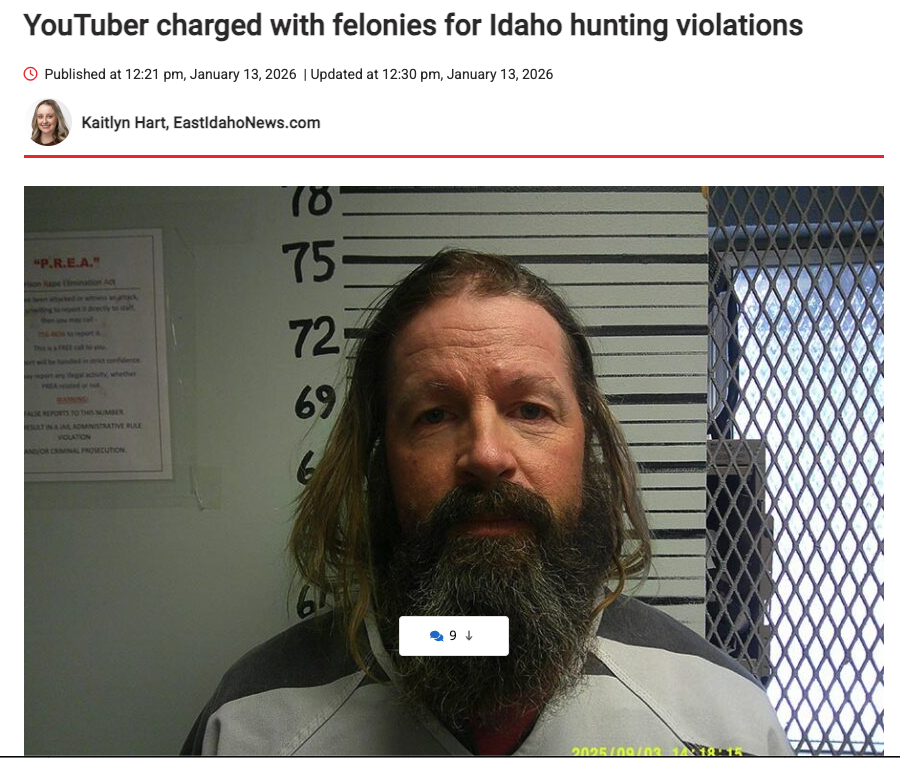
Image courtesy of the East Idaho News
The recent charges against hunting influencer Ryan Lampers raise important questions about how wildlife violations are handled, and who is held accountable.
Lampers is facing felony charges in Idaho for alleged poaching-related crimes, including killing animals out of season, falsifying records, and lying about where a wolf was killed in order to receive a higher payout. But what’s equally troubling is what came before those charges.
In 2024, Lampers was cited in Montana for failing to submit a black bear hide and skull for inspection within the required timeframe, an important step states rely on to monitor populations and quotas. The penalty? A $155 fine. No loss of hunting privileges. No meaningful consequence.
This post isn’t about demonizing hunting or disrespecting the many people who follow the rules, respect wildlife, and are just trying to put a deer in the freezer to feed their families. Ethical hunters are not the problem. In fact, they are often the first to be harmed when bad actors erode public trust and undermine conservation systems.
The issue is inconsistency, leniency, and power.
Across states, penalties for similar wildlife violations vary wildly. In some places, failing to report a bear is treated like a traffic ticket. In others, it can result in serious fines, confiscation, or loss of hunting privileges. That uneven enforcement sends a dangerous message: that wildlife laws are flexible, optional, or negotiable, especially for people with platforms, sponsors, or status.
And that brings us to the hunting influencer question.
Someone who profits from hunting content, sponsorships, and public credibility should be held to a higher standard. Hunting influencers shape beliefs, normalize behavior, and influence what tens of thousands of people think is acceptable. When someone with that reach repeatedly violates the rules—and those early violations are brushed off—it raises a hard question:
How many others are out there doing the same thing, quietly, without scrutiny? If someone is willing to lie about wolves and carnivores to manipulate their audience, what else are they willing to lie about? Bag limits? Seasons? Ethics? The law itself?
Wildlife belongs to all of us. When enforcement is weak, inconsistent, or deferential to power, wild animals, public trust, and the integrity of the system itself are all lost.
So that leads to the bigger question: What should a fair, effective wildlife accountability system look like?
- Should repeat violations trigger escalating consequences?
- Should influencers and commercial hunters face stricter standards?
- How do we protect ethical hunters while holding bad actors accountable?
- What actually deters poaching—and what clearly doesn’t?
This isn’t about punishment for punishment’s sake. It’s about building a system that treats wildlife as the public trust they are, and applies the rules consistently, transparently, and in service of ecological health.
February Wildlife Commission Meetings
Speak up for wildlife at February Wildlife Commission Meetings.
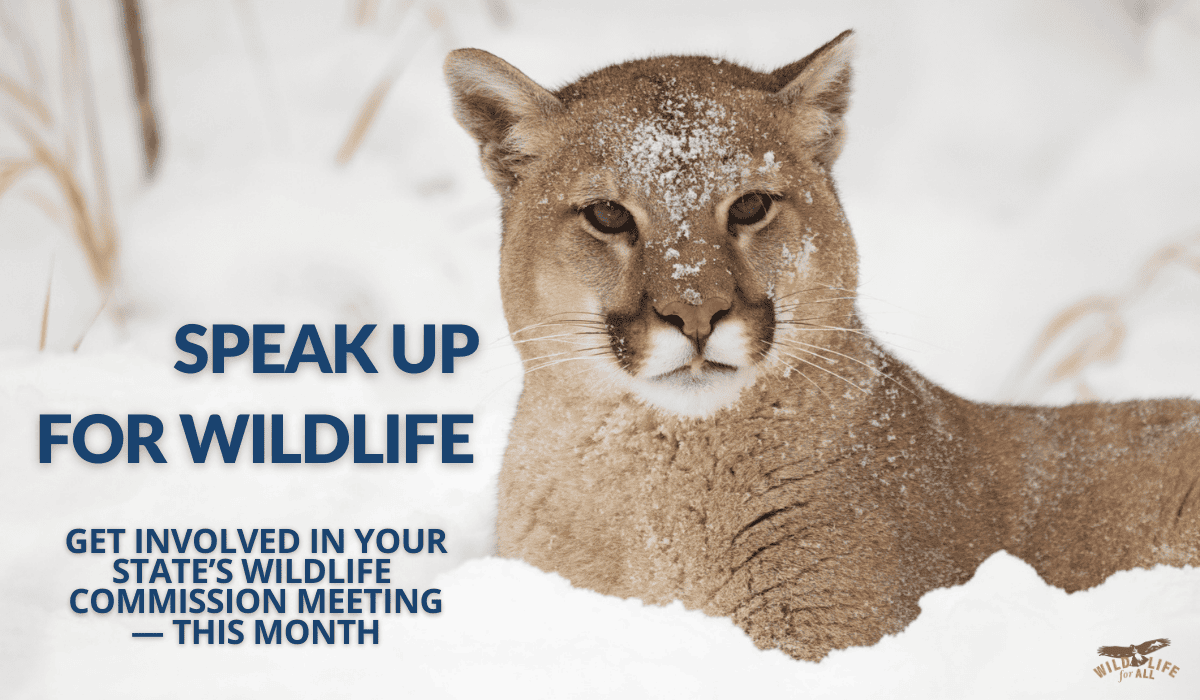
February Wildlife Commission Meetings
February is where early-year wildlife decisions start to harden into policy. This month, the stakes couldn’t be more clear.
Across the country, 28 states are holding wildlife commission meetings, with major decisions on the table that will shape wildlife policy for the rest of the year. In California, commissioners are weighing actions that could determine the future of mountain lions. In Oregon, decisions affecting whales and marine protections are moving forward. In Florida, a process to gloss over trapping cruelty is ending but you can still try to shift policy with your comments. What happens in these rooms will ripple far beyond a single meeting.
These commission meetings rarely make headlines. But they are where wildlife governance actually happens. Where science is either respected or sidelined. Where public input is either meaningfully considered or brushed aside. And where decisions with real, lasting consequences for wildlife are often made with limited public visibility.
Participation matters, especially now. Showing up, submitting a public comment, or even listening in helps push back against closed-door decision-making and reminds agencies that wildlife belongs to the public, not a narrow set of interests.
February is a chance to intervene before the year’s biggest wildlife decisions are locked in. Below, you’ll find a list of February wildlife commission meetings by state and date. Visit our Resources Page and Advocacy Toolkit to prepare your comments or testimony—and help ensure science, ethics, democracy, and ecosystem health guide wildlife policy in 2026.
Florida
Meeting Date: February 4-5
Location: Florida State University, Donald L. Tucker Civic Center, 505 W. Pensacola St, Tallahassee, FL 32301
Details: Click here for agenda and meeting details
Notes: Meeting starts at 8:30 a.m. each day. Public comments will be accepted in person during the meeting. For in-person comments, please review the speaker registration guidelines at https://myfwc.com/about/commission/. Advance comments are due by 5 p.m. the Friday before the meeting. If you would like to provide comments via mail, please send those comments to: FWC Commissioners, 620 South Meridian Street, Tallahassee, Florida 32399. If you do not wish or are unable to speak at the meeting but would like to provide comments, you may do so using the online comment form or by contacting the Commissioners directly via email at commissioners@myfwc.com.
Action: Speak out on the proposed rule, “Regulated Trapping of Wildlife in Florida.” This change is not sufficient to protect wildlife from harm as the AWFA BMPs are not a suitable standard for humane actions. Public comment on this agenda item will be limited to no more than one hour. (This item may be moved to day one or postponed). See agenda for links.
Missouri
Meeting Date: February 4
Location: MDC Headquarters, 2901 W Truman Blvd., Jefferson City, MO 65102
Details: Click here for agenda and details
Notes: Meeting starts at 10 a.m. for the public, 9 a.m. is a Closed Executive Session. Any person who would like to comment to the Commission about a specific agenda item must make a written request to the Director at least four calendar days prior to the meeting. The time allotted for public comment and the number of speakers will be at the Commission’s discretion. Background documents related to open meeting agenda items are available for public viewing at Conservation Department Headquarters, Jefferson City, for eight calendar days prior to the meeting. Any person who would like to comment to the Commission about a specific agenda item must make a written request to the Director at least four calendar days prior to the meeting. Recording the open meeting is permissible, pursuant to any guidelines established by the Commission to minimize disruption to the meeting. Individuals wishing to record the open meeting by audiotape, videotape, or other electronic means should notify the Director at least four calendar days prior to the meeting so accommodations for such recording can be made. To view livestream of the open meeting, or to watch recordings of past meetings, go to http://on.mo.gov/2nodPJU
Ohio
Meeting Date: February 4; this is the rescheduled January 28 meeting
Location: Wildlife District 1 Office, 1500 Dublin Rd., Columbus, OH
Details: Click here for agenda and details
Notes: Meeting begins at 6 p.m. Comments for open forums during Ohio Wildlife Council meetings must be about a current rule proposal. If you have a topic that is not a current rule proposal, please email the council with your comment or question or speak to a council member before or after a meeting. If the topic falls within the wildlife, fish, or law section, feel free to reach out at our open houses or email the Division of Wildlife at wildinfo@dnr.ohio.gov. Speakers must register by 5 p.m. the Monday before the meeting via the Public Comment Form, which must be submitted to wildlife.council@dnr.ohio.gov. Along with the form, submit any handouts you plan to provide. Speakers are limited to 3 minutes. There will be a maximum of ten speaker slots available. PowerPoint presentations are not permitted.
Idaho Special Meeting
Meeting Date: February 5
Location: Idaho Department of Fish and Game Headquarters, Owyhee Room, 600 South Walnut Boise, Idaho
Details: Click here for agenda and details
Notes: 9:00 a.m. MT start. The agenda suggests virtual participation may be possible but provides no links as of 2/2.
Louisiana
Meeting Date: February 5
Location: LDWF Headquarters, Joe L. Herring Room, 2000 Quail Drive, Baton Rouge, LA 70808
Details: Click here for meeting details
Notes: Meeting starts at 9:30 a.m. A live audio/video stream of this meeting will be available via Zoom. To view via webinar, register here.
Arizona
Meeting Date: February 6
Location: Maricopa Library and Cultural Center, 18160 N Maya Angelou Dr., Maricopa, Arizona 85138
Details: Click here for agenda and details
Notes: Meeting location opens at 7:45 a.m. Meeting begins at 8:00 a.m. Lunch Break at 12:00 p.m. Members of the public may view the meeting from any Department Regional Office. Members of the public attending in person wanting to speak on a specific agenda item may submit Speaker Cards (Blue Cards) if they wish to speak to the Commission and may only address the Commission by attending in person or from any regional office. Copies of any presentations, documents, etc. discussed during the meeting will be available by contacting sprice@azgfd.gov. No discussion or action will be taken by the Commission on topics raised in public comment. Any items requiring further discussion or action will be included on a future Commission meeting agenda. View live webcasts at www.azgfd.gov/commissioncam. Listen to the meeting by calling 404-397-1516, Access code: 280 046 234##.
Oklahoma
Meeting Date: February 9
Location: Location TBD
Details: Click here for agenda and details (no agenda posted as of 2/2)
Notes: Meeting starts at 9 a.m. It’s not clear how to comment or speak; we suggest emailing the department to ask. It’s also unclear if there is a virtual participation option. Read more on their website.
New Jersey
Meeting Date: February 10
Location: Assunpink Wildlife Management Area – Central Region Office, Large Conference Room,1 Eldridge Rd., Robbinsville Twp, NJ 08691
Details: Click here for details and agenda
Notes: The public is welcome to attend and participate in the public portion of each meeting. Meeting starts at 10 a.m. and will be held both in person and via GoToMeeting (audio only). Call in: +1 (312) 757-3121 | Access Code: 848-342-077. Per the website, public comments may be made in person or online and will be limited to 3 minutes per person. More information about the Commission is on its website, including a meeting guide and how to connect. For help, contact Kristen.Meistrell@dep.nj.gov.
California
Meeting Date: February 11-12
Location: California Natural Resources Headquarters Building, 715 P Street, Second Floor, Sacramento, CA 95814
Details: Click here for agenda and details (note that the agenda is blank as of 2/2 and states it will be updated)
Notes: Meeting starts at 1 p.m. on Wednesday, Feb. 11 and 9 a.m. on Thursday, Feb. 12.
Action: The California Department of Fish and Wildlife announced in December they have determined that protections are warranted for six genetic populations, ranging from the Bay Area and Central Coast to Southern California. A final decision from the California Fish and Game Commission on the agency’s status review is expected at the February meeting. These iconic cats face growing threats from habitat loss and fragmentation, vehicle collisions, and toxic rodenticides. Without strong protections, their populations risk further decline—and the ecological communities they sustain could suffer as well. Wildlife for All calls for strong, science-informed action that prioritizes ecosystem health, connectivity, and the long-term survival of these predators. Mountain lions are more than charismatic wildlife—they are keystone species, critical for balanced ecosystems and healthy prey populations. Advocate for the Fish and Game Commission to finalize permanent protections for California’s mountain lions and ensure safe, connected habitats for these wild neighbors. Comment at the meeting or email them at: fgc@fgc.ca.gov
Massachusetts
Meeting Date: February 11
Location: MassWildlife Field Headquarters, 1 Rabbit Hill Road, Westborough, Massachusetts
Details: Click here for agenda and details.
Notes: Meeting starts at 1 p.m. Attendees can go in person or join via Zoom. After registering, you will automatically receive a confirmation email containing information about joining the webinar. Anyone wishing to be placed on the agenda to speak at the monthly business meeting must begin by notifying the Board in writing 2 weeks prior to the Board meeting; for more detailed information, contact Susan Sacco.
Michigan
Meeting Date: February 11
Location: Lansing Community College, West Campus Rooms M119-121, 5708 Cornerstone Drive, Lansing, MI 48917
Details: Click here for agenda (no agenda as of 2/2) and details.
Notes: 9:30 a.m. Persons registering to provide comments on a topic listed on the agenda on or before the Friday preceding the meeting will be allowed up to 5 minutes for their comments. Persons registering to comment on a topic not listed on the agenda, after the Friday preceding the meeting, or at the meeting will be allowed up to 3 minutes. If you are unable to attend the meeting but wish to submit written comments on agenda items, please write to Natural Resources Commission, P.O. Box 30028, Lansing, Michigan 48909, or email nrc@michigan.gov. Read more on the Commission website.
Iowa
Meeting Date: February 12
Location: Des Moines
Details: Click here for details and agenda (no agenda as of 2/2).
Notes: The meeting starts at 10 a.m. Comments regarding agenda items may be submitted for public record to Alicia.Plathe@dnr.iowa.gov or 6200 Park Ave Ste 200, Des Moines IA 50321 up to 24 hours prior to the business meeting.
Montana
Meeting Date: February 12
Location: Virtual via Zoom
Details: Click here for agenda and details.
Notes: 8 a.m. *NEW START TIME* This regular meeting of the Fish and Wildlife Commission is scheduled to be held virtually via Zoom. The Commission will take public comment on agenda items for registered commenters via Zoom. If you wish to make a comment via Zoom, registration will open on the Fish, Wildlife & Parks’ website https://fwp.mt.gov/ on January 28 and close at noon on February 11.
Washington
Meeting Date: February 12-14
Location: Hybrid: Zoom and Natural Resources Building, 1111 Washington St. SE, Olympia, WA 98501.
Details: Click here for agenda and details
Notes: The agenda has many, many links to register for Zoom participant on the different days and how to comment on agenda items; you must look at this webpage to fully participate. Registration for those wishing to provide virtual comments closes at 5 p.m. the day before the meeting begins. Registrants will be called upon and typically have 3 minutes to speak. If you are unable to participate, you can submit your comments on the Commission contact page. If you haven’t pre-registered and wish to attend and speak in person, complete a Public Testimony Form, available at the registration table. The form must be submitted at least 15 minutes prior to the beginning of the agenda item you wish to testify on. Watch on Zoom. Watch livestream.
Hawai’i
Meeting Date: February 13
Location: 1151 Punchbowl St. Room 132 (Kalanimoku Building), Honolulu, Hawai‘i
Details: Meeting agenda and details here. (Note no agenda available as of 2/2)
Notes: Meeting starts at 9.a.m. Attend in person and arrive at least 15 minutes prior to the meeting start time in order to add your name to the sign-in sheet. To speak virtually, email blnr.testimony@hawaii.gov. Include your name and the agenda item on which you would like to testify. Once your request has been received, you will receive an email with the Zoom link. Requests may be also made during the meeting. Meetings will be livestreamed at: https://youtube.com/c/boardoflandandnaturalresourcesdlnr. To submit a comment, email blnr.testimony@hawaii.gov no later than 24 hours prior to the scheduled meeting to ensure time for BLNR Member review.
New Hampshire
Meeting Date: February 17
Location: Fish and Game Headquarters, 11 Hazen Drive in Concord, NH
Details: Click here for agenda and details
Notes:Commission meetings are regularly scheduled at 1 p.m. on the third Tuesday of every month at Fish and Game Headquarters, 11 Hazen Drive in Concord, NH. Meetings of the NH Fish and Game Commission are open to the public, unless otherwise noted.
Public Meetings: February 4: a Public Engagement & Education Committee meeting at 10:30 a.m. at the NH Fish & Game Department, 11 Hazen Drive, Concord, NH 03301, in the Director’s conference room. This meeting is not open to the public, as personal information is involved. February 17: Legislative Committee Meeting held at 11:00 a.m. at the Owl Brook Hunter Education Center, 387 Perch Pond Rd., Holderness, NH 03245. The public is entitled to attend.
Arkansas
Meeting Date: February 18-19
Location: Little Rock
Details: Click here for agenda and details (no agenda posted as of 2/2)
Notes: Unclear how to speak at meetings or provide virtual testimony or written comments. Watch the meeting on YouTube.
North Carolina
Meeting Date: February 18
Location: Commission Room, 5th Floor, 1751 Varsity Drive, Raleigh, NC
Details: Click here for agenda and details (note no agenda available as of 2/2).
Notes: The board will meet at 9 a.m. Members of the public may join via Zoom by registering in advance; keep checking the meeting page for this link.
Vermont
Meeting Date: February 18
Location: National Life Dewey Conference Room, 1 National Life Drive, Montpelier, VT 05620
Details: Click here for agenda and details (note no agenda posted as of 2/2)
Notes: Meeting starts at 5 p.m. Unclear how to comment or speak either virtually or in person. Full meeting schedule for 2026 is here.
West Virginia
Meeting Date: February 19
Location: WVU Potomac State College – Davis Conference Center,101 Fort Avenue, Keyser, WV 26726
Details: Click here for agenda and details (no agenda as of 2/2)
Notes: Meeting starts at 6 p.m. Send comments to wvnrcommission@wv.gov. To send written comments, contact: West Virginia Division of Natural Resources Director’s Office, 324th Avenue, South Charleston, WV 25303. The meeting will be livestreamed on the West Virginia Department of Commerce’s YouTube channel and will be available starting the day of the meeting. The livestream is view-only. To provide public comments, you must attend in person at one of the six district locations listed above. If you can’t watch the meeting live, a recording will be posted and remain available until the next scheduled Commission meeting, so you can watch it at your convenience.
In-Person Locations
District 1 – 1110 Railroad St, Farmington, WV 26571
District 2 – 1 Depot St, Romney, WV 26757
District 3 – 738 Ward Rd, Elkins, WV 26241
District 4 – 2006 Robert C. Byrd Dr, Beckley, WV 25801
District 5 – 112 California Ave, Charleston, WV 25305
District 6 – 76 Conservation Way, Parkersburg, WV 26104
⚠️ Important Note About Public Comments: The livestream is view-only. To provide public comments, you must attend in person at one of the six district locations listed above.
New Mexico
Meeting Date: February 20
Location: Department of Game and Fish Roswell Office, 1615 W. College Blvd, Roswell, New Mexico
Details: Click here for details and agenda
Notes: Meeting starts at 9 a.m. Comment in person by signing up to speak via a card. Register in advance to attend this meeting virtually via Zoom. After registering, you will receive a confirmation email containing information about joining the webinar. The commission may hear verbal public comments from virtual attendees at this meeting. If comments are taken, you will be asked to virtually raise your hand and then acknowledged to speak when it is your turn. A live webcast of this meeting will be available on the commission’s Webcast page and on our YouTube Channel at https://www.youtube.com/user/NMGameandFish. Comments will not be taken on the live webcast or on YouTube.
Oregon
Meeting Date: February 20
Location: Lane County Armed Forces Readiness Center, 3106 Pierce Parkway, Springfield, OR 97477
Details: Click here for details and agenda
Notes: Commission meetings begin at 8 a.m. and proceed chronologically through the agenda. If you wish to receive written materials prepared for any of the agenda items, please contact the Director’s Office in Salem at (503) 947-6044 or email ODFW.Commission@odfw.oregon.gov to request a packet for those items that interest you. Members of the public can view a livestream of the meeting via the agency’s YouTube channel or on the Commission page. Members of the public may also view a livestream of this meeting at ODFW Headquarters, 4034 Fairview Industrial Drive SE, Salem. Comment and testimony are limited to 3 minutes or less.The Fish and Wildlife Commission has moved to hybrid meetings, meaning that you have the option to attend in-person or virtually. Those who would like to provide virtual testimony on an Exhibit scheduled on this agenda must REGISTER no less than 48 hours (Wednesday, Feburary 18 at 8 a.m.) in advance to receive a testimony link to the meeting. To provide testimony on an agenda item in-person, registration will also be available at the meeting. To provide testimony virtually or in-person during Public Forum you must contact the Director’s office no less than 48 hours (8 a.m. Wednesday January 14) in advance of the meeting for approval. Meeting is livestreamed here.
Action: Comment on the petition on modification to commercial Dungeness crab fishery rules to better protect whales after the young humpback whale died from entanglement in late 2025. The commission has already made late-season changes to this year’s fishery rules but can go farther to save whales’ lives.
Delaware
Meeting Date: February 24
Location: TBA, Dover, DE
Details: Click here for agenda and details (note no agenda available as of 2/2)
Notes: Meeting starts at 7 p.m. This will be a hybrid meeting with an in-person option in Dover and a virtual option via Teams. To join virtually via Teams, click here and enter Meeting ID: 294 098 738 088 64 and passcode: 6wC69BX7. To join by phone (audio-only) dial 1-302-504-8986 and enter code 391878221#. For more information, contact the DNREC Wildlife Section, at 302-739-9912 or Joe Rogerson at Joseph.Rogerson@delaware.gov or 302-739-9912.
Georgia
Meeting Date: February 24
Location: A.W. Jones Heritage Center, 610 Beachview Drive, St. Simons Island, GA 31522
Details: Click here for details. (note the meeting agenda was not available at time of webpage publishing)
Notes: Meeting starts at 9 a.m. Watch online here. It is unclear how to comment or participate outside of attending in person.
Ohio—Meeting 2
Meeting Date: February 25
Location: Wildlife District 1 Office, 1500 Dublin Rd., Columbus, OH
Details: Click here for agenda and details (note: no agenda available as of 2/2)
Notes: Meeting begins at 6 p.m. Comments for open forums during Ohio Wildlife Council meetings must be about a current rule proposal. If you have a topic that is not a current rule proposal, please email the council with your comment or question or speak to a council member before or after a meeting. If the topic falls within the wildlife, fish, or law section, feel free to reach out at our open houses or email the Division of Wildlife at wildinfo@dnr.ohio.gov. Speakers must register by 5 p.m. the Monday before the meeting via the Public Comment Form, which must be submitted to wildlife.council@dnr.ohio.gov. Along with the form, submit any handouts you plan to provide. Speakers are limited to 3 minutes. There will be a maximum of ten speaker slots available. PowerPoint presentations are not permitted.
Wisconsin
Meeting Date: February 25
Location: TBD; not available at time of webpage publishing
Details: Click here for agenda and meeting details (note: no agenda available as of 2/2)
Notes: The meeting will begin at 8:30 a.m. The public is encouraged to watch live on YouTube. The Natural Resources Board will meet in-person. Remote testimony from the public via Zoom may be accepted for this meeting. In person public appearances are also welcome. Members of the public can submit their request to testify remotely, in person, or their written comments by the posted deadline date for Board consideration, typically one week before the meeting date. Please contact Ashley Bystol, NRB Liaison, at 608-267-7420 or by email at DNRNRBLiaison@wisconsin.gov with NRB-related questions, to request information, submit written comments or to register to testify at a meeting.
Hawai’i—Meeting 2
Meeting Date: February 27
Location: 1151 Punchbowl St. Room 132 (Kalanimoku Building), Honolulu, Hawai‘i
Details: Meeting agendas are posted at least 6 days prior to the date of the meeting but an agenda for this month was not available when this webpage was posted. Keep checking back on this webpage.
Notes: Meeting starts at 9.a.m. Attend in person and arrive at least 15 minutes prior to the meeting start time in order to add your name to the sign-in sheet. To speak virtually, email blnr.testimony@hawaii.gov. Include your name and the agenda item on which you would like to testify. Once your request has been received, you will receive an email with the Zoom link. Requests may be also made during the meeting. Meetings will be livestreamed at: https://youtube.com/c/boardoflandandnaturalresourcesdlnr. To submit a comment, email blnr.testimony@hawaii.gov no later than 24 hours prior to the scheduled meeting to ensure time for BLNR Member review.
Alabama
Meeting Date: February 28
Location: Alabama Department of Agriculture and Industries, Richard Beard Auditorium, 1445 Federal Dr., in Montgomery, Alabama
Details: Click here for agenda and details
Notes: Meeting starts at 9 a.m. Comments are in-person only. Those who wish to address the Board must register between 8:00 and 8:30 am. Please bring 18 copies of all documents you wish to distribute to the Board to the Registration Table. Make sure your name and organization are on each document. After registering before the meeting, the person wishing to speak should go to the designated microphone when called. After being recognized by the Chair, the person should first give his/her name, city and county. The time limit to speak is three minutes. If several persons wish to speak on the same subject, the group should choose one speaker to represent them. The Chair may or may not choose to call on each person in that group to speak for additional information. Questions or debate from Advisory Board members shall be limited to 10 minutes. No person may speak twice until all registered speakers have spoken, and then only at the discretion of the Chair.
Utah Killed Three Dispersing Wolves Just For Existing In The State
For Immediate Release: January 28, 2026
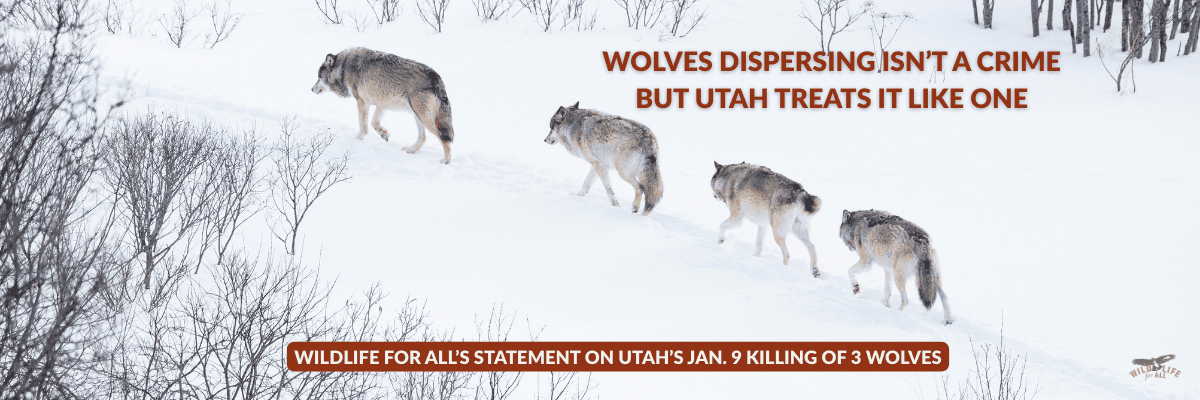
Utah’s Killing of Dispersing Wolves Exposes Fear-Driven Wildlife Management
Three Wolves Killed Near Avon as State Enforces “No Wolves” Policy
Salt Lake City, Utah—Wildlife for All condemns the lethal removal of three dispersing gray wolves near Avon, Utah, confirmed this week by the Utah Division of Wildlife Resources. The wolves were killed by the Utah Department of Agriculture and Food on Jan. 9 after state officials determined their mere presence in the state justified lethal action despite the absence of any actual conflict with humans or livestock.
Utah officials have stated there are “no established wolf packs” in the state, yet these three animals were killed precisely because they were behaving like wolves: dispersing, moving through habitat, and potentially establishing territory.
In response, Michelle Lute, PhD in wolf-human coexistence and executive director of Wildlife for All, issued the following statement:
“This is a textbook case of ‘guilty until proven innocent’ wildlife management. Utah claims it has no wolves, yet keeps killing wolves for the crime of existing in wolf habitat. That contradiction should alarm anyone who cares about science, fairness, or responsible governance.
“What we’re seeing is jurisdictional chaos masquerading as management. Colorado is restoring wolves as part of a science-based recovery effort, while Utah is killing them at its border to prevent establishment at all costs. We’ve seen this before: wolves leaving Yellowstone face similar hostility the moment they cross invisible political lines. Wildlife doesn’t recognize state boundaries, but outdated policies insist on enforcing them with lethal force.
“Utah doesn’t want the Wild West—it wants the Mild West: carnivores controlled by cleansing the landscape of their beneficial influences, ecosystems broken, and a false sense of control enforced through killing rather than coexistence. That approach may feel orderly, but it’s ecologically reckless and out of step with what actually works to protect livestock.”
Lute warned that such actions undermine conservation at a moment when dispersal into Utah is expected to increase due to wolf recovery in neighboring states. Killing dispersing wolves before conflicts are demonstrated forecloses coexistence, increases the risk of future conflict by destabilizing natural social structures, and accelerates the very ecological instability agencies claim to be managing. Lethal management also erodes public trust, as the majority of Americans value wildlife and effective, science-informed policies that protect all lives.
Nonlethal tools—including range riders, fladry, carcass removal, and livestock husbandry changes—are proven to reduce conflict where wolves are present, while indiscriminate killing does not prevent future depredations and often destabilizes ecosystems.
“This isn’t proactive management—it’s preemptive eradication,” Lute added. “As climate change reshapes ecosystems and species move to survive, policies rooted in fear and control will fail. Wolves are not the problem. Governance that refuses to adapt is.”
Wildlife for All calls on Utah officials to halt lethal removals of dispersing wolves, invest in effective nonlethal coexistence tools, and align state policy with modern conservation science and the ecological realities of a changing West.
###
About Wildlife for All
Wildlife for All is a national organization dedicated to reforming wildlife management to be more democratic, just, compassionate and focused on protecting wild species and ecosystems. Through research, advocacy, and education, we aim to protect wildlife and ensure that policies reflect the values of all Americans.
ICE Out For Good
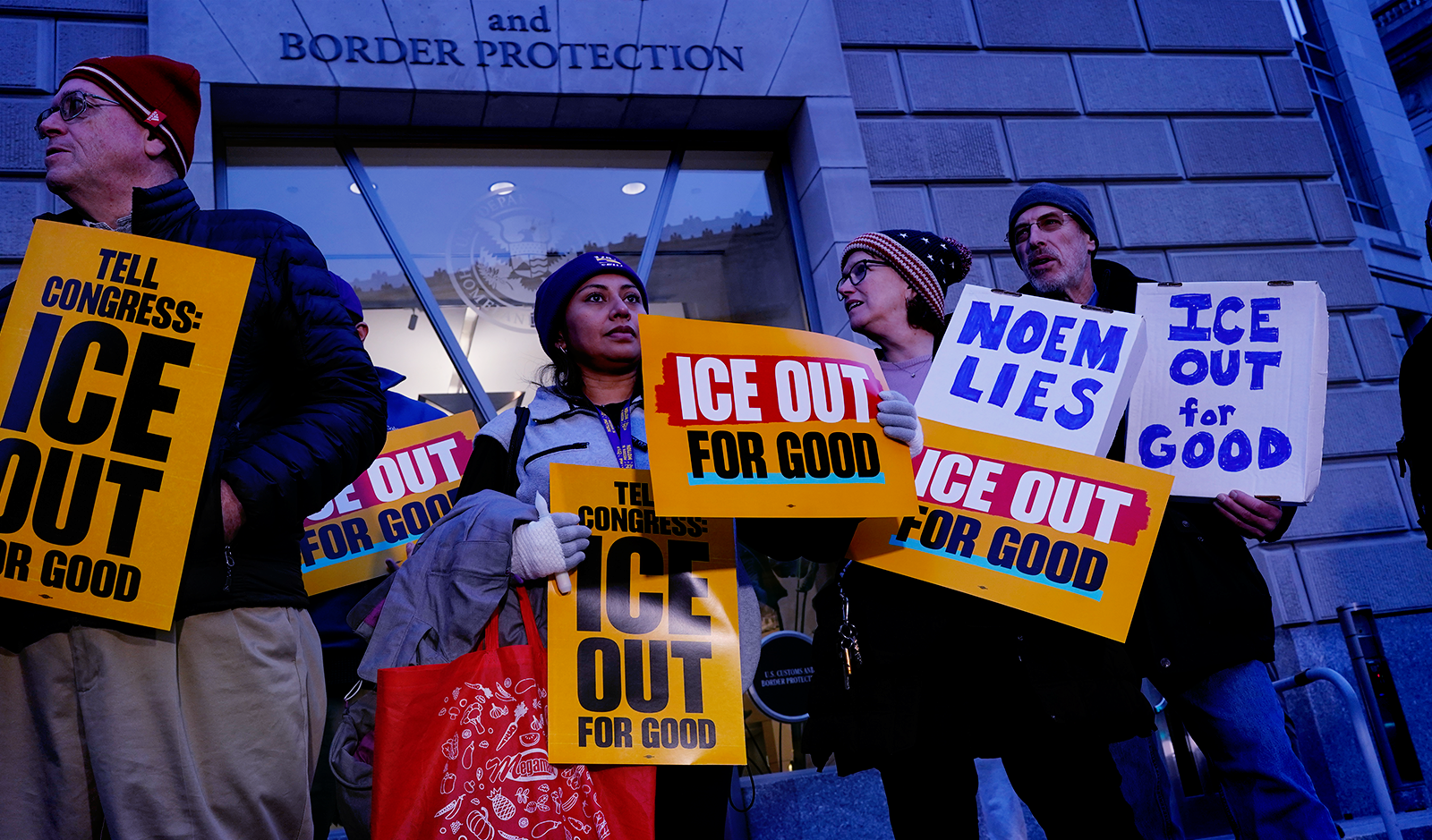
Image courtesy of SEIU. https://iceoutforgood.org/
Wildlife for All’s mission is rooted in justice—for wildlife, for communities, and for the systems that govern both. When state violence and terror are directed at communities, especially communities already marginalized, it undermines the conditions necessary for any meaningful advocacy.
That’s why what’s happening in Minnesota right now demands our attention and action. Wildlife for All stands in solidarity with all those terrorized by ICE and invites you to take action to hold ICE accountable and support communities with us.
What’s Happening in Minnesota
As you may know, ICE has deployed thousands of federal immigration agents across the Twin Cities. On January 7, 2026, ICE agents murdered Renee Nicole Good. And she’s not the first person they have killed.
Since then, the Trump Administration has emboldened ICE officers, leading to horrifying accounts of racial profiling of immigrant neighbors and U.S. citizens alike (including children). Reports of people being stopped simply for observing ICE agents, aggressively interrogated, tear gassed, beaten, and in some cases violently detained without probable cause. One of the most discussed examples of this is Nasra Ahmed’s story.
The Trump Administration has said ICE agents have full immunity and is encouraging agents to break into homes without judicial warrants, with threats that other states may be next.
What’s Happening in Congress
In the ongoing DHS funding bill debate, Democrats in Congress have pushed amendments aimed at prohibiting ICE from detaining U.S. citizens and increasing transparency, but these measures were stripped and remain unlikely to pass without strong pressure.

Image courtesy of SEIU. https://iceoutforgood.org/
Take Action
- Call your U.S. Senators and Representatives and urge them to filibuster (in the Senate) and oppose (everyone) the DHS funding bill unless it strips funding for ICE and includes strict civil rights protections. Visit Senate offices while Senators are on recess, until January 25th.
- Participate in a “Day of Truth & Freedom” TODAY, Friday, January 23 to demand ICE leave Minnesota and accountability for abuses. Visit https://seiu.co/ICEOut for details on times and locations.
- Donate to mutual aid and support organizations helping Minnesota residents.
If our communities aren’t safe, wildlife won’t be either. Advocacy without community safety is impossible. Our struggles are interconnected. And none of us are free until all of us are free.
We stand with immigrant communities in Minneapolis and everywhere. And we will keep fighting for justice for all life.
Thank you for standing with us and with Minnesota.
In solidarity,
The team at Wildlife for All
Taylor, the Boundary-Defying Wolf, Found Dead on Interstate 40 in New Mexico
For immediate release: January 21, 2026
Taylor, the Boundary-Defying Wolf, Found Dead on Interstate 40 in New Mexico
Albuquerque, N.M. – Taylor, the Mexican gray wolf made famous for establishing a home range last year near Mount Taylor, and returning there twice after having been removed despite a federal rule banning wolves north of Interstate 40, was found dead over the weekend on the interstate near Grants, New Mexico.
“This is such an unfortunate outcome for Taylor, who showed us so much about how wolves choose their own habitats, regardless of the lines that humans draw on maps,” said Greta Anderson, deputy director of Western Watersheds Project. “But it’s also a positive development that the agencies were letting him stay outside of the artificial boundary for so long and giving him the opportunity to be wild on Mt. Taylor. His life firmly demonstrated the suitability of wolf habitat in these mountains, and we can only hope that he’s not the last wolf choosing his own fate in northern New Mexico.”
Taylor was originally located on Mt. Taylor in the spring of 2025 and was moved by the New Mexico Department of Game and Fish into the Gila National Forest. He walked back to Mt. Taylor in July, where he lived peacefully until November, when he was removed by the department again after journeying north.
Once again, upon release, he immediately went north to Mt. Taylor where he had been for the past two months. Taylor had successfully crossed I-40 at least three times in the past, but appears to have been hit along the highway over the holiday weekend. He was thought to be almost three years old. He is survived by his mother in the Elk Horn pack in Arizona, a younger brother, and likely other pack members without radio collars.
“Taylor’s death is a heartbreaking reminder that highways like I-40 are not just lines on a map, they are lethal barriers for wildlife,” said Claire Musser, executive director of the Grand Canyon Wolf Recovery Project. “Abolishing I-40 as a management boundary is long overdue. If we are serious about recovery, we must allow wolves to move freely across suitable habitats and invest in wildlife crossings and landscape-scale connectivity so highways no longer function as death traps.”
Taylor is the 11th Mexican gray wolf known to have spent time north of I-40, and the fifth who specifically spent time near Mt. Taylor. Over 3,500 people took action and asked the New Mexico Department of Game and Fish to let Taylor be allowed to roam free. His Facebook page had more than 700 fans following his journey.
“That Taylor’s death evokes human sadness is testament to how wolves inspire us,” said Mary Katherine Ray, Wildlife Chair for the Rio Grande Chapter of the Sierra Club. “Taylor’s desire to find his own way beyond the officially allowed boundary demonstrated again that a larger part of the natural world than we allow is not broken but still retains what wolves need to make a home.”
“Taylor’s death, while tragic, is a powerful reminder that wild wolves face countless barriers to survival but human-imposed barriers shouldn’t be part of the equation,” said Regan Downey, Director of Education and Advocacy for the Wolf Conservation Center. “Taylor’s steadfast desire to live north of I-40 inspired the nation to support his intrepid movements and dream of a world where wolves are free to roam. May he inspire policy change, as well.”
“Taylor’s death is not a failure of dispersal — it’s a failure of planning,” said Michelle Lute, PhD in wolf conservation and executive director of Wildlife for All. “Taylor was doing exactly what recovering wolves are supposed to do: exploring habitat, testing landscapes and establishing new home ranges for others to follow. What lags behind is our infrastructure and policy. Highways like I-40 will continue to function as lethal, politically-imposed barriers until we choose proactive recovery over preventable loss.”
“Taylor’s devastating death highlights the importance of improving wildlife corridors and connectivity across the Land of Enchantment,” said Sally Paez, staff attorney for New Mexico Wild. “Mexican gray wolves instinctually disburse to find mates and prey. They follow the seasonal movement of big game herds, including elk and deer, which travel long distances. The State of New Mexico must continue to prioritize policies that provide the dual benefits of improving wildlife connectivity and enhancing public safety through the prevention of wildlife-vehicle collisions.”
“Once again, a wild, north-bound wolf captured the hearts of New Mexicans and wildlife lovers across the nation and the world in his pursuit of freedom,” said Leia Barnett, New Mexico conservation lead for WildEarth Guardians. “Taylor’s tragic death reminds us that our lobos need more from state and federal wildlife agencies if they are to truly recover and thrive as a species. Allowing more wolves to roam north of Interstate 40, installing adequate wildlife crossings, protecting wildlife corridors, and continuing to rely on the best available science to guide recovery efforts need to be paramount in decisions regarding our lobos.”
“I’m mourning this intrepid wolf whose life was cut short while also taking a moment to admire his determination and sheer grit,” said Michael Robinson, a senior conservation advocate at the Center for Biological Diversity. “I can’t help but wonder whether this tragedy could have been avoided if Taylor and potential female mates had been allowed to roam and find each other north of I-40, instead of him crossing south to look for love.”
###
State SGCN analysis shows wildlife decline as new federal “open unless closed” policy expands pressure
Wildlife for All statement on federal “open unless closed” policy as SGCN analysis shows wildlife decline.

For Immediate Release: January 15, 2026
Federal “Open Unless Closed” Policy Expands Pressure on Public Lands as States Document Worsening Wildlife Decline
New SCGN Analysis Shows Growing Mismatch Between Federal Policy and Ecological Reality
Albuquerque, N.M.—In response to an announcement Monday from Department of Interior (DOI) Secretary Doug Burgum reframing public lands and waters as “open unless closed” to expanded hunting access, Wildlife for All warns that the policy represents a significant shift in wildlife governance at a moment of accelerating biodiversity decline.
The announced-on-X “open unless closed” framework from Burgum reverses decades of conservation practice by treating wildlife protection and refuge purpose as exceptions rather than the baseline. This approach increases ecological risk because it treats access as the default and conservation as an exception—shifting the burden of proof onto underfunded managers and eroding precaution in already-stressed systems.
In practice, such policies lead to more pressure on wildlife because no habitat provides safety and closures require time, funding, political capital, and litigation risk—resources most agencies do not have. It weakens land managers’ adaptive management capacity and site-level discretion, casts stewardship as obstruction and insulates deregulatory decisions from science-informed scrutiny.
This shift comes as states themselves are documenting unprecedented conservation needs. A new Wildlife for All analysis of 2025 State Wildlife Action Plans shows that most states are identifying significantly more Species of Greatest Conservation Need (SGCN) than they did a decade ago, evidence that current conservation systems are failing to meet the rising challenges of biodiversity loss, climate stress and chronic underfunding.
In response, Michelle Lute, PhD, executive director at Wildlife for All issued the following statement:
“This is not a neutral access update but instead is a dangerous mismatch between political pandering and the biodiversity crisis unfolding on the ground. At the exact moment states are documenting record increases in species at risk, federal leaders are choosing to expand pressure on already-stressed wildlife and ecosystems.
“Wildlife refuges and public lands exist to conserve wildlife first. An ‘open unless closed’ approach flips that purpose on its head. Access decisions that ignore ecological realities risk accelerating species and ecosystem decline rather than preventing it.
“This decision is a governance failure and exposes Burgum’s Interior Department as the sham it is under this administration. Expanding access without safeguards shifts responsibility onto underfunded managers and pushes more species closer to crisis. Further, added extractive recreational pressure while deprioritizing precaution, including safeguards around lead ammunition, places additional strain on agencies already struggling to manage the twin crises of biodiversity loss and climate change with limited resources.”
Wildlife for All urges federal leaders to align public lands policy with the ecological realities states are documenting and calls on state leaders to support federal refuge and park managers in responding to federal policy gaps. U.S. wildlife policy at every level must recommit to science-informed, ethical wildlife governance that protects biodiversity and acknowledges the challenges of modern wildlife conservation.
###
About Wildlife for All
Wildlife for All is a national organization dedicated to reforming wildlife management to be more democratic, just, compassionate and focused on protecting wild species and ecosystems. Through research, advocacy, and education, we aim to protect wildlife and ensure that policies reflect the values of all Americans.
Oppose Utah’s Cougar Removal Plan
Wildlife officials are floating Utah’s cougar removal plan for multiple management units as an “experiment” to boost deer numbers.
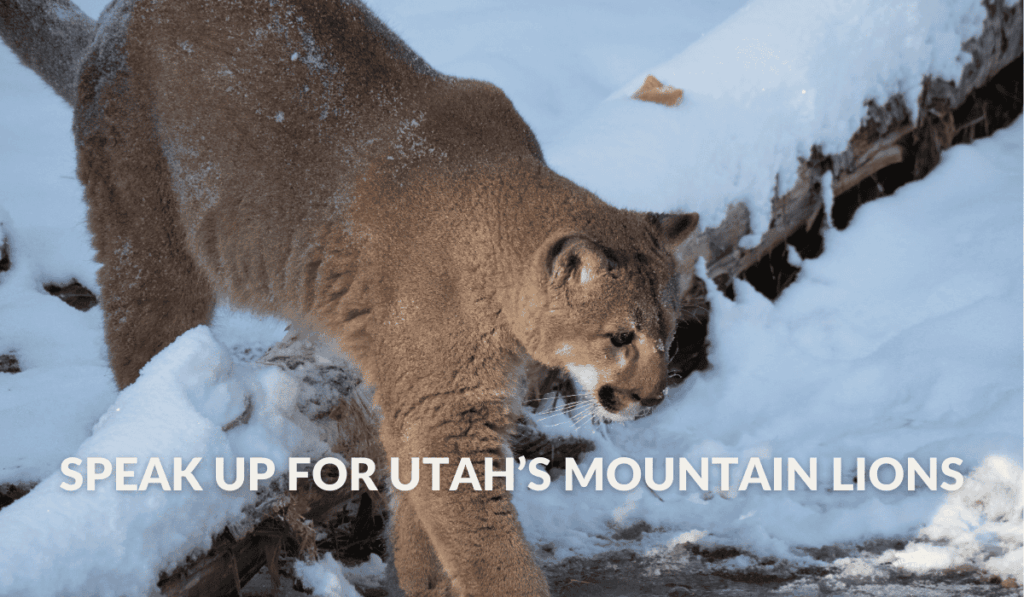
Utah’s Cougar Removal Plan Is Not Science — It’s a Governance Failure
Utah wildlife officials are advancing a proposal to lethally remove mountain lions across multiple management units as an “experiment” to increase mule deer numbers. The proposal frames lethal control as a management tool, despite the lack of credible evidence that such actions deliver long-term ecological benefits.
Importantly, this approach did not originate from new peer‑reviewed science or from agency biologists calling for population reduction. Instead, it reflects political priorities imposed on wildlife, an increasingly common pattern across the country.
This matters because state wildlife agencies are legally tasked with managing wildlife based on science and the public trust, not political expediency.
Framing this as “science-based management” obscures a far more troubling reality: this plan fails basic scientific standards, violates ethical wildlife stewardship, and exposes deep flaws in how wildlife governance is operating in Utah.
This is not a debate about whether carnivores should exist, nor if we should coexist with them (hint: we must). It is a test of whether wildlife policy will be grounded in evidence, transparency, and public trust, or driven by political pressure and outdated assumptions.
What Is Utah’s Cougar Removal Plan?
According to statements made in public meetings, Utah’s Division of Wildlife Resources (DWR) is proposing a multi-year cougar removal program across six management units. Officials have acknowledged that:
- Cougar populations are difficult to count and current estimates are uncertain due to Utah’s harmful 2023 bill that allows unlimited, year-round killing.
- The project could run for three years or longer.
- Unreported mortality (read: poaching) is likely and difficult to monitor.
- The plan lacks baseline data, success metrics, safeguards, and ecosystem monitoring.
The stated goal is to determine whether killing cougars will improve mule deer populations. But we already know that doesn’t work … and that carnivores aren’t the reason ungulate populations decline.
Decades of peer-reviewed research across the western United States tell a consistent story: broad, sustained carnivore removal does not deliver long-term or landscape-scale recovery of ungulate populations.
Here’s why: deer declines are driven by habitat loss—not cougars. Mule deer numbers are primarily shaped by habitat quality and fragmentation, drought and climate stress, winter severity, diseases like CWD, and migration corridor loss. When these limiting factors are not addressed, removing carnivores provides little measurable benefit and is in fact, a misdiagnosis of the problem.
Further, carnivore removal destabilizes ecosystems. Large-scale cougar killing disrupts social structure, increases turnover, and can lead to younger, more transient animals moving across the landscape that can mean increased conflict with humans and livestock. And again, there is no sustained benefit to prey populations.
Even studies showing short-term prey increases involve narrowly targeted, time-limited actions, not open-ended culls across multiple units. The evidence is clear: killing cougars at this scale, without clear purpose or accountability, won’t fix deer declines and risks destabilizing ecosystems in ways that are hard to reverse.
And ask any scientist: this is not a credible experiment. A legitimate scientific study would have:
- Baseline data
- Clear success and failure metrics
- Defined parameters
- Independent oversight
- Monitoring of broader ecosystem impacts
Utah’s proposal includes none of these safeguards. There are no thresholds that would halt the project if cougar populations decline further, nor plans to assess cascading ecological effects.
Critically, this proposal was not listed on a public agenda, meaning the public was denied notice and opportunity to comment until it surfaced through questioning at a Regional Advisory Council meeting. That lack of transparency alone should raise serious red flags.
Calling this an “experiment” does not make it science. This is a high-risk culling program that shifts attention away from real solutions and places an apex carnivore at risk.
Why This Fails Ethics and Public Trust
This proposal highlights a deeper failure in state wildlife governance: State wildlife commissions are often structured to prioritize a narrow set of interests, while excluding much of the public from meaningful representation.
That is not democratic wildlife management. It is regulatory capture.
Wildlife belongs to everyone. Decisions about wild neighbors should reflect ecological knowledge, ethical values, and the democratic process, not backroom politics. Wildlife is held in trust for all people, including future generations and arguably for wildlife themselves, not managed solely to maximize one species for a single user group.
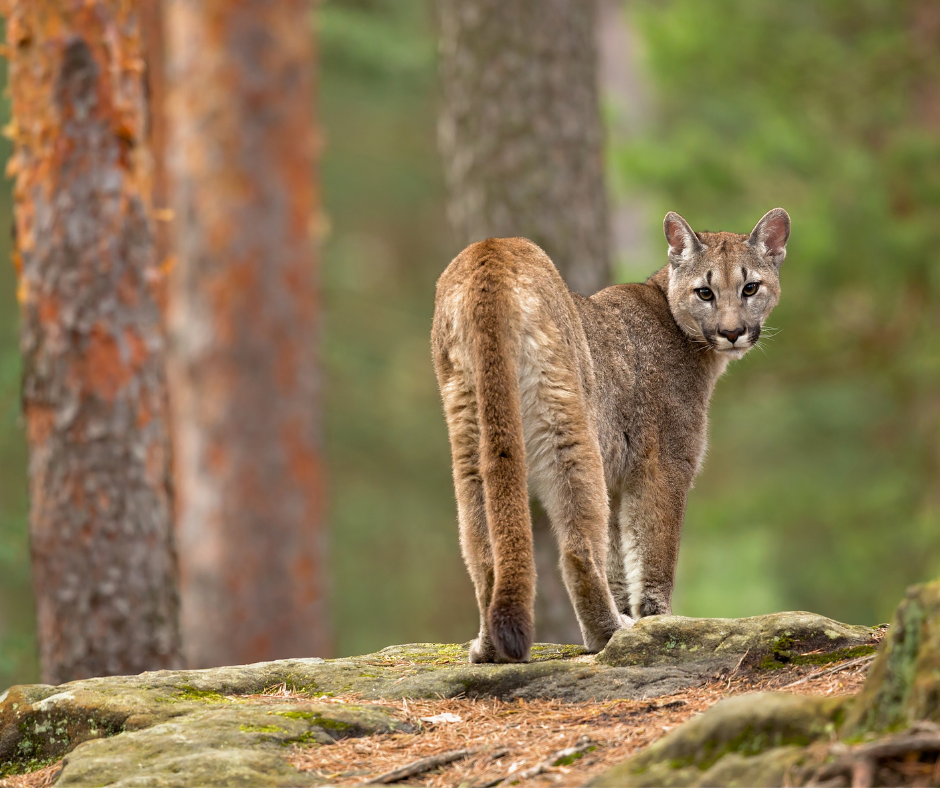 This proposal:
- Treats an apex carnivore as expendable
- Uses uncertainty as a justification for killing more cougars, placing all of the risk on a population that is already declining
- Advances lethal methods without public consent, and at risk to their safety
- Risks irreversible ecological harm without demonstrated likelihood of benefit
Ethical wildlife management requires precaution, especially when uncertainty is high and stakes are irreversible.
Utah’s cougar proposal highlights a deeper problem facing wildlife management nationwide:
When agencies are structured to prioritize game production over ecosystem health, carnivores become scapegoats for failures rooted in habitat loss, climate change, and policy inertia.
Killing carnivores is politically easier than restoring habitat, protecting migration corridors, limiting development pressure, ending private deer breeding, or addressing climate impacts. But just because something is easy does not mean it’s effective, or responsible.
Conversely, science-informed stewardship, real conservation invests in habitat restoration and connectivity, funds nonlethal coexistence strategies, and addresses root causes of wildlife decline. This means transparent decision-making, independent scientific review of the full spectrum of scientific and ethical knowledge available, and providing for meaningful public participation.
Lethal removal, when used at all, must be narrow, temporary, evidence-driven, and precautionary, not broad, speculative, and politically motivated.
Real leadership that follows science‑informed, ethical wildlife management would center peer‑reviewed ecological research, prioritize coexistence and ecosystem health, and resist special interest interference that undermines the public trust.
Utah’s proposal does none of these things. Mountain lions are not variables in a political experiment. They are essential members of functioning ecosystems, and they deserve better than this.
Decisions this big should never happen quietly.
Speak Out Against Utah’s Cougar Removal Plan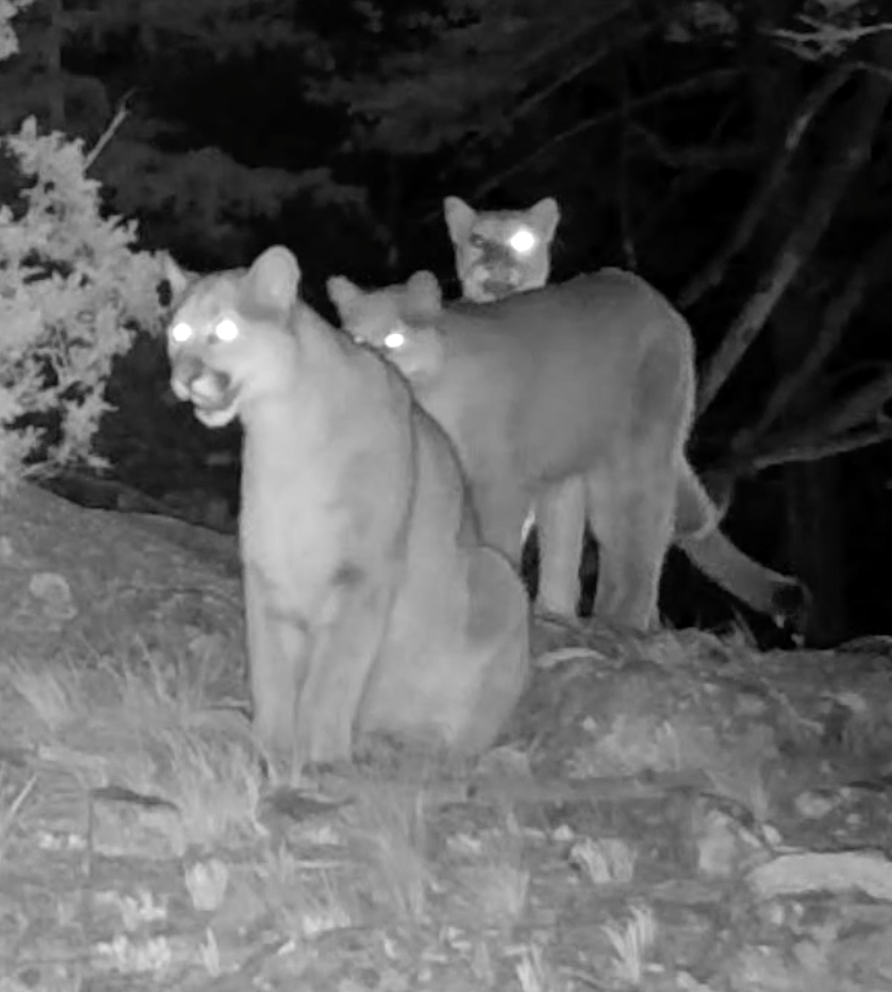
If You Live in Utah:
- Attend the Utah Wildlife Board meeting: 9 a.m. Jan. 8 at the Eccles Wildlife Education Center, 1157 S Waterfowl Wy, Farmington, UT 84025. Show up. Speak up.
- Submit a public comment demanding transparency, science-based criteria, and safeguards using this form.
- Contact your state legislators and request oversight using this toolkit from our partner, Utah Mountain Lion Conservation.
If You Don’t Live in Utah:
- Sign Utah Mountain Lion Conservation’s petition opposing this plan.
- Share credible information about this proposal.
- Support organizations defending science-informed carnivore management with a donation or your time.
- Pay attention, because similar proposals are spreading across states.
Wildlife governance reform is not abstract. It’s happening right now, decision by decision, often out of public view. This is a political decision made within a system that routinely sidelines ecological data, public values, and best available science.
At Wildlife for All, we focus on fixing the system that produces these outcomes. Join us.