News & Commentary
Hunting group to sue Gov. Inslee alleging biased commission appointments

By Eric Barker
Read more at The Spokesman-Review
Walter Medwid: Fish & Wildlife is unlike any other department in state government
Wildlife for All Advisory Committee member Walter Medwid wrote commentary for the Vermont Digger to highlight the necessity of reforming the Vermont Fish and Wildlife Board.
“The largely uncredentialed Fish and Wildlife Board holds broad regulatory and public policy authority over all game species without the benefit of the public’s voice at the table.”
The necessary reforms would include updating statutory language and diversifying the board.
Read more at The Vermont Digger
December 2022 Newsletter

December 2022 Newsletter
From the Desk of the Executive Director: The Elephant Not In The Room; Did You Know…; This Inspires Us: The Intersectional Environmentalist; Our Coalition Partner: TrapFree Montana; Join Now.
Port Townsend Washington recognizes rights of orcas
Last week, the city of Port Townsend, Washington, acknowledged the endangered southern resident orcas who call the region home have rights.
“The rights of the southern resident orcas include, but are not limited to, the right to life, autonomy, culture, free and safe passage, adequate food supply from naturally occurring sources, and freedom from conditions causing physical, emotional or mental harm, including a habitat degraded by noise, pollution and contamination,” Mayor David J. Faber said during the council meeting, reading from a nonbinding proclamation.
While this is mainly ceremonial, we are glad for the conversations that have sprung up about how people view and treat wildlife in the context of the rights we humans have. We hope this will be the start of better management and protections for all wildlife facing population declines due to human-generated health and habitat issues.
Read more at The Seattle Times
New Mexico needs modern wildlife management
By Kevin Bixby
Kevin Bixby, the Executive Director of Wildlife for All, explores the inadequate and dated system of wildlife governance in New Mexico in this op-ed.
“Wildlife management in New Mexico is stuck in a time warp. The laws and institutions put in place to protect our wildlife remain largely unchanged from when they were created more than a century ago. They are out of sync with modern science, public trust principles and changing public attitudes. Modernization is urgently needed to protect New Mexico’s rich wildlife heritage.”
Read more at the Santa Fe New Mexican
A Legislature Removing Sportsmanship, Democracy, and Soul of the People from the State
By Michael McFadzen, Amy Mueller, and Francisco J. Santiago-Ávila
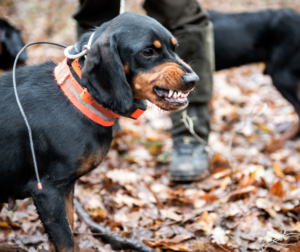
“The vision for the Wisconsin Conservation Congress was to be democratic and inclusive. Instead, today, wild animals in our state live at the mercy of a small special interest group, recreational hunters and trappers, leaving little recourse for recognition of public values increasingly shifting towards Leopold’s vision.”
“Wildlife is not the province of consumptive users; wildlife concerns us all. And respecting wild animals means moving beyond harm to care. It means allowing wildlife to thrive, for everyone’s sake.”
Read more at Silent Sports Magazine
Should Utah pay $50 bounties on coyotes killed in controversial contests?
By Brian Maffly
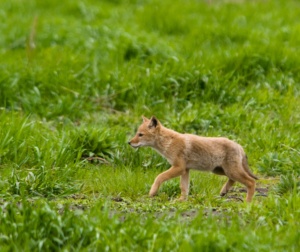
“Late fall marks the resumption of Utah’s wildlife killing contests, where an unknown number of coyotes and other animals are shot by teams angling to take the largest haul of dead “dogs” stacked in the bed of their pickups by the end of the day.”
Events such as these are legal because wildlife managers are trained to ignore the interests of individual animals and only focus on the impacts on populations and species. The fact that, “In one post, hunters are posed with their middle fingers extended and the carcasses linked to form the letters FJB in an apparent disapproving reference to the current occupant of the White house,” shows how wildlife issues are part of the larger culture wars and values conflicts in society.
“’They’re totally unethical. They accomplish no management goal. They are disruptive to the ecosystem, they cause a lot of pain and suffering and only for one thing, and that is the gratification of the participants,’ said Kirk Robinson, executive director of the Salt Lake City-based Western Wildlife Conservancy… ‘Wildlife is a public trust. Even if it’s not managed by the state, it still belongs to all.’”
Read more at The Salt Lake Tribune
Hybrid striped bass introduced into Caballo Lake
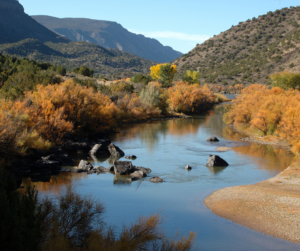
The New Mexico Department of Game and Fish just released over 40,000 hybrid striped bass into Caballo Lake in southern New Mexico. This story illustrates the absurdity of introducing a fish that is a hybrid of two nonnative, piscivorous (fish-eating) species into the state’s waters. There is no conservation value in introducing this fish, only the intention to increase fishing license sales.
Press Release: Washington Fish and Wildlife Commission Votes to Permanently Eliminate Recreational Spring Bear Hunting
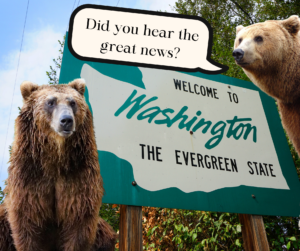
Press Release, Washington Wildlife First
“Washington Wildlife First applauds the Washington Fish and Wildlife Commission’s landmark decision today to establish a state policy eliminating recreational spring bear hunting.”
“Spring bear hunting is legal in only eight other states, and surveys have long shown that it is deeply unpopular with the Washington public. A recent poll commissioned by Washington Wildlife First confirmed that 80% of Washington voters oppose spring bear hunting, which targets black bears when they are emerging from hibernation, and often leads to the orphaning of nursing cubs.”
Order Now: Wildlife For All “Celebrating Species” 2023 Calendars for sale!
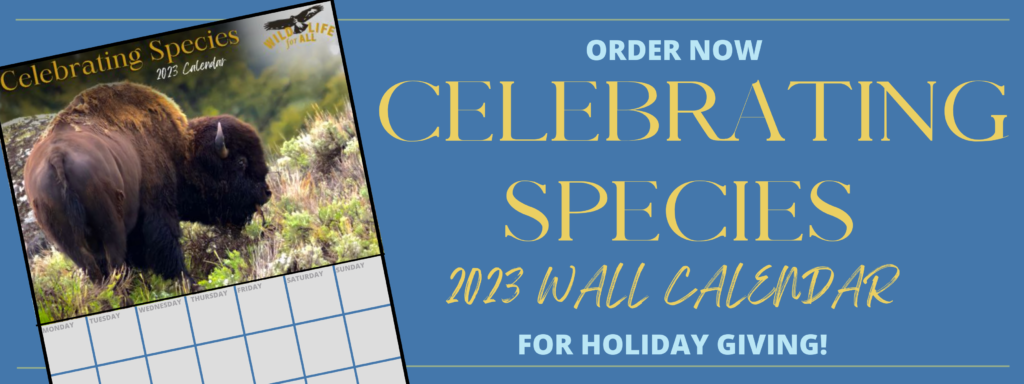
Purchase Now
Thank you for helping us celebrate the diversity of our native wild lives in our first photo contest! We are so grateful that all the participating photographers are able to share their love of wildlife through the art of photography. Their gift allows those who otherwise wouldn’t be able to see these unique, beautiful creatures a chance to view them through the photographer’s eyes. We believe that by providing this perspective, viewers will find connections that will help them grow as advocates for the wild lives with whom we share this land, sea and air.
The winning photos are featured in our beautiful 2023 Wildlife for All wall calendar, available for purchase now. And we’re making your holiday giving easier – they will be in your mailbox in time for gift giving! This beautiful calendar, featuring full-color, stunning wildlife photographs, is available for pre-order now through November 28. Get yours today!
Images include: