
News & Commentary
New Mexico Loses Another Wildlife Commissioner

Friday, the New Mexico Wildlife Federation released news that Edward Garcia resigned from the New Mexico Game Commission effective Aug. 1. While there is no additional information available at this time, the loss of yet another commissioner adds additional weight to calls for improved commission processes designed to increase stability.
Wildlife commissioners play a crucial role in shaping the policies that affect our wild species and ecosystems. Appointed by governors, these decision-makers oversee state wildlife agencies, set hunting regulations, and influence conservation efforts.
A single wildlife commissioner can influence policies that protect imperiled species, uphold ethical standards in wildlife management, and prioritize ecosystem health. By appointing commissioners who understand the importance of balancing diverse public interests—including those of non-consumptive users like wildlife watchers, hikers, and advocates for ecological integrity—we can create more inclusive, compassionate, and forward-thinking wildlife governance.
This is why Wildlife for All is committed to supporting the appointment of diverse, informed, and compassionate commissioners. Our Ideal Commissioner webpage provides guidance on the qualities we believe every wildlife commissioner should possess, including a commitment to scientific integrity, ethical wildlife management, and inclusivity of all stakeholders.
Importantly, the ideal commissioner has the understanding to serve as a trustee of the wildlife public trust for all, including future generations and for wild animals themselves. We hope to see the next New Mexico commissioner reflect these values.
Committee Fails To Ban Snowmobiling Over Wildlife
Despite global public outcry for months, the Travel, Recreation, Wildlife and Cultural Resources Committee advanced a toothless bill from a biased, undemocratic working group

Cheyenne, Wyo.—At today’s meeting the Wyoming State Legislature Joint Committee on Travel, Recreation, Wildlife, and Cultural Resources had the opportunity to address the public’s overwhelming demand to ban snowmobiling over wildlife.
Instead, lawmakers passed draft legislation requiring the quick dispatch of predators disabled by vehicles used to chase them down. Despite months of global outcry and testimony from concerned citizens, conservationists, and animal welfare advocates after the incident where a young wolf was not only disabled by a snowmobile but tortured in public afterwards, the committee’s watered-down bill falls short of any meaningful protections and would even codify running predators over with snowmobiles.
The bill, drafted by a working group with clear ties to special interests related to agriculture, lacks enforceability and fails to address the core issue: the cruelty inflicted on wildlife through this practice. Many who attended the meeting expressed frustration at the biased and undemocratic process, which left the voices of the public largely unheard.
Of the 15 public comments allowed, 13 strongly advocated for a ban on this widely opposed practice, but the voices of the two special interest representatives supporting the bill were given undue weight. Ten out of 12 committee members voted in favor, with two members absent.
Not a single legislator acknowledged the cruelty of the state’s current laws allowing motorized vehicles to hunt down predators. The committee’s decision to punt this issue to general session is a devastating blow to wolves and other predators in Wyoming, continuing the state’s legacy of ignoring calls for more humane wildlife management.
In response, Wildlife for All issued the following statement:
“It’s outrageous that despite overwhelming public outrage and the clear need for action, the committee has violated the trust of its constituents by offering a bill that does nothing to address the cruelty of running over wildlife with vehicles,” said Michelle Lute, Ph.D., executive director of Wildlife for All. “As winter and the forthcoming legislative session approaches, the urgency to take meaningful action grows. In light of this, and the overwhelming united front from wildlife stakeholders—whether they’re wildlife watchers or advocates or hunters—it’s unthinkable that the committee has opted for this weak and ineffective response that continues to leave Wyoming’s wildlife vulnerable.
“The committee’s process was undemocratic from the start, dominated by special interests and insiders while ignoring the voices of everyday Wyomingites and folks who love visiting the state because of its unparalleled natural heritage. But this fight is far from over. We’re building people power in Wyoming so that decision-makers will be forced to listen to their constituents and outlaw cruelty to wildlife once and for all.”
###
About Wildlife for All
Wildlife for All is a national organization dedicated to reforming wildlife management to be more democratic, just, compassionate and focused on protecting wild species and ecosystems. Through research, advocacy, and education, we aim to protect wildlife and ensure that policies reflect the values of all Americans.
Hunters Need Predators
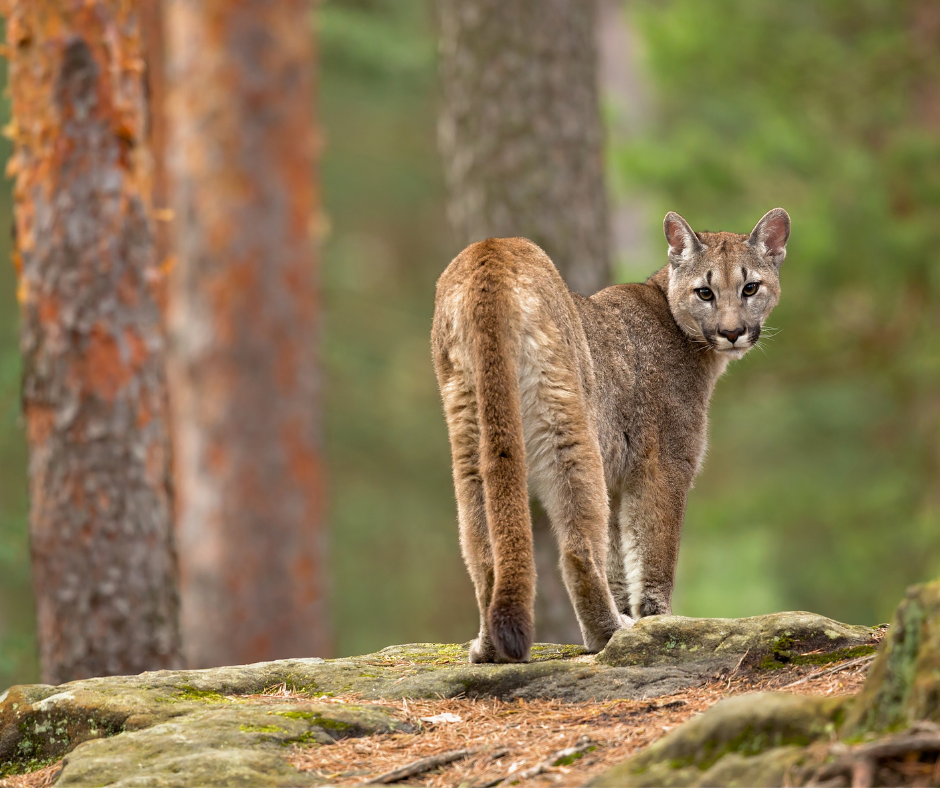
In North America, there is a long history since European settlement of hostility and intolerance towards native predators like cougars, bobcats, wolves, and coyotes. This antipathy is reflected today in the current system of state wildlife management, which continues to permit extensive (and sometimes unlimited and year-round) hunting of these species. However, native predators play critical ecological roles, some of which benefit hunters themselves.
A recent piece entitled “Hunters Need Predators” by outdoor writer Ted Williams highlights the phenomenon of “predator cleansing”, a valuable service native carnivores perform in keeping herds healthier. For example, predators are hunters’ allies in combating Chronic Wasting Disease (CWD), an always-fatal malady that affects ungulates like deer, elk, and moose. This disease is difficult to detect, continues to spread, and is considered a major threat to the future of ungulate hunting. However, bobcats potentially limit CWD contamination, as they are one of the few animals whose stomachs “deactivate” CWD prions when they consume infected deer. Wildlife ecologists have also noted that this disease has not flourished in areas where wolves roam the landscape. Other research indicates wolves and cougars selectively target infected deer and elk as prey, thus helping to keep herds healthier. Venison from CWD-infected animals is unsafe for human consumption but safe for wild predators.
“These and similar results in other states call into question the wisdom of permissive, in some cases unrestricted, hunting and trapping of cougars, wolves, coyotes and bobcats. If the whole of nature is good, no part can be bad. It’s time for all hunters to recognize predators as allies, not competitors.”
Read the op-ed here.
WDFW Issues Another Wolf Kill Order for Couse Pack
For Immediate Release: September 25, 2024
Washington Department of Fish and Wildlife Adheres to Outdated Management Practices, Issues Another Wolf Kill Order
Director approves lethal removal for the fourth time in two months

A gray wolf stands amidst tree cover, staring at the camera. Image courtesy of The Seattle Times.
Olympia, Wash.—The Washington Department of Fish and Wildlife (WDFW) Director Kelly Susewind approved a wolf kill order yesterday for the lethal removal of one adult from the Couse wolf pack territory in southeast Washington.
This action serves as the fourth approved wolf kill since July 31, a stark contrast to 2023 when only two wolves were killed by the department over the course of the entire year.
In response, Wildlife for All issued the following statement:
“The values of coexistence and compassion for wildlife are not reflected in the outdated policies of regulatory agencies like WDFW,” said Michelle Lute, Ph.D., executive director of Wildlife for All. “A small but powerful interest group continues to dominate wolf management in Washington, overshadowing the views of the majority of Washingtonians who value wolves and want non-lethal, proactive solutions supported by robust science. It’s time for the state to align its actions with true wildlife conservation.”
The best available science doesn’t support lethal control. Studies have shown that even the death of a single pack leader can result in fracture of pack structure and decreased reproduction in subsequent years.
This combination of increased mortality and decreased reproduction can compromise population recovery goals over time. Furthermore, pack instability can lead to increased livestock depredations following lethal control, rather than WDFW’s intended goal of decreasing conflict.
Instead, lethal wolf control is usually a political measure to pacify ranchers who demand action following livestock attack or losses yet who typically fail to exhaust coexistence measures or to implement them proactively.
“One wolf in the Couse Pack was already killed on July 8 of this year, proving that lethal removal doesn’t work,” Lute explained. “WDFW, like all state wildlife agencies, are trustees that manage wildlife in the public trust but are derelict in those duties when they choose to kill wolves in service to private businesses operating on our public lands. WDFW must start listening to their constituents, the diverse Washingtonians that value their natural heritage. Moreover, they can no longer ignore the growing body of evidence showing that consistent non-lethal prevention is the only way to manage wolves and livestock in shared landscapes.”
###
About Wildlife for All
Wildlife for All is a national organization dedicated to reforming wildlife management to be more democratic, just, compassionate and focused on protecting wild species and ecosystems. Through research, advocacy, and education, we aim to protect wildlife and ensure that policies reflect the values of all Americans.
Wild Ground is Common Ground

A recent op-ed (September 2, 2024) by Will Marlier challenges the notion that younger generations are “losing touch with nature”. He shares his experiences growing up and enjoying the outdoors in northeastern Vermont in the 2000s. Vermont, which is overall the most rural state and the third-oldest by population, is one of many states with ample opportunities for youth to hike, camp, play, and enjoy the natural world around them. Traditions and values inevitably change as new generations interact with wildlife and the outdoors in different ways, but interest in nature remains strong.
Will Marlier pushes back against the narrative often repeated in the wildlife management community that interest in hunting is waning in general because young/urban people are disconnected from nature and too immersed in their screens. That frequent narrative does not consider the alternative explanation that people have less interest in interacting with nature and wild animals in a consumptive way (i.e., hunting, hounding and trapping). As the writer says, this is not because they are disconnected from nature but because those are their values. He notes that on a national level, interest in activities like birdwatching, hiking, camping, and kayaking are growing in popularity. In contrast, practices like trapping for fur are slowly fading in approval and participation. Because values towards wildlife are shifting, this trend continues despite state wildlife agencies’ efforts to recruit more hunters, anglers, and trappers.
New Study Critiques Misleading Trapping Standards
FOR IMMEDIATE RELEASE

New Peer-Reviewed Study Critiques Misleading Trapping Standards
Calls for Immediate Reform as More States Push Unethical Trapping Practices
Madison, Wis.— A groundbreaking peer-reviewed study, ‘Best Management Practices for Furbearer Trapping Derived from Poor and Misleading Science’ co-authored by Naomi Louchouarn, Gilbert Proulx, Thomas Serfass, Carter Niemeyer and Adrian Treves, critically evaluates the methodology of a flawed study that U.S. state wildlife agencies heavily rely on to justify trapping.
Through their research, Louchouarn and colleagues expose significant problems in so-called “Best Management Practices” (BMPs) for furbearer trapping in North America. As more state wildlife agencies adopt these misguided BMPs to justify and promote trapping, the implications for public policy, and wildlife and ethical standards are dire.
The Flaws in Trapping BMPs and Their National Implications
Despite a marked decline in public support for trapping and decreasing numbers of trappers, state wildlife agencies across the United States are increasingly relying on BMPs to sanction the use of inhumane traps. These practices are out of step with the values held by the majority of Americans, who overwhelmingly favor wildlife conservation and appreciate the intrinsic value of living animals. The BMPs, as developed in White et al. (2021), were intended to meet internationally agreed-upon standards for humane trapping. However, Louchouarn and Treves’ evaluation reveals that these BMPs fail to align with current International Organization for Standardization (ISO) standards and are based on incomplete, inadequate, and non-replicable research methods.
Conflict of interest concerns also abound. In stark contrast to White and co-authors’ process, Louchouarn and colleagues’ study was reviewed by five anonymous peers recruited by the journal seeking unaffiliated experts after receiving all co-authors’ full disclosures concerning potential competing interests.
The implications of this flawed research are far-reaching. As more state agencies, such as Vermont Fish & Wildlife, adopt these BMPs instead of addressing public preferences to ban recreational trapping, they perpetuate unethical trapping practices that not only harm wildlife but also mislead the public into believing that these methods are humane. In reality, the White et al. study reveals that the BMPs allow for severe injuries—including amputations and deaths—up to 30% of the time, and are still considered to meet the BMP criteria.
A Call for Transparency and Accountability
“It is crucial, especially in cases where research is used to justify the consumptive, and sometimes controversial, use of wildlife, that journals hold researchers to the highest possible standards of transparency.” said Naomi Louchouarn, co-author of the study and associate researcher at the University of Wisconsin-Madison. “That highest possible standard requires transparency in the study methods and every effort throughout the scientific study process to reduce all possible biases, including the potential competing interests of the authors.”
Adrian Treves, co-author and professor at University of Wisconsin-Madison, added, “Our scientific team followed the highest standards of independent review, to model how White et al. and the journal fell below those standards. The public cannot trust science when researchers and data collectors – agency staff and private commercial and recreational trappers – are invested in the industry they study. Even more worrisome are the many authors of White et al.’s employment in agencies that claim to regulate the industry that appears to emerge shining from their study.”
“Science should be held to the highest standards, especially when it forms the basis for public policy,” said Michelle Lute, PhD in wildlife management and executive director of Wildlife for All. “This evaluation of White et al. (2021) shows that the research underpinning trapping BMPs is not only flawed but also deeply misleading. We urge state wildlife agencies and legislators to reconsider their reliance on these standards and to push for more transparent, reproducible, and ethically sound practices.”
The Growing Discrepancy Between Public Values and State Policies
The increasing adoption of BMPs by state agencies comes at a time when public interest in trapping is waning as public opposition increases. The number of active trappers is steadily decreasing, as is the global market for animal pelts. Despite this, state agencies continue to promote trapping under the guise of these BMPs, often ignoring the public’s preference for non-lethal and ethical wildlife management.
“Roxy’s Law,” recently enacted in New Mexico, provides a stark contrast to the policies supported by BMPs. This law, inspired by the tragic death of a dog caught in a snare trap, bans the use of traps, snares, and poisons on public lands, except in certain controlled circumstances. It reflects a growing recognition among legislators and the public alike that traps are not only inhumane but also pose an unacceptable risk to both wildlife and domestic animals.
“The American public deserves policies that reflect their values—values that prioritize the well-being of wildlife and respect for life,” said Brenna Galdenzi, President of Protect Our Wildlife. “The current BMPs fail to meet these expectations. It’s time for a thorough review and reform of these practices.”
Wildlife for All, in collaboration with its member organizations, calls on state wildlife agencies and legislators to rethink their reliance on flawed BMPs. It’s time to align state policies with the values of the American public, who increasingly see wildlife as beings with intrinsic value, deserving of better protections and respect.
For more information or to schedule an interview with Naomi Louchouarn and Adrian Treves, please contact info@wildlifeforall.us.
You can read the full text of the study here, published in the open-access journal Canadian Wildlife Biology and Management.
# # #
About Wildlife for All
Wildlife for All is a national organization dedicated to reforming wildlife management to be more democratic, just, compassionate and focused on protecting wild species and ecosystems. Through research, advocacy, and education, we aim to protect wildlife and ensure that policies reflect the values of all Americans.
Why Florida’s Right to Hunt Amendment is Unnecessary

Wildlife for All joined the list of groups opposed to a proposed Florida constitutional amendment on the ballot in November (2024) that would enshrine hunting and fishing as the preferred method of wildlife management in that state, including “traditional” methods like leghold traps, neck snares, and hunting with hounds. Approximately half of U.S. states currently have Right to Hunt amendments. On the surface, these laws appear uncontroversial to many, as most people generally support the right to hunt and fish for food. However, the push to include these amendments in more states is largely reactionary and aimed around endorsing an outdated status quo of wildlife management prioritizing hunters and hunting. Right to Hunt measures are unnecessary and often deceptively framed.
Groups pushing these amendments include the NRA and organizations promoting the status quo in wildlife management like the Congressional Sportsmen Foundation and the International Order of T. Roosevelt. The Florida Right to Hunt adds language favoring hunting “as preferred means of responsibly managing and controlling fish and wildlife” giving preferential treatment to hunters and hunting. Not all methods of hunting sanctioned by state wildlife agencies are favored by the public. Broad wording like “including by the use of traditional methods” endorses practices that garner strong public disapproval but are currently legal in many states, like using hounds and bait to hunt black bears.
The language and motives behind these amendments underscore the importance of understanding the current system in wildlife management and the need for a more democratic, just, and ecological system. WFA opposes these measures because they make it more difficult to pass needed reforms like banning wildlife killing contests, they privilege consumptive users over the public in wildlife matters, and they are unnecessary because there is no serious effort to ban hunting in any state.
New Mexico’s Green Amendment

Climate change impacts both people and wildlife, especially in arid regions, which are at heightened risk of wildfires and drought. Environmental hazards, pollution, degradation, and biodiversity loss also disproportionately affect low-income and minority communities. A proposed New Mexico Green Amendment promotes environmental equity and the right of all people to a safe and healthy environment. Pennsylvania, New York, and Montana currently have similar measures in their state constitutions. In addition, the New Mexico amendment would ensure stronger protections for the state’s wildlife, promoting healthy ecosystems and native species as a public trust.
A bill to place the Green Amendment on the ballot for November 2025 will be introduced in the next New Mexico legislative session in January 2025.
Wildlife For All supports this effort because:
- The measure would guarantee New Mexicans the right to a healthy environment, including native flora, fauna and ecosystems. Individuals could go to court to force the government to take action if this right was violated.
- It would explicitly acknowledge that wildlife and natural resources are part of the public trust that the government, as trustee, has a duty to protect for the benefit of all people, including future generations.
The current proposed language for the New Mexico Green Amendment is:
It is proposed to amend Article 2 of the constitution of New Mexico by adding: A. The people of the state shall be entitled to clean and healthy air, water, soil and environments; healthy native flora, fauna and ecosystems, and a safe climate; for the benefit of public health, safety and general welfare. The state shall protect these rights equitably for all people regardless of race, ethnicity, tribal affiliation, gender, socioeconomics, or geography. B. The state, counties and municipalities shall serve as trustee of the natural resources of New Mexico and shall conserve, protect and maintain these resources for the benefit of all the people, including present and future generations. C. The provisions of this section are self-executing. Monetary damages shall not be awarded for a violation of this section. This section is enforceable against the state, counties and municipalities.
The Role of Wildlife Governance in Rewilding

Mountain lions, while considered a species of “Least Concern” overall, remain absent from much of their original range, including the eastern United States.
State wildlife agencies are failing to restore and protect wildlife because they prioritize the wrong objectives, according to a new study in the journal Bioscience. Many keystone species could feasibly return to portions of their historic ranges where they no longer occur, but state wildlife agencies ignore and do not restore them. Overall, agencies are more focused on providing opportunities for hunting, fishing and trapping than on wildlife recovery.
The idea of rewilding – restoring wildlife to strengthen habitat resilience and biodiversity – is gaining traction. Historic and current conservation efforts have primarily focused on species-level extinctions. Geographic range contraction, while frequently overlooked, is a critical aspect of the biodiversity crisis. Mountain lions for example, while not federally threatened or endangered, remain extirpated (locally extinct) across significant areas of their former range. Where present, mountain lions are a keystone species. Since administration of the federal Endangered Species Act currently does nothing to address range contraction, this issue often falls to state wildlife agencies. This presents an obstacle for restoration of native carnivores and other species that hunters do not prioritize but are ecologically important.
An article published in Bioscience demonstrates strong support for rewilding species that are extirpated or locally endangered. The researchers found that the public generally thinks wildlife managers should prioritize wildlife restoration over providing hunting and fishing opportunities. This approach means acknowledging the ecological importance of wildlife (not just utilitarian benefits to humans) and the critical role a species is unable to fulfill in regions where they have become locally extinct due to historical persecution, unregulated hunting, or habitat degradation. Rewilding wildlife like wolves, beavers, bison, and mountain lions would also restore lost ecosystem functions in those places. Americans increasingly favor a more inclusive, ecologically-driven approach to state wildlife management that looks to the future and engages with hunters and non-hunters alike.
Wyoming Wolf Torture Incident Highlights Need to Drastically Reform State Wildlife Management
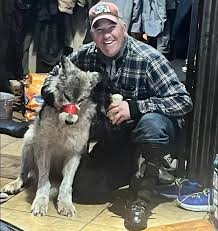
Cody Roberts poses with wolf he injured with his snowmobile. Photo courtesy of the Cowboy State Daily.
In a press release issued today, Wildlife for All joined a coalition of other wildlife, hunting, animal welfare, scientific, and governance reform organizations in calling for Wyoming and other states to overhaul their wildlife management policies in the wake of an incident of a wolf having been captured and tortured in Wyoming.
The case has gained national attention. As reported by KHOL 89.1 radio on March 29, 2024 a Wyoming man injured a gray wolf with his snowmobile, taped the wolf’s mouth shut, brought the animal to a home and then a local bar where the wolf was eventually killed after several hours of being paraded around the bar. The Wyoming Game and Fish Department states that the only crime the man violated is possession of a living, warm blooded wild animal, which is a violation of Wyoming law that carries a maximum $250 fine. He was fined $250, and, to our knowledge, the state wildlife management agency has not indicated that any further investigation is being conducted.
The incident reveals fundamental problems with the way Wyoming and many other states manage wildlife. The lack of protection for wolves and other carnivores encourages this type of cruel behavior. We are calling on Wyoming and other states to make fundamental changes to wildlife policy to prevent such incidents from happening again.