
News & Commentary
Montana Wolves: Commission Approves 300 Wolf Quota
For Immediate Release: August 19, 2026
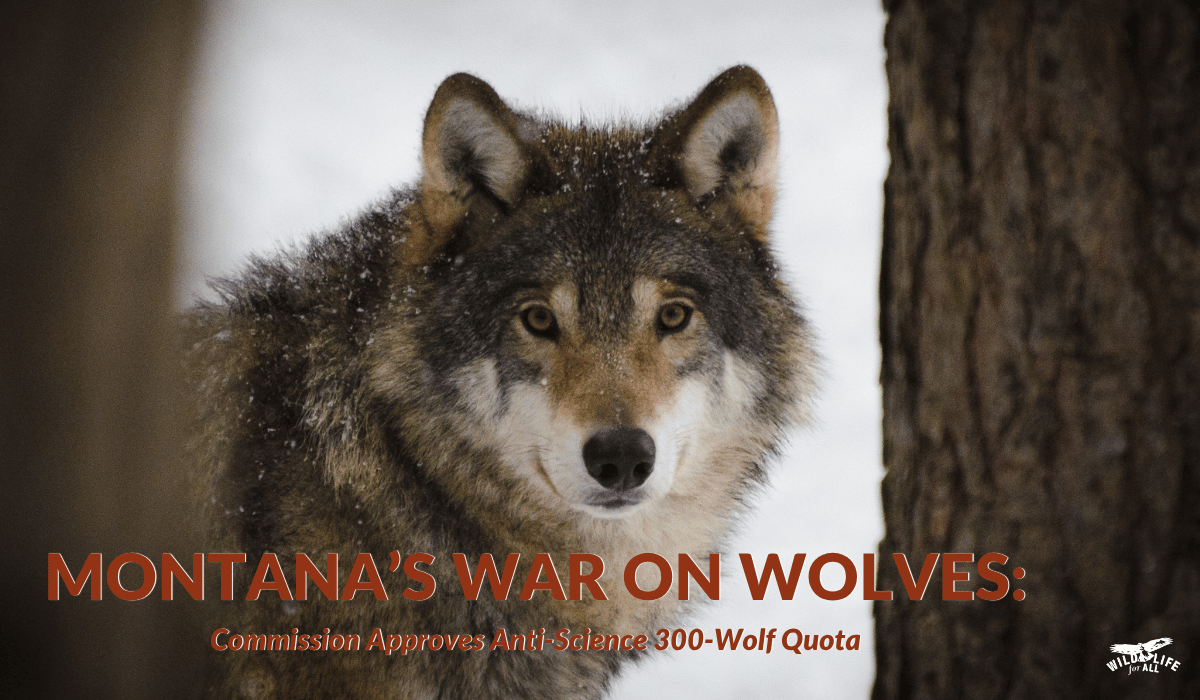
Despite Overwhelming Public Opposition, Montana FWC Approves Killing 300 Wolves
If total wolf deaths resemble last year’s, over half of alleged population will be killed
Helena, Mont.—Today, the Montana Fish & Wildlife Commission (the Commission) approved regulations for the 2026-27 wolf hunting and trapping season, which will allow for the killing of 300 wolves using anti-fair chase methods including night hunting, thermal and infrared imagery, and bait. Fish, Wildlife & Parks (FWP) recommended a quota of 250. The Commission passed this much higher quota despite 92% of commenters—2,019 people out of 2,203—speaking out in favor of killing fewer wolves, such as a hunting/trapping moratorium or a significant quota reduction from FWP’s original number of 250.
As a response to the public outcry, the Commission actually increased the total quota by 50 through a last-minute amendment that was not noticed before the written public comment period expired, and transitioned to a regional system, rather than using a statewide quota. The aggressive killing quota comes on the heels of FWP admitting that the state’s model for estimating the wolf population—iPOM (Integrated Patch Occupancy Model)—has been vastly overestimating the number of wolves in the state for years. And the state’s newest estimate, nearly 400 fewer wolves than FWP told the public last year, is still disputed by independent scientists and is not peer-reviewed.
Commissioner Ian Wargo, who proposed the last-minute amendments, said at the end of the meeting that “nothing that was said in comments would change anything,” despite more than 2,000 written comments and hours of public testimony raising substantive concerns about the proposed regulations. This included testimony from a former FWP carnivore specialist who said Montana’s wolf population could not support a quota of more than 175 wolves, as well as comments from a woman whose dog was shot while being mistaken for a wolf and lost a leg. Speakers on both sides of the debate also questioned the reliability of iPOM 2.0 and called for the model to undergo independent peer review.
“When 92% of people voice their opposition to a proposal that the Commission passes anyway, the state reveals that the ‘public participation process’ is merely a performative sham meant to conceal the fact that a few well-connected fringe special interests set wildlife management policy behind closed doors,” said Josh Schott, Rocky Mountain Coordinator at Team Wolf. “Year after year, the Commission ignores the will of the people and silences Montanans at the cost of our most vulnerable wildlife.”
The number of people who actively voiced opposition to the proposed wolf hunting and trapping regulations this year aligns with recent research that shows 74% of Montanans are tolerant or very tolerant of wolves on the landscape. According to the study, “a strong majority of Montana residents have positive attitudes toward wolves and tolerate them on the landscape.” The study also noted that the “minority of Montanans who have exceedingly negative attitudes towards wolves represent… an influential segment of the population.”
“Montana is treating wolves as a commodity to be handed over to the special interests that want to kill them, rather than as wildlife held in trust for all Montanans,” said Michelle Lute, PhD in wolf-human coexistence, executive director for Wildlife for All. “When politically-fueled hatred and ignorance override science, agency expertise, and overwhelming public concern, the result is not just ecological damage—it is the destruction of public trust and the betrayal of future generations.”
The seven governor-appointed Commissioners who passed the regulations represent specific industries with a strong interest in reducing the wolf population, such as livestock ranching, outfitting, and hunting. None of the current Commission members has a background in wildlife science or management.
“Wolves belong in Montana, they’ve been here for thousands of years and it’s up to us to share the landscape with them,” said Lizzy Pennock, carnivore coexistence attorney at WildEarth Guardians. “The Commission should be setting policies that steward our state’s wildlife, not capitulating to special interest groups who want to kill off the wolf population.”
“Montana’s wolf hunting and trapping is abjectly cruel, ecologically destructive, and pushing wolf families and the entire population to the brink,” said Nadia Steinzor, carnivore conservation director at Project Coyote. “The Commission just demolished any pretense that it cares about science, a healthy environment, or public opinion.”
Despite public outcry, Montana allows many killing methods that violate fair chase principles, including baited traps and snares, artificial light, night vision, and thermal and infrared imaging. Fair chase principles are widely shared and cherished values of Montana hunters. The Idaho based Foundation for Wildlife Management pays bounties of up to $1,500 per wolf killed. No other species carries bounties from out-of-state enterprises.
“For years, we have warned about the serious decline in the wolf population, citing a flawed model as our evidence,” said KC York, president and founder of Trap Free Montana. “This was reinforced by the failure of hunters and trappers to hit the quota, instead reporting killing 272 wolves on average annually, and despite the egregious means of unfair chase and unethical methods exacerbated since 2021. Now, rather than heeding the alarm call, the Commission persists in prioritizing lethal management for special interests. Appalling, the quota was increased to 300, with one bright outcome, one wolf each in 313 and 316.”
After five years of controversy and public outcry, FWP admitted it has been overestimating the wolf population and updated iPOM into a new version called iPOM 2.0. According to this updated version, iPOM overestimated the wolf population by nearly 400 for 2025. iPOM 2.0, on the other hand, estimates roughly 725 wolves in Montana, but this updated version has not been peer reviewed. Further, wolf researchers still challenge the validity and scientific legitimacy of iPOM 2.0 because the model underpinning both iPOM and iPOM 2.0 is fundamentally flawed, so the state can’t accurately estimate how many wolves are in Montana and it’s likely far less than the estimated range provided by iPOM 2.0.
“Wolf management decisions should not be based on iPOM (versions 1.0 or 2.0). FWP touted the accuracy of iPOM 1.0, then a year later admitted that it greatly overestimated wolf population size, as we indicated it would in our work to improve how wolves are counted and managed,” said Robert Crabtree, Chief Scientist and Founder of the Yellowstone Ecological Research Center. “How could anyone now trust iPOM 2.0 when they fixed two of some twenty-plus problems that other scientists and we identified? iPOM 2.0 still has serious bias that stands unaddressed and uncorrected. All this while, they ignore other methods successfully used in other states and in Europe.”
According to FWP’s 2025 Wolf Report, hunters and trappers killed 247 wolves last year despite a quota of 458, and 81 wolves died from other documented causes, bringing the wolf death total to 328 in 2025. The 300 quota for this season is an authorization to kill even more wolves than were killed last year, even though there are at least 400 fewer wolves in Montana than previously stated.
###
Mexican Gray Wolf Killed in Illegal Trap
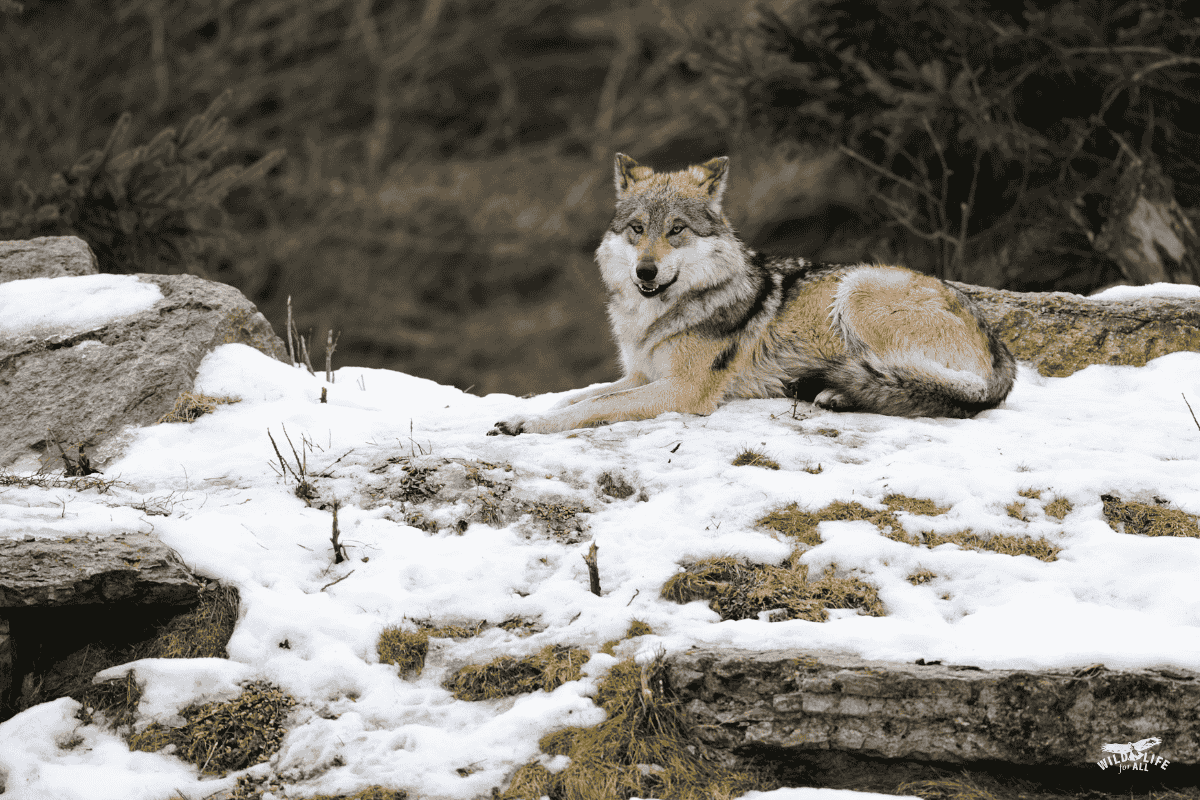 FOR IMMEDIATE RELEASE: August 14, 2026
Coalition Demands Justice for Endangered Mexican Wolf Killed in Illegal Trap
Santa Fe, N.M. — A coalition of wildlife conservation, environmental and animal protection organizations is demanding accountability after new reporting revealed that the New Mexico Department of Justice declined to bring criminal charges against a trapper who illegally set a trap on public land and then killed an endangered Mexican gray wolf. The incident, covered in yesterday’s Albuquerque Journal, involved William Nelson, a permitted public safety and depredation control officer for the Catron County Sheriff’s Office, who unlawfully set a trap for coyotes on public land in July 2025. After a Mexican gray wolf was caught in the trap, Nelson and a rancher restrained the wolf using a sleeping bag. The wolf died from asphyxiation due to vomit that obstructed his airway while being restrained.
According to the Albuquerque Journal, the New Mexico Department of Wildlife sought prosecution in the case, while the NMDOJ and federal authorities declined to bring charges. The New Mexico Department of Justice ultimately entered into an agreement under which the trapper would not be prosecuted and instead was required to download an app showing public and private land boundaries.
“An endangered Mexican gray wolf was caught in an illegal trap and died a horrific death, and the consequence was essentially downloading an app,” said Michelle Lute, Ph.D., executive director of Wildlife for All. “Why are we unable to protect an endangered species when multiple laws were violated so clearly? If our laws cannot deliver meaningful justice in a case like this, we need to fix both the enforcement and the laws themselves.”
Since 2022, at least 23 Mexican gray wolves have been documented caught in traps in New Mexico, demonstrating that trapping is an ongoing and recurring threat to the state’s endangered wolf population.
“New Mexico banned public lands trapping to prevent these exact kinds of incidents. The legislature wanted to keep public lands safe and protect wildlife from cruelty,” said Chris Smith, wildlife and wild places program director for WildEarth Guardians. “Roxy’s Law is a beacon of enlightened wildlife and public lands policy in the West, but only if we uphold it.”
“Wildlife enthusiasts, outdoor recreationists, and people opposed to animal cruelty and the brutality traps inflict along with the support of the majority of New Mexicans worked for years to finally see traps banned on NM public lands”, said Mary Katherine Ray, wildlife chair for the Rio Grande Chapter of the Sierra Club. “The state of New Mexico is entrusted to enforce this law including prosecuting violators and administering penalties and this is regardless of whether the victim is a coyote or an endangered animal like a wolf. That it did not is a betrayal to all of us.”
The coalition is urging New Mexico Attorney General Raúl Torrez to strengthen the NMDOJ’s prosecution of illegal activity related to trapping and other cruelty to wildlife and is calling on state leaders to strengthen enforcement and close statutory loopholes that put wolves and other wildlife at risk.
“The Governor and the Department of Wildlife recognized that this case warranted prosecution, yet the state’s response failed to provide meaningful accountability for the unlawfully set trap that resulted in the death of an endangered wolf,” said Cyndi Tuell, Arizona and New Mexico director at Western Watersheds Project. “We urge Attorney General Torrez to get tough on wildlife crime, and we urge the Legislature to ensure that future cases do not fall through the same cracks.”
“We cannot simultaneously claim that Mexican gray wolves are ready for fewer federal protections while an endangered wolf can be illegally trapped and killed with no meaningful criminal consequence,” said Regan Downey, director of education and advocacy at the Wolf Conservation Center. “Recovery requires more than increasing the number of wolves on the landscape through wild breeding or captive releases. It requires protecting them once they are there.”
“This case should concern everyone who cares about the future of Mexican gray wolves. We are being told that lobos are approaching a point where federal protections can be weakened, yet an endangered breeding male can be illegally trapped on public land, die as a result, and there is no meaningful prosecution,” said Claire Musser, executive director of the Grand Canyon Wolf Recovery Project. “Recovery cannot simply be measured by how many wolves are counted each year. It must also mean that wolves can live on the landscape with meaningful legal protections, accountability when those protections are violated, and a genuine chance to thrive.”
Nelson’s victim, referred to by the code AM2765, was the breeding male of the Frieborn pack and had welcomed pups earlier that year. He served as the adoptive father to seven wild-born pups who were fostered from the Pancho Spring pack to the Frieborn pack in 2024.
###
About Wildlife for All
Wildlife for All is a national organization dedicated to reforming wildlife management to be more democratic, just, compassionate and focused on protecting wild species and ecosystems. Through research, advocacy, and education, we aim to protect wildlife and ensure that policies reflect the values of all Americans.
About Western Watersheds Project
Western Watersheds Project is a nonprofit conservation organization with more than 50,000 members and supporters who care about protecting western public lands for watersheds and wildlife.
About WildEarth Guardians
WildEarth Guardians protects and restores the wildlife, wild places, wild rivers, and health of the American West.
About Sierra Club
The Sierra Club’s mission is to explore, enjoy, and protect the wild places of the Earth, practice and promote the responsible use of its ecosystems, and educate humanity to protect the natural environment.
About Grand Canyon Wolf Recovery Project
The Grand Canyon Wolf Recovery Project is a nonprofit dedicated to bringing back wolves to help restore ecological health in the Grand Canyon region, while also recognizing wolves as sentient beings with intrinsic value and worth.
About Wolf Conservation Center
The Wolf Conservation Center advances the survival of wolves by inspiring a global community through education, advocacy, research, and recovery, and is an active participant in the SAFE Mexican Wolf Program.
The Importance of a Veto to Mexican Gray Wolf Recovery
On June 19, 2026, Arizona Gov. Katie Hobbs vetoed SB 1280, protecting a critical aspect of the Mexican Wolf Recovery Program. Initially introduced in January, the bill would have legally barred the Arizona Fish & Game Commission from transporting Mexican gray wolf pups into Arizona, or spending public money or resources for wolf pup transportation. This legislation would have cut off cross-fostering – placing young captive-born wolf pups in dens – a conservation tactic that aims to bolster wild wolves’ genetic diversity.
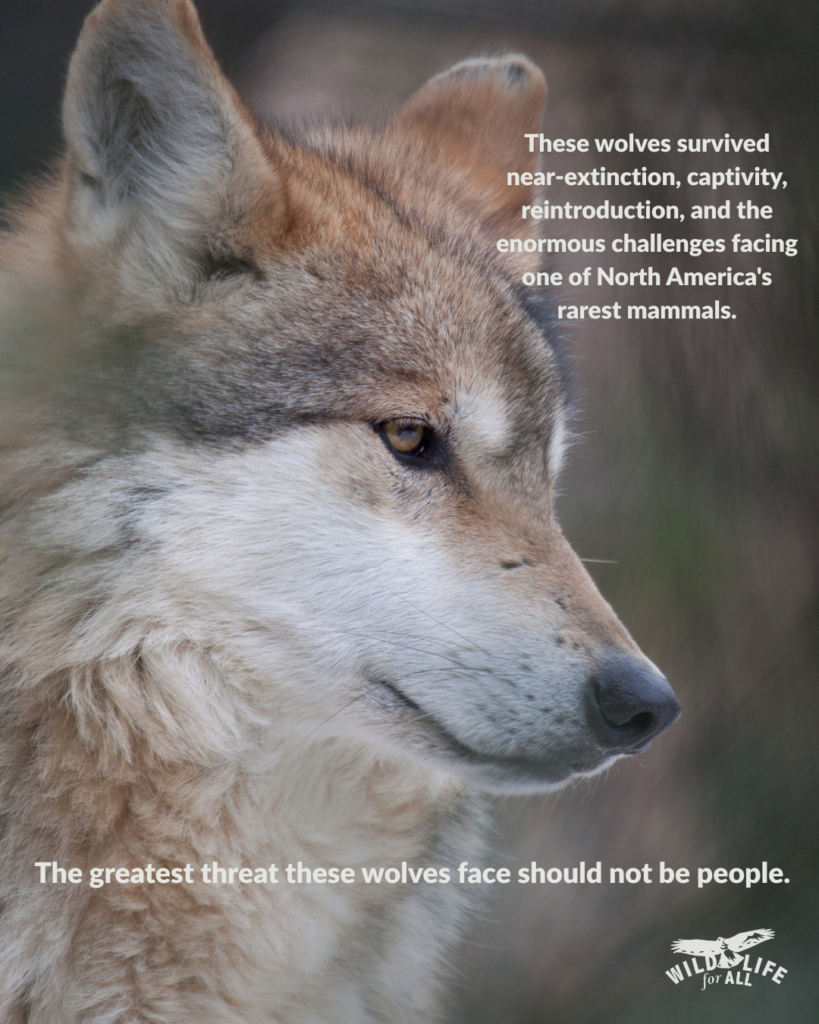
Why genetic diversity matters
Mexican wolves, also called lobos, are the smallest and most genetically divergent North American gray wolf subspecies. Low genetic diversity remains a critical threat to their recovery. The entire population originates from just seven captive founder wolves. These individuals were survivors of an intensive eradication campaign that lasted until the 1970s.
Current genetic diversity in wild wolves has dropped over four straight years, even as the overall population grew. Mean kinship figures (a measure of average relatedness) indicate the reintroduced population has 37% less genetic diversity than lobos in the captive breeding program.
Releasing adult bonded pairs has been more effective (66% success rate) for the recovery program than placing neonatal pups in wild dens. Adult wild wolves naturally have much higher annual survival rates than pups. However, due to livestock industry pressure, the recovery program currently cannot release captive-born bonded pairs or family packs into the recovery area. This leaves cross-fostering pups as the only permitted way to introduce new genetics into the population – and Arizona’s legislature attempted to close off that tactic, too.
These wolves’ greatest threat should not be people
Mexican gray wolves face other conservation challenges, including poaching. Several mortalities stem from hunters apparently mistaking endangered wolves for coyotes. Coyotes are unprotected within the recovery area, and their close similarity of appearance to wolves serves as a dangerous loophole for illegal killing. Despite the lack of respect they get from state wildlife agencies, coyotes perform crucial ecosystem services and protecting them can help protect wolves as well.
Lobos are a “bureaucratically imperiled” endangered species – meaning economic interests and ideological opposition have stalled or blocked conservation progress. Arizona’s legislative attempt to prohibit cross-fostering is just one example. Policies confine wolves to a recovery zone and capture them when they wander past boundary lines. There are no plans to reintroduce or allow lobos to re-establish much of their historic U.S. range, though viable habitat remains. Capturing or killing genetically valuable wolves in retaliation for livestock losses also undermines recovery.
These wolves survived near-extinction, captivity, reintroduction, and enormous challenges. Their greatest threats should not include the very states charged with their recovery.
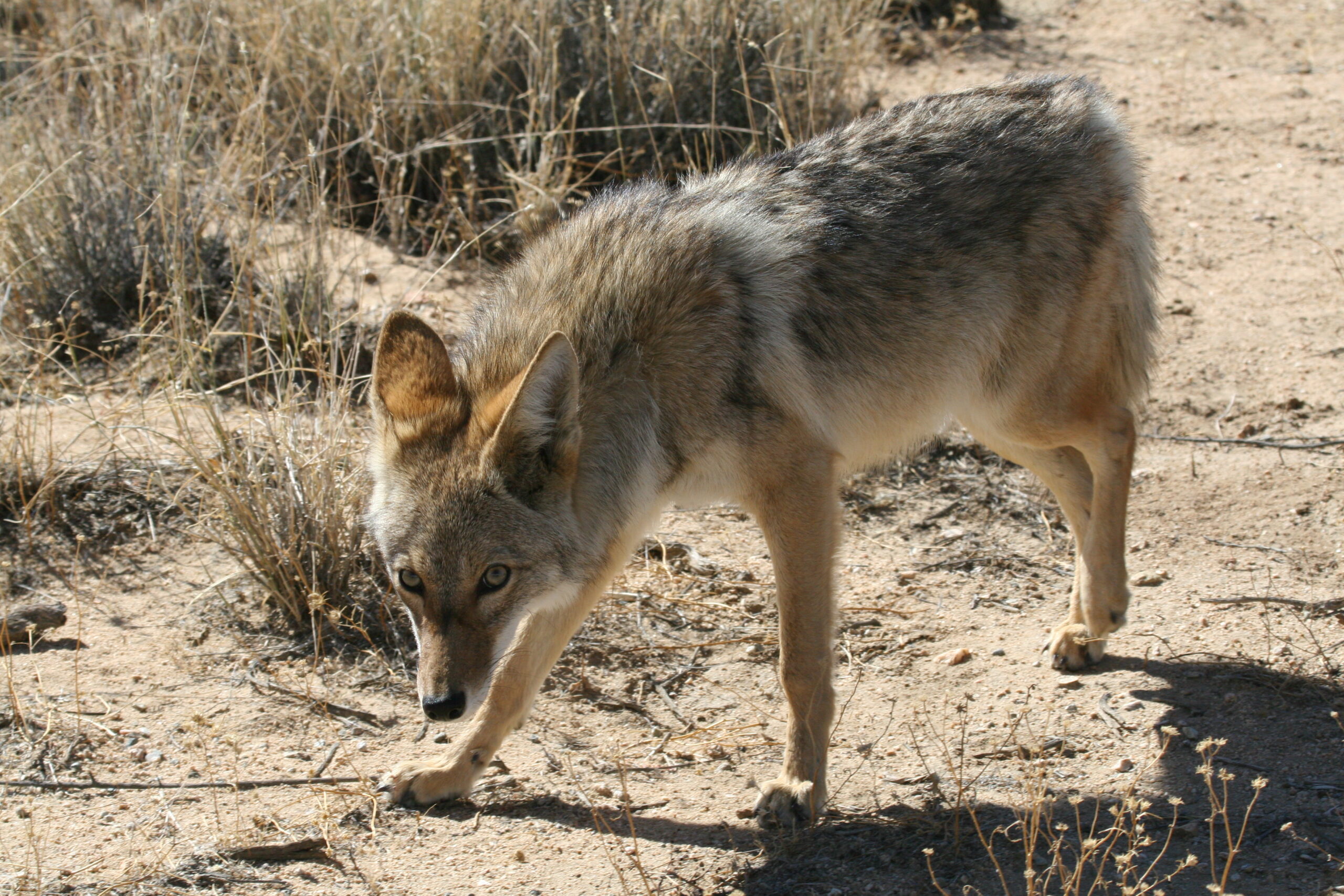
A coyote in the Southwestern United States. Coyotes closely resemble Mexican gray wolves.
Governor Hobbs’ veto marked a significant win for Arizona Mexican gray wolf recovery. It preserves one of the most important tools available for recovering this endangered species. Conservationists warned the bill would have undermined decades of recovery work and set a dangerous precedent.
Vetoing this harmful bill protects an important conservation tool and reminds us that informed public advocacy can make a real difference for wildlife when policymakers choose to listen. If you live in Arizona, thank her for standing up for Mexican gray wolves. Be a voice for wildlife in your state by visiting our Action Hub.
What Initiative 302 Could Mean for Local Wildlife Decisions and Public Safety
 What Initiative 302 Could Mean for Local Wildlife Decisions and Public Safety
TO: Interested Parties
DATE: August 10, 2026
As your newsroom covers Initiative 302, it is important to understand that this measure does more than affirm hunting and fishing but would place new wildlife policy language into Colorado’s Constitution, where it could reshape how future disputes over wildlife management, local authority, and public safety are resolved.
Constitutional amendments are different from ordinary statutes because they become part of a state’s highest law. Once adopted, courts—not wildlife agencies, legislatures or local governments—must interpret what the new constitutional language means when disputes arise. Colorado’s own fiscal analysis anticipates that the amendment could increase requests for legal guidance and litigation challenging wildlife regulations.
- Constitutional amendments often lead to new legal questions, not fewer.
Wildlife for All recently completed a 50-state review of constitutional right to hunt amendments, legislative proposals, and relevant court decisions. Our review found a consistent pattern: these amendments rarely eliminate disputes. Instead, they often shift wildlife policy questions into constitutional litigation over property rights, local government authority, wildlife management, and public safety.
For example, Indiana courts recently considered whether the state’s constitutional right to hunt superseded local zoning restrictions on residential property. After years of litigation, the Indiana Court of Appeals concluded that the constitutional amendment did not override local zoning laws, illustrating that constitutional amendments can create years of uncertainty before courts establish how they apply and create new legal precedent.
In Wisconsin, the state Supreme Court concluded that the constitutional right to hunt did not eliminate wildlife regulations, but it did require courts to evaluate whether hunting restrictions were “reasonable.” And in North Carolina, a constitutional right-to-hunt amendment became part of litigation over whether state officials had adequately managed fisheries for future generations. Rather than limiting lawsuits, the amendment became part of a broader constitutional dispute over the state’s wildlife management responsibilities.
Initiative 302 would not automatically invalidate existing laws or local regulations but it would change where policy debates occur because questions that are currently resolved through local government, wildlife commission, and legislature processes where citizens can weigh in would become questions courts interpret through costly litigation.
- Local governments routinely balance hunting access with other public interests.
Wildlife management decisions often involve more than biological considerations alone as local governments also consider public opinion, competing recreational uses, and the preferences of residents around public safety, protection of homes and property, and wildfire prevention.
Colorado Springs recently considered an urban archery program after wildlife managers identified increasing deer conflicts. While some residents supported the proposal, others raised concerns about hunting near homes, parks, trails, children, and pets. City leaders ultimately declined to proceed after weighing local public safety and community concerns. In Cañon City, a tightly regulated deer harvesting program in response to concerns about deer overpopulation, property damage, and vehicle hazards relies on local requirements governing where and how hunting may occur.
If Initiative 302 passes, local restrictions like these could potentially be challenged by someone arguing that the constitutional right to hunt limits a city’s ability to impose additional conditions on hunting. That could make it harder for cities and counties to adapt wildlife management decisions to changing land use, population growth, wildfire risk, and other local conditions.
These debates are not unique to Colorado. Across the country, communities have struggled with how to balance recreational shooting, hunting access, neighborhood safety, and other uses of public and private lands. (See more context from New Mexico, North Carolina, and Georgia as examples.)
- Local authority overall could become a future constitutional question.
Attorneys evaluating constitutional hunting rights language in Michigan concluded that local firearm-discharge ordinances could become vulnerable to constitutional challenge because constitutional rights typically supersede local restrictions.
A current case in Tennessee illustrates the issue. Safari Club International and the Tennessee Wildlife Federation recently filed an amicus brief urging the Tennessee Court of Appeals to overturn a lower-court decision upholding the City of Sweetwater’s firearm-discharge ordinance applied to duck hunting on private property, arguing that the local ordinance interferes with hunters’ constitutional rights.
Several Colorado counties have adopted firearm discharge restrictions where residential growth, public safety concerns, or other local conditions warranted additional protections:
- Boulder County adopted Resolution 2024-040 establishing a no-firearm-discharge area around the Sugarloaf community while expressly preserving licensed hunting on National Forest lands where otherwise lawful.
- Clear Creek County maintains multiple recreational shooting closures while identifying areas where hunting remains permitted.
- Douglas County has participated with state and federal agencies in planning designated shooting ranges and evaluating where dispersed target shooting remains appropriate within the Pike National Forest.
Colorado lawmakers have also addressed public concerns about recreational shooting through House Bill 23-1165 which, if it had passed, would have created additional tools for addressing shooting-related effects on private land. Similar legislation could face constitutional challenges if introduced or passed in the future, potentially creating a chilling effect that makes lawmakers and local governments more reluctant to adopt such measures in the first place.
- Initiative 302 would elevate one lawful use of public lands into the Constitution.
Colorado’s public lands are shared by many users. BLM-managed lands alone draw roughly 10 million visitors each year for activities including hiking, mountain biking, rafting, camping, and other recreation and hiking alone is estimated to bring more than $71 million in tourism to the state.
Initiative 302 would give hunting and fishing constitutional protection that other lawful recreational uses do not have. That raises a question that has received little attention: how would Colorado balance a constitutionally protected right to hunt against other lawful uses of public lands?
For example, a trail organization might propose rerouting or maintaining a trail to improve safety or a land manager might close a portion of a hunting area to protect sensitive habitat. Under current law, those decisions are made in a process where competing uses can be weighed against one another.
If hunting, fishing, and trapping become constitutional rights, a future challenger could argue that any decision that they perceive to reduce access violates those rights. Other lawful recreational uses of public lands would not receive comparable constitutional protection under the amendment. Whether that argument would succeed is unknown, but it is a question Colorado would have to resolve under a new constitutional standard.
###
To arrange interviews with legal experts and wildlife governance specialists, please contact Wildlife for All.
3 Things You Can Do for Wildlife This Week
 3 Things You Can Do for Wildlife This Week
Montana is preparing to set a new wolf-killing quota. The Trump administration is proposing weaker protections for grizzly bears. And one of Yellowstone’s most important wolf families could be killed this fall. Here’s what’s happening—and how you can help.
Jump to sections:
Montana wolf hunting quota | Federal grizzly 4(d) rule | Mollie’s Pack in Wyoming
Wildlife policy can sometimes feel abstract. A commission meeting in another state, a federal rulemaking process, or a management decision involving animals most people will never see can seem far removed from everyday life, but these decisions have very real consequences.
Three important wildlife decisions are happening right now, and the public has an opportunity to weigh in before those decisions are made. None requires you to be a wildlife policy expert. What matters is taking a few minutes to understand what is being proposed and making sure decision-makers hear from people who care about wildlife and how it is managed.
So without further ado, here are three things you can take action on this week:
MONTANA

1. Tell Montana to pause wolf killing until we know how many wolves are actually there
Written comments are due Wednesday, August 12.
On August 19, Montana’s Fish & Wildlife Commission will decide how many wolves hunters and trappers can kill during the upcoming season, a consequential decision under any circumstances. But this year, there is a basic problem that should make the Commission stop and take a much more cautious approach: Montana Fish, Wildlife & Parks has substantially revised its estimate of the state’s wolf population.
For years, FWP has relied on a population modeling system that it maintained produced reliable estimates showing Montana had a stable and abundant wolf population.
Montana Fish, Wildlife, and Parks relies on the Integrated Patch Occupancy Model (iPOM), a tool designed to estimate where wolves are, not how many exist, because the iPOM model predicts distribution, not abundance. iPOM data is based on hunter observation and lacks peer review. In absence of more precise population modeling, reliance on iPOM could erroneously label declining wolf populations as stable. Montana’s aggressive wolf-hunting policies do not align with ecological principles or data, and lack reasonable safeguards for wolf populations. Without reliable population data, setting quotas to kill hundreds of wolves is not “responsible science-based management”, it’s guesswork with consequences.
FWP now agree iPOM 1 was flawed and shared its updated modeling estimates that Montana has approximately 725 wolves with iPOM 2. The agency previously estimated to wolf population to be 1,094.
That is a 34% reduction in the estimated population, not because hundreds of wolves suddenly disappeared, but because the agency has acknowledged serious problems with the way it was estimating the population in the first place.
And there is another important caveat: FWP’s updated model, known as iPOM 2, has not been peer-reviewed through the scientific literature. We have no idea if they’ve actually fixed the problem (and a good deal of suspicion that they haven’t).
The proposed quota could leave Montana below its own minimum
Perhaps worst of all is that FWP is STILL proposing a hunting and trapping quota of 250 wolves for the upcoming season. Landowners would also be permitted to kill up to another 100 wolves under existing provisions.
If Montana actually has 725 wolves, killing ~350 of them would leave approximately 375. FWP has identified 450 wolves as the minimum population it believes is needed to reliably maintain the federally required 15 breeding pairs.
That doesn’t mean we can simply subtract the proposed quota from the population estimate and declare that 375 wolves will remain. Wildlife populations don’t work that neatly, and mortality occurs for many reasons. In fact, that uncertainty is precisely the problem.
In 2025, FWP recorded 328 wolf mortalities from all causes, including documented hunting and trapping, vehicle collisions, detected poaching and other causes. The agency also acknowledged that additional mortalities undoubtedly occurred but were not detected.
The reporting periods for the total mortality and hunting harvest figures don’t line up exactly, so those numbers cannot simply be subtracted from one another. But they demonstrate something important: the proposed killing quota is only one source of mortality affecting Montana’s wolves.
FWP is making a decision with incomplete information about both the number of wolves in the state and the number of wolves that will die from other causes.
That is not a situation in which the responsible response is to proceed as though the numbers are certain.

Wolves are more than a number on a spreadsheet
There is another reason population estimates alone don’t tell the whole story: Wolves are social animals. They live in highly organized family groups in which adults and younger animals depend on one another for hunting, raising pups, learning and survival.
A population of 725 wolves isn’t simply 725 interchangeable individuals. The size and stability of wolf packs matter, as does the age and reproductive status, where packs are located matters as well as concerns like disease, habitat conditions, food availability and other sources of mortality.
FWP now reports that average pack size in Montana has fallen to approximately four wolves. That should be a warning sign, particularly when the agency is simultaneously proposing significant additional mortality.
And Montana’s wolves are facing other pressures, such as canine distemper, which has caused substantial mortality among wolf pups in the Yellowstone ecosystem. Further, drought, heat, and wildfires are changing conditions across the state, and habitat is being fragmented by development and other land-use changes.
None of these factors necessarily tells us exactly how many wolves Montana can sustain. Together, however, they make one thing clear: This is not the time to pretend we know more than we do.
What you can do
Submit a comment to the Montana Fish & Wildlife Commission by Wednesday August 12.
- Ask the Commission to establish a moratorium on wolf hunting and trapping until FWP can provide transparent, reliable and scientifically defensible information about Montana’s wolf population, including pack size and population health.
- If you live in Montana, you can also contact your regional Fish & Wildlife Commissioner directly and ask them to support a moratorium.
- If you wish to comment at the meeting via Zoom, you MUST register to comment, which closes at noon MT on August 18.
The Commission will consider the wolf proposal at its August 19 meeting in Helena, but you do not need to attend the meeting to make your voice heard.
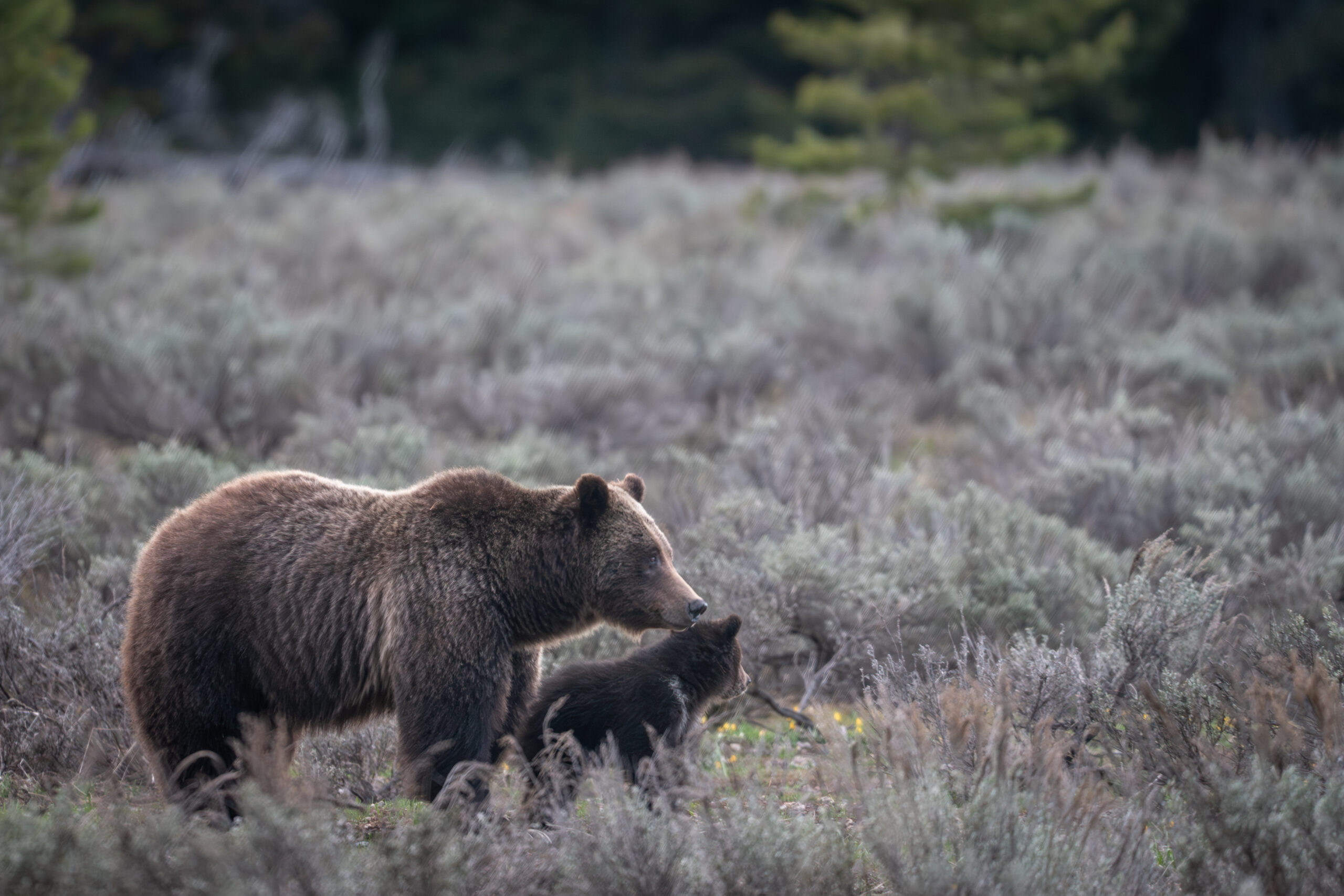
Photo of Grizzly 399 and Spirit by C. Adams, Grand Teton National Park
GRIZZLIES
2. Tell the Trump administration not to weaken protections for grizzly bears
Comments are due August 17.
On July 16, the Trump administration proposed sweeping changes to the Endangered Species Act protections that currently apply to grizzly bears. The proposal does not formally delist grizzlies, but it would nevertheless substantially weaken the practical protections grizzly bears receive while they remain listed as threatened.
The proposal would create a tiered management system that gives federal, state and other wildlife agencies greater authority to manage grizzlies under agreements approved by the U.S. Fish and Wildlife Service. It would also expand exceptions to the Endangered Species Act’s prohibition on “take.”
Under the ESA, “take” is a broad legal term that includes killing, harming, harassing, trapping, capturing or otherwise injuring protected wildlife.
In other words, this proposal would make it easier for agencies to undertake activities that can result in grizzly mortality with less direct federal oversight, and it comes at a particularly important moment.
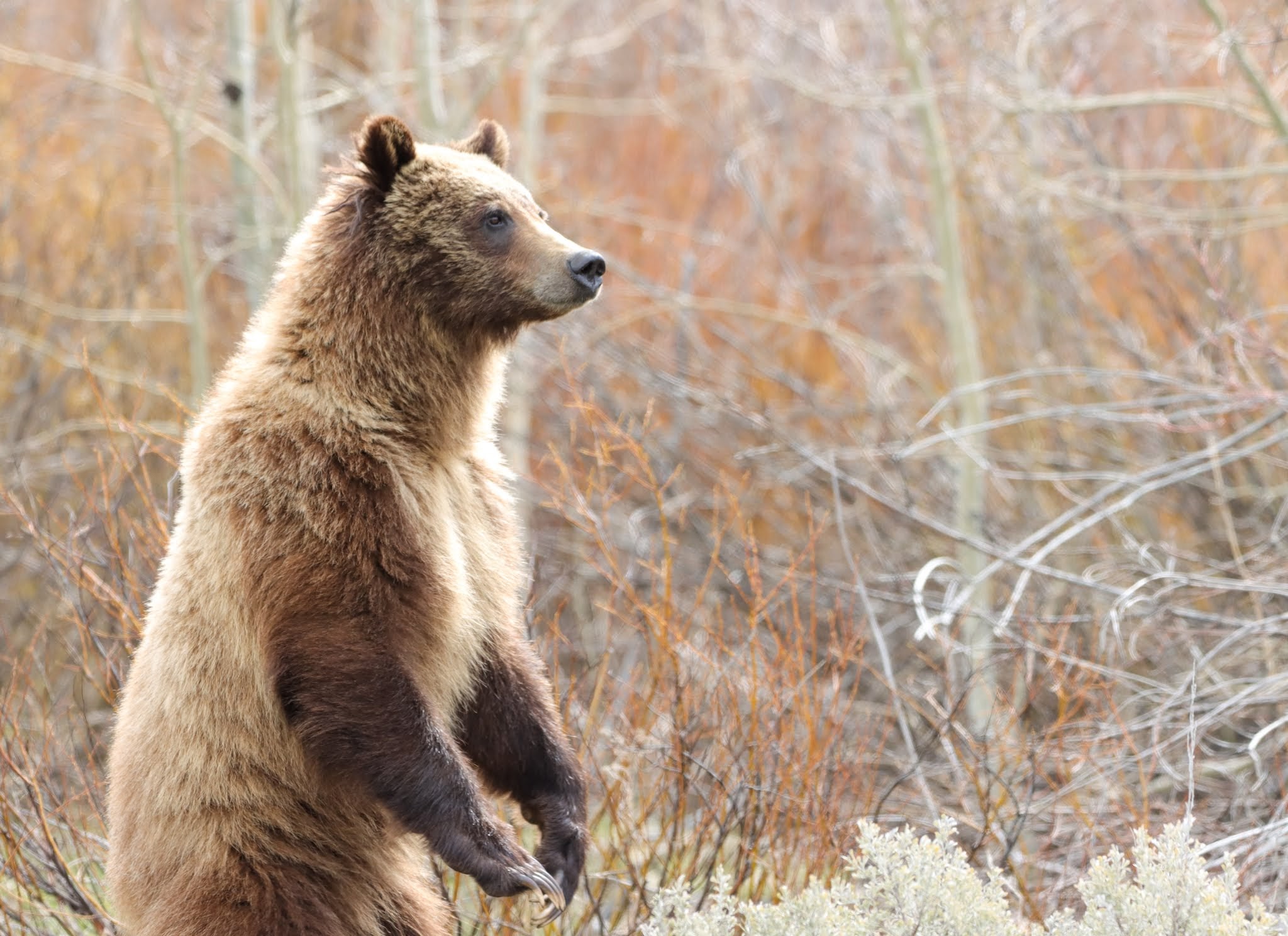 Grizzlies aren’t recovered
Grizzly bears remain listed as threatened under the Endangered Species Act because they have not recovered across a significant portion of their historic range.
Populations have increased in some parts of the Northern Rockies, but grizzlies occupy only a fraction of the habitat they once occupied. Long-term recovery depends not just on maintaining existing populations, but on protecting habitat and reconnecting isolated populations. The U.S. Fish and Wildlife Service reached that conclusion just 18 months ago.
In 2025, the agency rejected petitions from Montana and Wyoming seeking to delist grizzly bears, determining that removing federal protections would be premature, and the agency instead proposed retaining ESA protections while making changes to how grizzly populations are managed.
Now the Trump administration is proposing to weaken those protections while simultaneously signaling that it may pursue a separate action concerning the species’ listing status.
Taken together, these actions point toward a larger, politically driven shift: moving grizzly management away from federal recovery requirements and toward state management before recovery is complete.
Grizzly bears already face significant threats from human-caused mortality. Conflict with livestock is a leading cause of grizzly deaths, road strikes kill grizzlies annually, and trapping activities targeting other species can also injure or kill grizzlies. Meanwhile, habitat fragmentation makes it more difficult for bears to move between populations and maintain the connectivity needed for long-term recovery.
The Greater Yellowstone Ecosystem has experienced record levels of grizzly mortality in recent years even under existing protections. Reducing those protections now moves in exactly the wrong direction.
The problem becomes even more serious when considered alongside other actions the administration is pursuing that could affect grizzly habitat, including efforts to eliminate the Roadless Rule and weaken other Endangered Species Act safeguards. Grizzlies cannot recover if the habitat it needs is continually fragmented, and a population cannot recover if mortality continues to increase.
State management isn’t automatically better management
The proposal also raises questions about what will actually happen once more authority is transferred to states. Montana, Wyoming and Idaho have repeatedly sought greater control over grizzly management and, in some cases, have pursued delisting and the return of hunting.
More state authority to kill bears isn’t a recovery strategy.
Montana’s own grizzly bear management plan says the state would not actively manage for grizzly presence between core population areas. That is a significant problem because those connecting areas are essential for true recovery. If isolated populations are ever going to become a connected metapopulation, bears need to be able to move between core areas without being treated as problems simply because they have left a designated recovery zone.
What you can do
Submit a public comment opposing the proposed changes by August 17. You can use the Bears Belong action alert to submit a comment, or comment directly through the Federal Register.
 TAKE ACTION
Make sure you personalize your comment. Public comments are most useful when they explain why a proposed rule is problematic. You can the Bears Belong talking points to discuss the scientific evidence documenting:
- mortality from livestock conflict;
- the risks grizzlies face from trapping activities targeting other species;
- the importance of habitat connectivity;
- the consequences of increased human-caused mortality; and
- why federal oversight remains necessary while grizzly bears are still threatened.
If you use the scientific literature compiled by WildEarth Guardians, include the following statement: “Literature cited in this comment has been added to the administrative record by WildEarth Guardians.”
The administration is asking the public to weigh in, so make sure it hears from people who want grizzlies to actually recover.
WYOMING
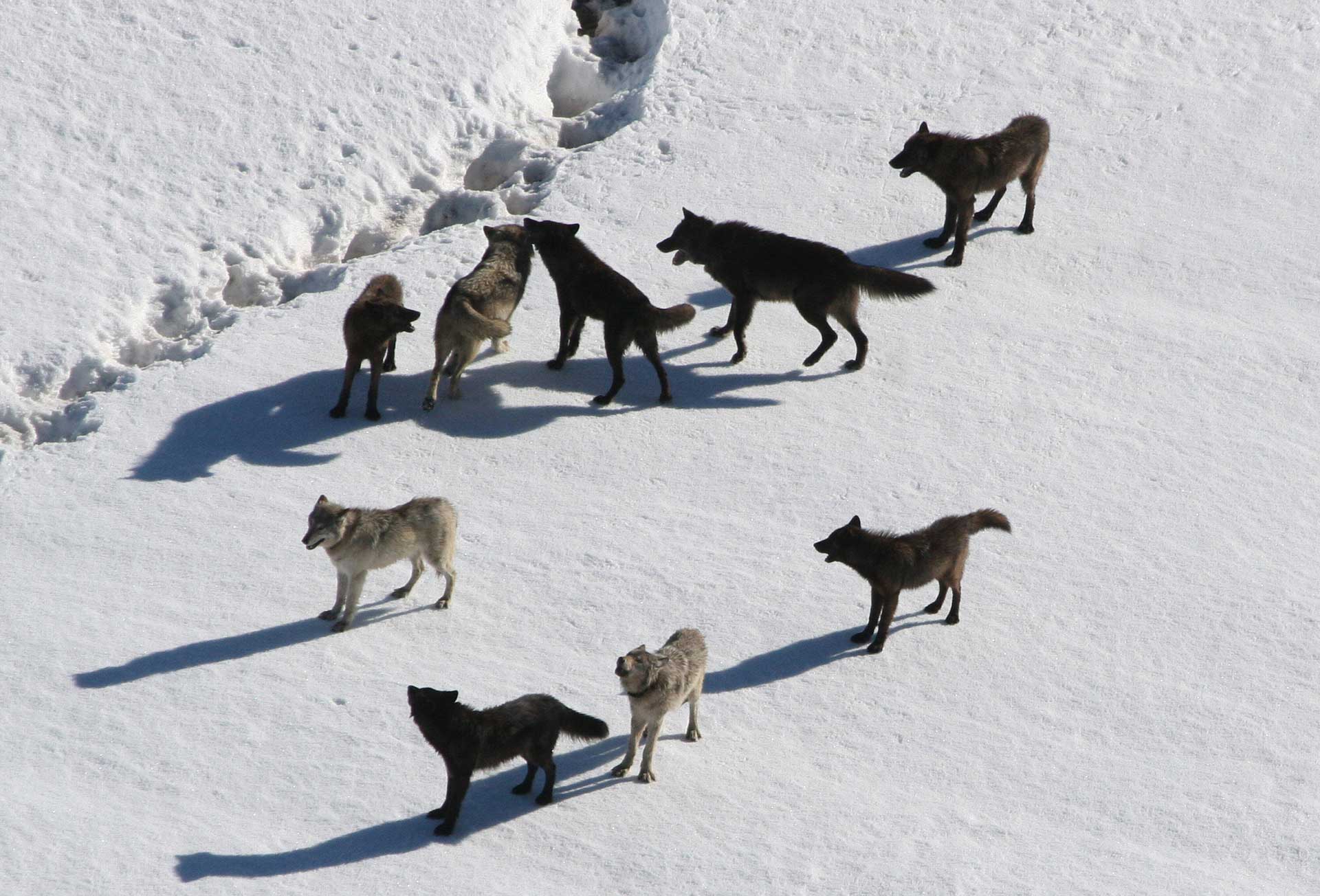 3. Help protect Mollie’s Pack before Wyoming’s hunting season begins
Contact Wyoming officials this week.
Some wildlife stories are about population numbers or regulatory language, but this one is about a family.
Mollie’s Pack is one of the best-known wolf families in the Greater Yellowstone Ecosystem. Its matriarch, Wolf 1090F, is 12 years old and believed to be the oldest living wolf in the area.
Scientists have studied her and her family for more than a decade, making Mollie’s Pack one of the most extensively documented wolf packs in the world. The pack is also the last remaining pack originally established during the historic wolf reintroduction effort more than 30 years ago.
Named for Mollie Beattie, the first woman to serve as director of the U.S. Fish and Wildlife Service, the pack has contributed to what scientists know about wolf behavior, family dynamics and the ecological role of wolves.
And now, those wolves are at risk of being legally killed.
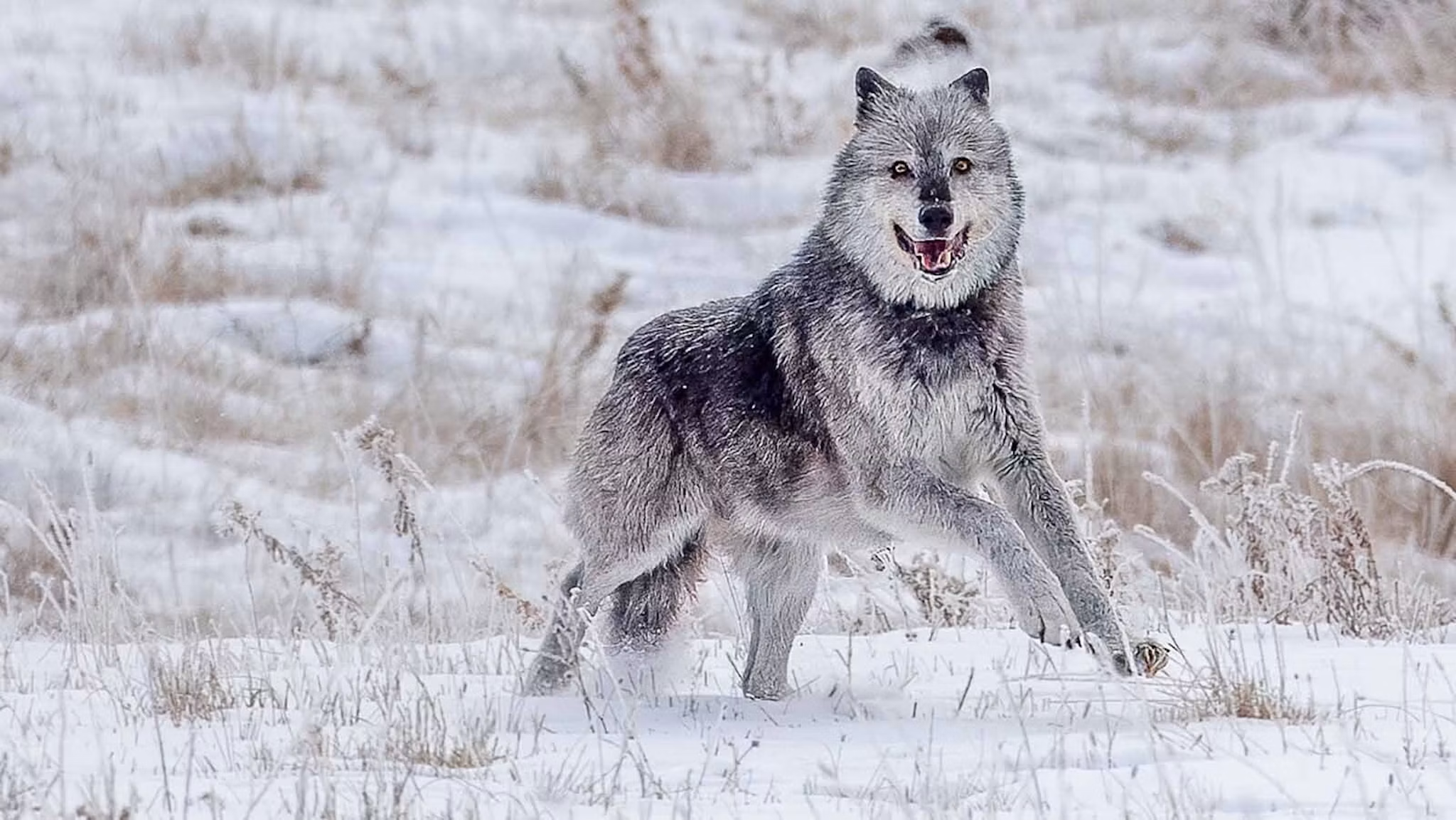
Wolf 1090F, of the Mollie’s pack in Yellowstone National Park, recently hit the age of 12 years. That makes her her the oldest living wolf in the park, and one of the oldest ever. (Courtesy Sylvia Borgonovo Photography)
A line on a map changed their status
For nearly all of her life, Wolf 1090F lived inside Yellowstone National Park. Recently, she and her pack established a den outside the park boundary, but still in Wyoming.
That seemingly simple change has major consequences: inside Yellowstone, the wolves are protected from hunting and trapping. But outside the park, Wyoming’s draconian wolf management rules apply: there are several “Trophy Game Areas” with a managed hunting season, and in the rest of the state, wolves can be killed at any time with no limits on how they are killed.
When the state’s hunting season opens this fall, members of Mollie’s Pack could legally be killed. But the wolves haven’t changed, not has their ecological importance or value to the public. Only their location relative to a jurisdictional boundary has changed.
That is exactly the kind of situation in which wildlife management requires judgment rather than simply applying a rule without considering the circumstances.
Wyoming can choose to protect them
The Wyoming Game & Fish Commission and Wyoming Game & Fish Department have an opportunity to respond to this extraordinary situation: they can recognize that Mollie’s Pack is not just another group of wolves moving through the landscape.
These are some of the most scientifically significant wolves in the Greater Yellowstone Ecosystem, and their family history is directly tied to one of the most important wildlife restoration efforts in American history.
Protecting them would not require Wyoming to abandon its entire wolf management framework. It would mean using targeted, science-informed management tools to protect an exceptional pack while officials assess the situation. There is also a nearby grazing allotment on the Shoshone National Forest that should be temporarily closed while appropriate management decisions are considered.
What you can do
Contact the Wyoming Game & Fish Commission, Wyoming Game & Fish Department and Shoshone National Forest.
Ask them to:
- temporarily close the relevant Trophy Game Management Zone to wolf hunting and trapping while Mollie’s Pack’s situation is assessed;
- recognize the pack’s exceptional scientific and conservation significance; and
- temporarily close the nearby Shoshone National Forest grazing allotment while appropriate management decisions are made.
You don’t have to live in Wyoming, be a wildlife biologist, or write a long letter. A simple respectful message explaining that you believe Wyoming should protect Mollie’s Pack and use targeted management tools to do so is enough.

Who to contact
Wyoming Game & Fish Commission
Mark.Jolovich@wyo.gov
Rusty.Bell@wyoboards.gov
Kenneth.Roberts@wyo.gov
John.Masterson@wyoboards.gov
Fonzy.Haskell@wyoboards.gov
Bill.Mai@wyoboards.gov
Ashlee.Lundvall@wyo.gov
Wyoming Game & Fish Department
Eric.Wiltanger@wyo.gov
Jeff.Davis@wyo.gov
Daniel.Thompson@wyo.gov
Shoshone National Forest
Kenneth.Coffin@usda.gov
You can also contact:
Wyoming Governor’s Office
Governor@wyo.gov
Yellowstone National Park
yell_public_affairs@nps.gov
 Three actions. One week.
These three situations are different, but they raise some of the same questions about how we manage wildlife. Do we make decisions based on the best available science, or proceed despite serious uncertainty? Do we treat wildlife populations as numbers on a spreadsheet, or consider the social structure, habitat and ecological conditions that determine whether those populations are actually healthy? Do we weaken protections before species have recovered, or recognize that conservation gains can be reversed?
And when wildlife policy affects animals that belong to all of us—not just the people who hunt, trap, ranch or live closest to them—do we make room for the public to have a meaningful voice?
You can make that voice heard this week. As a recap:
1. By close of business MT Wednesday, August 12
Comment on Montana’s proposed wolf quota.
Ask for a moratorium on wolf hunting and trapping until FWP can provide reliable, transparent and scientifically defensible population information.
2. By midnight ET Monday, August 17
Comment on the proposed changes to grizzly bear protections.
Tell the Trump administration not to weaken Endangered Species Act protections for a species that has not yet recovered.
3. This week
Contact Wyoming officials about Mollie’s Pack.
Ask them to protect Wolf 1090F and her family while the situation is assessed.
Wildlife policy is often decided in meetings most people never hear about, through rules most people never read, and by agencies that rarely hear from anyone outside the small group of people who regularly participate.
Pay attention. Speak up. And make sure wildlife has a voice in the decisions that determine whether they live or die.
Conservation organizations support Juneteenth Fee-Free Day at National Parks
America The Beautiful for All Coalition Members Support the Encouraging Public Service in Our National Parks and Public Land Act
WASHINGTON DC — Ahead of Juneteenth National Independence Day, 35 organizations in the United States and territories across zip codes, sectors, and scale issued a formal letter affirming support for S.3429, Encouraging Public Service in Our National Parks and Public Land Act. This important legislation would permanently restore Juneteenth among other nationally important days as fee-free days at national parks and federal recreational lands.
In response, these letter signatories issue the following statements:
“It is important to restore Juneteenth as a fee-free day because it is important to make it easily accessible for everyone to know the truth, the whole truth, and nothing but the truth about American history,” said Michael Coard, Avenging The Ancestors Coalition (ATAC) Founder and Attorney.
“If Secretary Burgum is serious about keeping parks open, safe and accessible he will work with Congress to get this bill on President Trump’s desk ASAP,” said Olivia Juarez, GreenLatinos Public Land Program Director. “Our national parks are in crisis; they need public service now more than ever.”
“Entrance fees at National Parks discriminate based on wealth, posing barriers to access by lower-income communities,” said Erik Molvar, Executive Director of Western Watersheds Project. “Every day should be a fee-free day at America’s National Parks, but at the very least, fees should be waived for important holidays celebrating our national diversity such as Juneteenth and Martin Luther King Jr. Day.”
“Public lands are national treasures that belong to everyone, and getting a new generation outside and enjoying them is vital to their protection,” said Steve Pedery, Conservation Director with Oregon Wild. “The Juneteenth fee-free day created an opportunity for families from all economic backgrounds to fall in love with public lands, and it should be restored.”
“Fee-free days are an invitation to enjoy America’s unmatched network of national parks and public lands. President Trump and Interior Secretary Burgum eliminated free admission on both Martin Luther King Jr. Day and Juneteenth, one of several steps they have taken to weaponize our national park system in service of efforts to whitewash American history,” said Jackie Ostfeld, Sierra Club’s Outdoors for All Director.
“Federal holidays are important opportunities for families to spend time together outdoors, especially when schools are closed. We should be making all federal holidays fee-free in our national parks, not closing the door on families discovering America’s national treasures for the first time.”
“America’s public lands belong to all of us, and fee-free days help ensure that access isn’t limited by income or circumstance,” said Michelle Lute, PhD, Executive Director of Wildlife for All. “Juneteenth is an opportunity to reflect on the ongoing work of expanding freedom, opportunity, and belonging in this country. Restoring Juneteenth as a fee-free day sends an essential message: our public lands are for everyone, and everyone deserves the chance to experience and connect with them.”
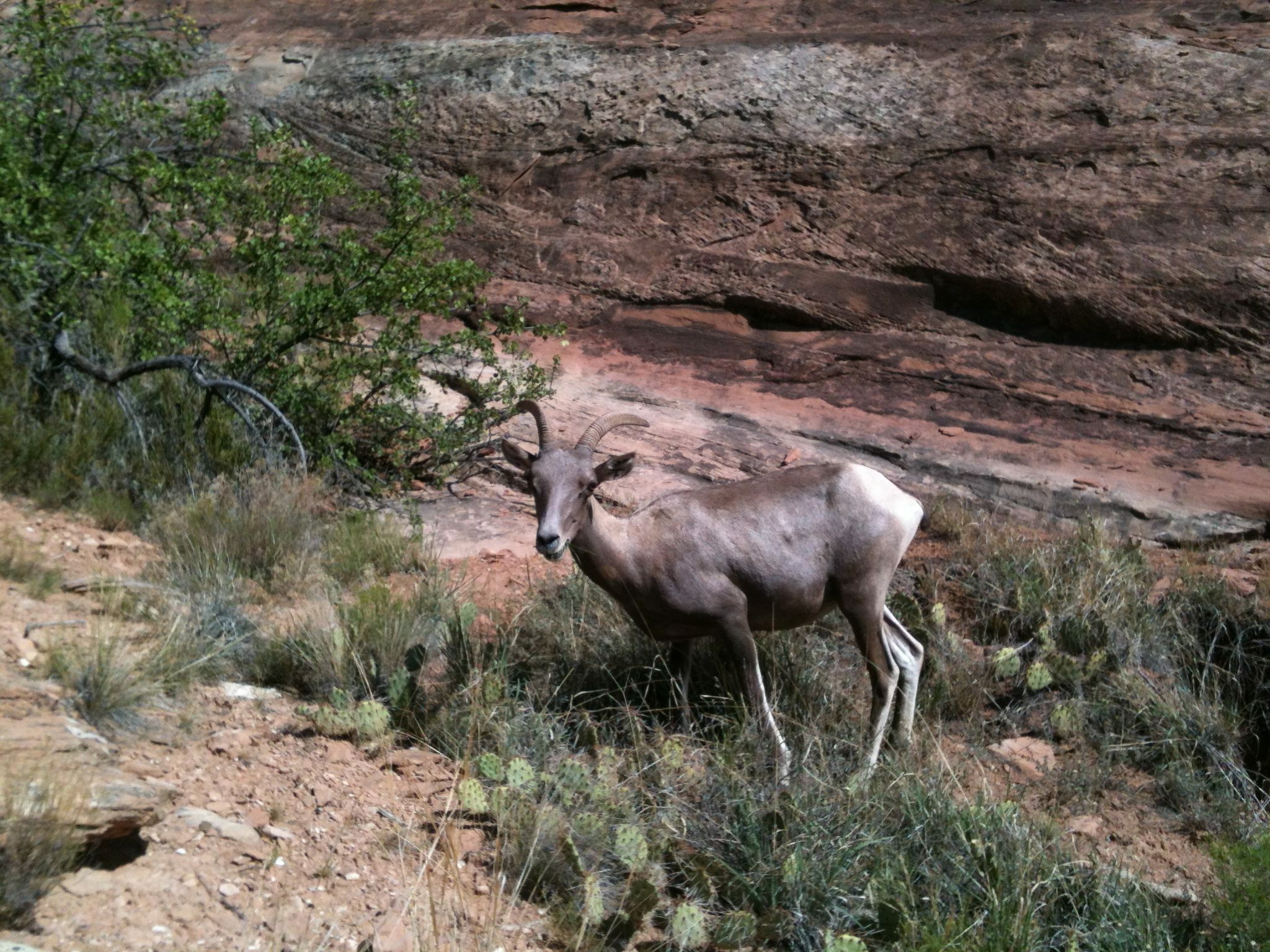
Desert Bighorn Ewe – Colorado National Monument
Media
Read the community sign-on letter addressed to the Sponsor and Cosponsors of S.3429 here.
Read more about S.3429 here.
The far-right political network behind Colorado’s Initiative 302
Interested Parties Memo: The far-right political network behind Colorado’s Initiative 302
TO: Interested Parties
DATE: July 16, 2026
As your newsroom considers coverage of Colorado’s proposed Right to Hunt constitutional amendment (Initiative 302), we encourage you to examine what the campaign’s own architects have said publicly about its purpose.
While its supporters have described Initiative 302 as simply protecting hunting and fishing, the national organization behind the measure has repeatedly said constitutional amendments are intended to create new legal precedent, make future wildlife policy changes more difficult, and give hunting advocacy organizations stronger standing to challenge wildlife decisions in court.
Those statements raise important questions about whether the public communications of the campaign accurately reflect the constitutional amendment’s intended legal and long-term effects.
1. The campaign’s architects say Initiative 302 is designed to change future wildlife policy.
The organizations leading this effort have made numerous public statements that describe Initiative 302 and other right-to-hunt constitutional amendments as a legal strategy that extends well beyond preserving existing hunting opportunities.
In a June 2026 opinion essay in Outdoor Life, International Order of T. Roosevelt (IOTR) Executive Director Luke Hilgemann wrote: “These amendments aren’t just words on paper. Their real power lies in the case law they create—solid, precedent-setting barriers that make it far harder for groups to erode hunting and fishing, either through the next wave of emotional ballot initiatives or through overreach by city councils and state wildlife commissions.”
Hilgemann went on to describe the amendments as creating new legal footing for future lawsuits: “The amendments don’t just declare rights. They give everyday citizens and sportsmen’s groups the legal footing to stand in court…”
He characterized this strategy as moving from “playing defense” to “being on offense.”
Other proponents have described the effort similarly. In Field & Stream, IOTR Director of Policy and Coalitions, Travis Thompson, called constitutional amendments “a lock on the door” against future wildlife policy changes. Hilgemann repeated this language in an email celebrating the number of signatures the campaign has gathered, sent July 8.
On the Through the Gates podcast, Initiative 302 proponent and Coloradans for Responsible Wildlife Management (CRWM) Executive Director Dan Gates described Initiative 302 this way: “We have the state constitution that denies you the opportunity… now we have legal standing and we can go to court.”
IOTR’s own website describes Right to Hunt amendments as a “pre-emptive defense” against future legislation and litigation, explaining that constitutional amendments make policy changes “not easily challenged, changed, or revoked.”
Taken together, these statements describe constitutional amendments as legal tools intended to shape future wildlife policy through litigation and constitutional precedent.
2. Initiative 302 is part of a coordinated national legal strategy.
Colorado is one of several states targeted as part of a nationwide effort led by IOTR and its advocacy arm, T. Roosevelt Action. According to Hilgemann’s congressional biography, one of the organization’s principal objectives is to establish constitutional hunting rights in a majority of states by 2030.
The organization has supported similar campaigns across the country while pointing to litigation in states like Wisconsin, Florida, and Maine as evidence that constitutional amendments create stronger legal protections for hunting interests.
Hilgemann’s June Outdoor Life op-ed celebrated those cases as examples of an “emerging body of law” that turns constitutional amendments into “a practical shield.”
3. The organizations and individuals leading Initiative 302 have longstanding right-wing political ties.
Before leading IOTR, Hilgemann served as CEO of Americans for Prosperity (AFP), the national advocacy organization founded by billionaire industrialists David and Charles Koch, and was also CEO of Hunter Nation, a political advocacy hunting organization whose stated mission is to protect the “Traditional American Values of God, Family, Country, and our Nation’s Constitution.” Hunter Nation’s leadership includes Donald Trump Jr., Ted Nugent, voter-ID law advocate Kansas Attorney General Kris Kobach, country singer Craig Morgan, and other national right-wing political activists.
Prior to his role with AFP, Hilgemann previously served as chief of staff to former Wisconsin Assembly Majority Leader Scott Suder. Suder resigned in 2013 amid controversy over a state grant awarded to the United Sportsmen of Wisconsin Foundation. Hilgemann had served on the organization’s board before leaving Wisconsin for a national leadership role at AFP.
After joining IOTR, Hilgemann announced a partnership with right-wing political advocacy group Turning Point USA on national hunting advocacy campaigns, launched six-figure digital campaigns promoting constitutional hunting amendments, and publicly identified passing constitutional amendments as one of its highest organizational priorities.
Public tax filings also show IOTR has made financial contributions to several conservative political organizations and legal advocacy groups, illustrating that the organization operates within a broader national political network rather than solely as a wildlife advocacy organization.
These relationships raise questions about the extent to which Initiative 302 reflects a Colorado wildlife proposal versus a nationally coordinated anti-democracy strategy.
4. Initiative 302 follows a national legal strategy already being tested in other states.
The organizations behind Initiative 302 point to constitutional amendments in states including Nebraska, Florida and Wisconsin as examples of how this language can be used in legal disputes over wildlife policy. In his own public writing, Hilgemann described these amendments as tools that create “precedent-setting barriers” and provide hunting organizations with “the legal footing to stand in court” against future wildlife decisions.
These statements raise a fundamental question for Colorado voters: Is Initiative 302 simply preserving an existing activity, or is it creating a new constitutional framework that could reshape wildlife policymaking, invite litigation, and limit whose voices are heard for years to come?
###
What Walks This Way? Rediscovering the Wild Lives Around Us
 What Walks This Way? Rediscovering the Wild Lives Around Us
Most of us don’t have to travel far to encounter wildlife.
A rabbit slips beneath a shrub at dusk. A raven calls from a utility pole. A coyote trots confidently down a neighborhood street before sunrise. A spider builds the same web outside the back door each morning. These everyday encounters are easy to overlook—but they can also become the beginning of a deeper relationship with the living world around us.
That spirit of curiosity and connection is at the heart of What Walks This Way by acclaimed New Mexico author Sharman Apt Russell. Through thoughtful observations of the animals sharing our landscapes, Russell reminds us that wildlife aren’t anonymous creatures exisiting “out there.” They are living, breathing, creative individuals, all around us and inviting us to pay closer attention to the moments and landscapes we share.

Photo of canid tracks at White Sands National Park by Michelle Lute
One of my favorite winter pastimes is to track animals in fresh fallen snow. The sand near the Rio Grande where I live can be reluctant to reveal many secrets. But snow (and mud) is an amateur tracker’s boon. I always find a coyote and several elk along “my” stretch of the river. Usually some cows too. And then untold numbers of tiny feet with tail drags, who Russell affectionately calls “the little guys,” mice and voles moving across the landscape.
Tracks have represented some of my only encounters with the wildlife I traveled to see. I spent a week in the Brazilian Pantanal in 2013, the largest tropical wetland and flooded grasslands in the world, to find an elusive jaguar. We found a set of tracks. Again over a decade later, hoping for jaguars along the Rio Aros in Sonora, Mexico, we found one precious print on the muddy riverbank. One little sign, enough to hang a lot of hope on.
Russell’s What Walks This Way is ultimately an invitation to notice, which first requires slowing down and seeing what’s in front of us. To recognize that every animal has its own life, routines, relationships, goals and challenges. The more we observe, the more we begin to see our wild neighbors not as anonymous members of a species, but as individuals navigating the same changing world we inhabit.
That perspective feels especially important right now. Sometimes we’re doom-scrolling the unending bad news delivered straight to our phones or so lost in thought, worrying about the state of the world (or is that just me?), that we miss the world in its present moment. Right in front of us, asking to be seen and appreciated.
There is so much to appreciate. When we get to know wildlife personally—even if only through repeated encounters in a backyard, neighborhood park, or nearby trail—we begin asking different questions. Where did that fox go? Where and with whom do these migrating birds spend the winter? Why are prairie dogs no longer in this field? Who decides how wildlife is treated?
Those questions naturally lead us to bigger conversations about who makes decisions for wildlife, whose values shape those decisions, and what wildlife conservation and governance should look like in a rapidly changing world.
We’re honored that What Walks This Way includes a chapter on “A New Vision of Wildlife Management,” highlighting Wildlife for All’s work to build wildlife governance systems that better reflect modern conservation science and the diverse values people hold around wildlife.
For too long (as you’ve probably heard us say before), wildlife management has focused primarily on a relatively small number of hunted and fished species, often centering the interests of those who pursue them. But today’s public cares deeply about all wildlife—from pollinators and songbirds to carnivores, reptiles, amphibians, and the countless other species that make healthy ecosystems possible.
This growing appreciation for individual animals reflects ideas that philosophers have explored for decades. More people are learning about the work of experts like Christine Korsgaard who adapts Kantian ethics to argue that wildlife are ends in themselves, deserving direct moral consideration. Or Tom Regan who argues that animals are “subjects of a life” with intrinsic value and fundamental rights not to be harmed or used merely as resources. What better way to embody that understanding than to bear witness to the animals that share your home?
The future of wildlife conservation depends on governance systems that recognize this broader public interest and the intrinsic values of animals. Decisions about wildlife should reflect ecological science, transparency, accountability, ethics, and the diverse values people hold for the animals with whom we share our communities. And decisions should reflect our appreciation of the wild beings and their world.
As Russell notes in chapter 16, “A New Vision of Wildlife Management:”
What I want to say is that we still have a lot of wildlife in North America, and we should celebrate these animals. We don’t see them much… But we can be alert to their track and sign. This can become a form of seeing. I want to exhort: we must ally ourselves with wildlife. We must work to mitigate global warming, keep our public lands ecological healthy, alter landscapes for humans in ways that consider wildlife, and reform our management of wildlife. We must choose wildlife. We must demand more wildlife, more of the nonhuman world, more celebration, more humility, more empathy, more connection.
In many ways, Russell’s book illustrates why this work matters. Governance reform isn’t simply about changing laws or commissions. It’s about creating institutions that value the same curiosity, respect, and sense of shared responsibility that emerge when we develop meaningful relationships with wildlife.
You don’t need to be a legislator, or scientist, or philosopher to begin.
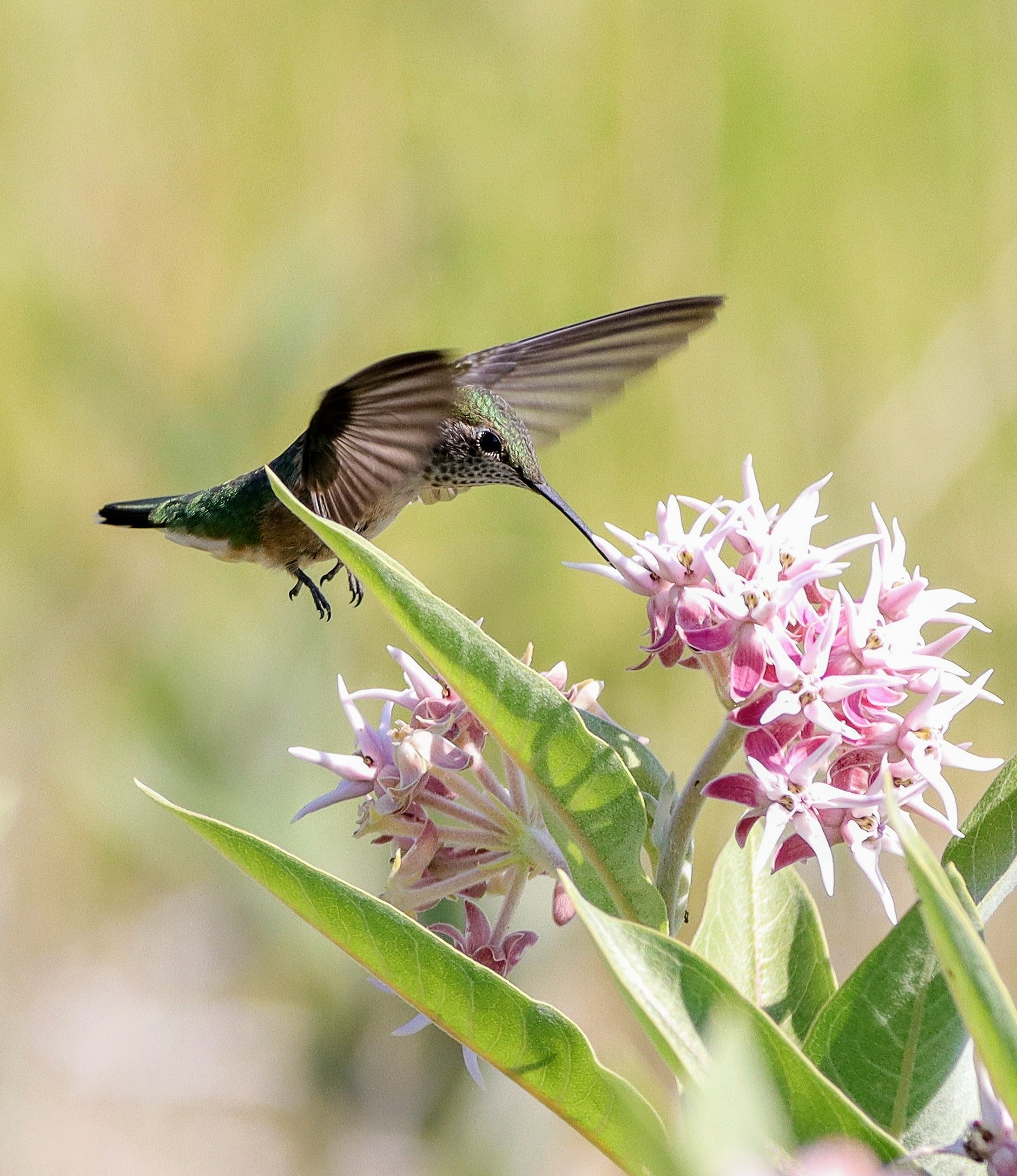
Spend a few minutes watching the hummingbirds at your feeder. Learn the names of the lizards in your garden (I like calling them all Frankie and imagining they have Boston accents, but you do you). Learn about the relationships Indigenous peoples have with the animals and ecosystems of the places you call home. Pay attention to the coyote who regularly passes through your neighborhood or the family of rabbits living beneath the brush pile. Note which birds arrive with the changing seasons. Maybe even start a nature journal and become a student of seasonal change through phenology, as Aldo Leopold encouraged us to do. Follow the tracks after a fresh snowfall.
Every observation deepens our understanding. Every connection strengthens our commitment to protecting wildlife.
And those observations matter beyond our own backyards.
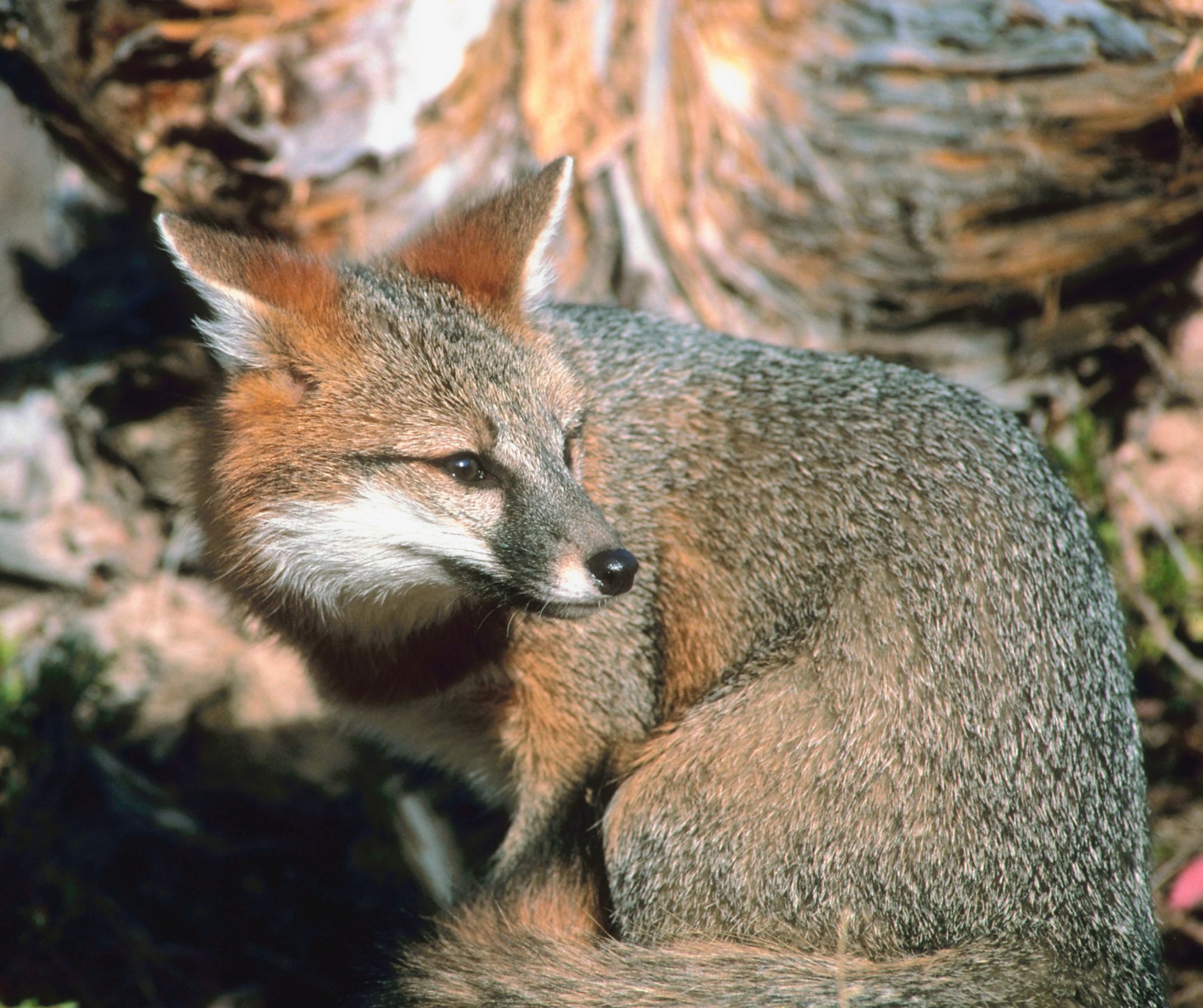 Wildlife commissioners, state agencies, and elected officials routinely hear from members of the public about how wildlife management decisions affect their communities. Your firsthand experiences—seeing monarch butterflies disappear from a familiar meadow, watching a fox raise kits each spring, noticing changes in bird migration, or observing increasing conflicts between wildlife and development—provide valuable knowledge about how wildlife and landscapes are changing.
You don’t have to be a professional biologist for your observations to have value. In fact, the people who spend time paying attention to wildlife in their neighborhoods, parks, farms, ranches, and favorite hiking trails often notice changes that might otherwise go unseen. Sharing those experiences through public comments, letters to the editor, commission meetings, or conversations with decision-makers helps ensure that wildlife governance reflects the knowledge and values of the people who live alongside wildlife every day.
Wildlife agencies have historically privileged one type of knowledge: maximizing game animals for harvest through the work of agency biologists and the advocacy of consumptive users, while often underrepresenting the knowledge and experiences of other people who pay attention to wildlife. But conservation is stronger when it also incorporates observations from birders, hikers, photographers, Indigenous knowledge creators and holders, gardeners, farmers, recreationists, and anyone else who pays attention to wildlife. Good wildlife governance depends not only on good science but also on engaged constituencies who know and care about the wildlife around them.
In a time when the news often feels overwhelming, there’s something not only hopeful but empowering about simply paying attention. Wildlife continues to surprise, teach, and remind us that we’re part of a much larger community of life.
We hope you’ll pick up What Walks This Way and then step outside to discover what walks, flies, crawls, hops, or slithers through your own neighborhood. You may find that the more you notice, the more invested you become in ensuring that wildlife—and the public institutions entrusted with their care—can thrive for generations to come.
 Michelle Lute is Executive Director of Wildlife for All and an avid explorer of wild places. When she’s not fighting for democratic and compassionate wildlife policy, she’s somewhere wild with her dogs, inspecting tracks and scat before the dogs get to them.
Release | Agencies Pursue Mexican Wolf Downlisting
FOR IMMEDIATE RELEASE: July 15, 2026
As Agencies Pursue Mexican Wolf Downlisting, Coalition Urges New Mexico to Close Protection Gaps
Fifteen organizations urge New Mexico leaders to close trapping loopholes following trapping deaths of endangered Mexican gray wolves.
Santa Fe, N.M. — As federal and state wildlife agencies prepare to pursue downlisting of Mexican gray wolves under the Endangered Species Act, a coalition representing 15 wildlife conservation, environmental, and animal protection organizations is urging New Mexico leaders to strengthen—not weaken—protections for the endangered subspecies.
Following the recent spate of trapping incidents, including the deaths of two federally endangered Mexican gray wolves from the Sawtooth Pack and at least 23 documented trapping incidents since 2022, the coalition called on state leaders to take immediate action..
Last Friday, the coalition delivered a letter to Governor Michelle Lujan Grisham, Lieutenant Governor Howie Morales, New Mexico Department of Wildlife director Michael Sloane, Attorney General Raúl Torrez, Commissioner of Public Lands Stephanie Garcia Richard, Senate President Pro Tempore Mimi Stewart, and Speaker of the House Javier Martínez, urging coordinated action to prevent future trapping incidents and strengthen protections for Mexican gray wolves.
The letter comes amid growing concern over the increasing number of wolves caught in traps. Since 2022, at least 23 Mexican gray wolves have been documented in trapping incidents across New Mexico. While some wolves survived, others suffered serious injuries or died, underscoring the continued risks of trapping posed to one of North America’s most endangered mammals.
Yesterday, the Arizona Game and Fish Department announced that the U.S. Fish and Wildlife Service, the New Mexico Department of Wildlife, and the Arizona Game and Fish Department are preparing a petition to downlist the Mexican gray wolf from endangered to threatened under the Endangered Species Act, citing recent population growth and progress toward recovery plan criteria.
“New Mexico made important progress with the passage of Roxy’s Law and preliminary population growth, but recent events demonstrate that significant and alarming gaps remain,” said Michelle Lute, Ph.D. in wolf conservation and executive director of Wildlife for All. “True recovery means ensuring wolves can survive and thrive in perpetuity. The plague of both intentional and incidental trapping deaths makes clear that serious gaps remain in the protections for this still very rare species. Downlisting should follow durable recovery, not substitute for it.”
“The trapping deaths of two endangered wolves in New Mexico last year were preventable and deeply disturbing,” said Cyndi Tuell, the Arizona and New Mexico director at Western Watersheds Project. “We’re concerned that we’ll see more of these kinds of tragic deaths under a downlisting scenario that turns more management over to the states. New Mexico should be closing loopholes, not trying to open more of them.”
“The loss of even a single Mexican gray wolf is a setback for the recovery of one of North America’s most endangered mammals. These deaths underscore the urgent need to ensure existing protections are fully enforced, suspected violations are thoroughly investigated, and the remaining gaps that continue to place wolves at risk are addressed, not to weaken protections or pursue premature delisting,” said Claire Musser, executive director of the Grand Canyon Wolf Recovery Project. “Recovering Mexican wolves requires more than reintroducing animals to the landscape; it requires creating conditions where they can survive and thrive.”
“The tragic deaths of the Sawtooth wolves underscore the need for New Mexico’s elected officials to close loopholes in New Mexico law, dedicate resources for outreach and education, and commit to enforcing existing laws intended to protect endangered Mexican wolves and other wildlife,” said Sally Paez, staff attorney at New Mexico Wild. “The agencies’ premature downlisting proposal ignores the ongoing threats of human-caused mortality and genetic vulnerability.”
“If New Mexico is to continue to protect and recover native wildlife, its leaders need to continue to update and improve laws that anchor us to a moment in history when wildlife was seen as a nuisance and a pest, rather than a neighbor and a relative,” said Chris Smith, wildlife and wild places director for WildEarth Guardians. “Wolves and other species don’t see lines on maps and they don’t read statute and regulation – they need stronger protections across the board. Weakening protections while deadly loopholes remain on the books is nonsensical.”
“New Mexico officials must learn from these tragic killings and create a safer state for Mexican gray wolves. It’s terrifying to know that wolves, including wolves released from facilities like the Wolf Conservation Center, can be trapped without significant repercussions. This needs to change, especially with agencies prematurely attempting to decrease protections,” said Regan Downey, director of education and advocacy at the Wolf Conservation Center.
“The brutality exhibited by the humans in the recent wolf trapping deaths was heinous,” said Mary Katherine Ray, Wildlife Chair of the Rio Grande Chapter of the Sierra Club. “If these acts are not legally addressed, perpetrators will become emboldened and more wolves will not only be killed, but will suffer in the same way. Removing protections by downlisting in addition will ensure more of the same. ”
Among other recommendations, the coalition is calling on state leaders to:
- Publicly condemn the recent deaths of the Sawtooth Pack wolves.
- Expand education and outreach regarding the legal protections afforded to Mexican gray wolves and steps to take if a wolf is unintentionally trapped.
- Ensure that suspected violations of state and federal law are thoroughly investigated.
- Work with the Legislature to close statutory loopholes that continue to place endangered wolves at unnecessary risk.
- Continue coordinating across federal, state, tribal, and local agencies to strengthen wolf recovery and reduce future trapping incidents.
The coalition noted that while investigations into the deaths of the Sawtooth Pack wolves remain ongoing, the recent incidents highlight the need for both immediate action and longer-term reforms to reduce the risk of future trapping injuries and deaths.
Signatories include:
- Wildlife for All
- WildEarth Guardians
- Western Watersheds Project
- The Rewilding Institute
- Wolf Conservation Center
- Grand Canyon Wolf Recovery Project
- Rio Grande Chapter, Sierra Club
- Grand Canyon Chapter, Sierra Club
- Upper Gila Watershed Alliance
- Madrean Archipelago Wildlife Center
- Animal Protection New Mexico
- New Mexico Wild
- Western Wildlife Conservancy
- White Mountain Conservation League
- Wild Arizona
###
About Wildlife for All
Wildlife for All is a national organization dedicated to reforming wildlife management to be more democratic, just, compassionate and focused on protecting wild species and ecosystems. Through research, advocacy, and education, we aim to protect wildlife and ensure that policies reflect the values of all Americans.
About Western Watersheds Project
Western Watersheds Project is a nonprofit conservation organization with more than 50,000 members and supporters who care about protecting western public lands for watersheds and wildlife.
About Grand Canyon Wolf Recovery Project
The Grand Canyon Wolf Recovery Project is a nonprofit dedicated to bringing back wolves to help restore ecological health in the Grand Canyon region, while also recognizing wolves as sentient beings with intrinsic value and worth.
About WildEarth Guardians
WildEarth Guardians protects and restores the wildlife, wild places, wild rivers, and health of the American West.
About New Mexico Wild
New Mexico Wild is a nonprofit 501(c)(3) grassroots organization dedicated to the protection, restoration, and continued enjoyment of New Mexico’s wildlands and wilderness areas.
About Sierra Club
The Sierra Club’s mission is to explore, enjoy, and protect the wild places of the Earth, practice and promote the responsible use of its ecosystems, and educate humanity to protect the natural environment.
About Wolf Conservation Center
The Wolf Conservation Center advances the survival of wolves by inspiring a global community through education, advocacy, research, and recovery, and is an active participant in the SAFE Mexican Wolf Program.
Right-to-Hunt Amendments: New Analysis Examines National Trend
For Immediate Release: July 14, 2026
 Wildlife for All Releases New National Analysis of “Right to Hunt” Constitutional Amendments as Colorado Weighs Initiative 302
Issue brief reveals national trend toward narrowing wildlife management policy in state constitutions
DENVER, Colo.—As Colorado voters prepare to consider Initiative 302, Wildlife for All (WFA) today released a new issue brief examining the growing national movement to embed hunting, trapping, and fishing as preferred wildlife management policy into state constitutions.
The report, Understanding “Right to Hunt and Fish” Constitutional Amendments, analyzes more than 140 constitutional proposals introduced across the nation in the last 30 years, documenting similarities and the evolution of these constitutional amendments.
WFA’s analysis found recent amendments increasingly go beyond recognizing hunting traditions to include language that could shape future wildlife policy by narrowing decision-making authority and restricting public input.
“Colorado’s proposal is not an isolated measure,” said Michelle Lute, PhD, executive director at Wildlife for All. “Initiative 302 is part of a decades-long national campaign to constitutionalize wildlife policy in a way that removes the adaptive capacity of agencies and takes away constituent voices. Once language is placed in a state constitution, it becomes much harder to adapt wildlife management as science evolves, threats to species and ecosystems deepen, and public priorities change.”
Among the report’s findings:
- More than 140 Right-to-Hunt proposals have been introduced nationwide since 1997.
- Twenty-nine states now have constitutional or statutory protections for hunting, fishing, or both.
- Many newer amendments include language establishing hunting as the “preferred” means of wildlife management or protecting undefined “traditional methods,” which the Congressional Sportsmen’s Foundation advises amendment authors to include to cover unpopular activities like trapping, baiting, and hounding.
- Many state proposals incorporate language from a model constitutional amendment promoted by the National Rifle Association.
- While courts have generally upheld existing wildlife regulations under earlier amendments, the broader language found in many recent proposals has received little judicial interpretation, leaving important legal questions unresolved.
Because hunting and fishing are already legal in every state, constitutional amendments have been described by scholars as “a solution in search of a problem.” Amendments can have lasting consequences because constitutions are intentionally difficult to amend and often guide future legislative and judicial decision-making.
Lute said the issue brief is the culmination of months of research into a growing national trend and was developed to help policymakers, journalists, and voters look past slogans to evaluate proposed constitutional amendments on their merits before they reach the ballot.
“These amendments are often framed as protecting traditions,” Lute said. “But the exact wording matters. Terms like ‘preferred means of wildlife management,’ ‘traditional methods,’ and ‘forever preserve’ can narrow how wildlife is managed and biodiversity is protected, or not, for decades. Wildlife policy should remain flexible to respond to new science, emerging technical advancements, changing ecosystems, and the values of future generations.”
Colorado’s Initiative 302 reflects broader national trends documented in the report, including the use of constitutional language that extends beyond recognizing hunting to address how wildlife should be managed and who should make those decisions.
The issue brief also includes national maps, legislative trend data, comparative analysis of constitutional language, and examples illustrating how right-to-hunt amendments have influenced policymaking in other states.
The full issue brief is available at: https://bit.ly/RTHBrief
###
About Wildlife for All
Wildlife for All is a national organization dedicated to reforming wildlife management to be more democratic, just, compassionate, and focused on protecting wild species and ecosystems. Through research, advocacy, and education, we work to ensure wildlife policies reflect the values of all Americans.