
287(g): When Wildlife Agencies Become Immigration Police
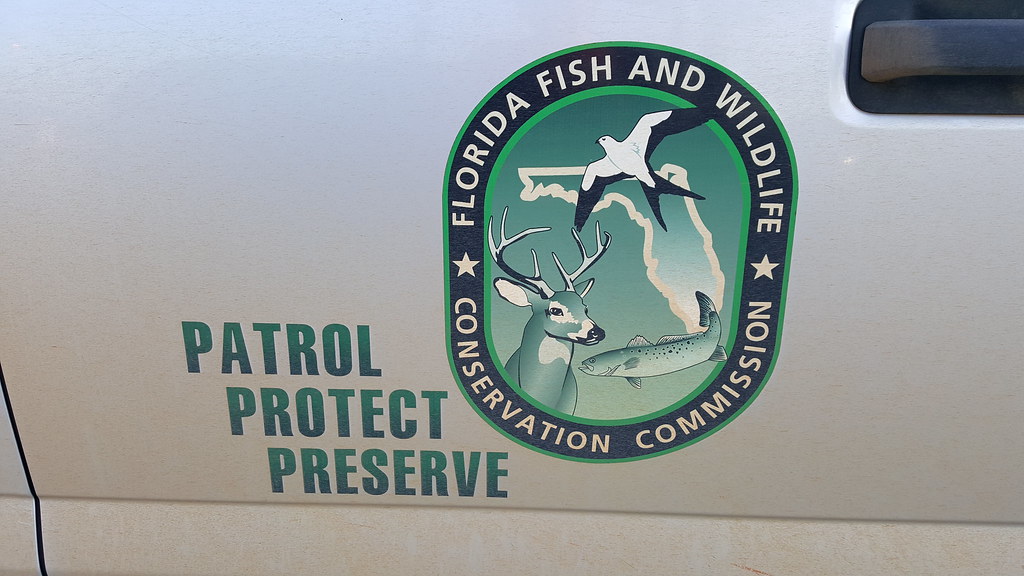
Image courtesy of Jacob Barrone.
Wildlife agencies were created to steward ecosystems, protect biodiversity, and ostensibly serve the public trust (arguable on whether or not this happens in practice).
They were not created to function as extensions of federal immigration enforcement. Yet across the United States, that line is being deliberately blurred, and the consequences for democracy, community trust, and science-informed wildlife governance are profound.
Recent news documents a rapid expansion of partnerships between Immigration and Customs Enforcement (ICE) and state and local agencies through the federal 287(g) program. These agreements deputize non-federal officers to investigate, detain, and transfer people suspected of immigration violations, often absent any criminal charge.
As of December 2025, more than 1,200 agencies nationwide have signed 287(g) agreements, with enrollment surging nearly 700 percent in a single year. Alarmingly, this expansion now includes state fish and wildlife agencies in at least three states: Florida, Louisiana, and Virginia.
What is the 287(g) program?
287(g) is a provision of the 1996 Illegal Immigration Reform and Immigrant Responsibility Act that allows ICE to sign agreements with local law enforcement agencies. The officers empowered under 287(g) agreements are not immigration experts; they are local police and sheriff deputies turned enforcers of a federal deportation agenda.
This program uses three different models:
- Jail Enforcement Model (JEM): Focused on individuals already in custody, this approach allows local law enforcement to question people arrested under local or state charges about their immigration status. Officers can also detain non-citizens for up to 48 hours at ICE’s request.
- Warrant Service Officer (WSO): Under this model, jail personnel are deputized to carry out ICE administrative warrants, effectively extending federal authority into local detention facilities.
- Task Force Model: This version grants local officers ICE powers to conduct street-level enforcement, including traffic stops and other encounters in public spaces. It is considered the most intrusive and high-risk form of 287(g) participation, and this is where state wildlife agencies are participating.
Enforcement Creep and the Making of a National Police Force
Legal scholars, civil rights advocates, and even federal judges have warned that this strategy amounts to the construction of a de facto national police force, one increasingly answerable to the executive branch rather than local democratic oversight. Immigration enforcement has served as the testing ground.
By funneling federal money, signing bonuses, and full salary reimbursements to state and local agencies, the federal government is effectively purchasing compliance. Agencies strapped for funding are incentivized to sign on, regardless of whether immigration enforcement aligns with their mission or expertise. Once enrolled, the scope expands: joint patrols, shared intelligence, task forces, and normalized cooperation that extends far beyond immigration.
This is not accidental. The goal is to blur the boundaries between civilian agencies, local police, federal law enforcement, and even the military, consolidating power upward while diffusing accountability outward.
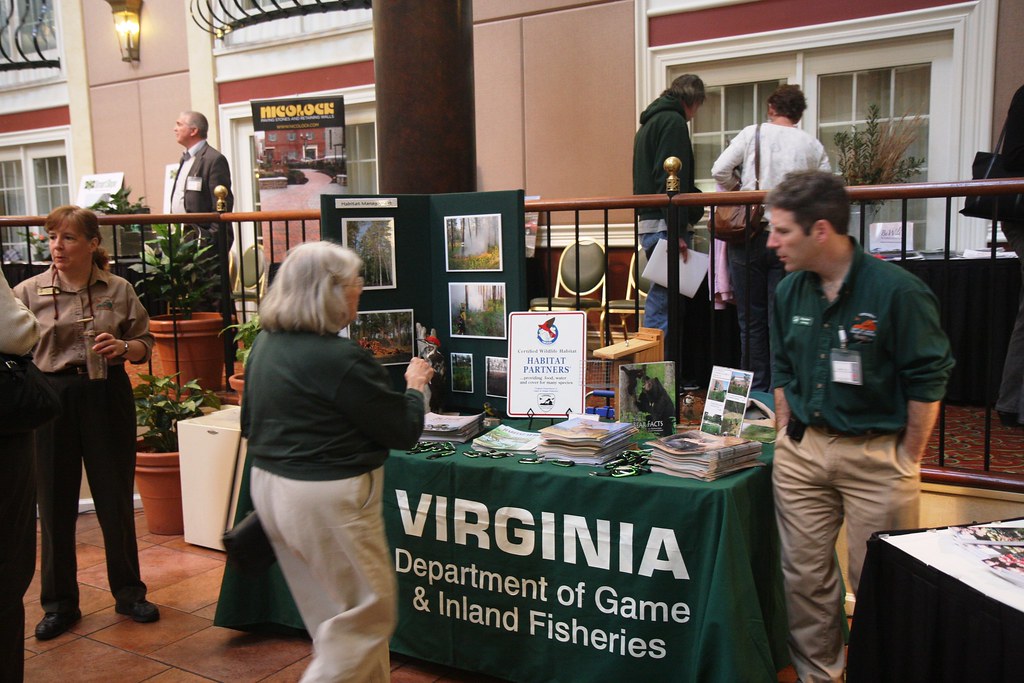
Image courtesy of Chesapeake CLC.
Why Wildlife Agencies?
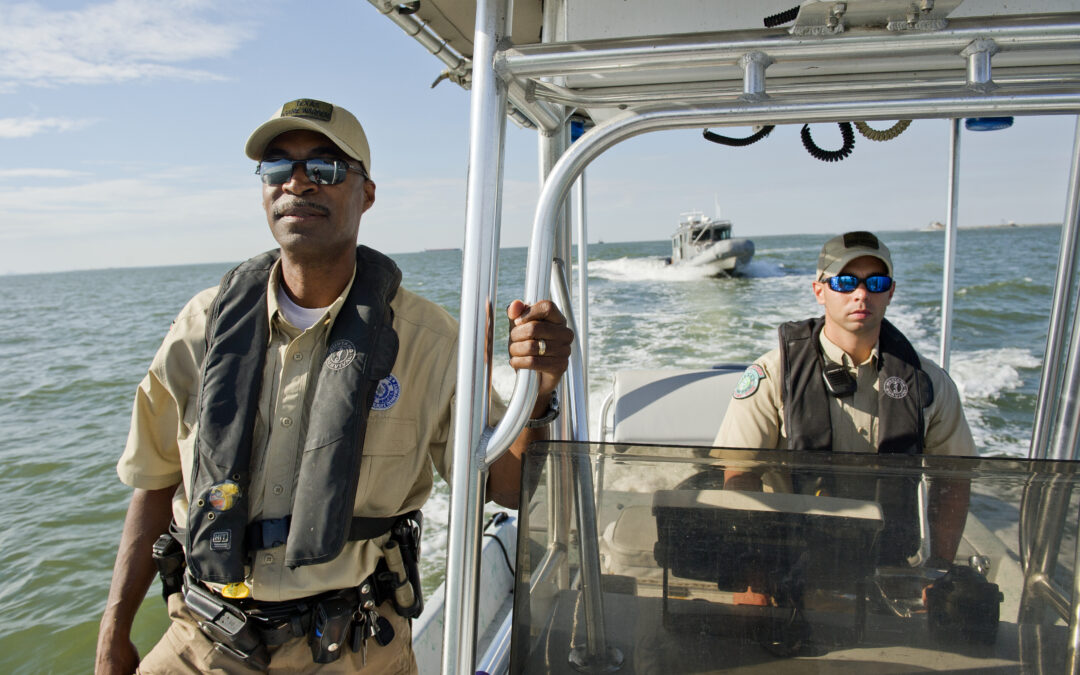
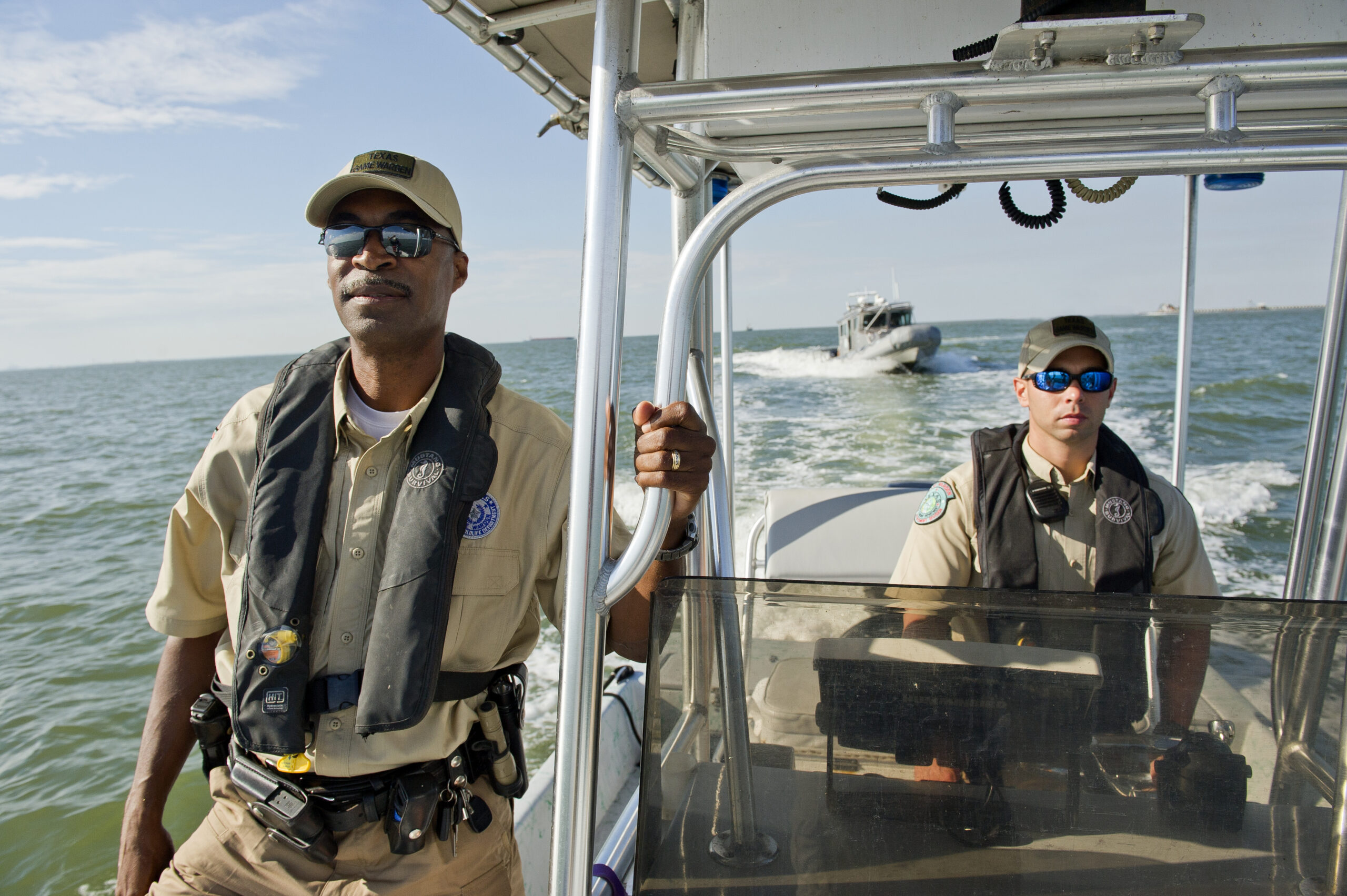
Wildlife agencies occupy a unique and troubling position in this expansion. Conservation officers already have broad authority to stop, question, and detain people on public lands and waterways. They operate in rural areas, wildlife management areas, and remote landscapes where oversight is limited and encounters are often undocumented. That authority, when merged with immigration enforcement, creates an especially dangerous concentration of power.
In Louisiana, public records obtained by Wired show wildlife officers conducting joint patrols with ICE, Customs and Border Protection, and the U.S. Coast Guard in wildlife management areas. In several cases, individuals were taken into federal custody despite no criminal charges being filed. At least two people were known by ICE to have been legally present in the United States at the time of their detention.
In Florida, the scale is even larger. The Florida Fish and Wildlife Conservation Commission (FWC) is one of numerous state agencies that have entered 287(g) agreements, alongside the Department of Highway Safety and Motor Vehicles, Highway Patrol, Department of Law Enforcement, National Guard, State Guard, Department of Environmental Protection, Lottery Services, and others. This level of compliance in advance with authoritarianism did not emerge overnight.
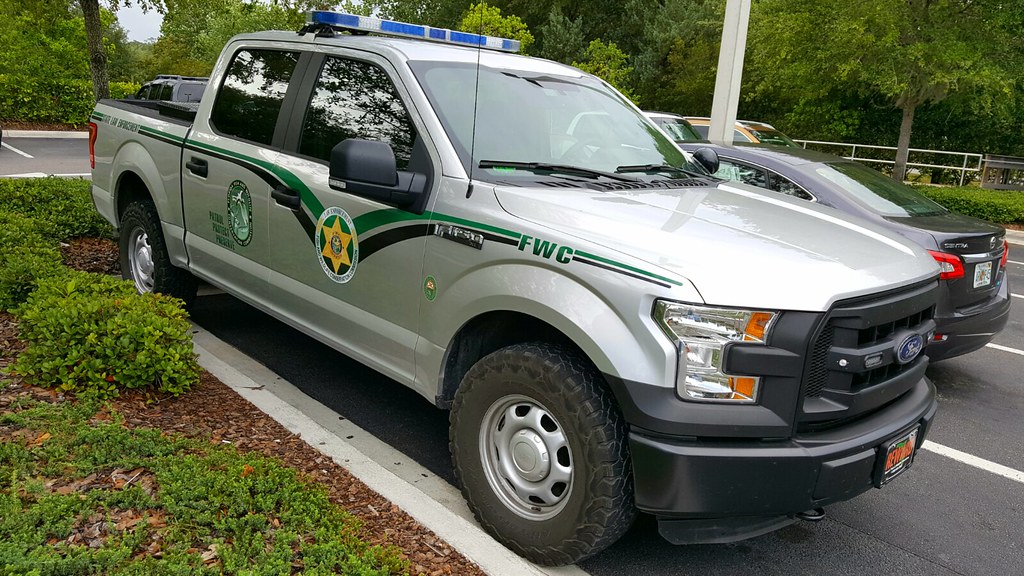
Image courtesy of Jacob Barrone.
Florida’s Long Arc Toward Militarized Enforcement
Florida has been a national leader in fusing environmental, law enforcement, and immigration agendas under the banner of manufactured crisis. In early 2024, Governor Ron DeSantis announced the deployment of Florida National Guard and Florida State Guard members to Texas, framing immigration as an “invasion.” That deployment explicitly included officers from FWC, the Florida Highway Patrol, and the Florida Department of Law Enforcement.
At the time, more than 90 Florida officers were already assisting Texas at the southern border. Additional resources were placed on standby. Wildlife officers, whose training and mandate center on conservation, habitat protection, and public safety, were folded into a political performance designed to amplify fear rather than address reality.
Research has consistently shown that immigration does not drive violent crime, and that local-federal enforcement partnerships do not improve public safety. What they do produce is moral panic, racial profiling, and the normalization of surveillance and detention as routine governance.
The Cost to Conservation and Community Trust
When wildlife agencies are transformed into immigration enforcement partners, the damage is not abstract.
Community trust erodes. People who live, work, and recreate on public lands become fearful of routine encounters with conservation officers. Reporting environmental violations, participating in restoration projects, or cooperating with wildlife research becomes risk-laden, particularly for immigrant communities and communities of color.
Further, science-informed wildlife governance is sidelined. Conservation officers are diverted from habitat protection, poaching prevention, and ecosystem stewardship toward enforcement priorities unrelated to wildlife. Limited agency resources are reallocated away from science and toward surveillance.
Importantly, the public trust doctrine is weakened. Wildlife agencies exist to serve all people and all life. When they participate in systems that criminalize presence rather than behavior, they abandon their obligation to equitable stewardship.
And perhaps most dangerously, public lands are transformed from shared commons into enforcement zones: spaces of fear rather than belonging.
 This Is About Democracy, Not Just Immigration
It is tempting to view 287(g) partnerships as an immigration issue alone. That framing misses the larger pattern.
Authoritarian systems rarely announce themselves all at once. They grow through normalization: expanding enforcement authority incrementally, embedding it in unexpected institutions, and training the public to accept its presence as inevitable.
Wildlife agencies partnering with ICE are not an anomaly; they are a warning sign.
If agencies tasked with stewarding ecosystems can be repurposed to detain people without criminal charges, then no public institution is insulated from political capture. The erosion of democratic accountability in wildlife governance mirrors broader democratic backsliding across state and federal systems.
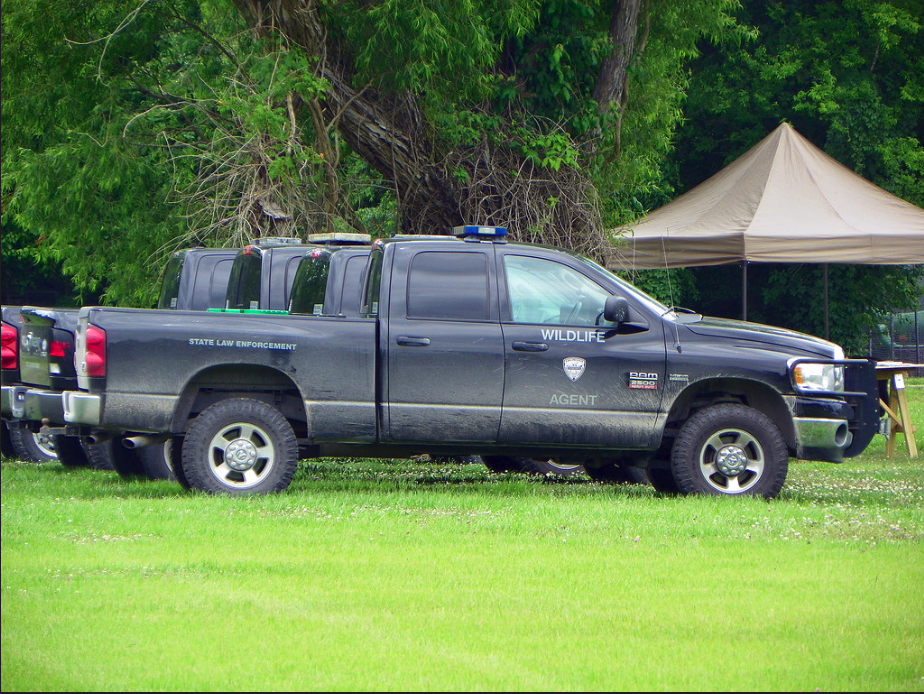
Image courtesy of Daryl McGrath.
Take Action
Wildlife for All believes that defending wildlife, democracy, and human dignity are inseparable. In Florida, Louisiana, and Virginia, state leaders and agency directors must immediately terminate all 287(g) agreements involving wildlife agencies and recommit to conservation-centered missions. And across the country, the public must demand transparency around which agencies are partnering with ICE, under what authority, and with what oversight. Resources like Maxwell Commons’ tracking of ICE partnerships offer a starting point, but sustained public pressure is essential.
• If you live in Florida, Louisiana, and Virginia: Contact your governors, legislators, and agency leadership. Demand that wildlife agencies end all 287(g) agreements and refocus on conservation, not deportation.
• Especially for Florida residents: The state now has the largest number of agencies partnered with ICE, from Fish & Wildlife to the Lottery, Highway Patrol, Environmental Protection, and the National Guard. Demand divestment across agencies.
• Everyone else: Look up which agencies in your state are partnering with ICE and pressure them to withdraw: View the list of official 287(g) partners from ICE here.
Ultimately, this is about drawing clear boundaries. Wildlife agencies should protect wild neighbors and ecosystems, not serve as extensions of a nationalized enforcement regime. Public lands should be places of shared stewardship, not surveillance. And democracy depends on our willingness to stop enforcement creep before it becomes irreversible.
The question is not whether immigration enforcement should be humane. It is whether we will allow the machinery of punishment to hollow out institutions that were never meant to wield it, and in doing so, reshape our country and our states.